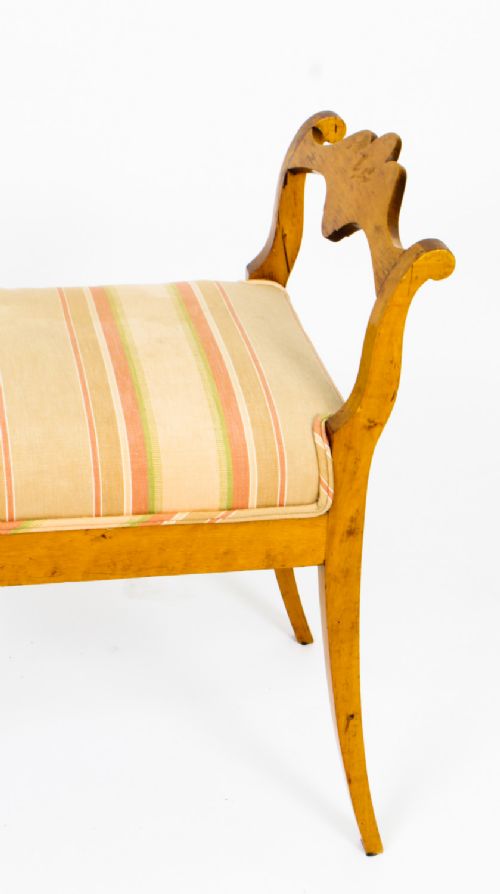
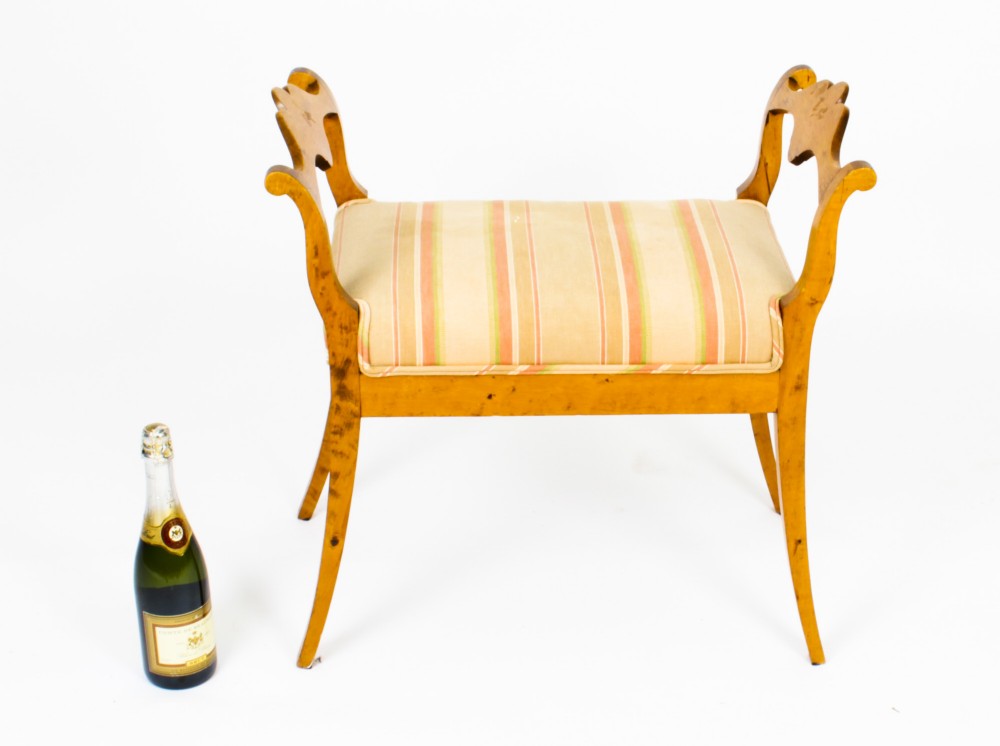
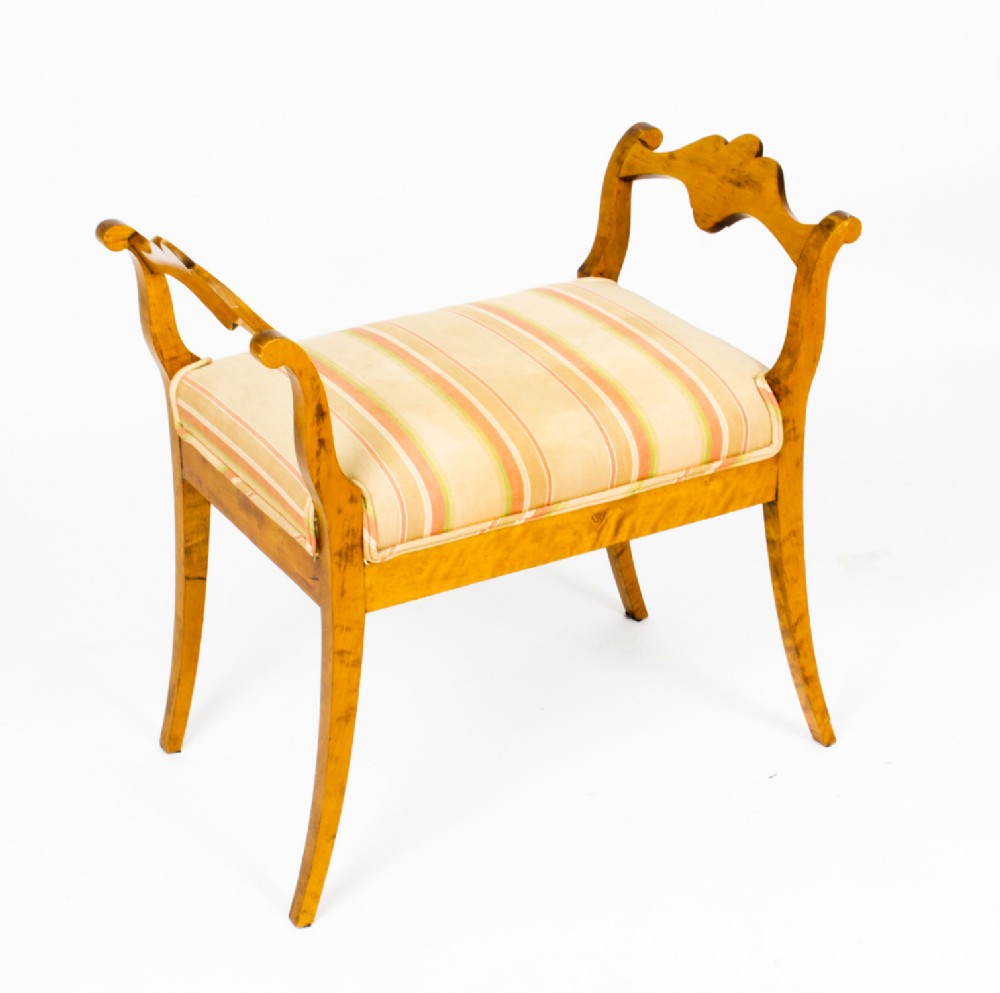
It was listed by Regent Antiques. Sold pieces stay on Sellingantiques as a record of what has passed through, and the next one is rarely far away.
Regent Antiques has dated this piece to the 19th Century.
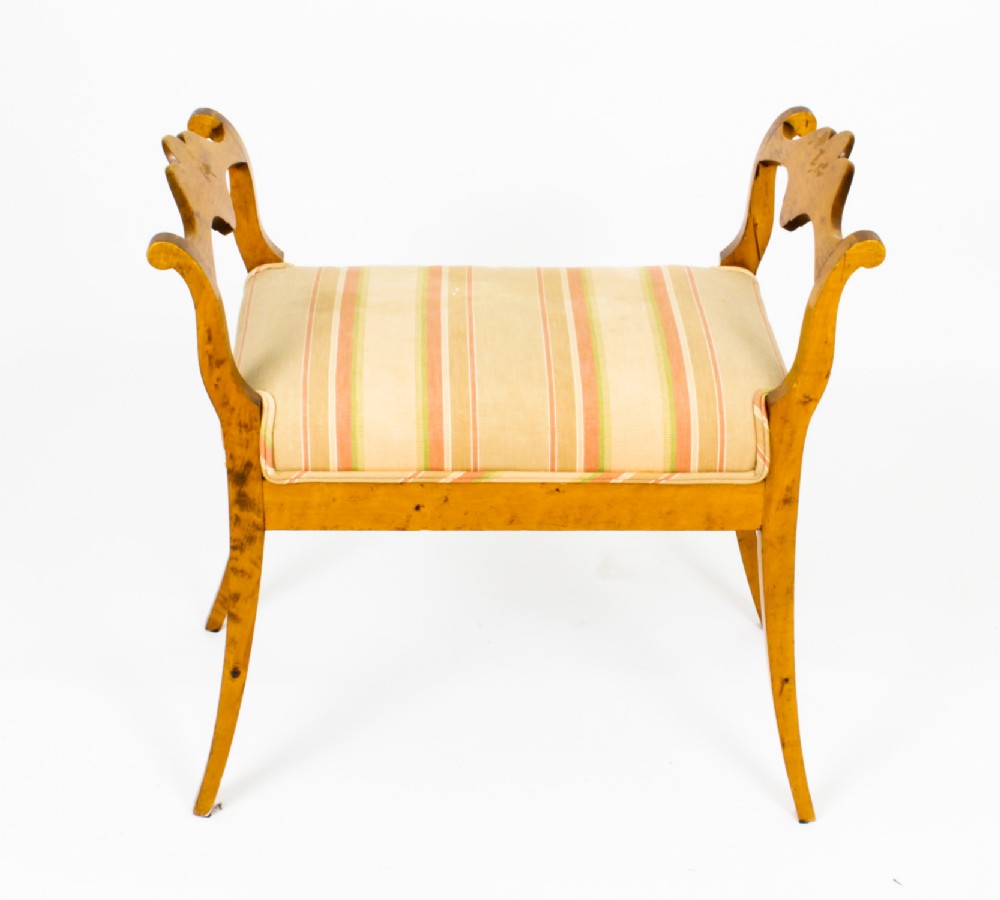
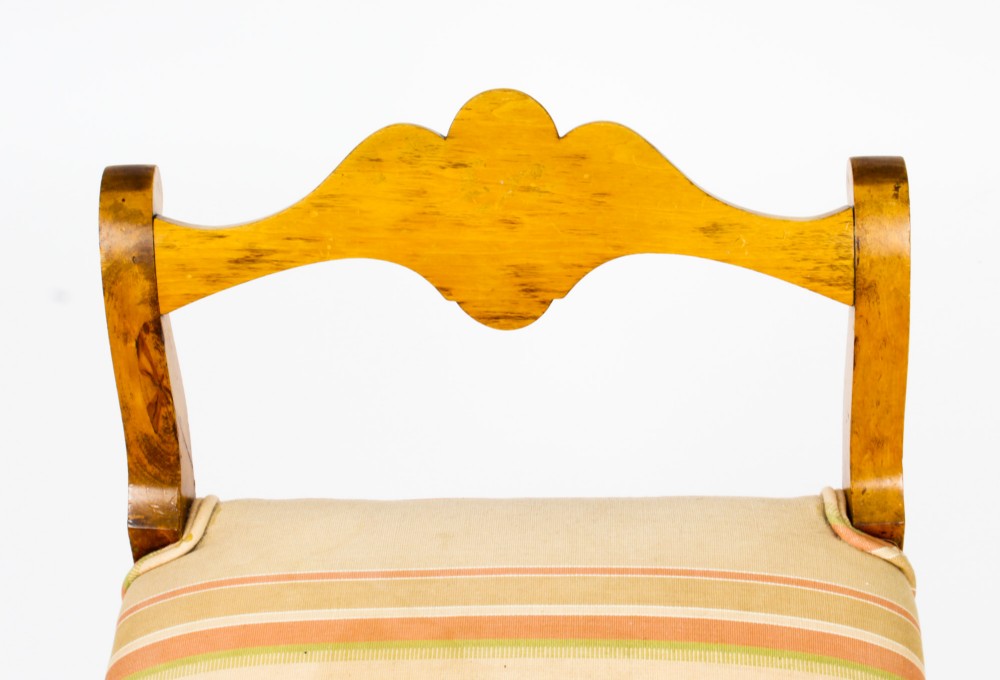
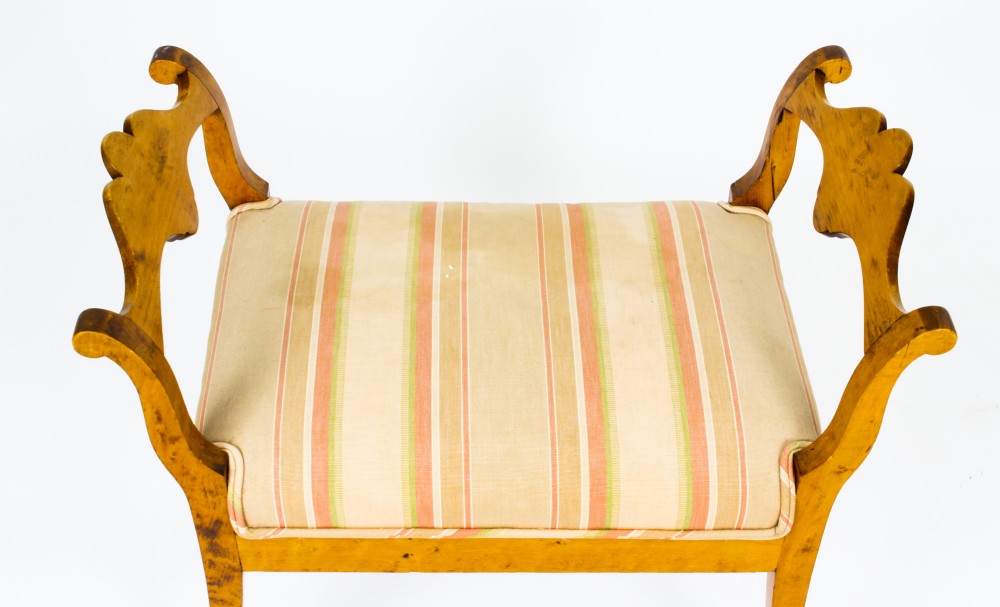
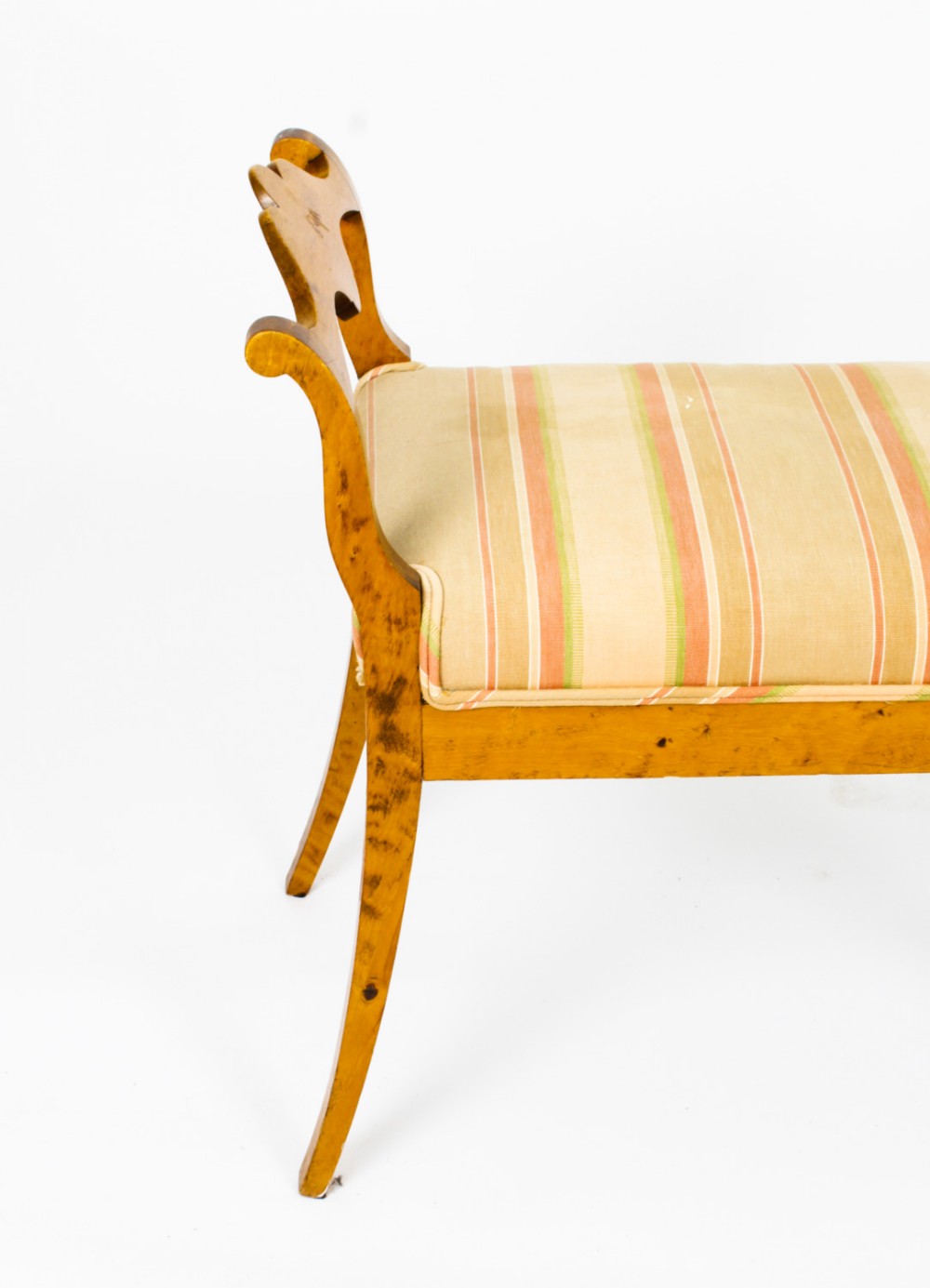
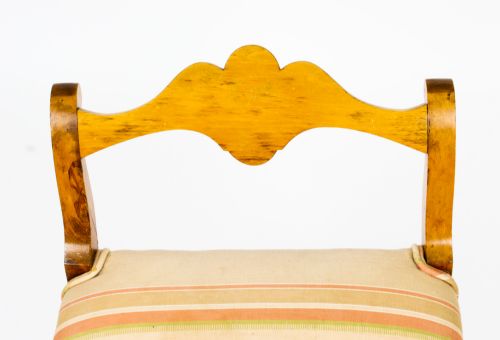
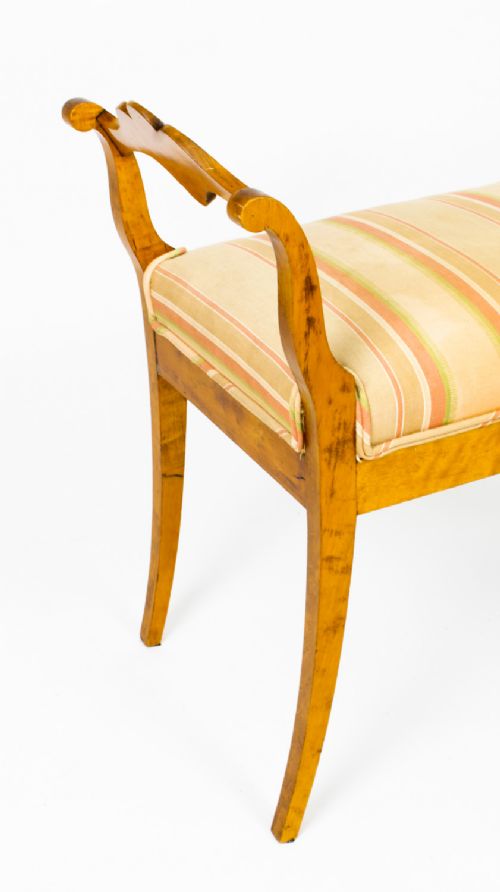
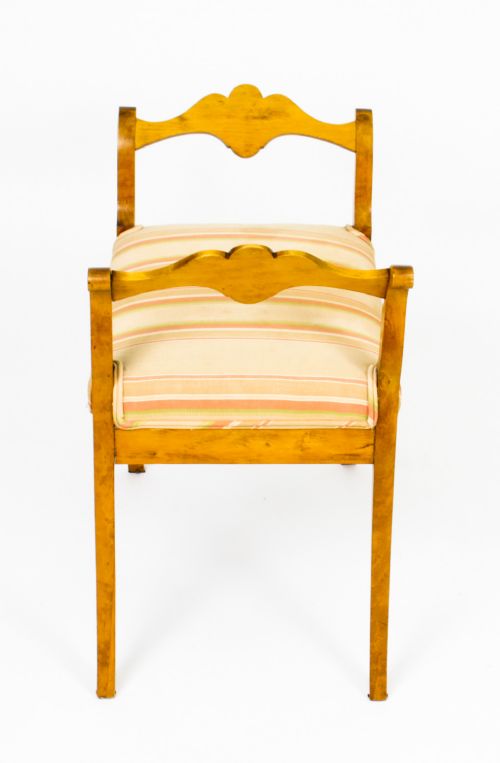
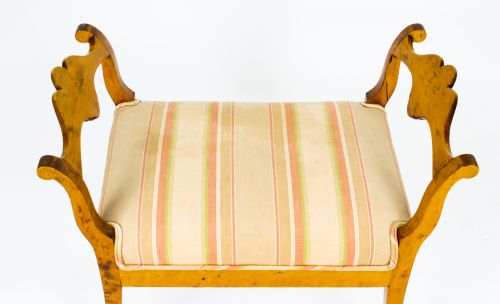
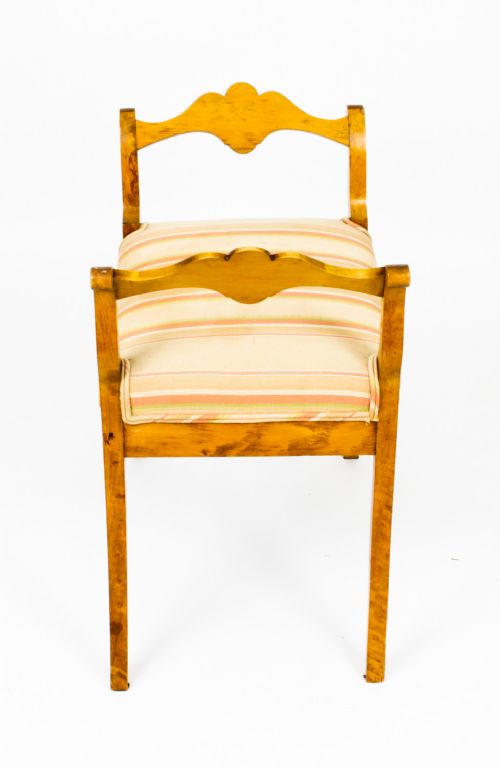
This gorgeous antique stool will be a wonderful addition to one special room in your home.
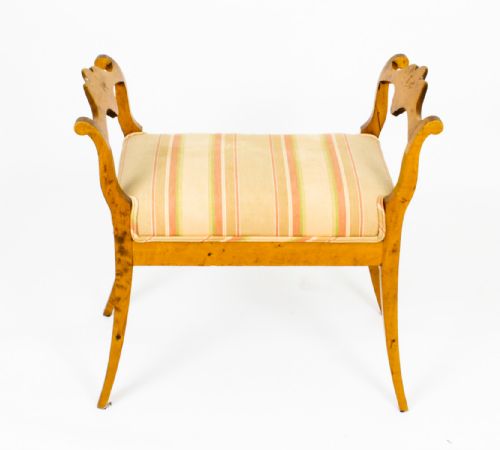
Condition:
In excellent condition. As an antique item, the stool show signs of use commensurate with age, these minor condition issues are mentioned for accuracy and, as seen in the accompanying photographs, the stool displays beautifully.
Dimensions in cm:
Height 64 x Width 76 x Depth 41
Dimensions in inches:
Height 2 feet, 1 inch x Width 2 foot, 6 inches x Depth 1 foot, 4 inches
Biedermeier period,
refers to an era in Central Europe during which arts appealed to common sensibilities in the historical period between 1815, the year of the Congress of Vienna at the end of the Napoleonic Wars, and 1848, the year of the European revolutions.
Although the term itself is a historical reference, it is predominantly used to denote the artistic styles that flourished in the fields of literature, music, the visual arts and interior design.
Biedermeier was an influential style of furniture design from Germany during the years 1815–1848, based on utilitarian principles. The period extended into Austria and Scandinavia.
Throughout the period, emphasis was kept upon clean lines and minimal ornamentation. As the period progressed, however, the style moved from the early rebellion against Romantic-era fussiness to increasingly ornate commissions by a rising middle class, eager to show their newfound wealth.
The idea of clean lines and utilitarian postures would resurface in the 20th century, continuing into the present day. The Biedermeier style was a simplified interpretation of the influential French Empire Style of Napoleon I, which introduced the romance of ancient Roman Empire styles, adapting these to modern early 19th century households. Biedermeier furniture used locally available materials such as cherry, ash and oak woods rather than the expensive timbers such as fully imported mahogany.
Biedermeier furniture and lifestyle was a focus on exhibitions at the Vienna applied arts museum in 1896. The many visitors to this exhibition were so influenced by this fantasy style and its elegance that a new resurgence or revival period became popular amongst European cabinetmakers.
This revival period lasted up until the Art Deco style was taken up. Biedermeier also influenced the various Bauhaus styles through their truth in material philosophy.
Our reference: L101
Regent Antiques has dated this piece to the 19th Century.
We specialise in english and continental furniture, silver, porcelain and decorative items.
You can view the stock and full dealer information on the Regent Antiques Profile Page
Regent Antiques is a registered member of LAPADA CINOA
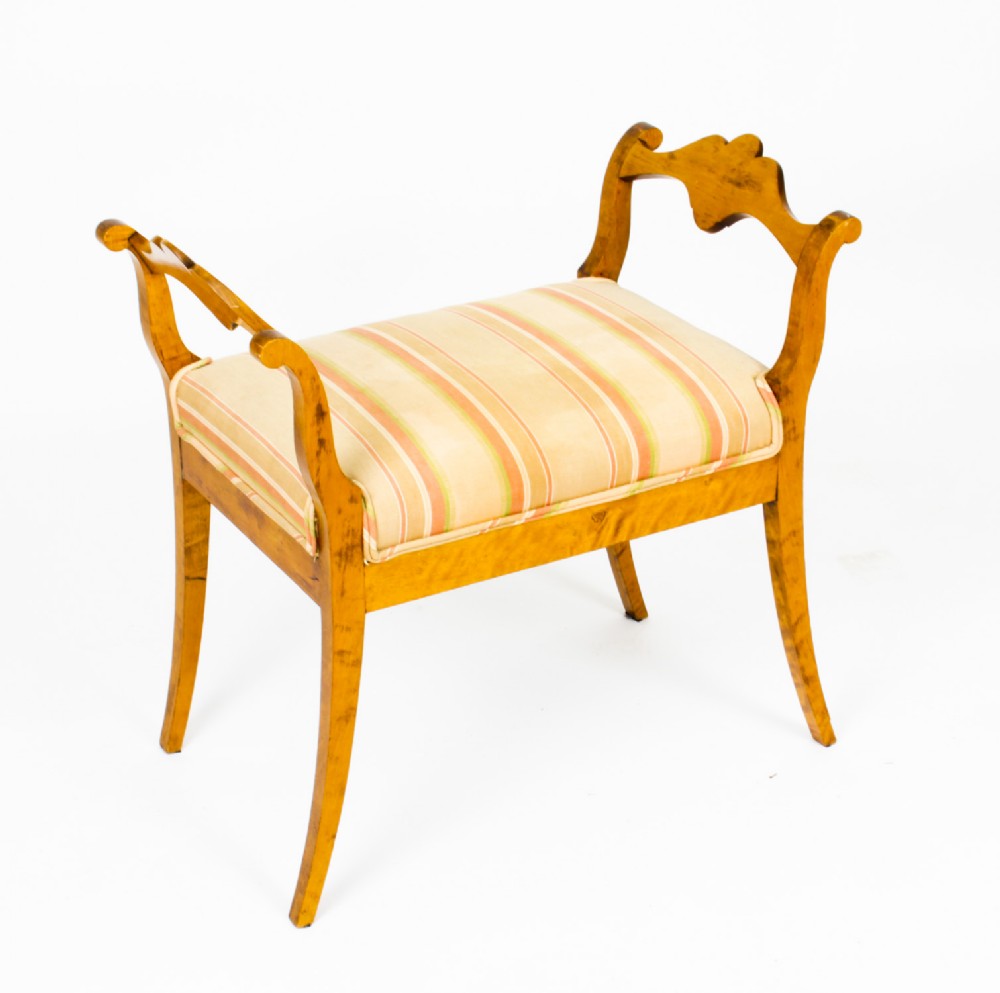
Antique Swedish Biedermeier Birch Wood Stool C1840 19th Century