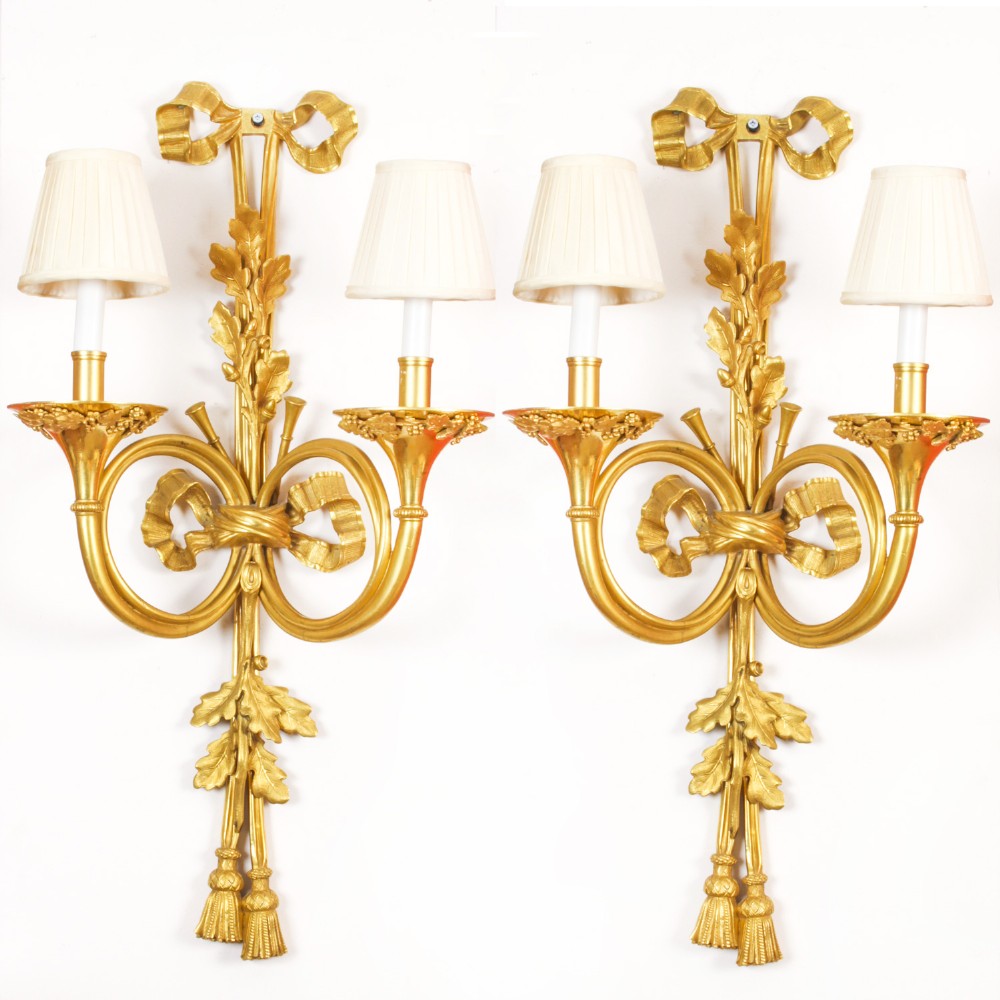
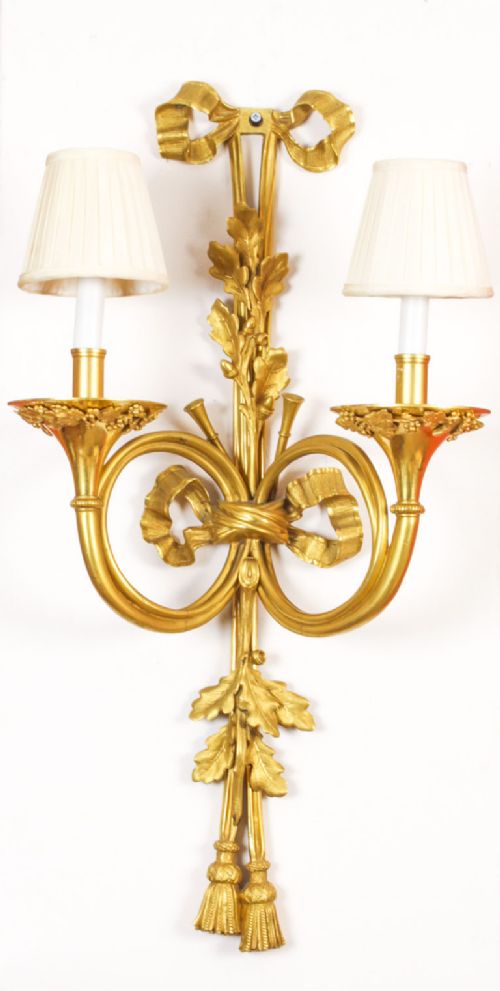
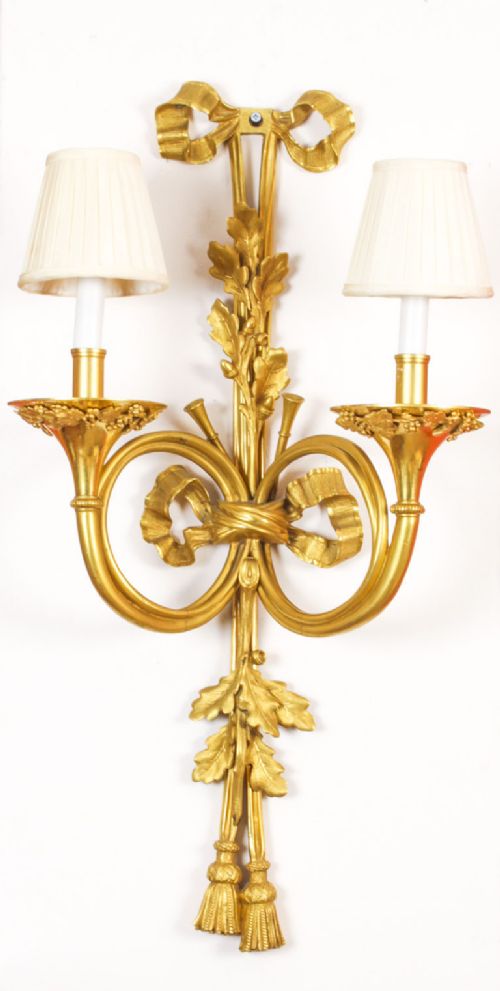
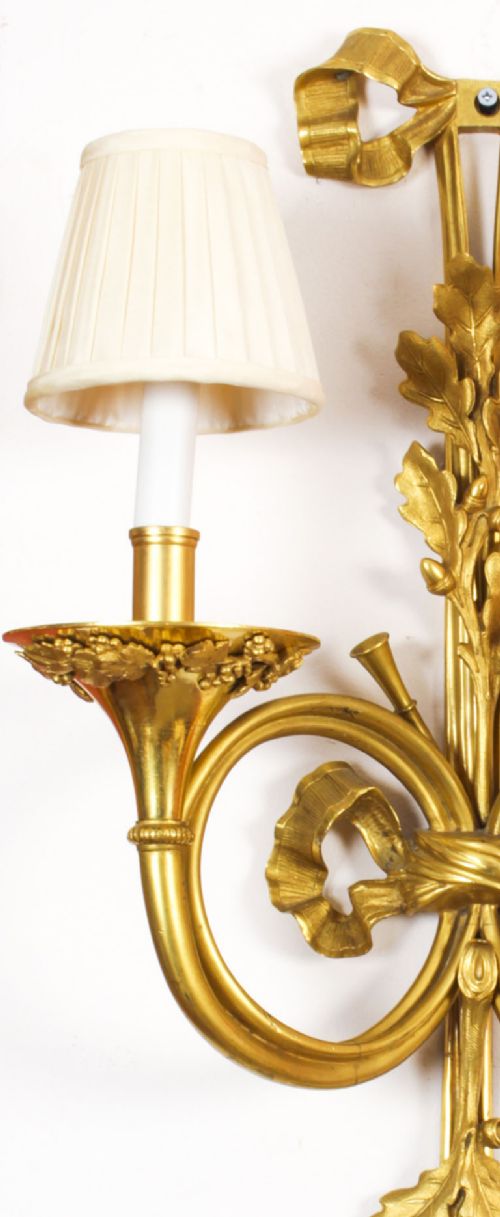
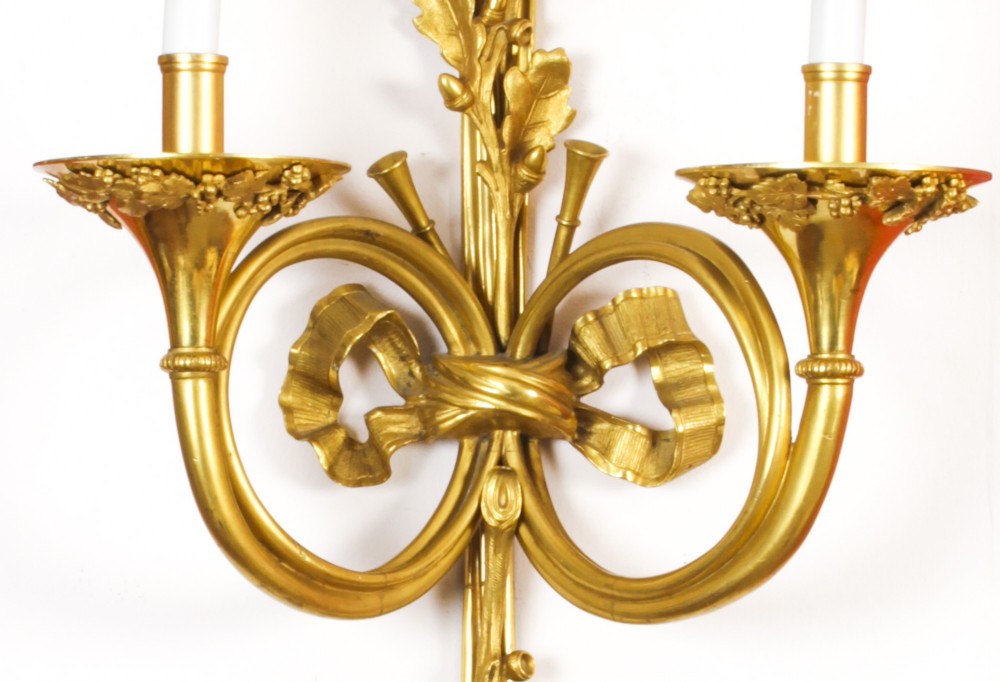
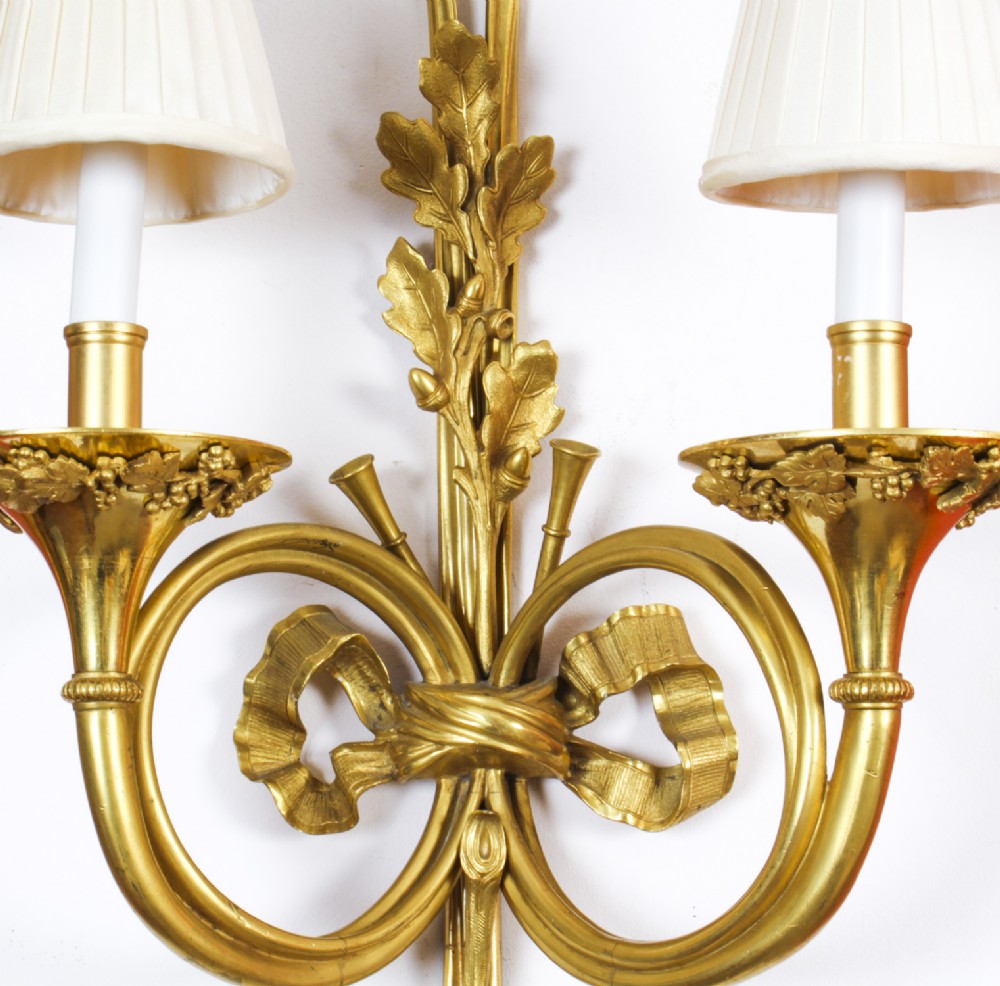
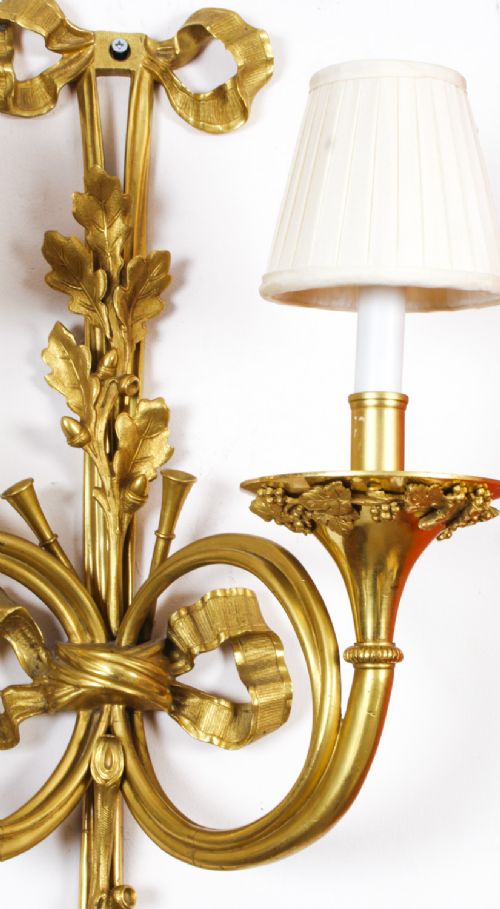
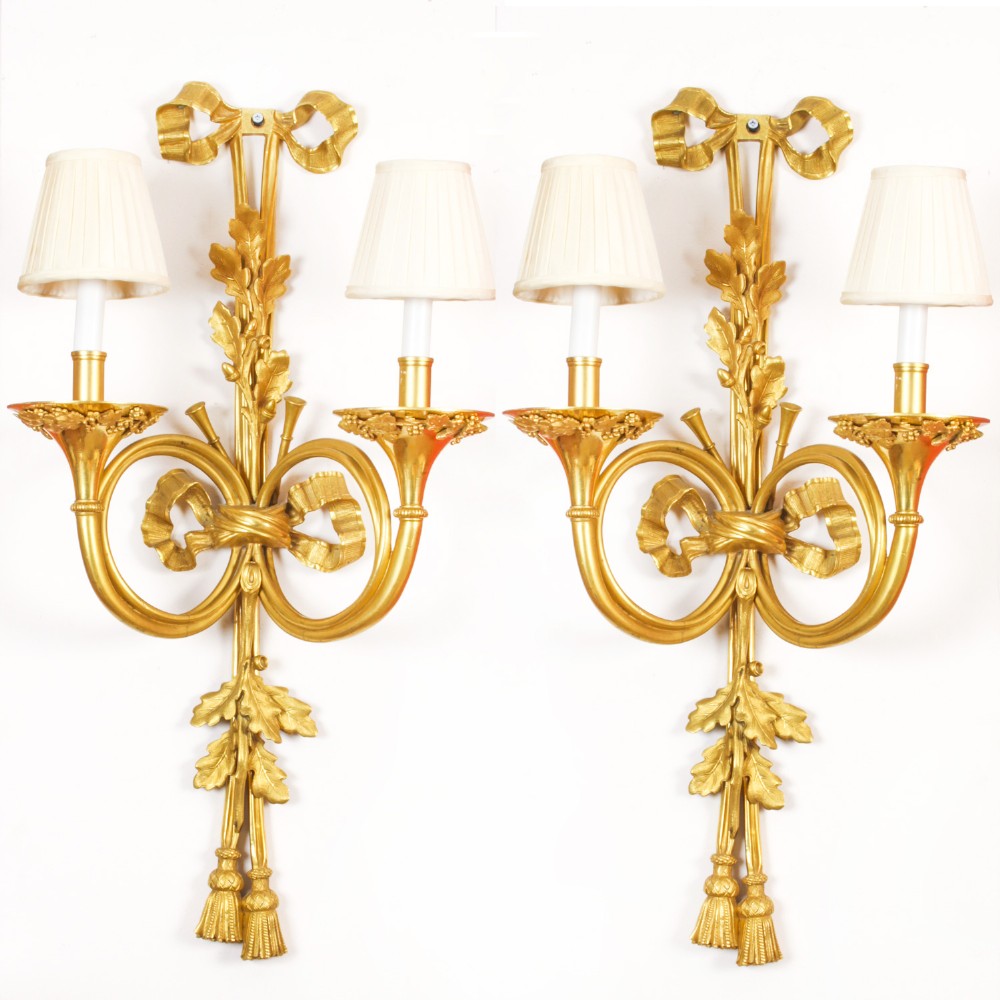
This is a monumental pair of antique Louis XVI Revival gilded ormolu twin branch wall lights, late 19th century in date.
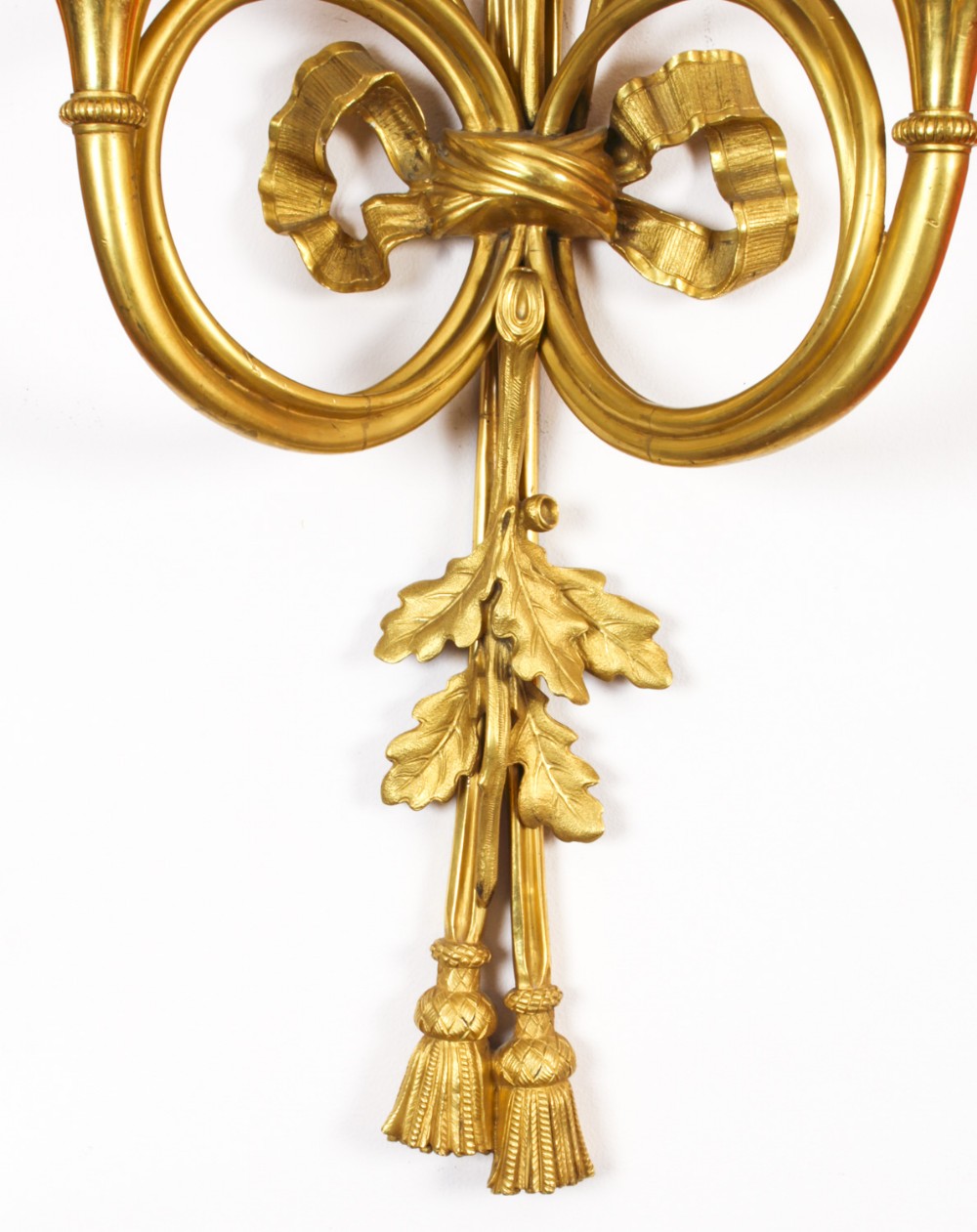
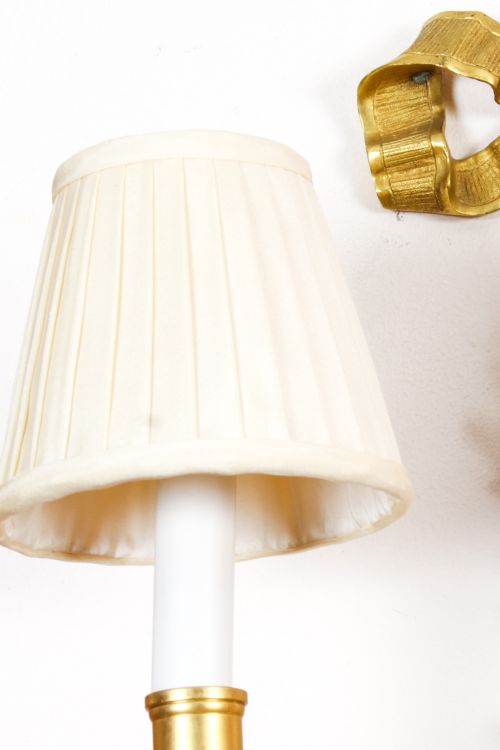
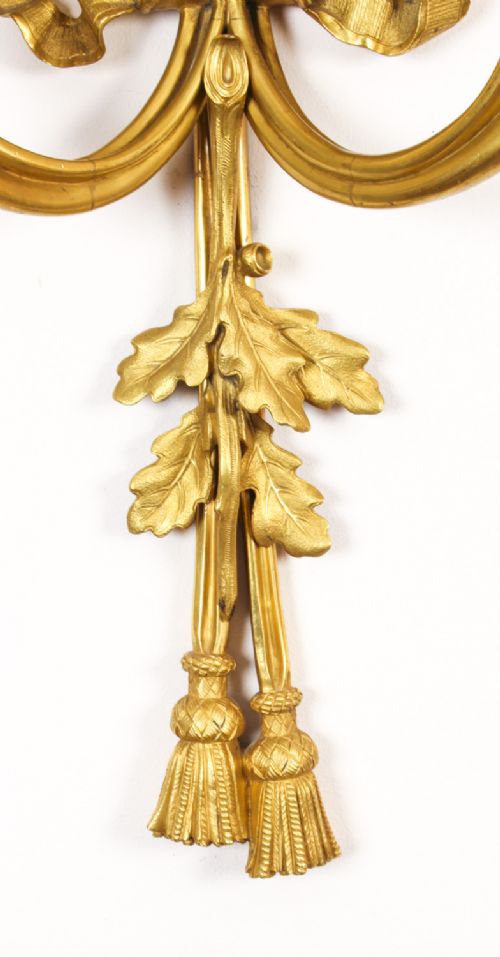
They each feature grapevine adorned upturned hunting horns as arms, issuing from backplates modelled as tied, tasselled and oak sprig embellished swags. They have pleated fabric shades,
There is no mistaking their unique quality and design and they will soon instantly enhance the style of one special room in your home.
Condition:
In excellent condition having been cleaned, fully rewired and PAT tested.
Please see photos for confirmation.
Dimensions in cm:
Height 81 x Width 44 x Depth 24
Dimensions in inches:
Height 2 foot, 8 inches x Width 1 foot, 5 inches x Depth 9 inches
Ormolu
(from French 'or moulu', signifying ground or pounded gold) is an 18th-century English term for applying finely ground, high-carat gold in a mercury amalgam to an object of bronze.The mercury is driven off in a kiln leaving behind a gold-coloured veneer known as 'gilt bronze'.
The manufacture of true ormolu employs a process known as mercury-gilding or fire-gilding, in which a solution of nitrate of mercury is applied to a piece of copper, brass, or bronze, followed by the application of an amalgam of gold and mercury. The item was then exposed to extreme heat until the mercury burned off and the gold remained, adhered to the metal object.
No true ormolu was produced in France after around 1830 because legislation had outlawed the use of mercury. Therefore, other techniques were used instead but nothing surpasses the original mercury-firing ormolu method for sheer beauty and richness of colour. Electroplating is the most common modern technique. Ormolu techniques are essentially the same as those used on silver, to produce silver-gilt (also known as vermeil).
Our reference: A2124