Opus Antiques has dated this piece to the 19th Century.
These matches would ignite when dipped in the acid.
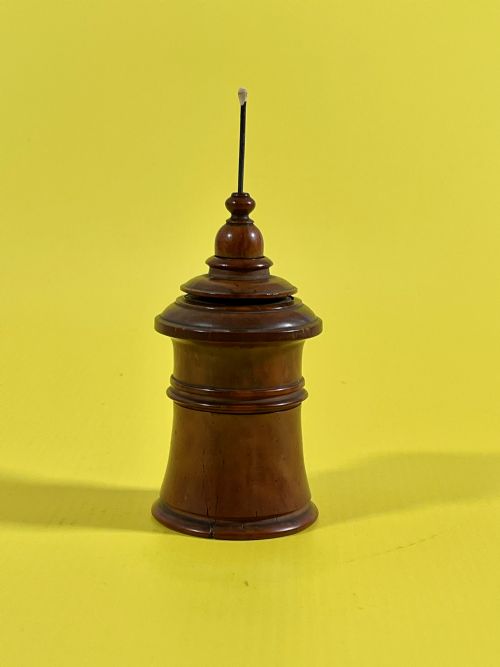
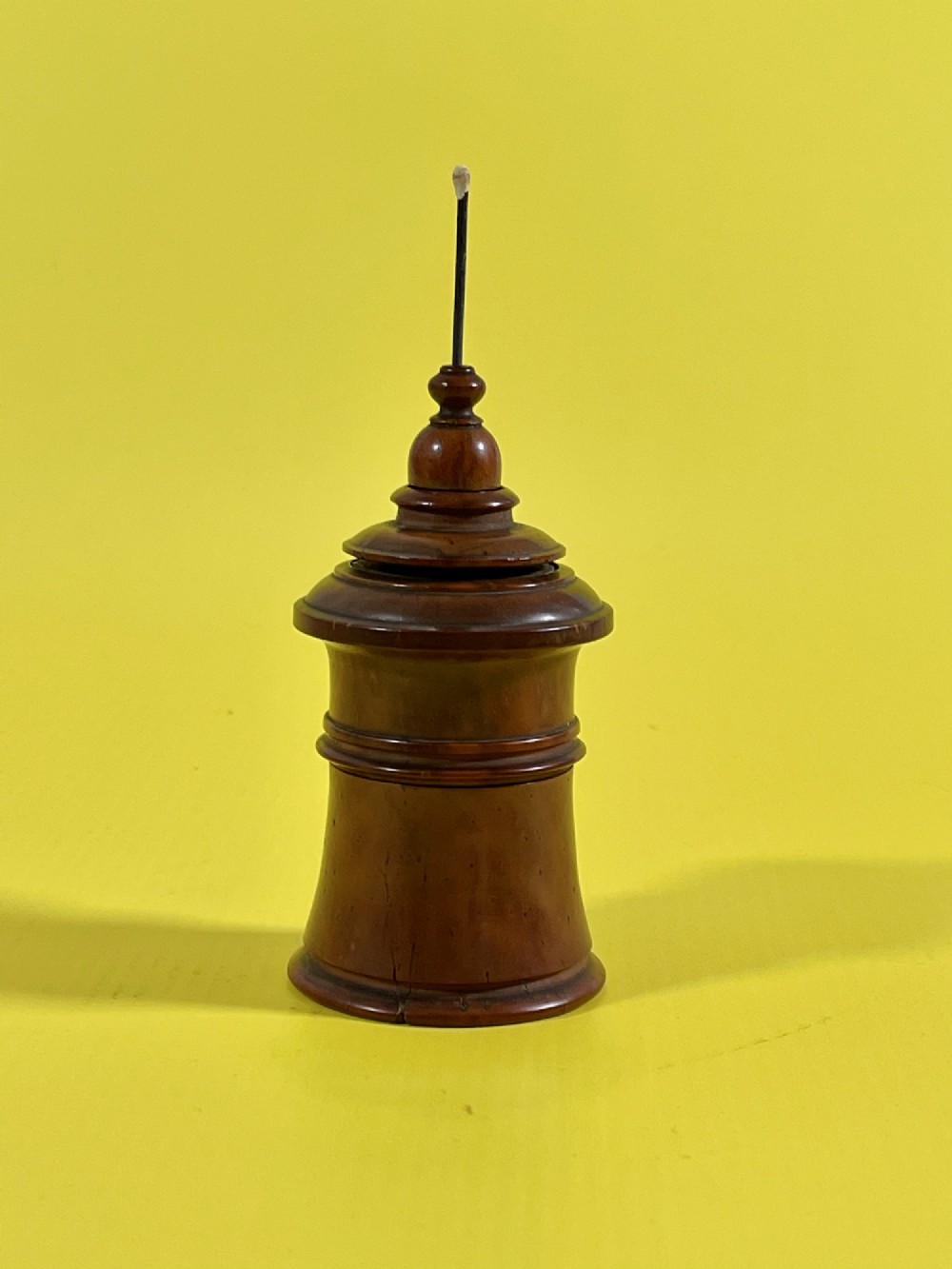
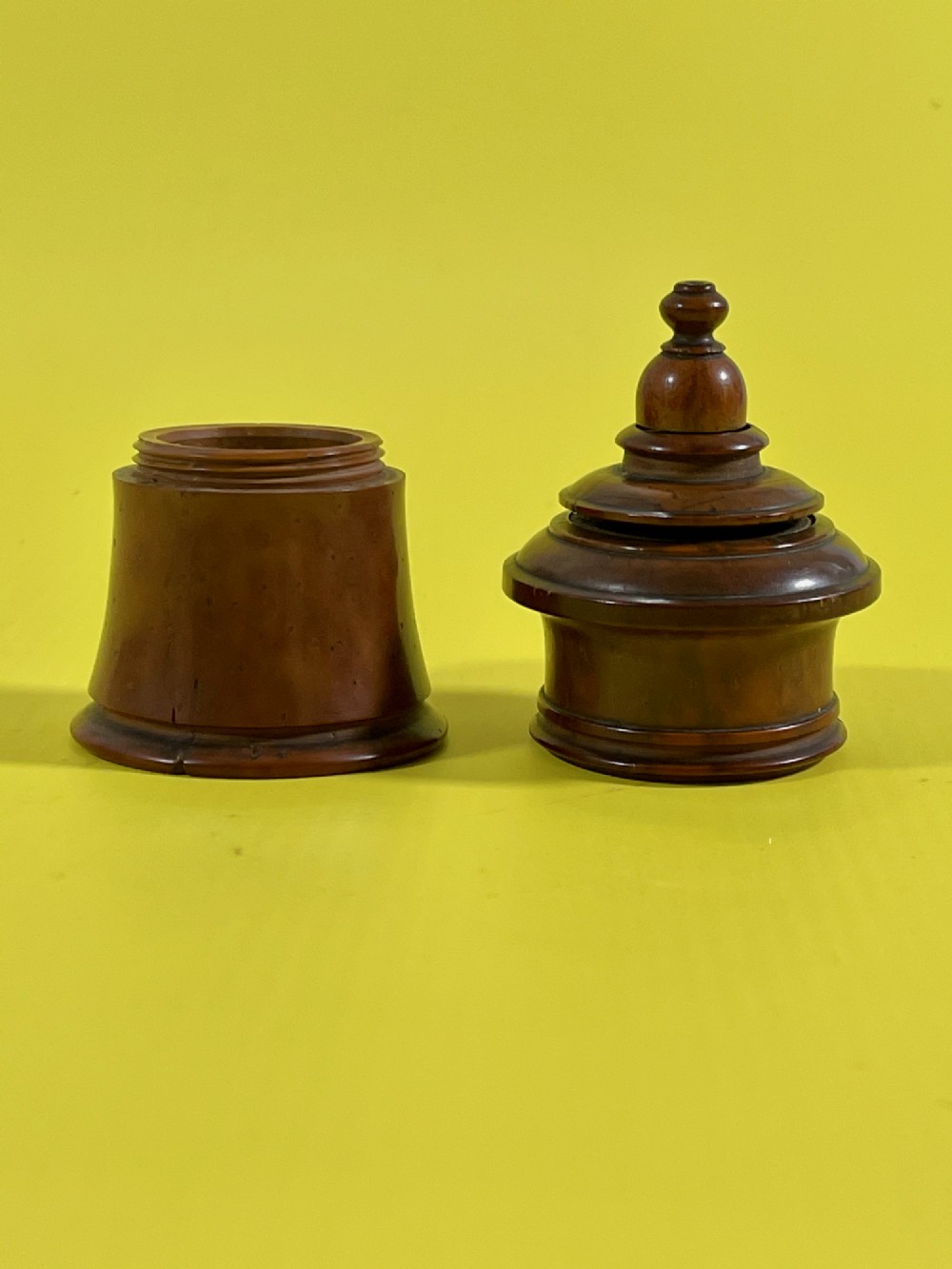
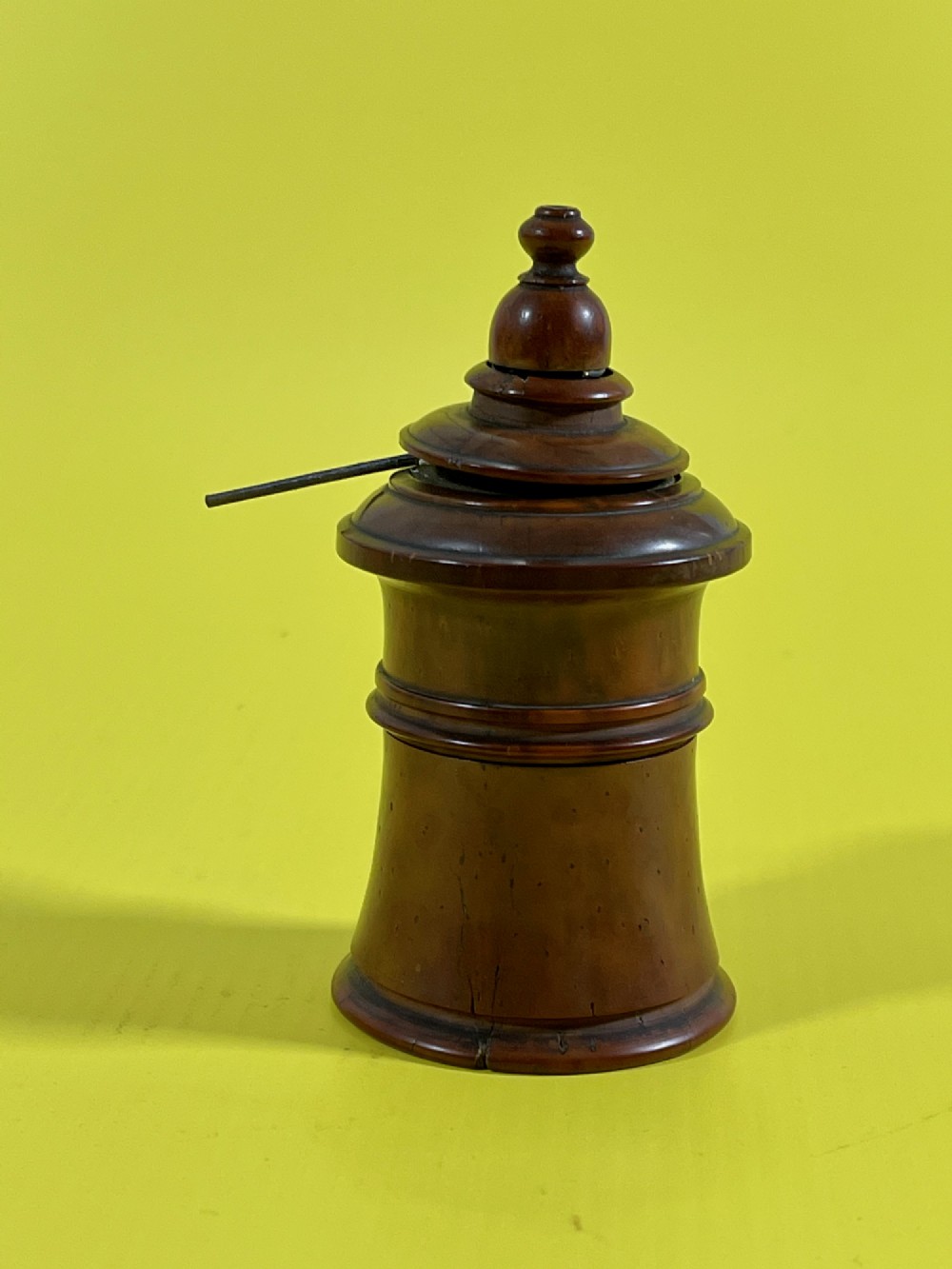
By the 1830s, friction matches had taken their place, and hence, there was no need for acid. The boxes changed style to have single compartments with an external striker. The bottom of the box would have glass paper recessed into the bottom, or the base would have grooved circular lines to create friction. Very occasionally, there was a third design made by Berry, a similar example of which is photographed here. On the top of the box are two parallel discs: the lower disc forms part of the lid and the upper disc can be moved up or down on a short threaded spindle to vary the space between the discs. The discs are covered in sand paper. The gap would be opened to allow the match-head to be inserted between the discs and then closed slightly to hold it in position. The match would then be pulled out, creating the friction which would light it
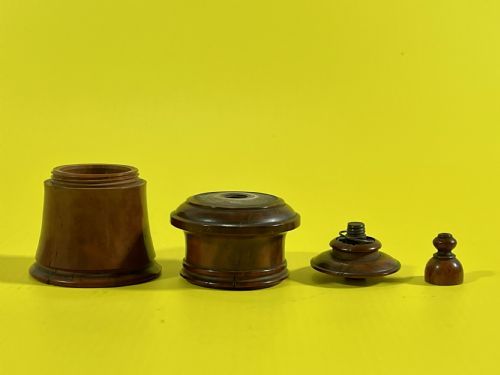
This example dates from around 1830 and is made from coquilla nut. It has a few minor shrinkage marks, but they are only small. A rare example, similar to the Berry Patent types. 'Berry'is the name of a company better known for its metal match holders, and yet, their earliest productions were turned from hard wood such as lignum vitae
It measures 10cm h x 4.8cm w
Opus Antiques has dated this piece to the 19th Century.
Antique treen, boxes & decorative georgian items
You can view the stock and full dealer information on the Opus Antiques Profile Page

Antique Coquilla Nut Go to Bed - Unusual Form