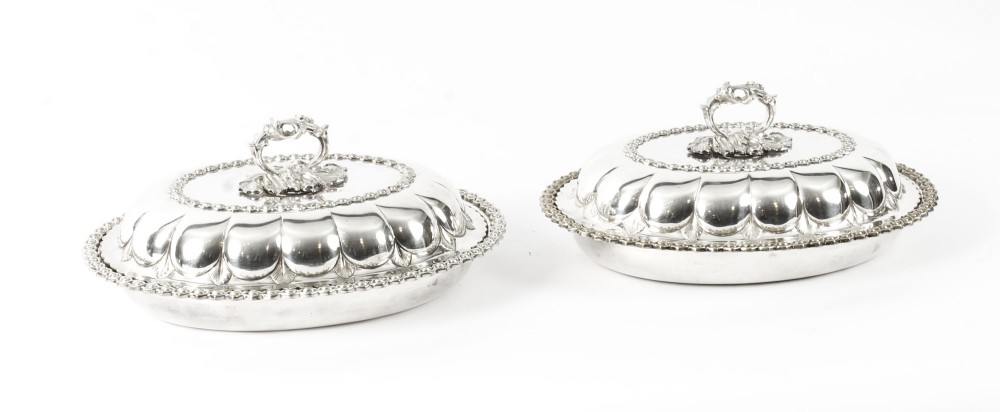
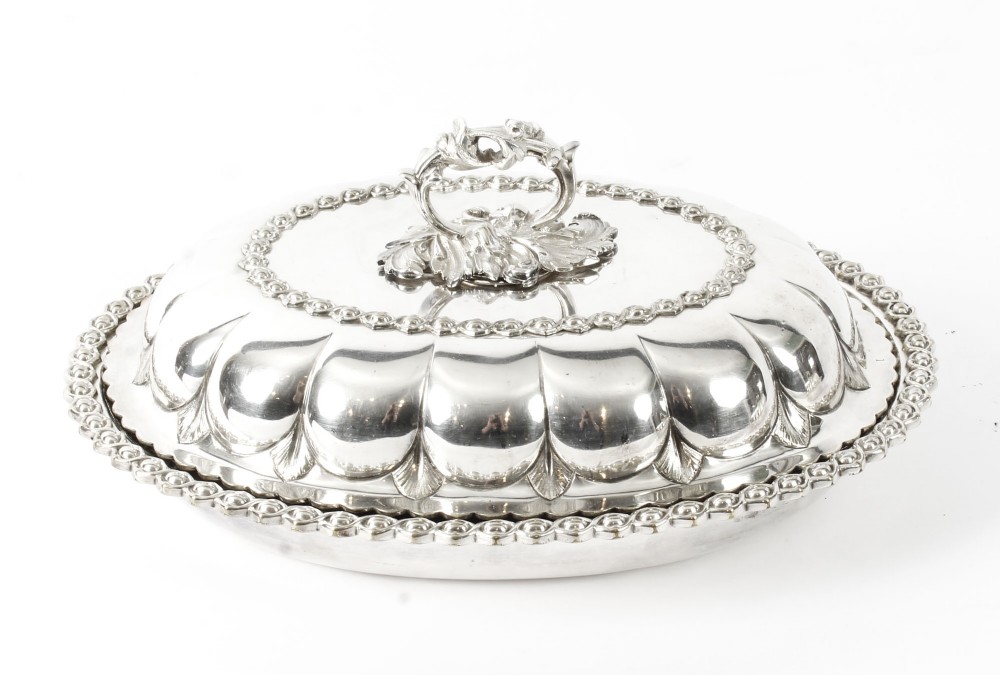
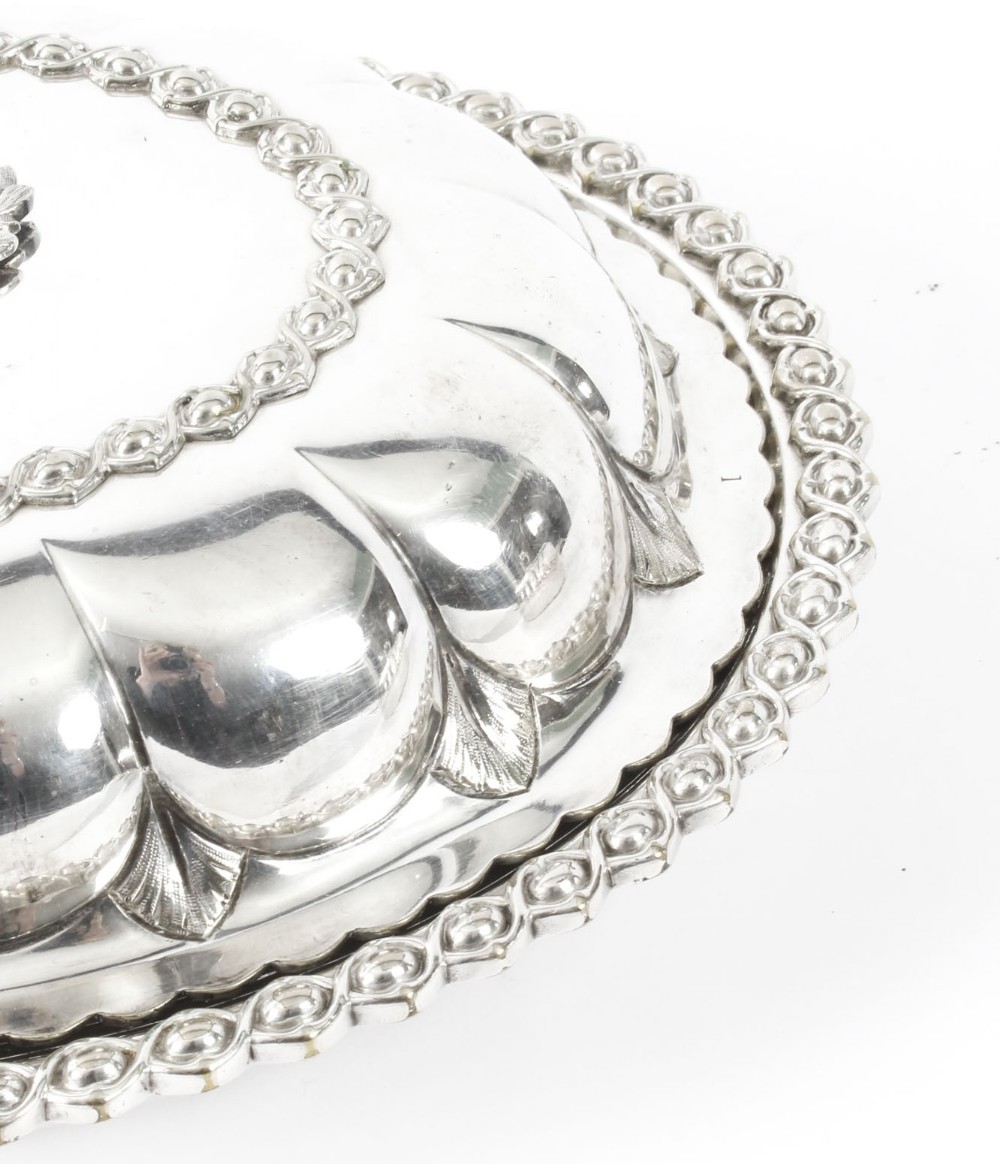
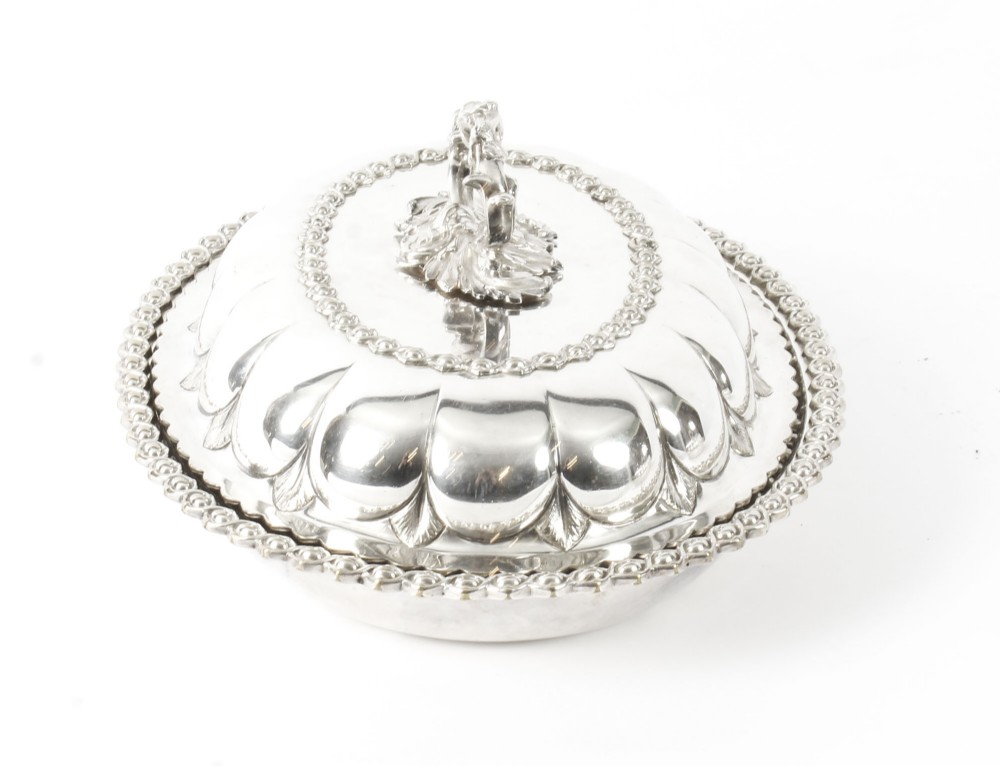
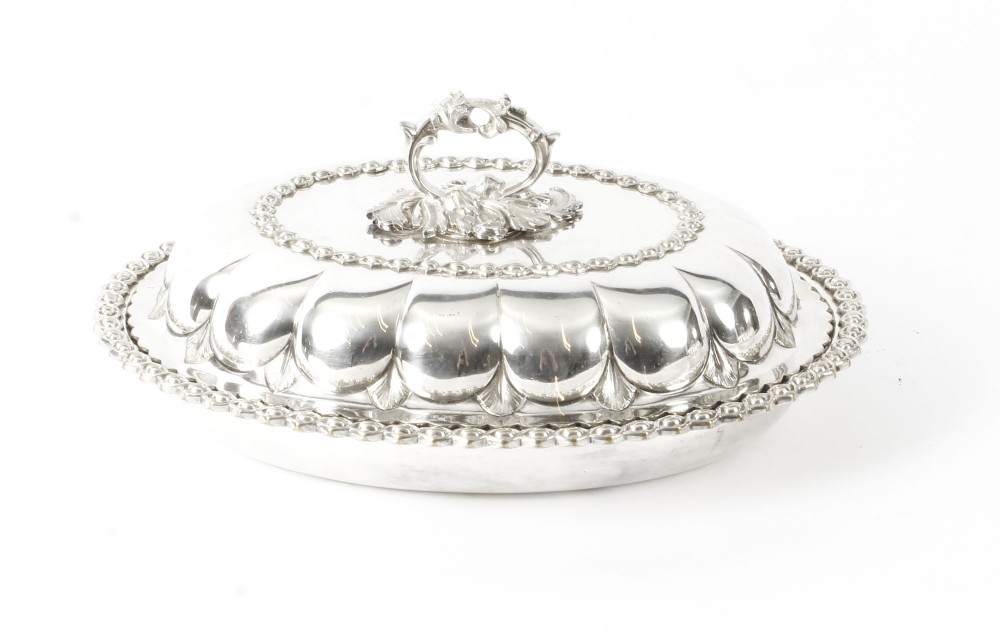
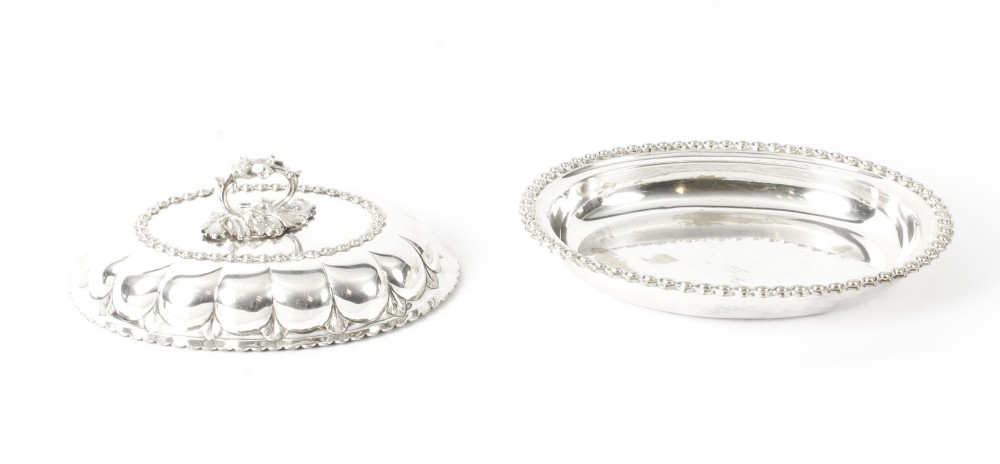
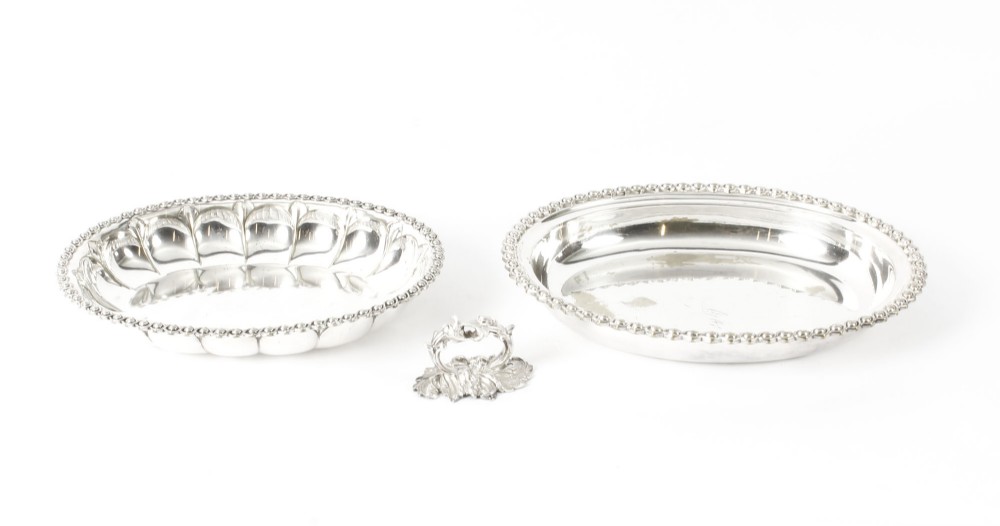
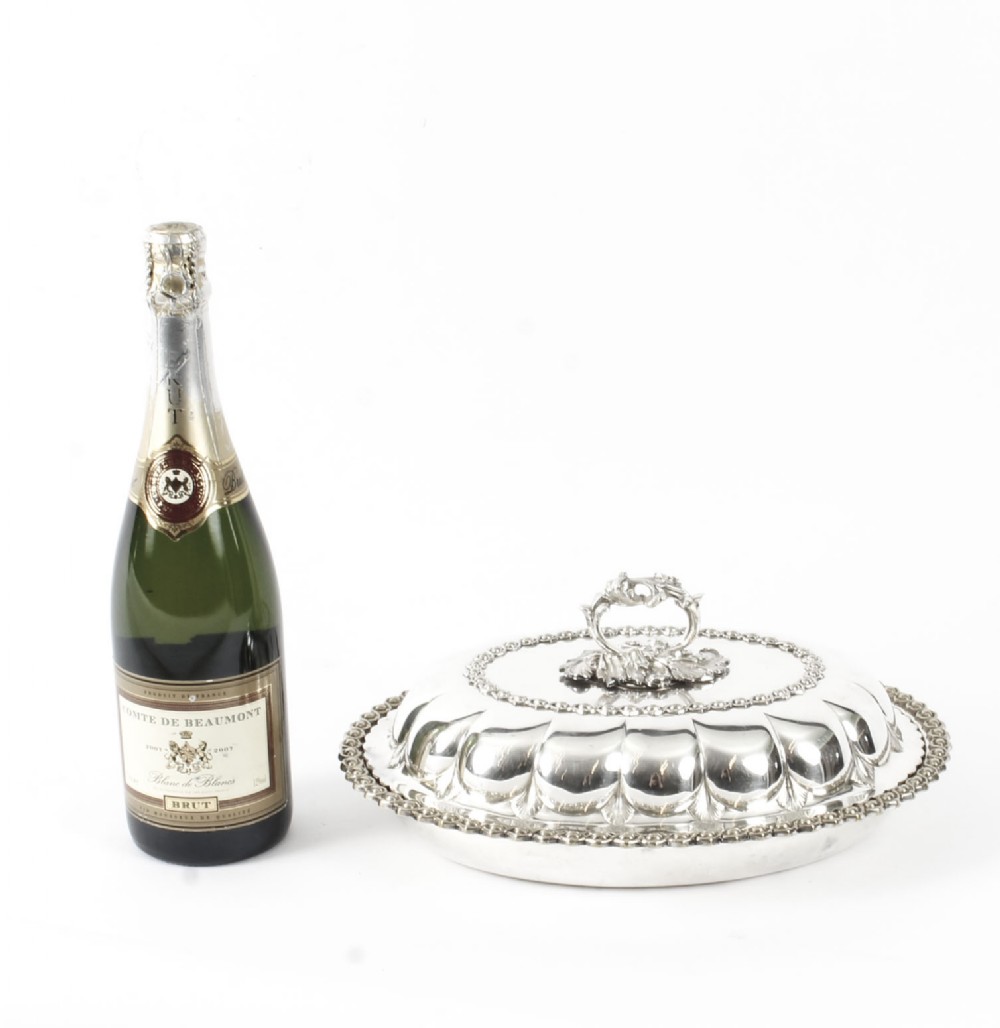
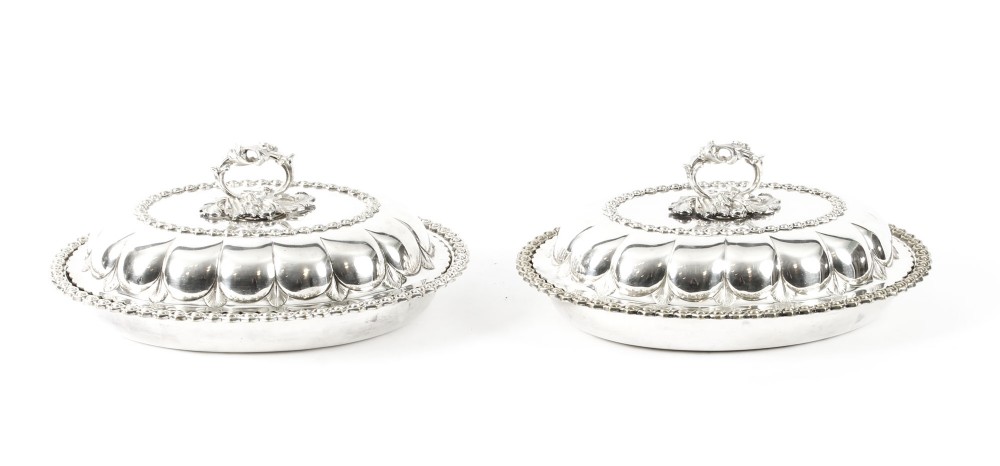
This is an exquisite and rare antique pair of Old Sheffield plated entree dishes with covers, circa 1830 in date.
These entree dishes are of the highest quality and bear the makers' mark of Roberts, Smith & Co.
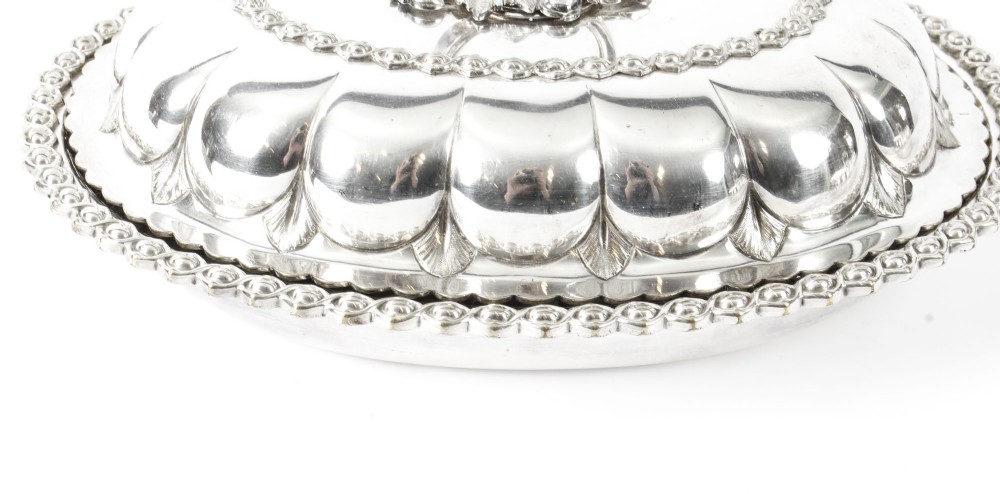
They are of oval shape and feature elegant gadrooned decoration on the rim.
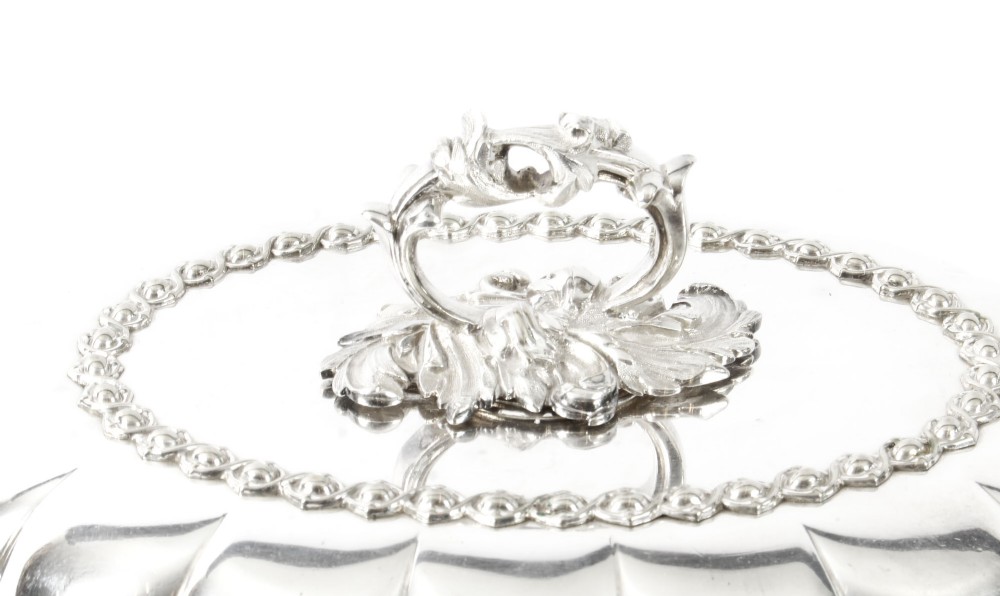
The covers have matching gadroon decoration on the top as well as beautifully fluted decoration throughout. They feature stunning textured and chased handles in the shape of leaves.
A truly fine and exquisite pair that would make a fine addition to any antique collection and grace your dinner table.
Condition:
In excellent condition with no dings, dents or signs of repair. Please see photos for confirmation.
Dimensions in cm:
Height 13 x Width 31 x Depth 24
Dimensions in inches:
Height 5.1 x Width 12.2 x Depth 9.4
Old Sheffield Plate - or ‘fused plate’ as it is sometimes known, was the first commercially viable method of plating metal.
The material was accidentally invented by Thomas Boulsover, of Sheffield's Cutlers Company, in 1743. While trying to repair the handle of a customer's decorative knife, he heated it too much and the silver started to melt. When he examined the damaged handle, he noticed that the silver and copper had fused together very strongly. Experiments showed that the two metals behaved as one when he tried to reshape them, even though he could clearly see two different layers.
Boulsover set up in business, funded by Strelley Pegge of Beauchief, and carried out further experiments in which he put a thin sheet of silver on a thick ingot of copper and heated the two together to fuse them. When the composite block was hammered or rolled to make it thinner, the two metals were reduced in thickness at similar rates. Using this method, Boulsover was able to make sheets of metal which had a thin layer of silver on the top surface and a thick layer of copper underneath. When this new material was used to make buttons, they looked and behaved like silver buttons but were a fraction of the cost.
The technique Boulsover developed was to sandwich an ingot of copper between two plates of silver, tightly bind it with wire, heat it in a furnace and then mill it out in to sheet, from which objects could be made.
Our reference: 09480