24,833  PAGES BROWSED TODAY PAGES TODAY • 49 ANTIQUES UPLOADED TODAYNEW ARRIVALS
GIFTS
49 ITEMS ADDED TODAY
Sort Order
Items Per Page
Antiques dealer?
Join as a Seller
Browse Categories
Sort order
Items per page
sold SA761496
Sorry, but this item has been sold.
Regent Antiques

Regent Antiques

Sellingantiques Verified Since Sep 2016
Browse dealers 639 items
  • About Us
    We specialise in english and continental furniture, silver, porcelain and decorative items.
  • Trade Associations
    Regent Antiques is a registered member of LAPADA  CINOA
Id #SA761496
SHARE
SAVE

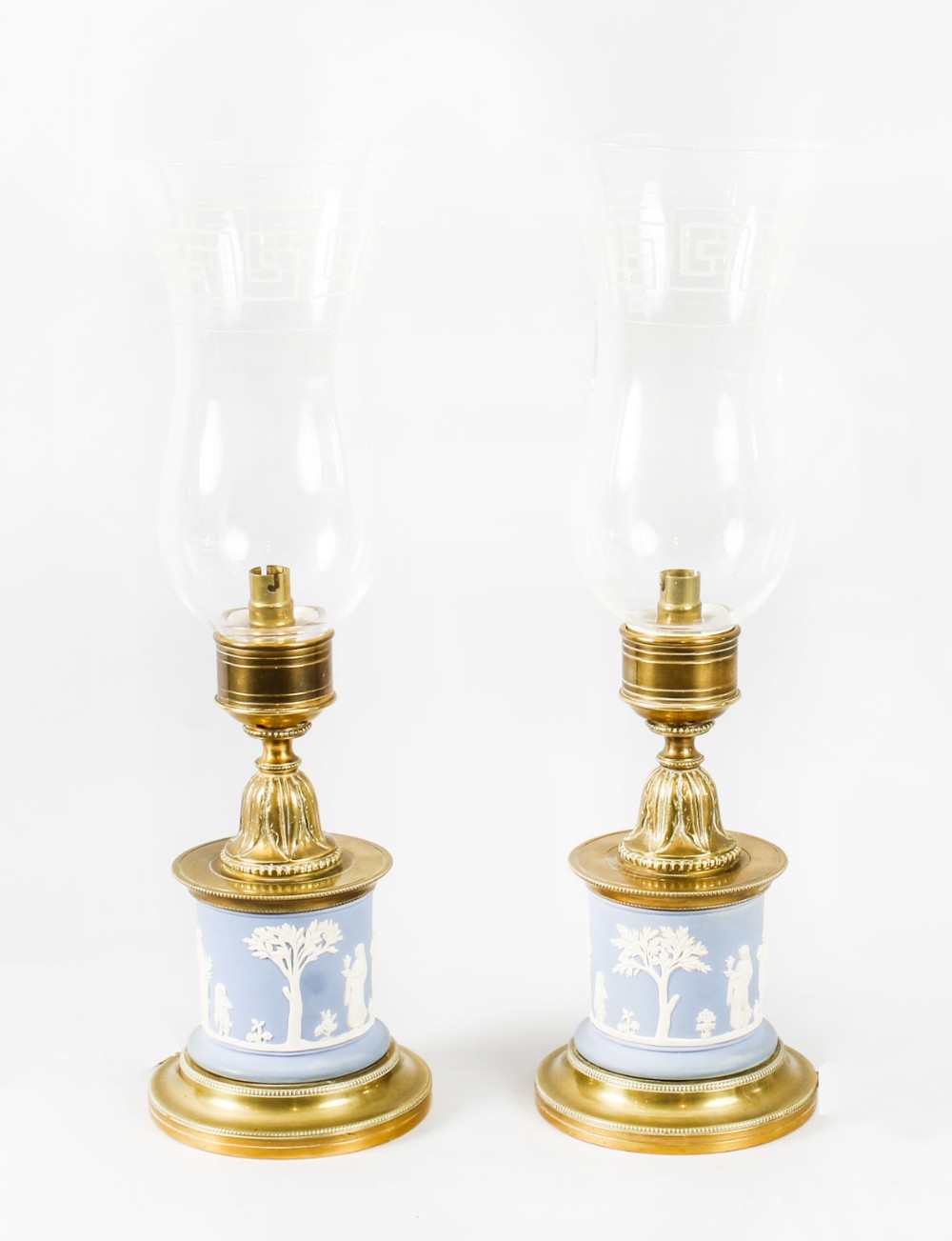
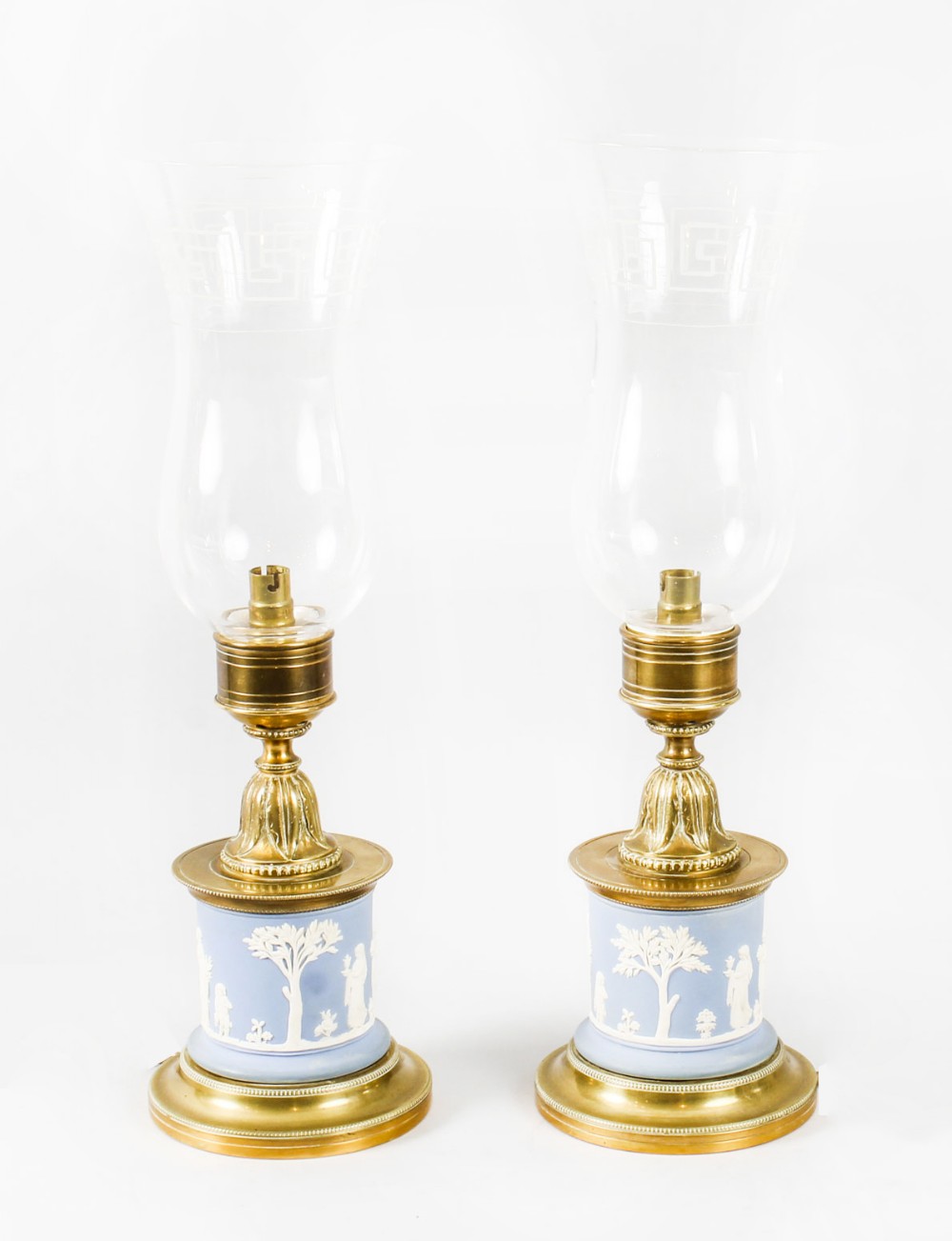
Antique Pair Ormolu & Jasperware Table Lamps Circa 1890 19th Century

19th century
Sold 25 March 2021 · Regent Antiques
This “Antique Pair Ormolu & Jasperware Table Lamps Circa 1890 19th Century ” found a buyer.

It was listed by Regent Antiques. Sold pieces stay on Sellingantiques as a record of what has passed through, and the next one is rarely far away.

Description

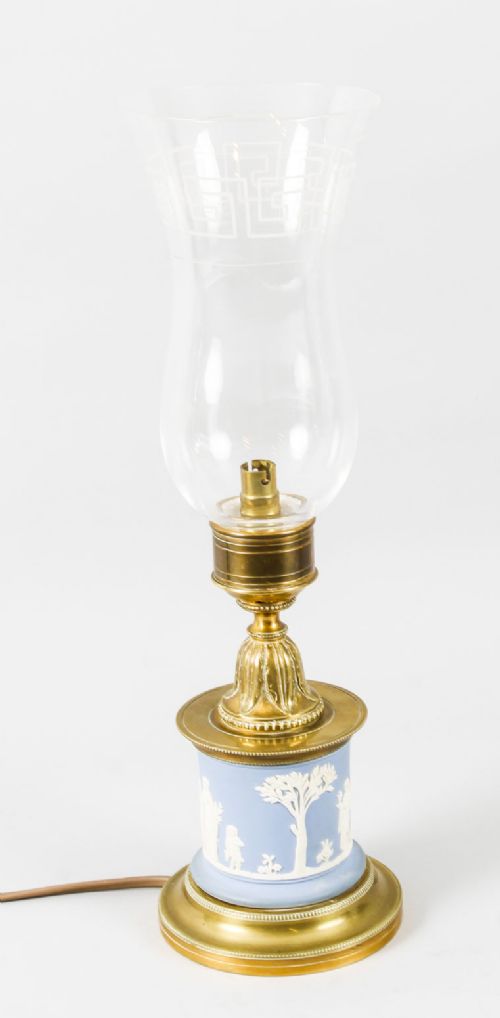
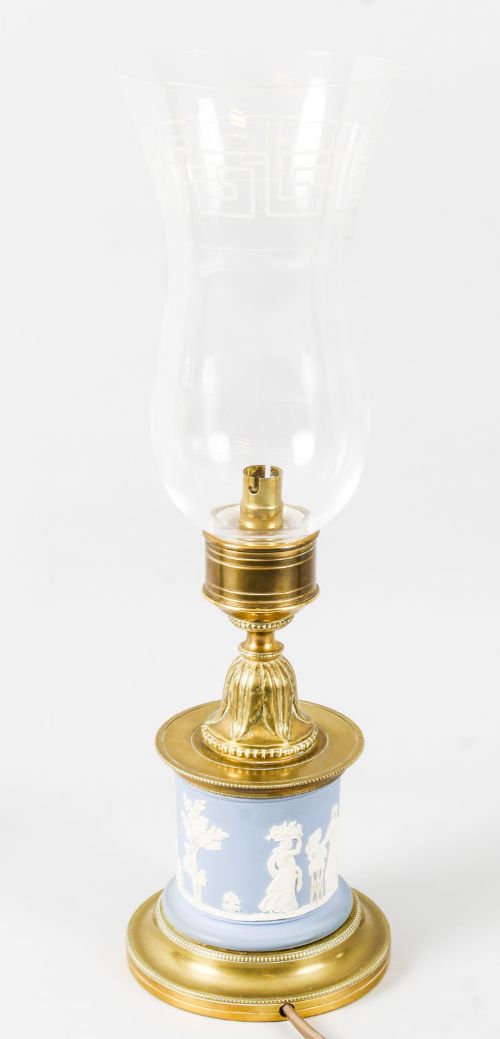
This is a stunning English pair of antique ormolu and Jasperware table lamps which have been skillfully converted for electricity, circa 1890 in date.

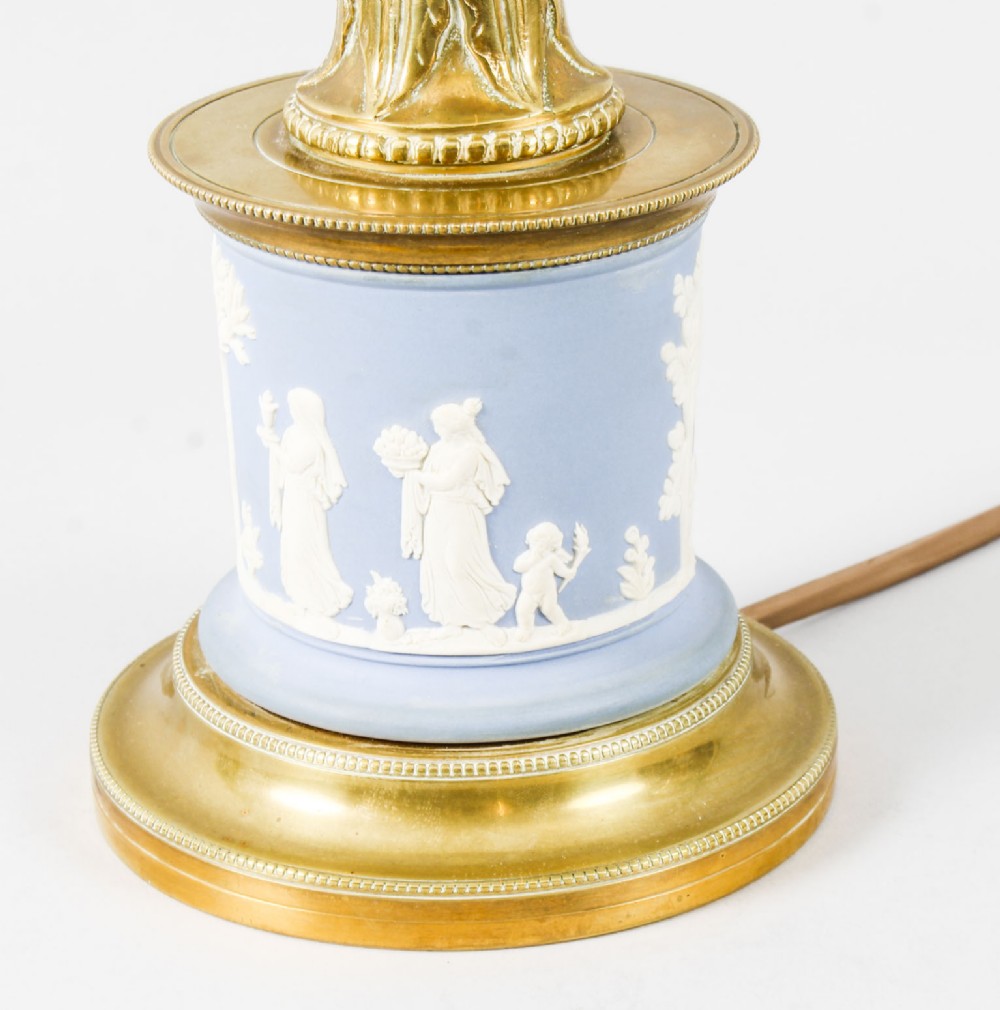
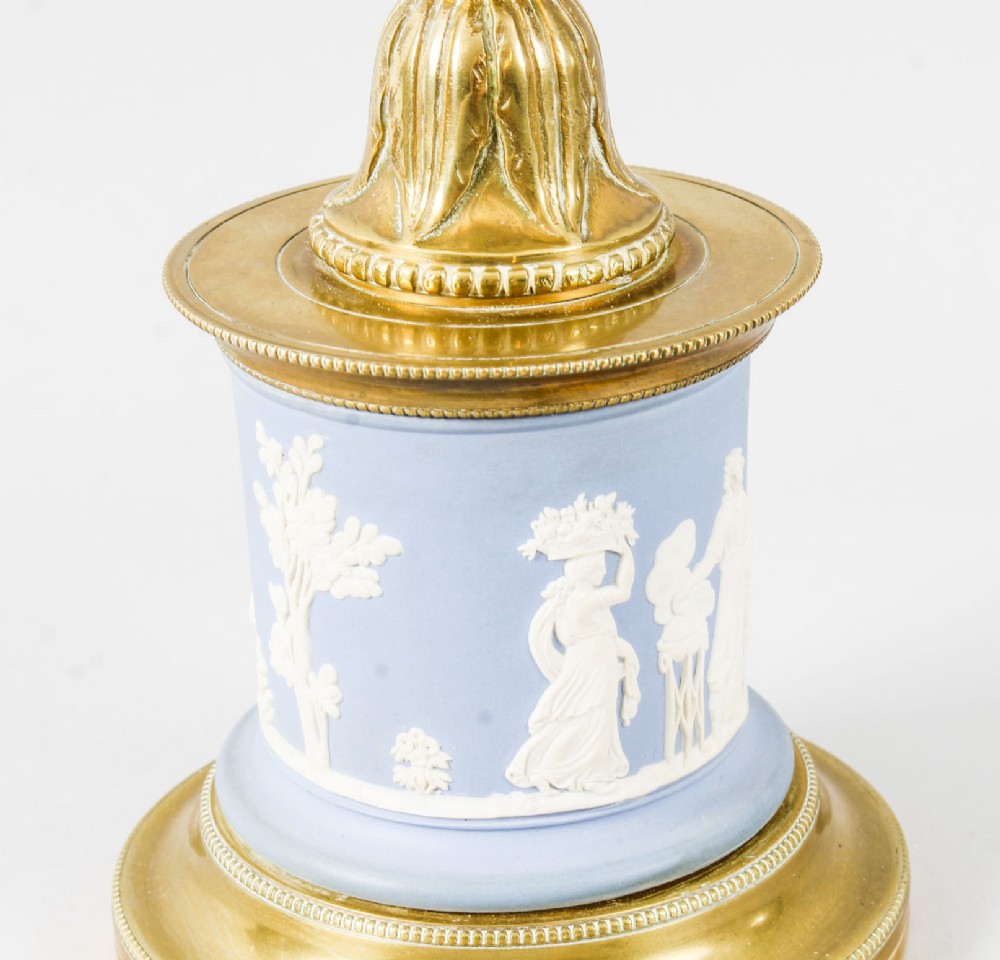
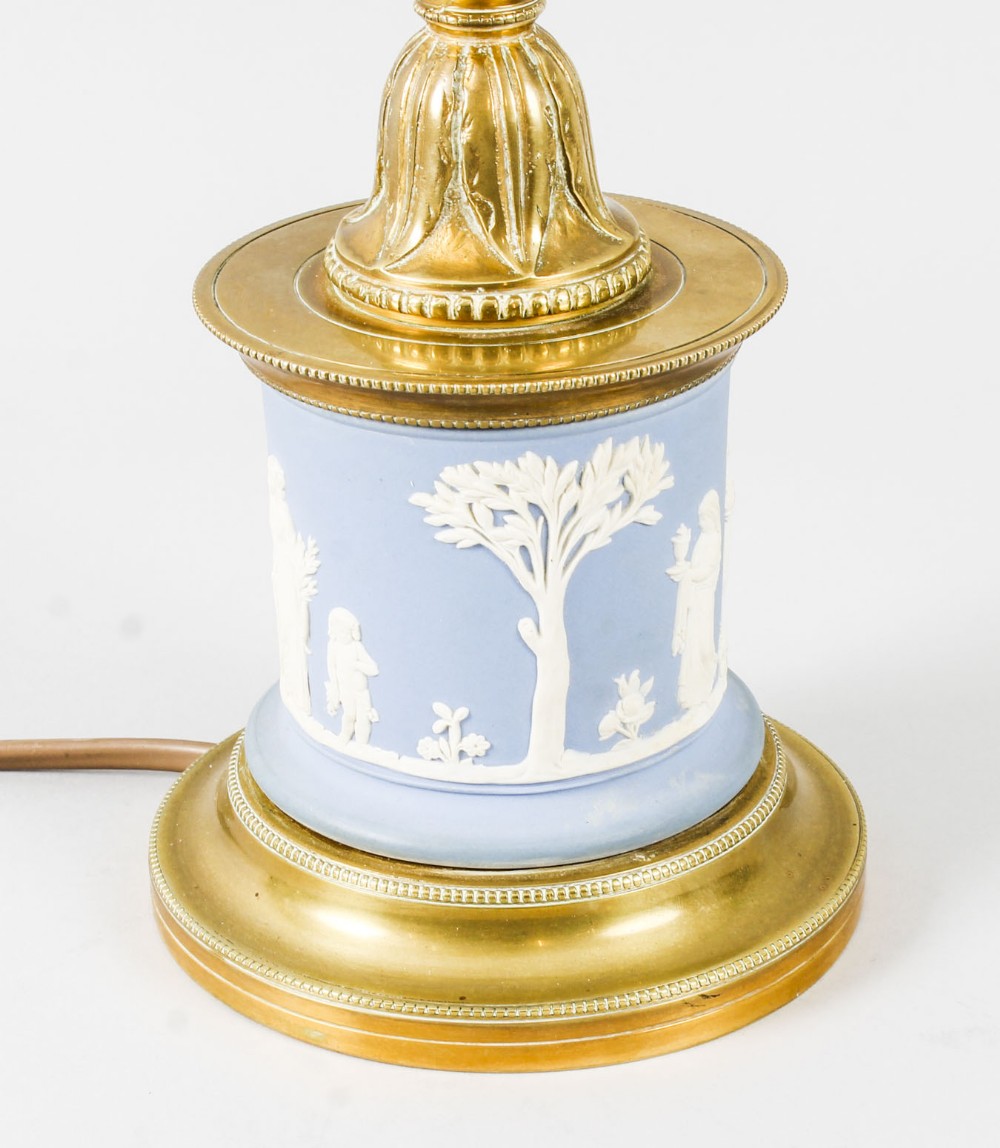
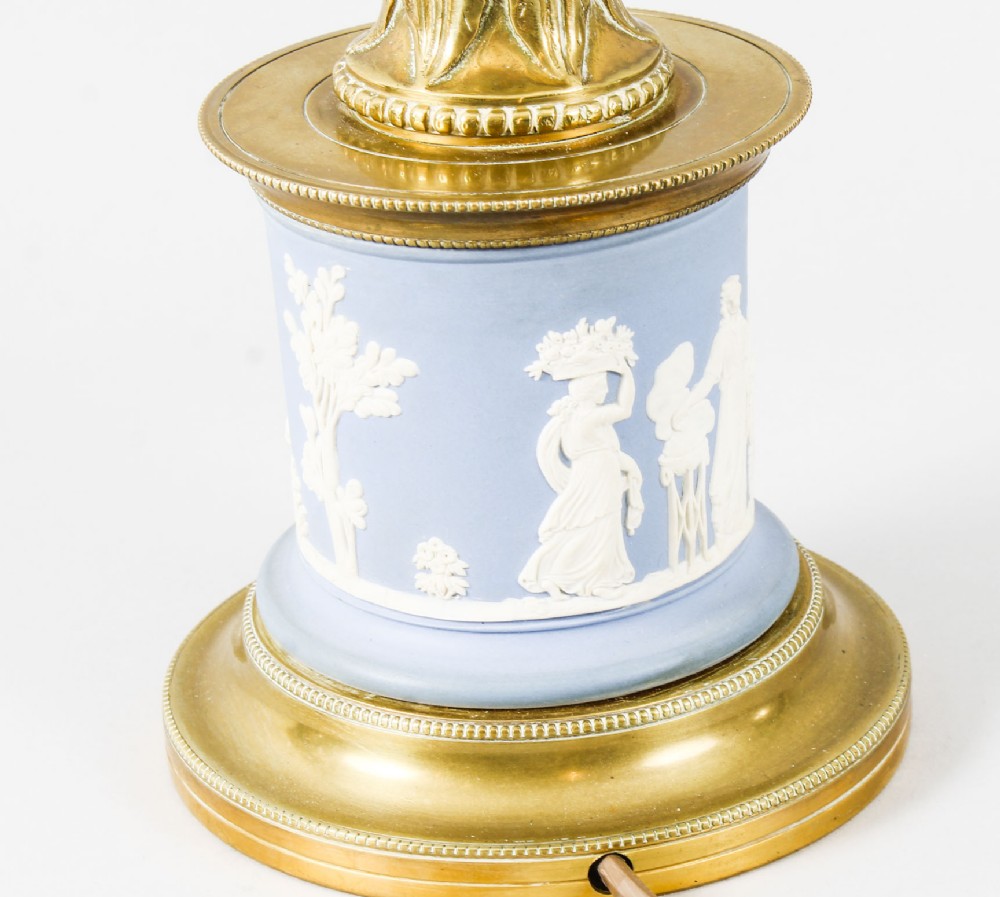
These elegant lamps have splendid Jasperware cylindrical bases which feature classical figures that are surmounted with ormolu mounts decorated with beading and acanthus leaves.

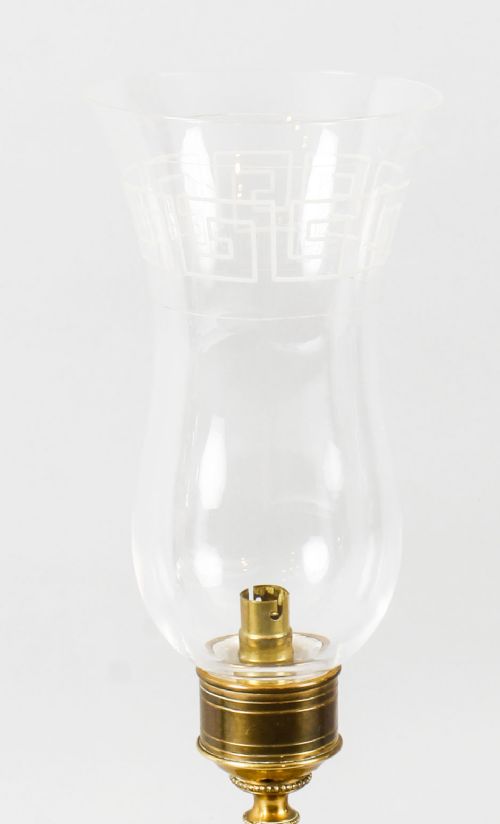
The sophisticated hand-blown glass storm shades feature a splendid etched Greek-key motif at the top.

The unique quality and design of these table lights will soon instantly enhance the style of one special room in your home.

Condition:

In excellent condition having been beautifully cleaned, rewired and PAT tested in our workshops, please see photos for confirmation.

Dimensions in cm:

Height 40 x Width 12 x Depth 12

Dimensions in inches:

Height 15.7 x Width 4.7 x Depth 4.7

Jasperware

or jasper ware, is a type of stoneware first developed by Josiah Wedgwood, although some authorities have described it as a type of porcelain. It is noted for its matte finish and is produced in a number of different colours, of which the best known is a pale blue that has become known as 'Wedgwood Blue'. "Jasper" in this context refers to the mineral of that name.

Wedgwood's main designs are jasperware and black basalt. Many of the Wedgwood designs were based on the art of making cameo glass and on the looks of The Portland Vase.

Ormolu (from French 'or moulu', signifying ground or pounded gold) is an 18th-century English term for applying finely ground, high-carat gold in a mercury amalgam to an object of bronze.The mercury is driven off in a kiln leaving behind a gold-coloured veneer known as 'gilt bronze'.

The manufacture of true ormolu employs a process known as mercury-gilding or fire-gilding, in which a solution of nitrate of mercury is applied to a piece of copper, brass, or bronze, followed by the application of an amalgam of gold and mercury. The item was then exposed to extreme heat until the mercury burned off and the gold remained, adhered to the metal object.

No true ormolu was produced in France after around 1830 because legislation had outlawed the use of mercury. Therefore, other techniques were used instead but nothing surpasses the original mercury-firing ormolu method for sheer beauty and richness of colour. Electroplating is the most common modern technique. Ormolu techniques are essentially the same as those used on silver, to produce silver-gilt (also known as vermeil).

Greek key

A meander or meandros (Greek: ?a?a?d???) is a decorative border constructed from a continuous line, shaped into a repeated motif. Such a design is also called the Greek fret or Greek key design, although these are modern designations.

On the one hand, the name "meander" recalls the twisting and turning path of the Maeander River in Asia Minor, and on the other hand, as Karl Kerenyi pointed out, "the meander is the figure of a labyrinth in linear form". Among some Italians, these patterns are known as Greek Lines. Usually the term is used for motifs with straight lines and right angles; the many versions with rounded shapes are called running scrolls running scrolls.

Meanders are common decorative elements in Greek and Roman art. In ancient Greece they appear in many architectural friezes, and in bands on the pottery of ancient Greece from the Geometric Period onwards. The design is common to the present-day in classicizing architecture. The meander is a fundamental design motif in regions far from a Hellenic orbit: labyrinthine meanders ("thunder" pattern) appear in bands and as infill on Shang bronzes, and many traditional buildings in and around China still bear geometric designs almost identical to meanders.

They were among the most important symbols in ancient Greece; and perhaps symbolized infinity and unity; many ancient Greek temples incorporate

Date of Manufacture

Regent Antiques has dated this piece to the 1890s.

Physical Dimensions
Height
40cm (15.75")
Width
12cm (4.72")
Depth
12cm (4.72")
Reference Numbers
Sellingantiques Reference
SA761496
Dealers Internal Reference
09515
Antique Pair Ormolu & Jasperware Table Lamps Circa 1890 19th Century
Detail view 1Detail view 2Detail view 3Detail view 4Detail view 5Detail view 6Detail view 7Detail view 8Detail view 9
SOLD6+ MONTHS AGO
1 / 10
1890s · SA761496
Antique Pair Ormolu & Jasperware Table Lamps Circa 1890 19th Century
Sorry, but this item has been sold.
Description
This is a stunning English pair of antique ormolu and Jasperware table lamps which have been skillfully converted for electricity, circa 1890 in date.

These elegant lamps have splendid Jasperware cylindrical bases which feature classical figures that are surmounted with ormolu mounts decorated with beading and acanthus leaves.

The sophisticated hand-blown glass storm shades feature a splendid etched Greek-key motif at the top.

The unique quality and design of these table lights will soon instantly enhance the style of one special room in your home.

Condition:

In excellent condition having been beautifully cleaned, rewired and PAT tested in our workshops, please see photos for confirmation.

Dimensions in cm:

Height 40 x Width 12 x Depth 12

Dimensions in inches:

Height 15.7 x Width 4.7 x Depth 4.7

Jasperware

or jasper ware, is a type of stoneware first developed by Josiah Wedgwood, although some authorities have described it as a type of porcelain. It is noted for its matte finish and is produced in a number of different colours, of which the best known is a pale blue that has become known as 'Wedgwood Blue'. "Jasper" in this context refers to the mineral of that name.

Wedgwood's main designs are jasperware and black basalt. Many of the Wedgwood designs were based on the art of making cameo glass and on the looks of The Portland Vase.

Ormolu (from French 'or moulu', signifying ground or pounded gold) is an 18th-century English term for applying finely ground, high-carat gold in a mercury amalgam to an object of bronze.The mercury is driven off in a kiln leaving behind a gold-coloured veneer known as 'gilt bronze'.

The manufacture of true ormolu employs a process known as mercury-gilding or fire-gilding, in which a solution of nitrate of mercury is applied to a piece of copper, brass, or bronze, followed by the application of an amalgam of gold and mercury. The item was then exposed to extreme heat until the mercury burned off and the gold remained, adhered to the metal object.

No true ormolu was produced in France after around 1830 because legislation had outlawed the use of mercury. Therefore, other techniques were used instead but nothing surpasses the original mercury-firing ormolu method for sheer beauty and richness of colour. Electroplating is the most common modern technique. Ormolu techniques are essentially the same as those used on silver, to produce silver-gilt (also known as vermeil).

Greek key

A meander or meandros (Greek: ?a?a?d???) is a decorative border constructed from a continuous line, shaped into a repeated motif. Such a design is also called the Greek fret or Greek key design, although these are modern designations.

On the one hand, the name "meander" recalls the twisting and turning path of the Maeander River in Asia Minor, and on the other hand, as Karl Kerenyi pointed out, "the meander is the figure of a labyrinth in linear form". Among some Italians, these patterns are known as Greek Lines. Usually the term is used for motifs with straight lines and right angles; the many versions with rounded shapes are called running scrolls running scrolls.

Meanders are common decorative elements in Greek and Roman art. In ancient Greece they appear in many architectural friezes, and in bands on the pottery of ancient Greece from the Geometric Period onwards. The design is common to the present-day in classicizing architecture. The meander is a fundamental design motif in regions far from a Hellenic orbit: labyrinthine meanders ("thunder" pattern) appear in bands and as infill on Shang bronzes, and many traditional buildings in and around China still bear geometric designs almost identical to meanders.

They were among the most important symbols in ancient Greece; and perhaps symbolized infinity and unity; many ancient Greek temples incorporate
Date1890s
Height40cm (15.75")
Width12cm (4.72")
Depth12cm (4.72")
ReferenceSA761496
Dealer's reference09515
Regent Antiques
Regent AntiquesSellingantiques verified since Sep 2016

We specialise in english and continental furniture, silver, porcelain and decorative items.

Member of LAPADA CINOA

SHARE
SAVE
Archive I Antique Pair Ormolu & Jasperware Table Lamps Circa 1890 19th Century
SOLD6+ MONTHS AGO

Antique Pair Ormolu & Jasperware Table Lamps Circa 1890 19th Century

Archive II Antique Pair Ormolu & Jasperware Table Lamps Circa 1890 19th Century
 View II
Archive III Antique Pair Ormolu & Jasperware Table Lamps Circa 1890 19th Century
 View III
Archive IV Antique Pair Ormolu & Jasperware Table Lamps Circa 1890 19th Century
 View IV
Archive V Antique Pair Ormolu & Jasperware Table Lamps Circa 1890 19th Century
 View V
Archive VI Antique Pair Ormolu & Jasperware Table Lamps Circa 1890 19th Century
 View VI
Archive VII Antique Pair Ormolu & Jasperware Table Lamps Circa 1890 19th Century
 View VII
Archive VIII Antique Pair Ormolu & Jasperware Table Lamps Circa 1890 19th Century
 View VIII
Archive IX Antique Pair Ormolu & Jasperware Table Lamps Circa 1890 19th Century
 View IX
Archive X Antique Pair Ormolu & Jasperware Table Lamps Circa 1890 19th Century
 View X
Enlarged Archival View
Location
Manor Warehouse
318 Green Lanes
London
N4 1BX
United Kingdom
Verified Since Sep 2016
Items For Sale 639
Items Sold 2,756
Regent Antiques
Regent Antiques
Verified Since Sep 2016
View Dealer Info
Location: Manor Warehouse, 318 Green Lanes, London, N4 1BX, United Kingdom
Verified
Sep 2016
For Sale
639
Sold
2,756
Antique Pair Ormolu & Jasperware Table Lamps Circa 1890 19th Century
Ref: SA761496
Antique Pair Ormolu & Jasperware Table Lamps Circa 1890 19th Century
Detail View 1
Detail View 2
Detail View 3
Detail View 4
Detail View 5
Detail View 6
Detail View 7
Detail View 8
Detail View 9
Archival Detail
Every single antique dealer on our platform is individually approved by our internal team. We verify their professional trade history, ethical standards, and photographic quality to ensure a secure, high-standard buying environment. Upon joining, every dealer agrees to a strict 9-point code of conduct. While issues can occasionally arise, our dealers typically resolve them swiftly and directly with the buyer. In fact, since our founding in 2002, Sellingantiques has only had to step in to help resolve an issue on roughly five occasions—a true testament to the quality of our dealers and their dedication to your happiness.
Our dealers are highly experienced in packing and shipping fragile, high-value antiques. Because you are in direct contact with the dealer, you will be able to easily go through all available shipping and insurance options together to ensure your item arrives safely.
Antiques are the ultimate green purchase. By choosing historical pieces over newly manufactured goods, you completely eliminate the carbon footprint of modern mass production while preserving exceptional, timeless craftsmanship.
Written by Sellingantiques from the dealer’s photographs and listing
  • Period19th century
  • SizeH 40 cm (16 in) x W 12 cm (5 in) x D 12 cm (5 in)
items
Add keywords to the filter
Price
£100
£250000
Era
Period
Style
Material
Origin
Stock Location
Recently Added
Online Payments
Categories