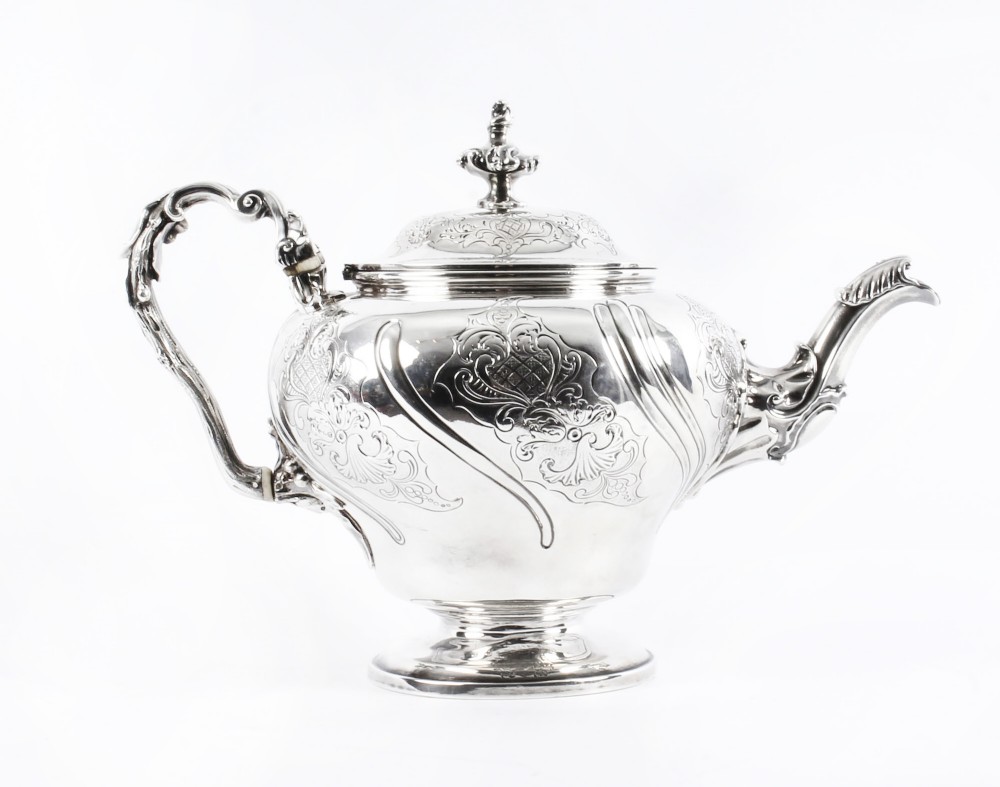
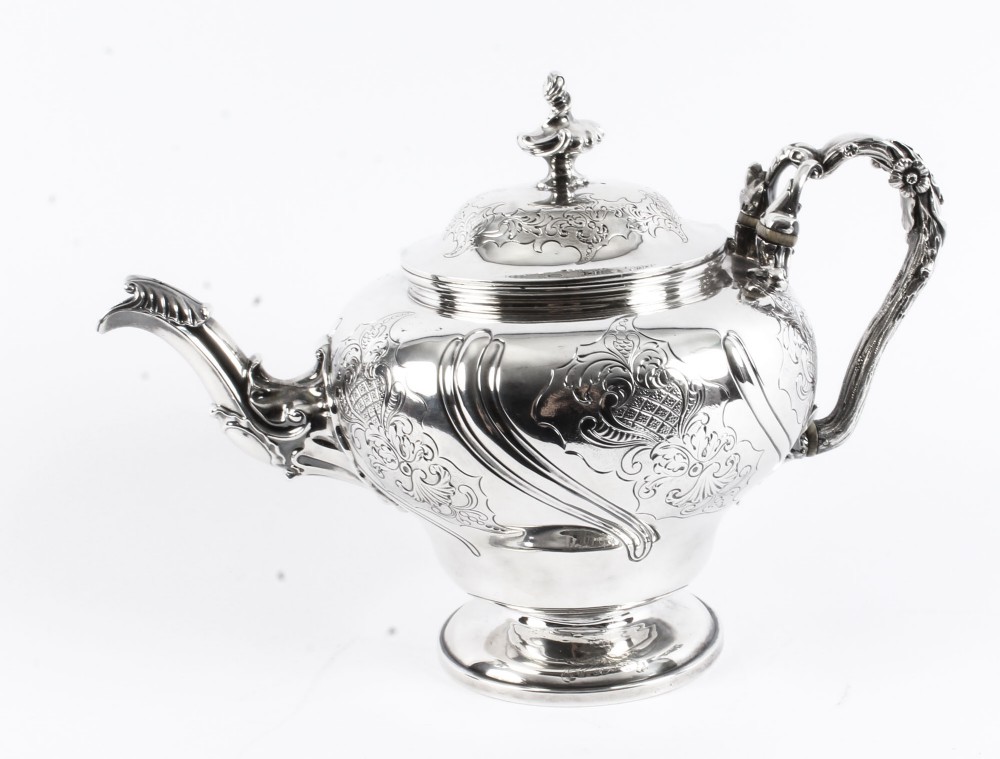
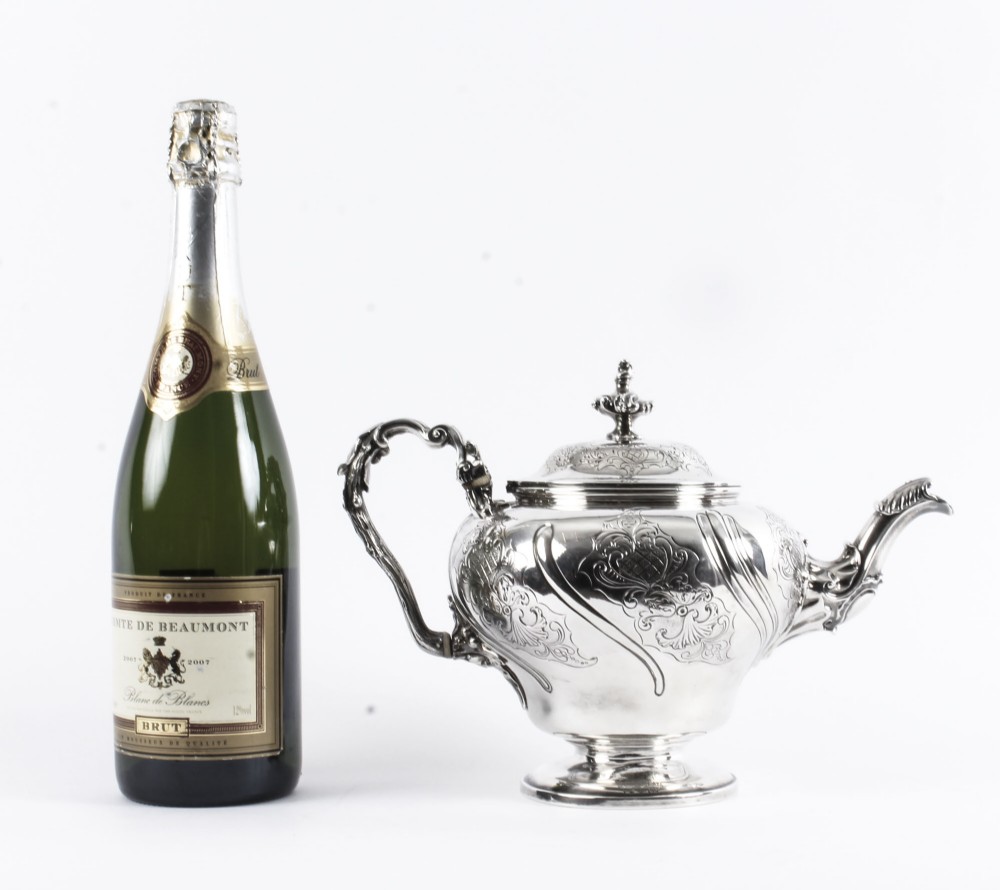
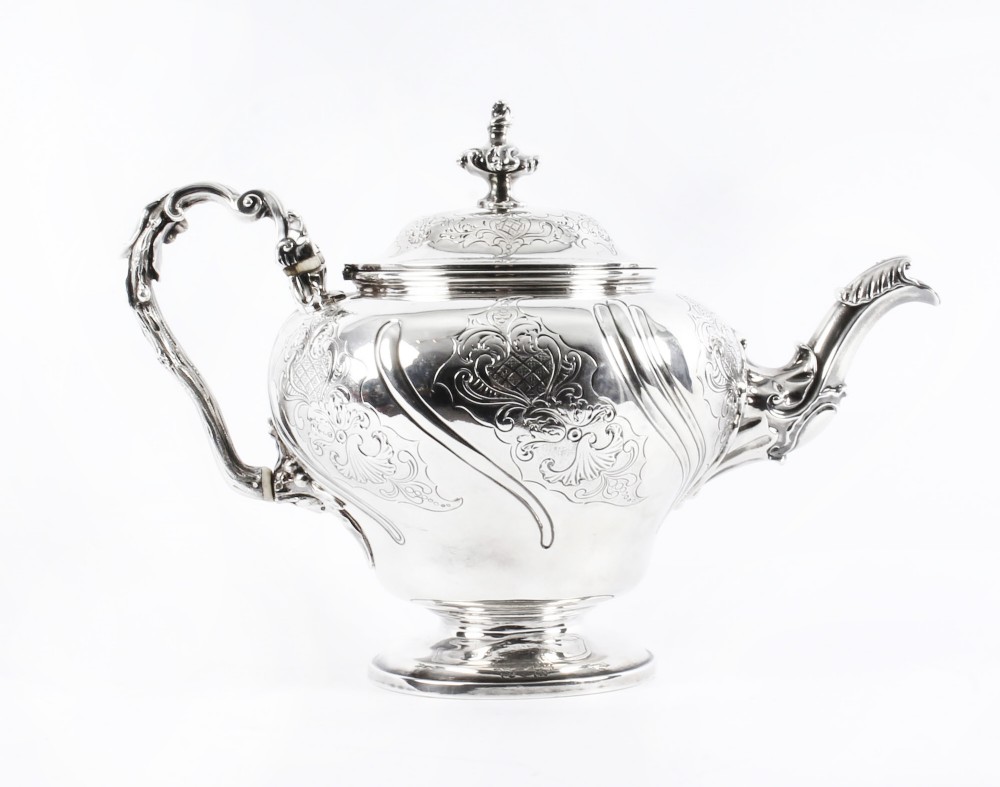
This is an exceptional antique English George IV sterling silver teapot by the world-famous silversmith, Paul Storr, 1829 in date.
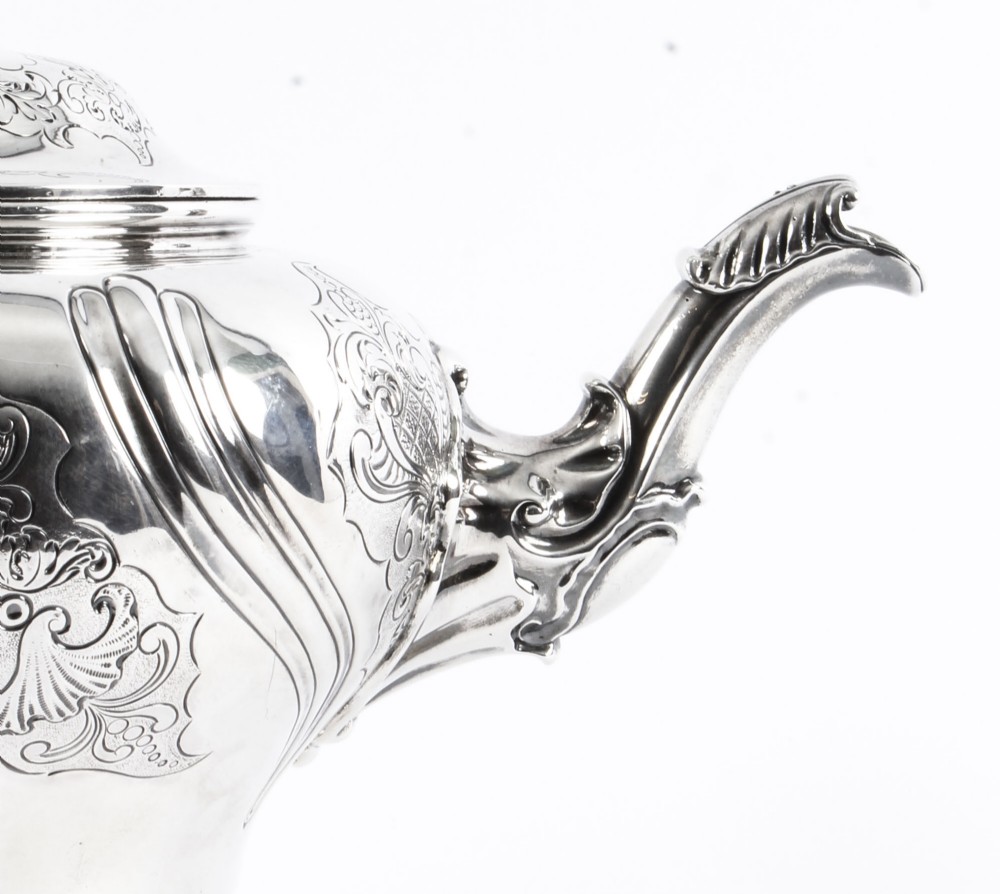
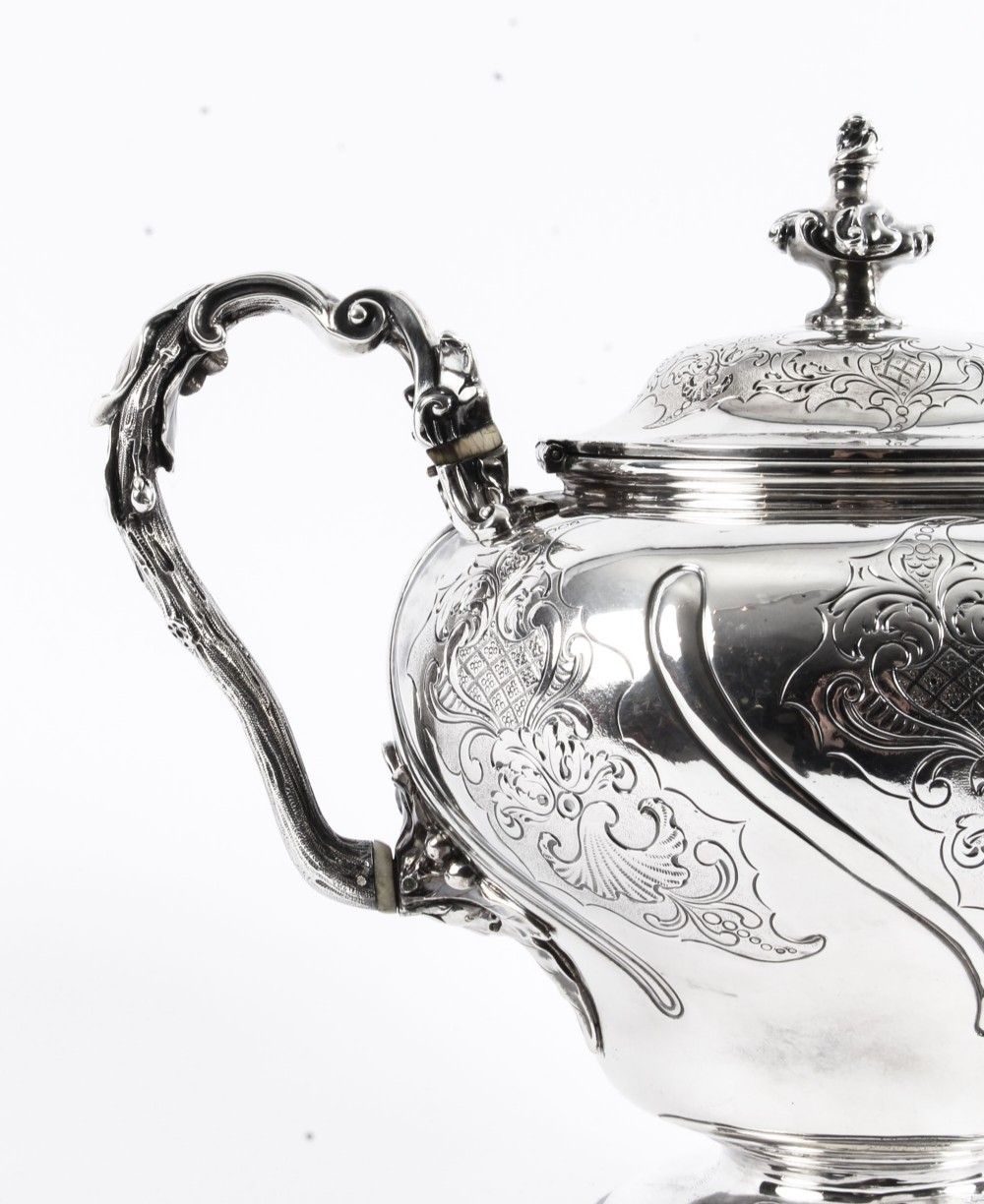
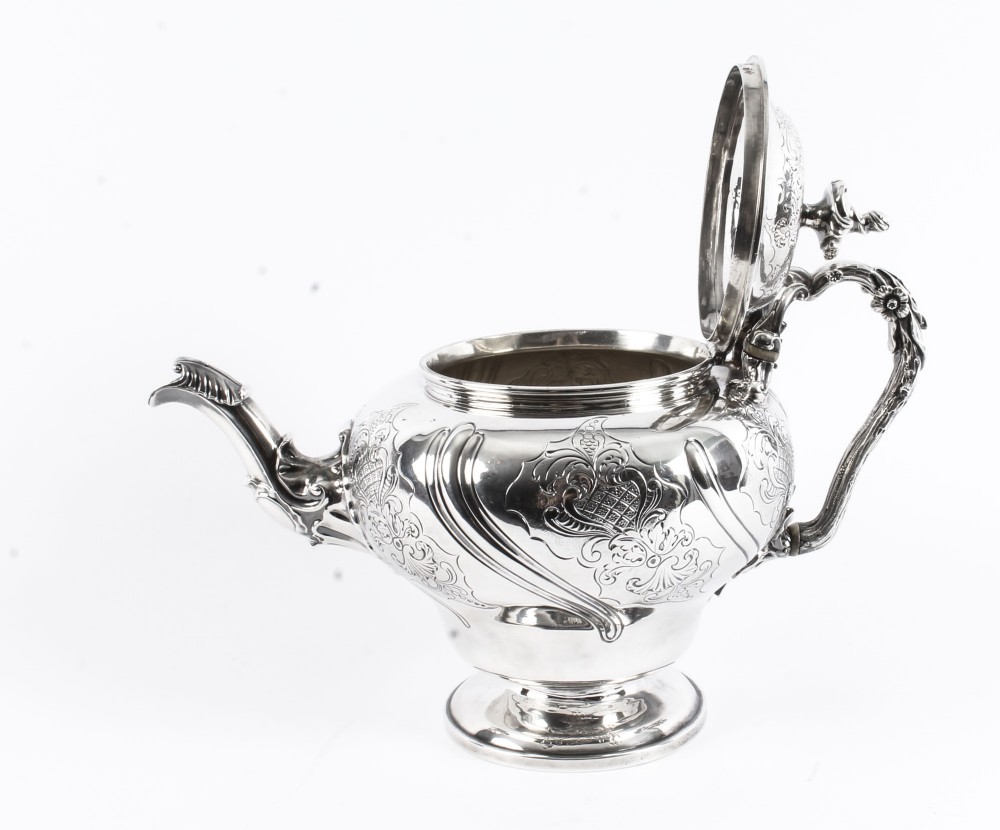
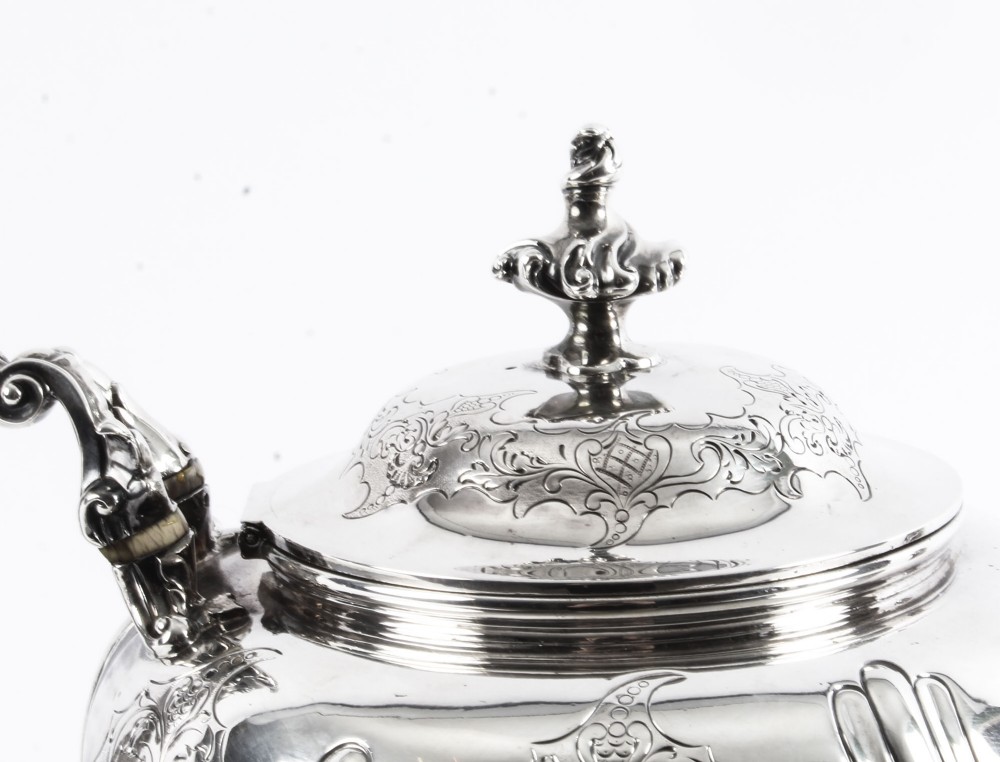
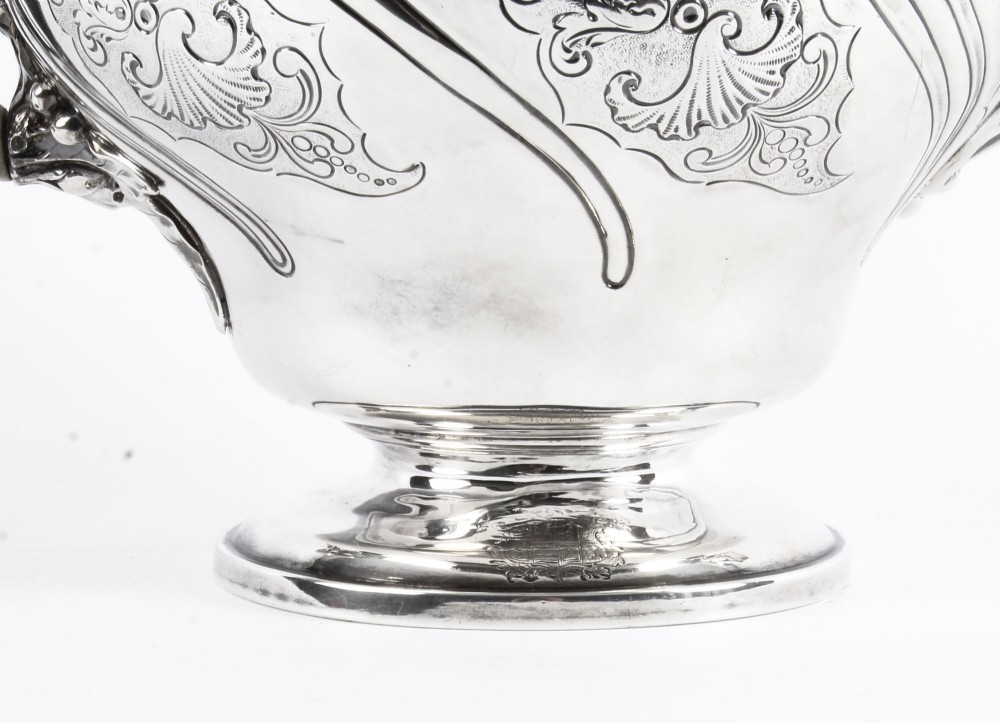
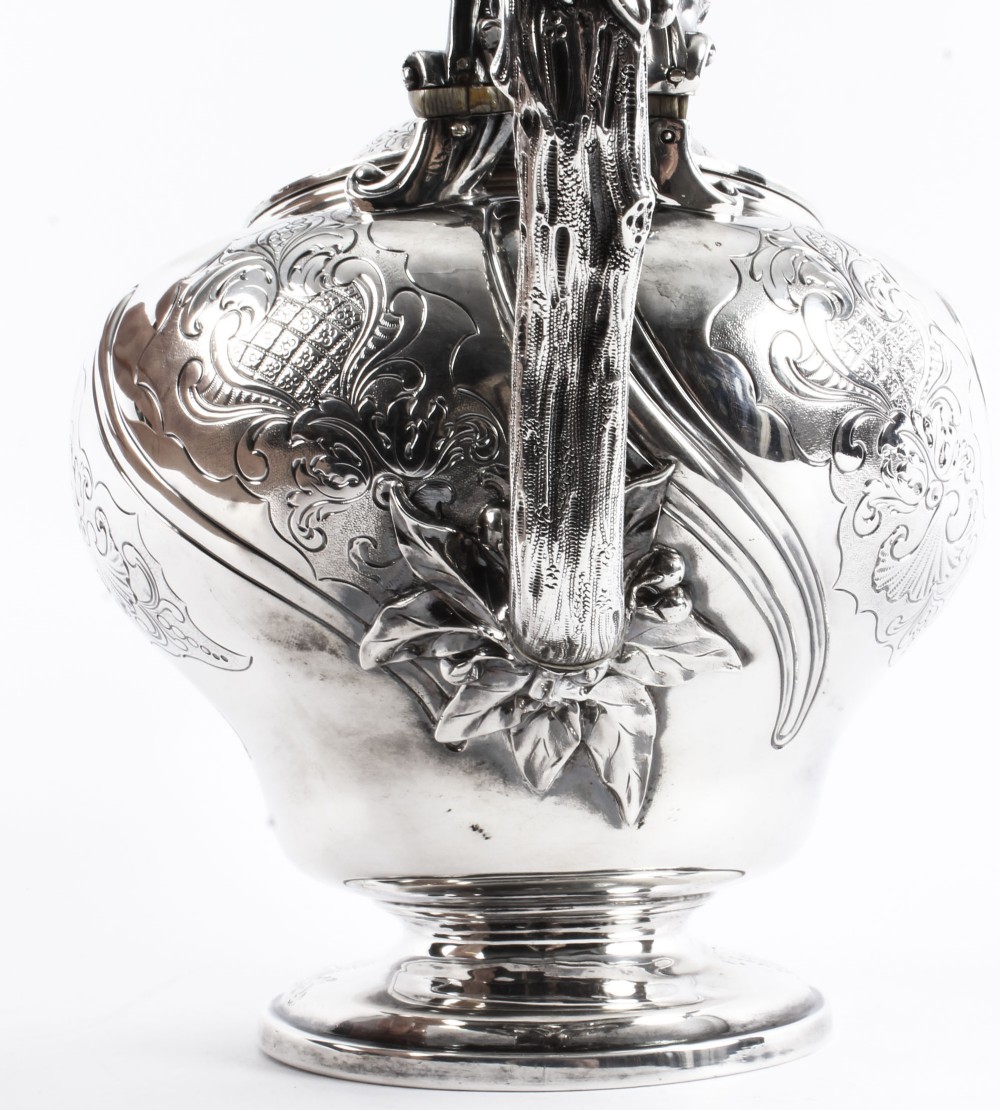
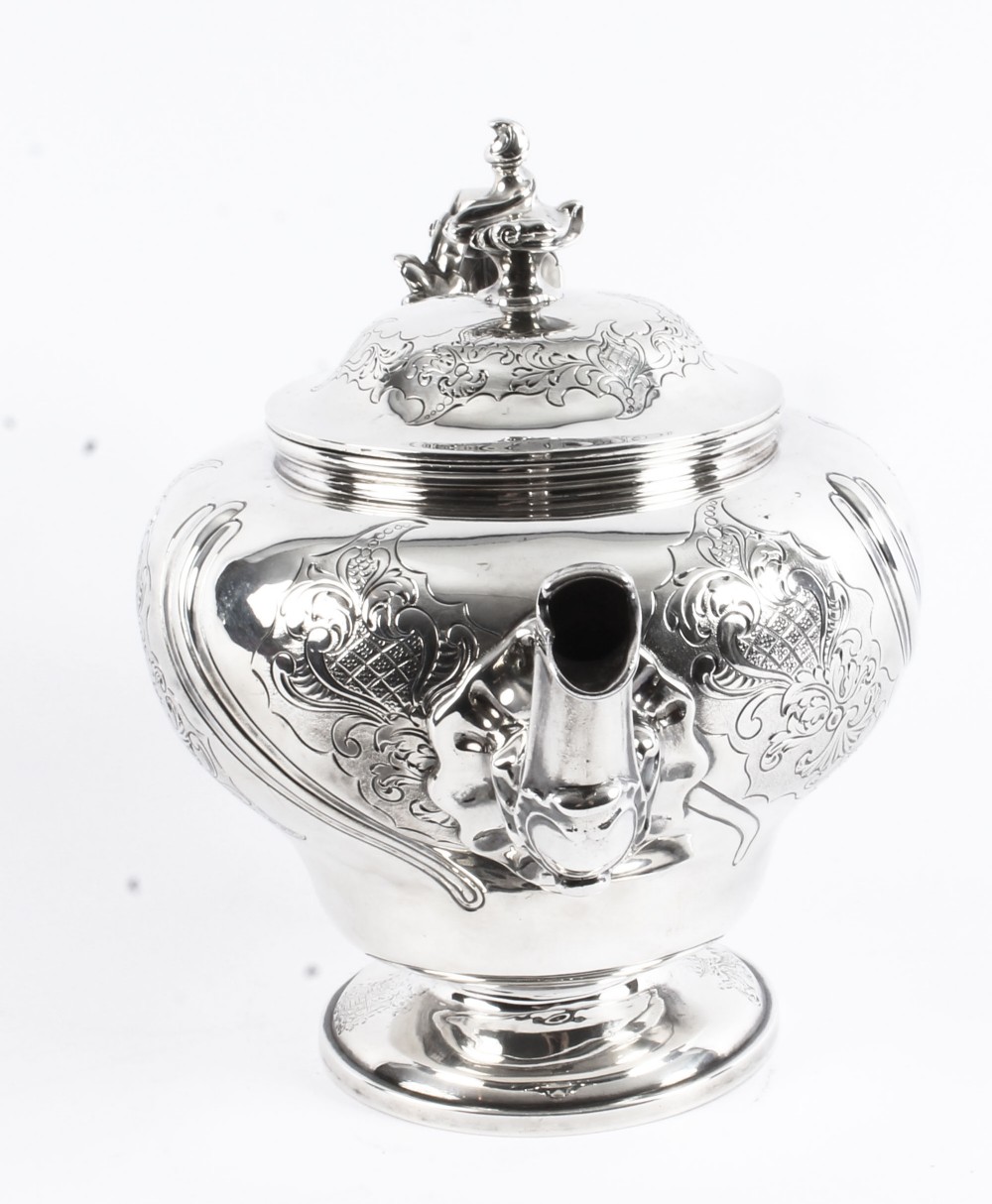
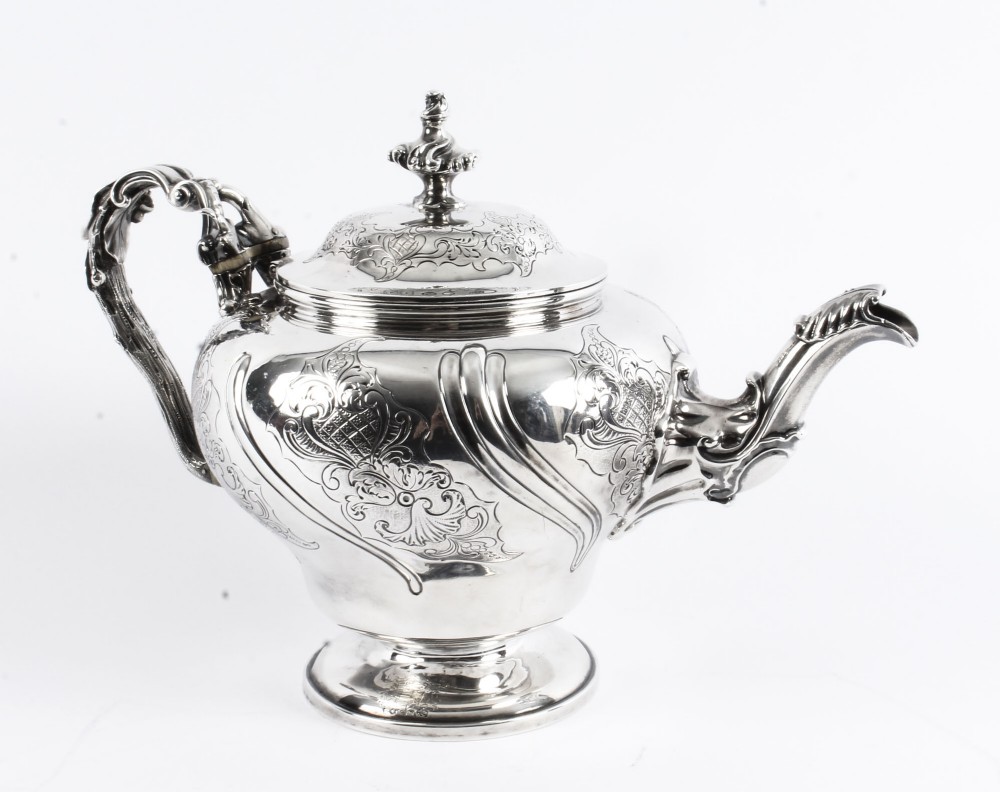
This splendid teapot is of a delightful inverted pear shape and it is profusely engraved with distinctive foliate decoration. The hinged lid is also beautifully engraved with matching foliate motifs and it is surmounted by a delightful floral finial.
It features a distinguished faux-bois handle with remarkable floral and foliate engraved decoration. This sumptuous design is repeated in the spout, proving the silversmith has perfected mastery in the creation of wonderful and luxurious silverware - Paul Storr never tired of adding detail to create a true piece of artwork.
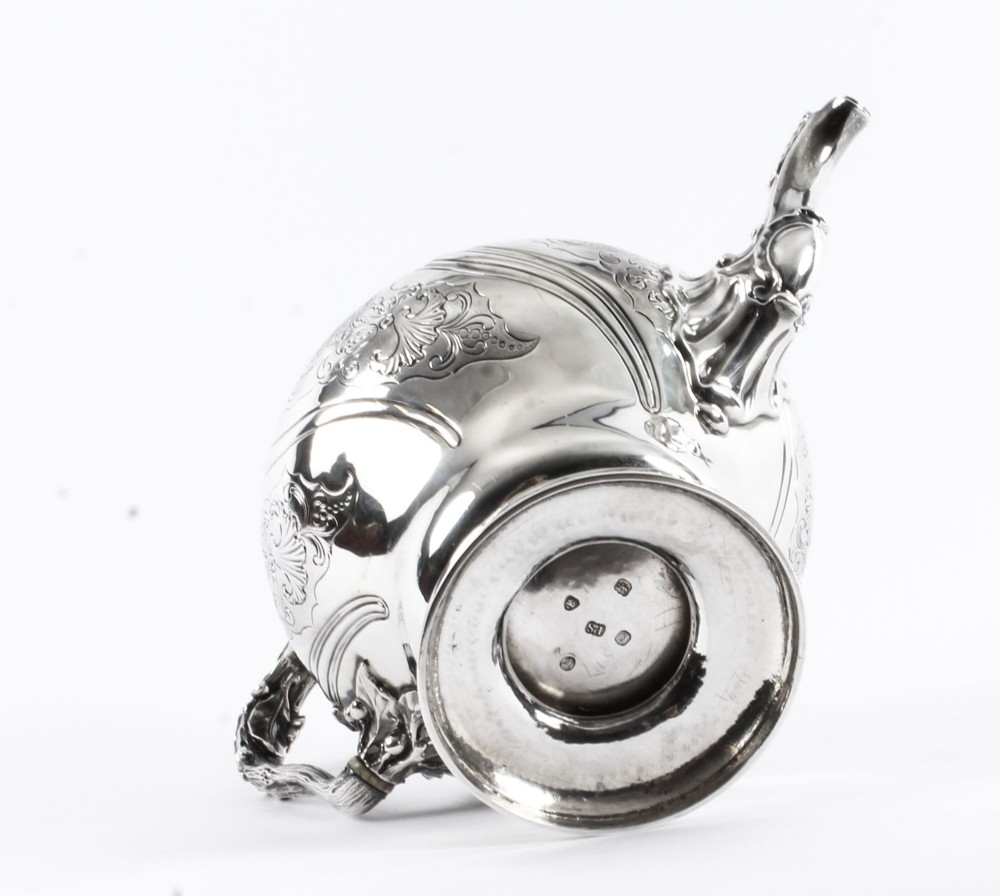
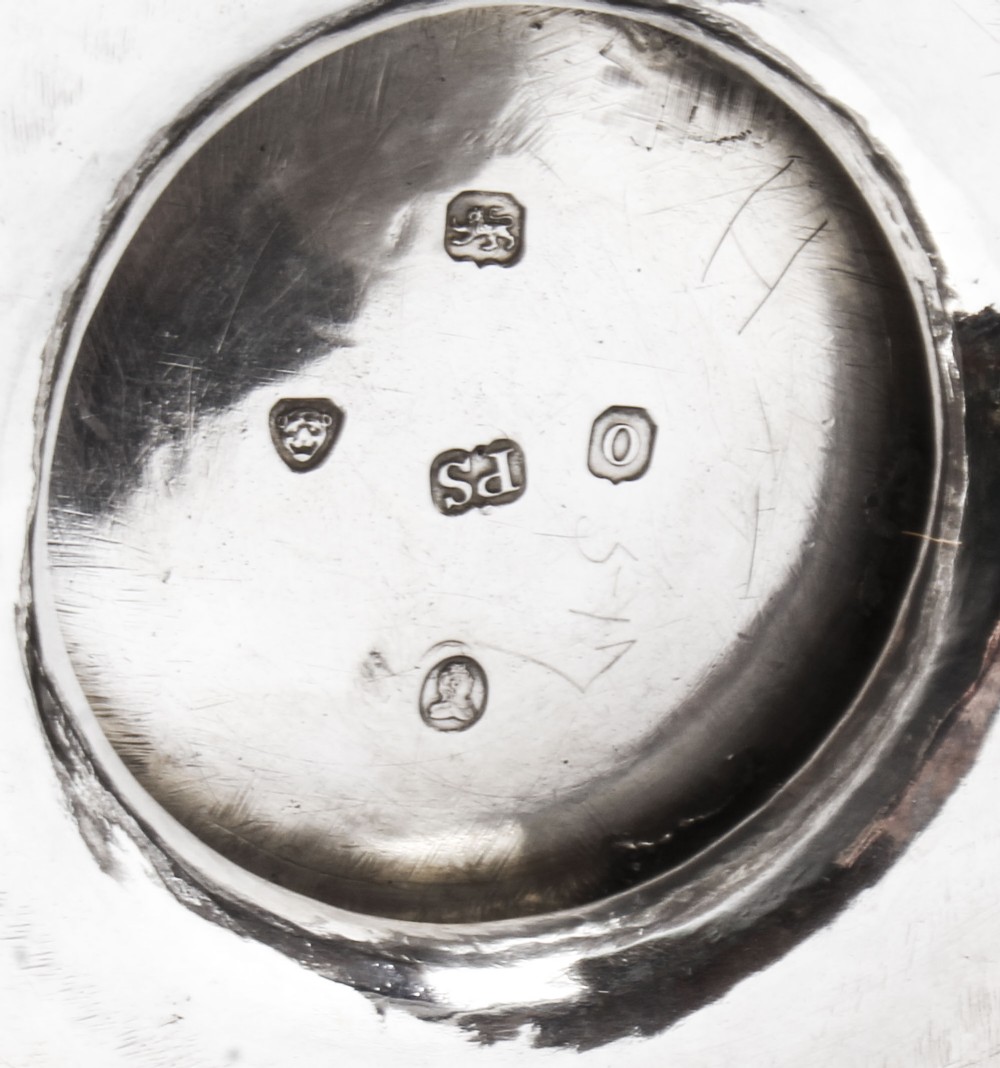
The underside bears the full hallmarks: the Lion passant for sterling silver, the leopard head for London, the letter 'o' for 1829 and the maker's marks 'PS' for Paul Storr.
There is no mistaking its unique quality and design, which is sure to make it a treasured piece by any discerning collector.
Condition:
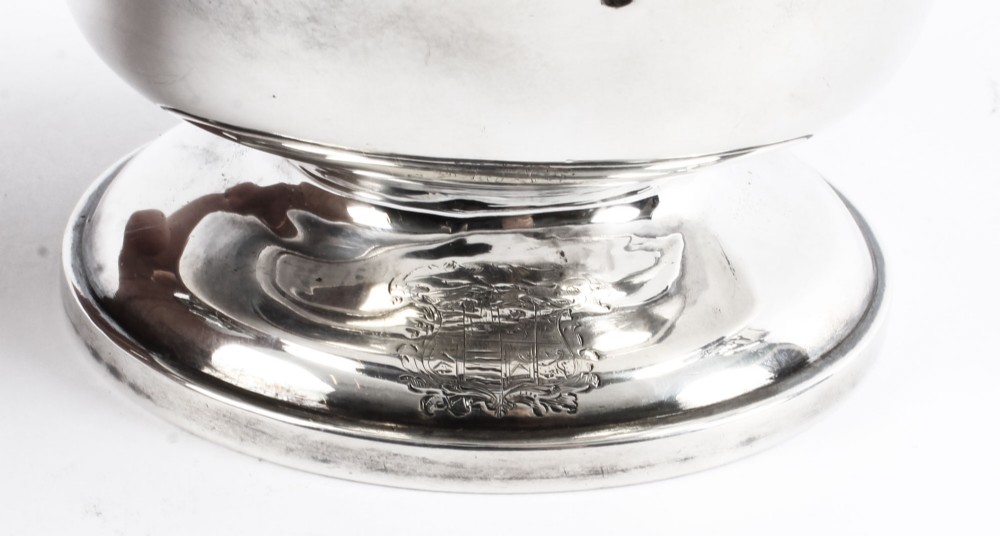
In excellent condition with clear hallmarks and no dings, dents or signs of repair. Please see photos for confirmation.
Dimensions in cm:
Height 20 x Width 28 x Depth 16
Weight 30 troy oz
Dimensions in inches:
Height 7.9 x Width 11.0 x Depth 6.3
Weight 0.93 kg
Paul Storr (Westminster 1771 - Tooting 1844)
born in London England in 1771, was to become one of the most talented silversmiths and goldsmiths of the nineteenth century. Today his legacy of exceptionally well crafted silver, found worldwide in museums and private collections, leaves one in awe when compared to that of his contemporaries. After having served a seven year apprenticeship from the age of 14, he began his career in 1792 when he went into a brief partnership with William Frisbee. This did not last and in 1793 a new mark, (his initials ‘P S’) was entered. By the beginning of the nineteenth century he had established himself as one of London’s top silversmiths producing, amongst others, commissions for Royalty.
In 1801 he married Elizabeth Susanna Beyer with whom he was to have ten children. In 1807 Paul Storr entered into a working relationship with Philip Rundell and by 1811 was a partner, and managing the workshops for Rundell, Bridge & Rundell.
During this period he kept his own marks and separate workshop. However it was through Rundell, Bridge & Rundell who were appointed Goldsmith in Ordinary to George III in 1804 that his reputation as a master silversmith grew. His talents lay in being able to transform ideas and designs from Rundell, Bridge & Rundell’s designers, William Theed II, the chief modeller and head of the design department, and later John Flaxman II who succeeded him in 1817. During this period Rundell, Bridge & Rundell’s reputation grew due to the patronage of the Prince Regent (later George IV).
Our reference: 09936