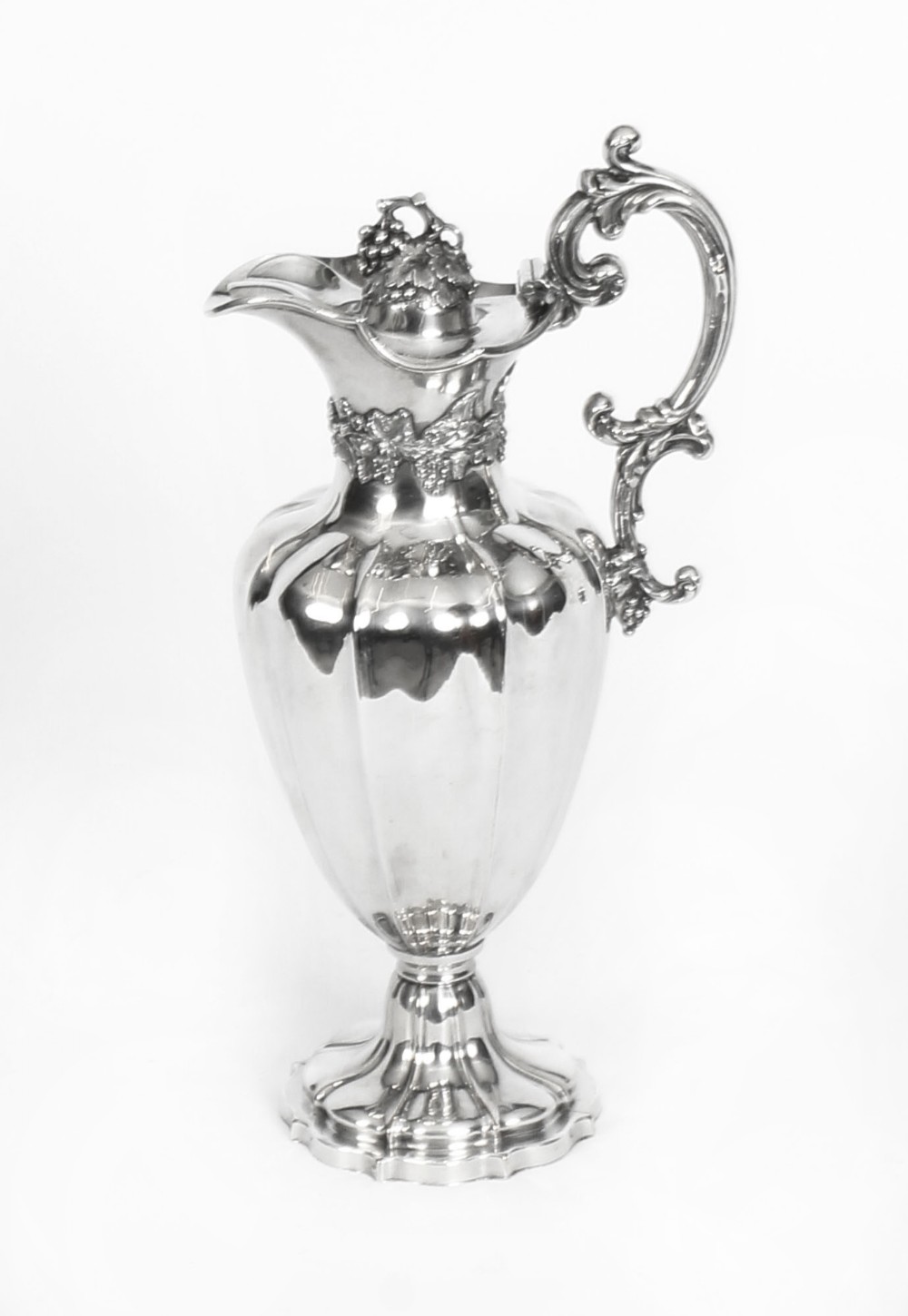
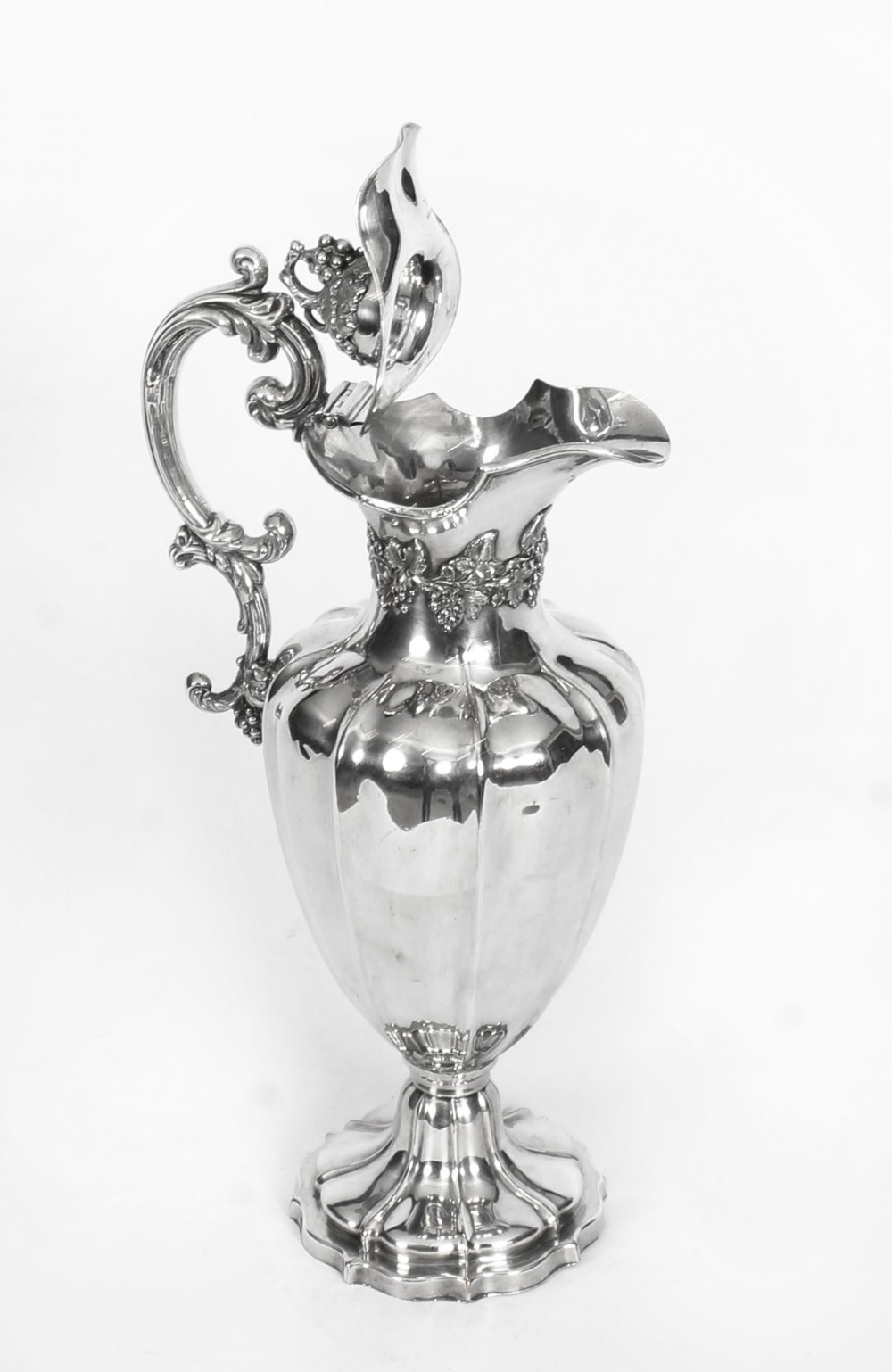
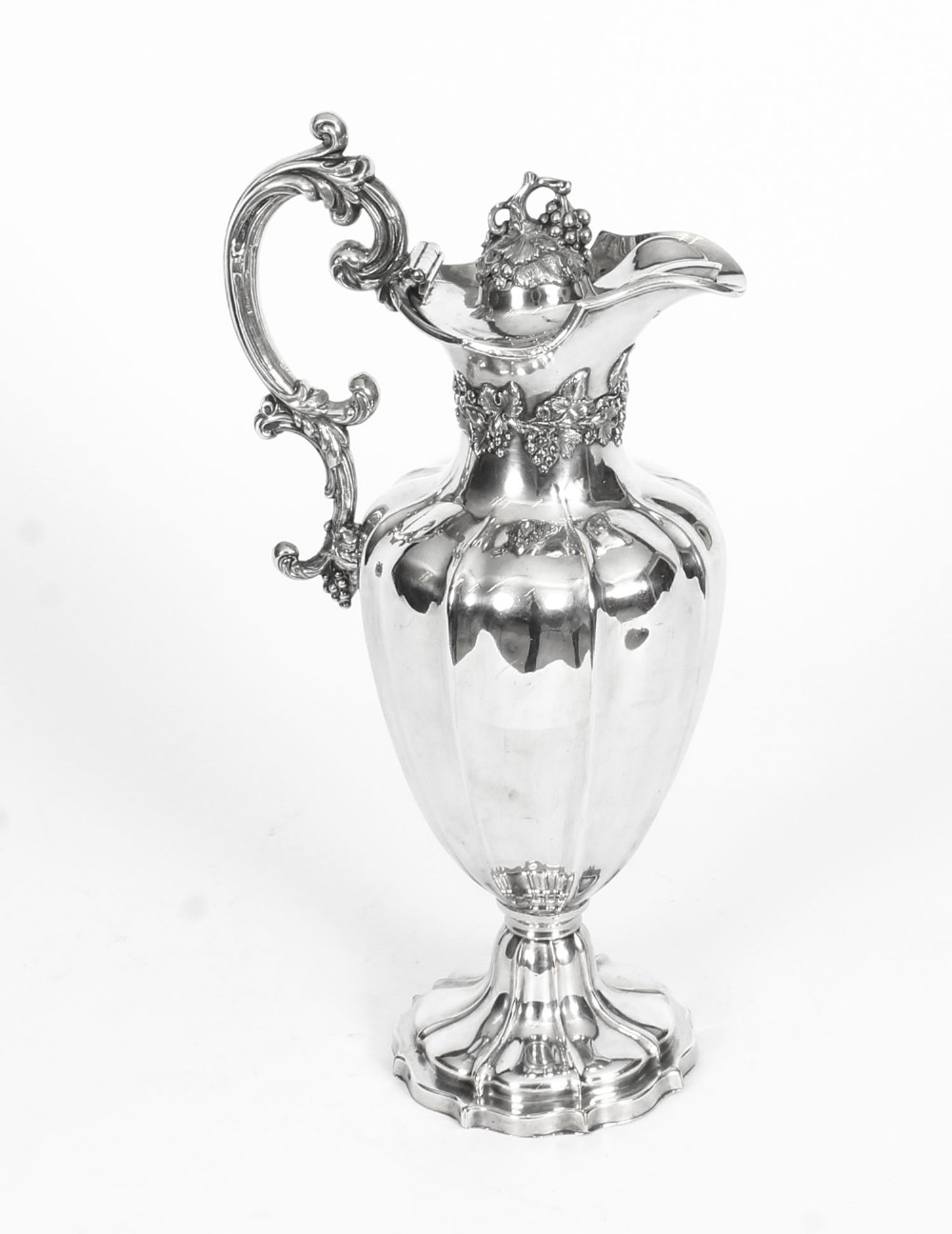
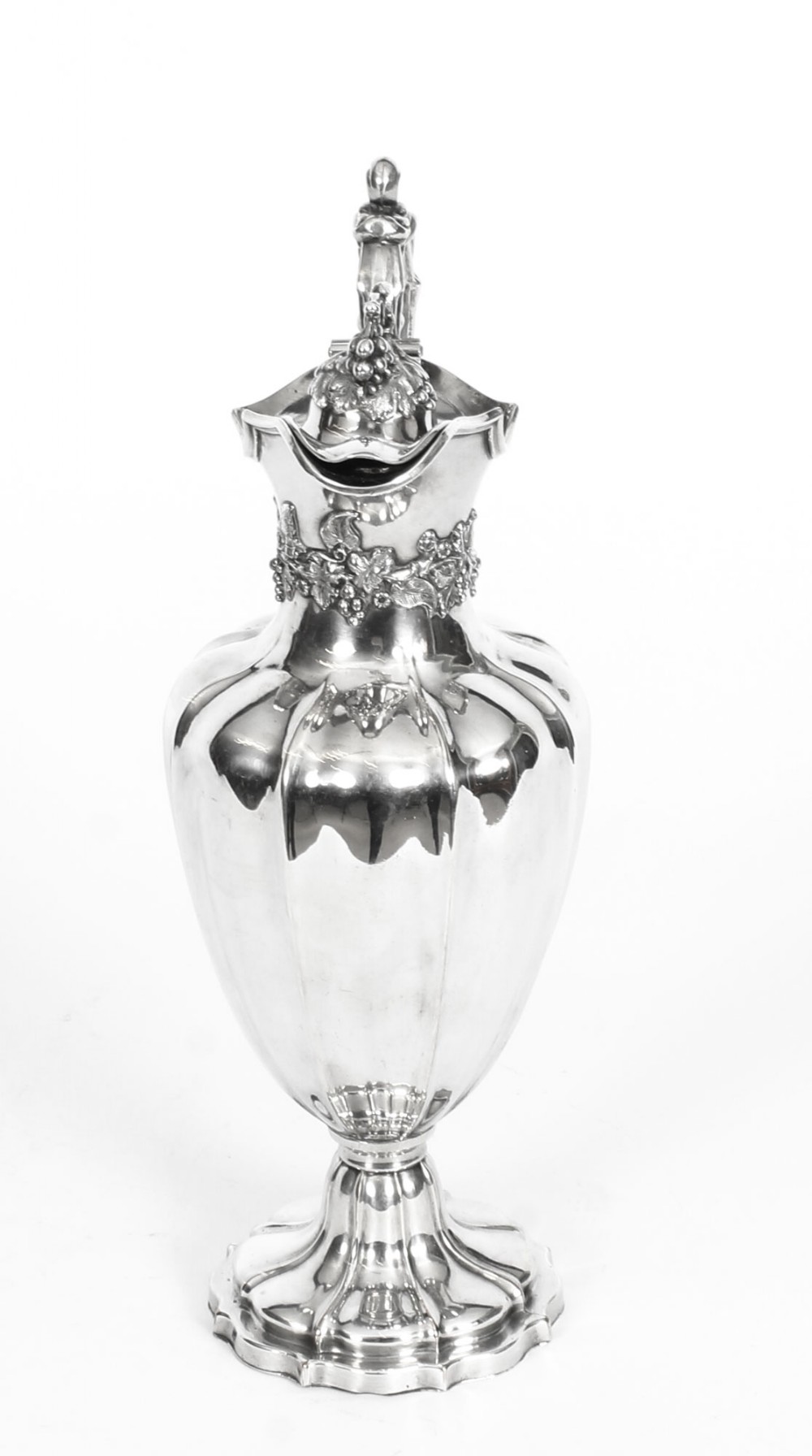
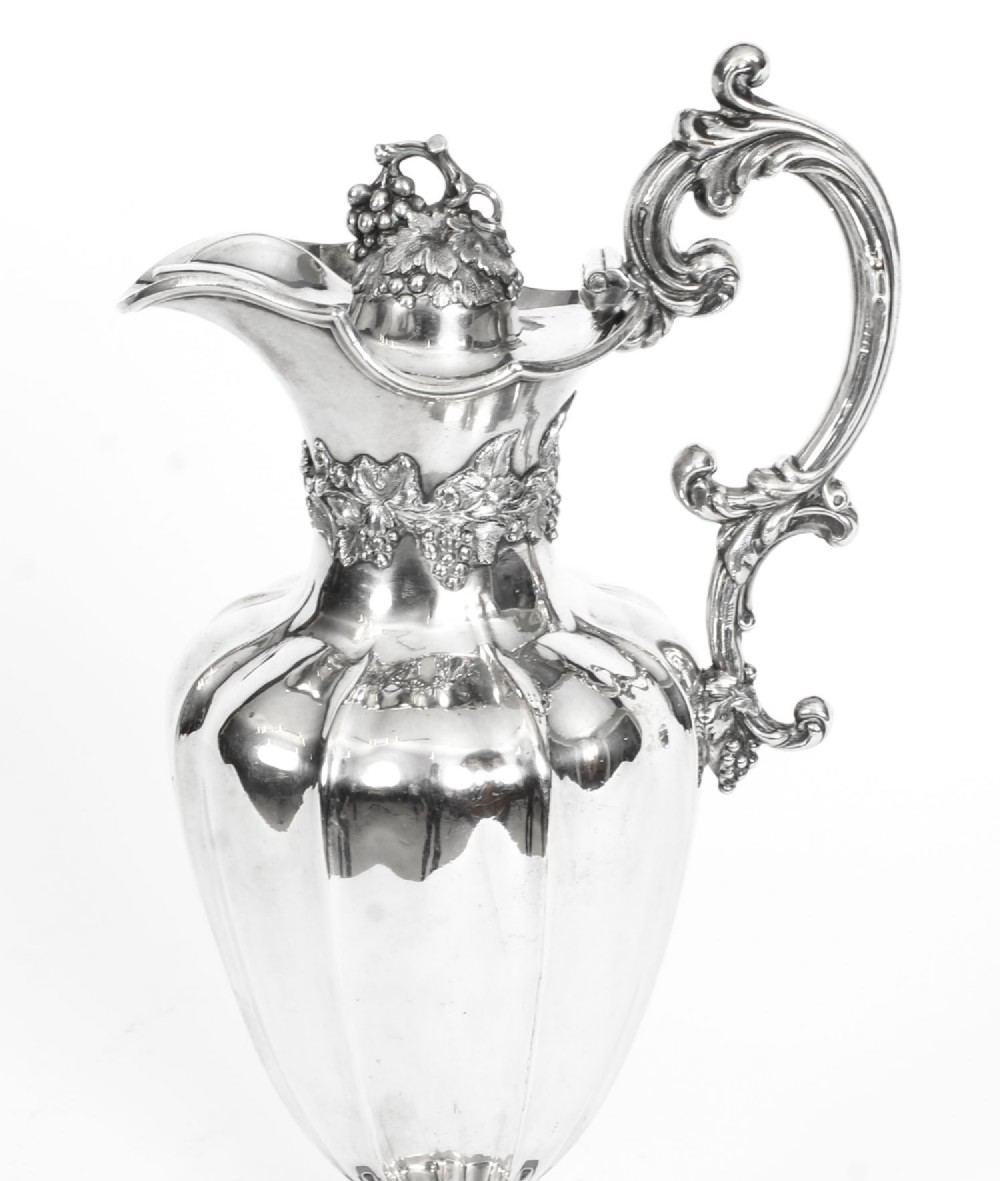
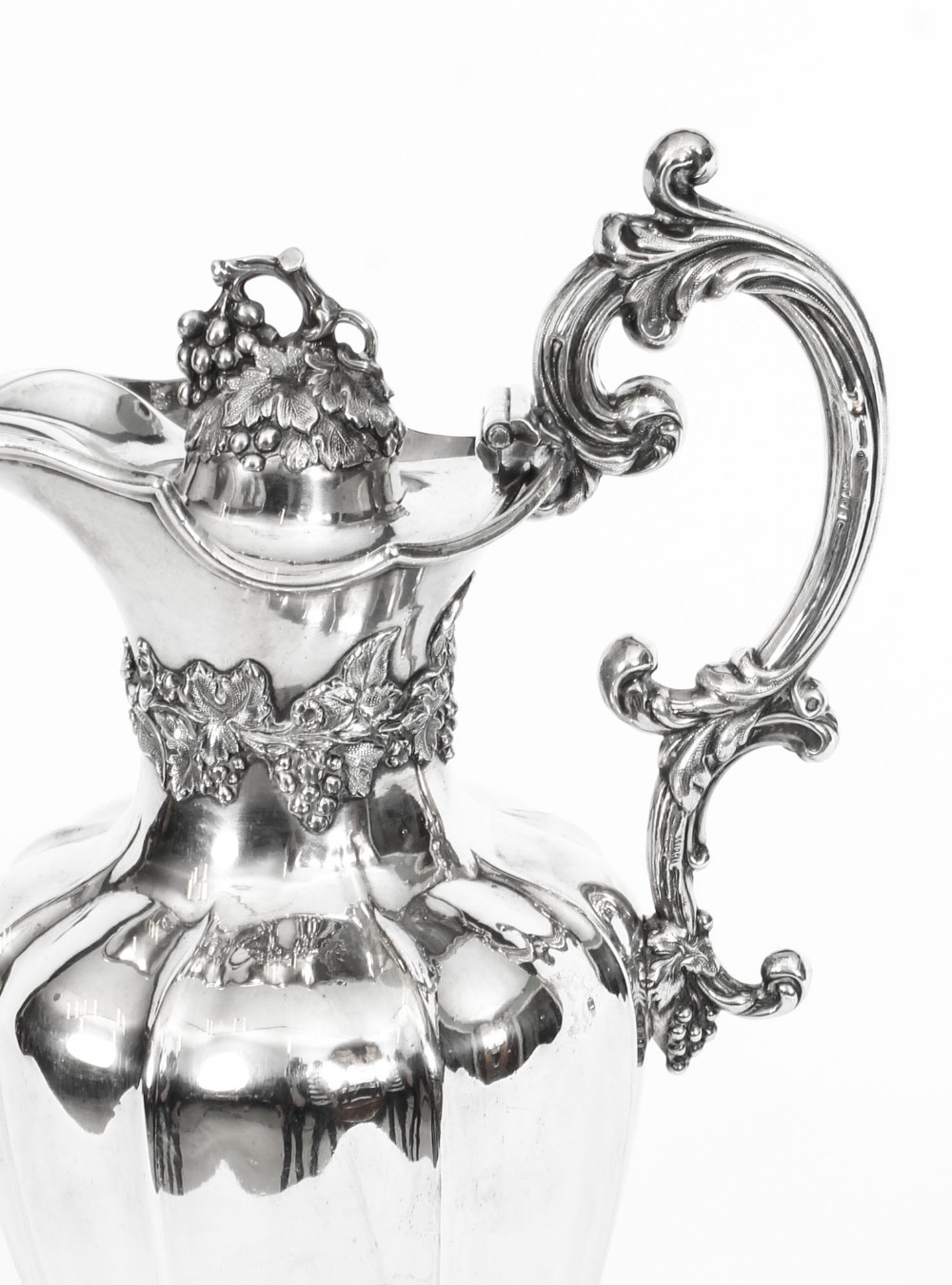
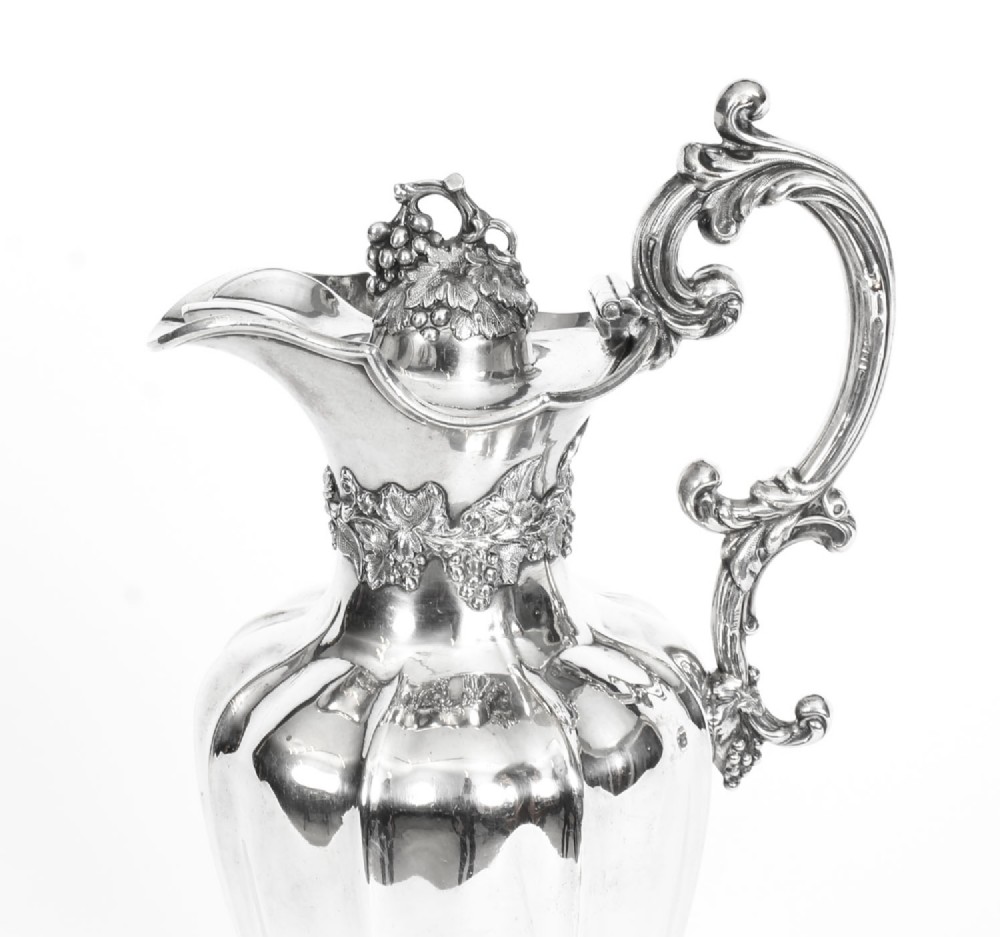
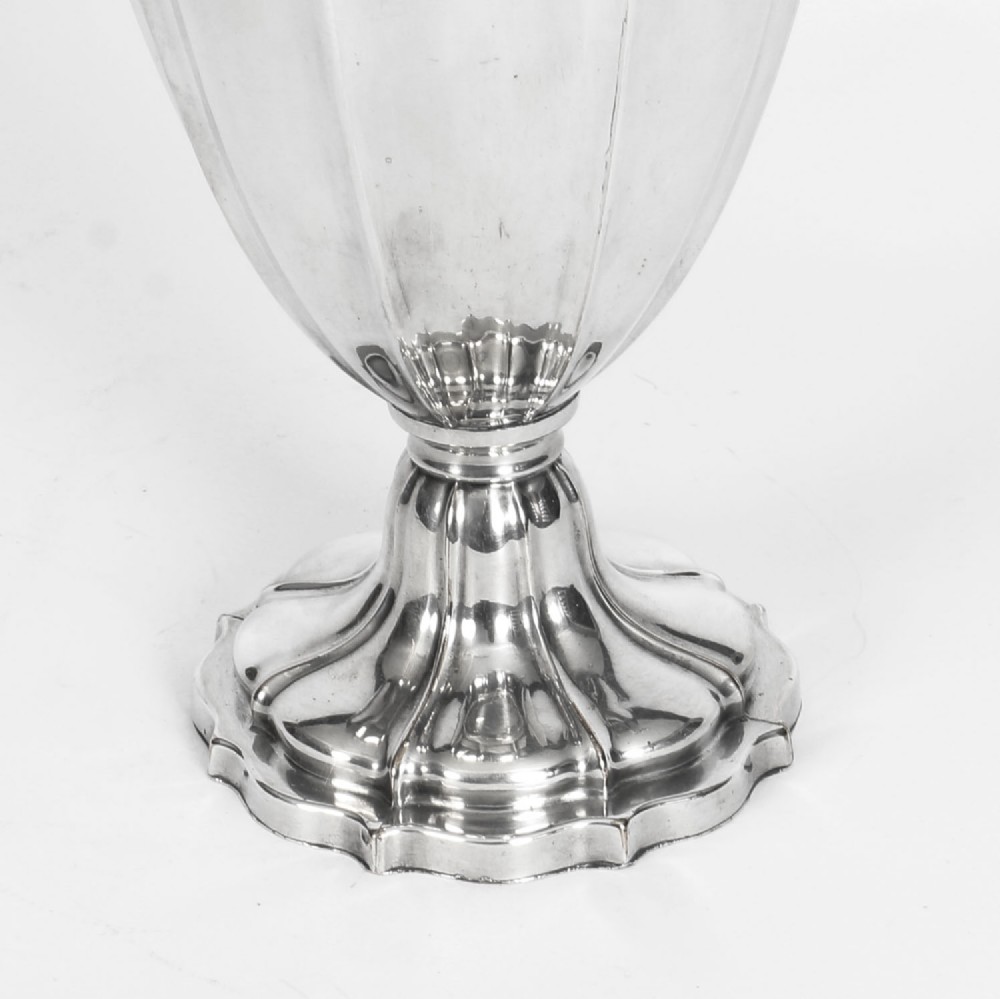
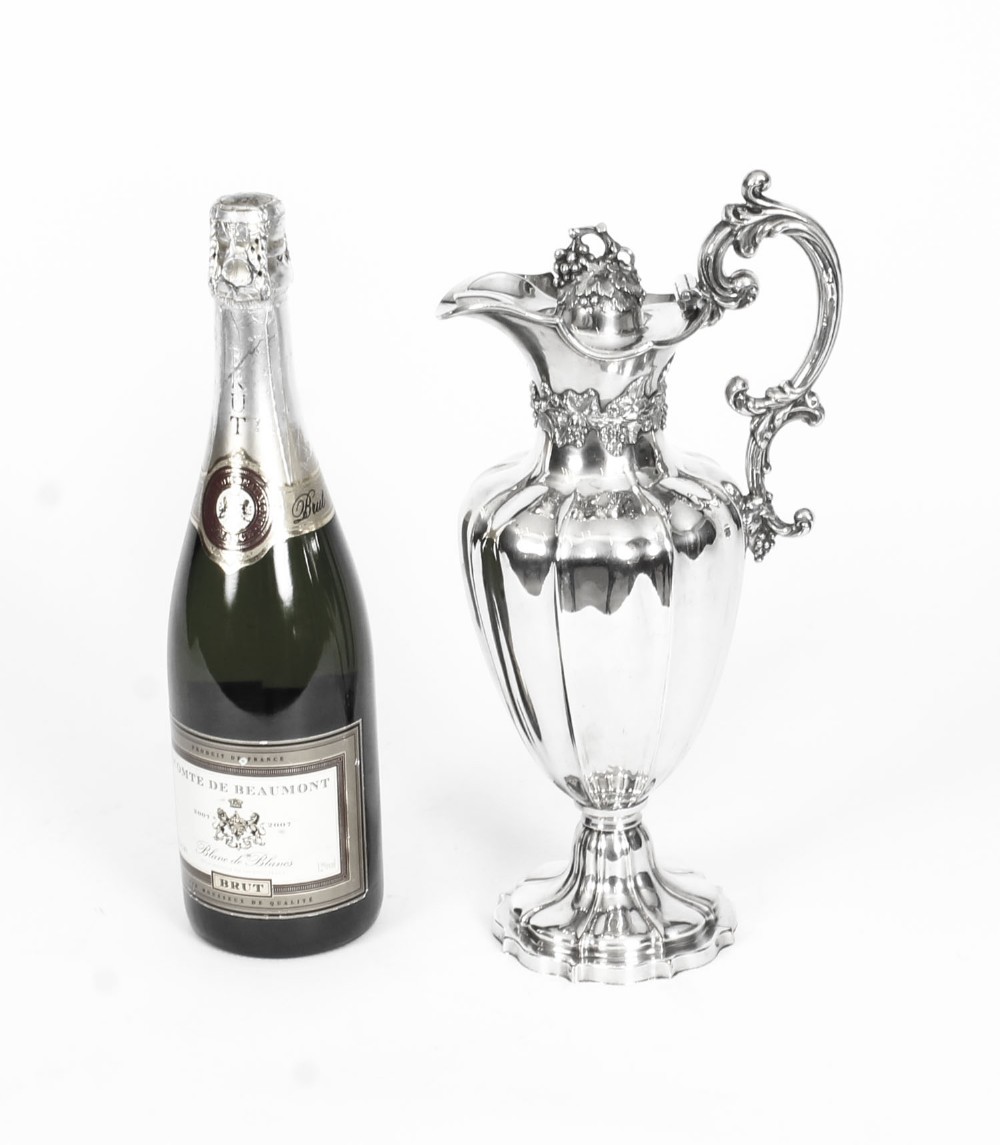
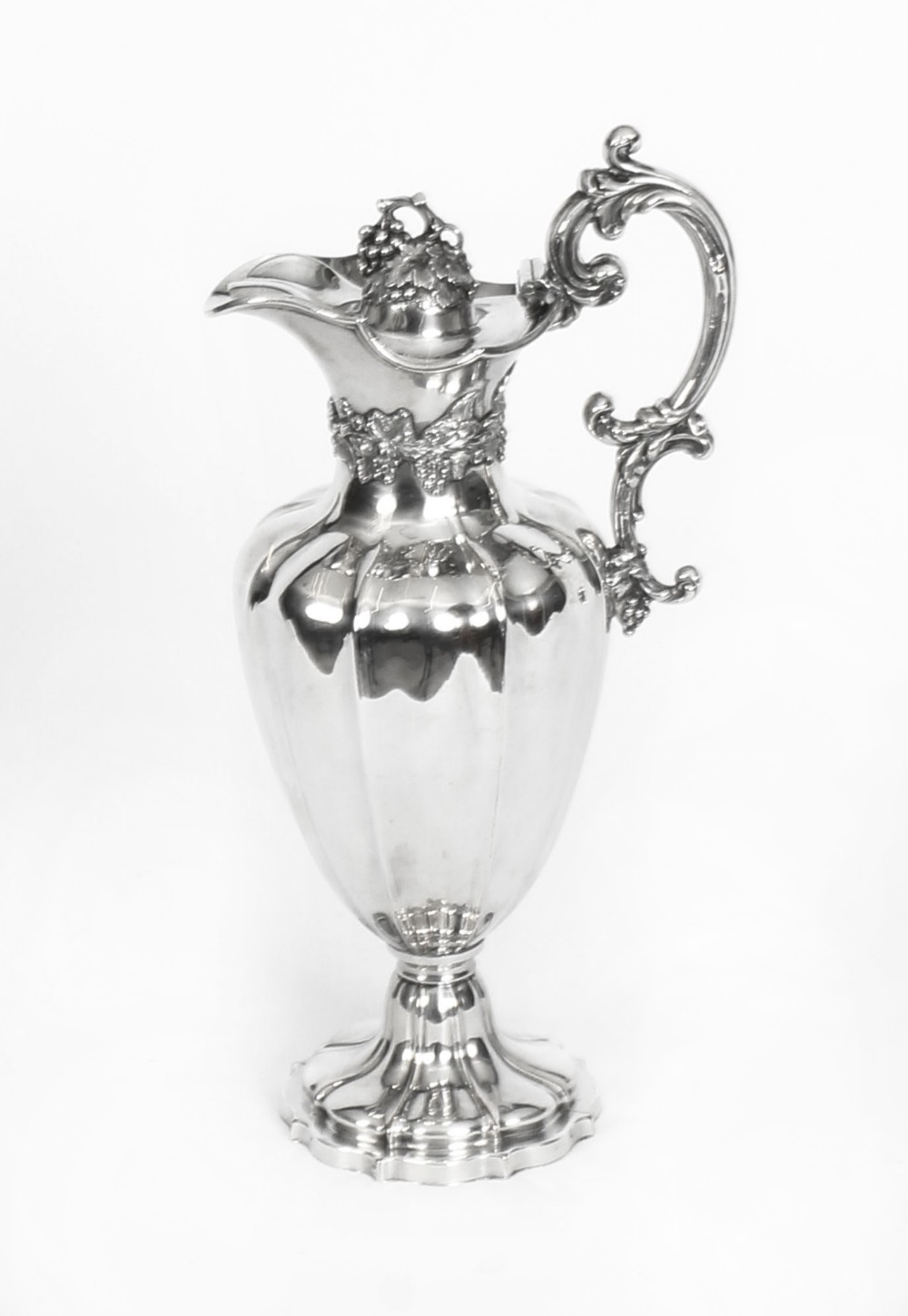
This is a fabulous antique George III Old Sheffield plate silver on copper claret jug, circa 1820 in date.
The claret jug is of scalloped baluster form and has an attractive circular foot.
It feature beautiful grape vine decoration, a beautifully shaped handle and a hinged lid that is surmounted with a decorative vine and grapes finial.
This item is of the highest quality with fabulous decorations ready to grace your dining table.
Condition:
In excellent condition. As an antique items, the piece show signs of use commensurate with age, these minor condition issues are mentioned for accuracy and, as seen in the accompanying photographs, the jug displays beautifully.
Dimensions in cm:
Height 30 x Width 17 x Depth 13
Dimensions in inches:
Height 11.8 x Width 6.7 x Depth 5.1
Old Sheffield Plate
or ‘fused plate’ as it is sometimes known, was the first commercially viable method of plating metal.
The material was accidentally invented by Thomas Boulsover, of Sheffield's Cutlers Company, in 1743. While trying to repair the handle of a customer's decorative knife, he heated it too much and the silver started to melt. When he examined the damaged handle, he noticed that the silver and copper had fused together very strongly. Experiments showed that the two metals behaved as one when he tried to reshape them, even though he could clearly see two different layers.
Boulsover set up in business, funded by Strelley Pegge of Beauchief, and carried out further experiments in which he put a thin sheet of silver on a thick ingot of copper and heated the two together to fuse them. When the composite block was hammered or rolled to make it thinner, the two metals were reduced in thickness at similar rates. Using this method, Boulsover was able to make sheets of metal which had a thin layer of silver on the top surface and a thick layer of copper underneath. When this new material was used to make buttons, they looked and behaved like silver buttons but were a fraction of the cost.
The technique Boulsover developed was to sandwich an ingot of copper between two plates of silver, tightly bind it with wire, heat it in a furnace and then mill it out in to sheet, from which objects could be made.
Our reference: A1383