10,604  PAGES BROWSED TODAY PAGES TODAY 51 ANTIQUES UPLOADED TODAYNEW ARRIVALS
51 ITEMS ADDED TODAY
Sort Order
Items Per Page
Browse Categories
Sort order
Items per page
ID #SA693866
SOLD
Email
Save
Late Victorian Gas Mantle Galvanometer Lamp by Auerlicht Germany
Jason Clarke Antiques
sold SA693866
Sorry, but this item has been sold.
Jason Clarke Antiques

Jason Clarke Antiques

Sellingantiques Verified Since Jul 2015
View Dealers Stock Page
Id #SA693866
PDF SHARE
SAVE

Late Victorian Gas Mantle Galvanometer Lamp by Auerlicht Germany

1900 - 1920
Description

For sale a Late Victorian gas mantle galvanometer lamp by Auerlicht Germany.

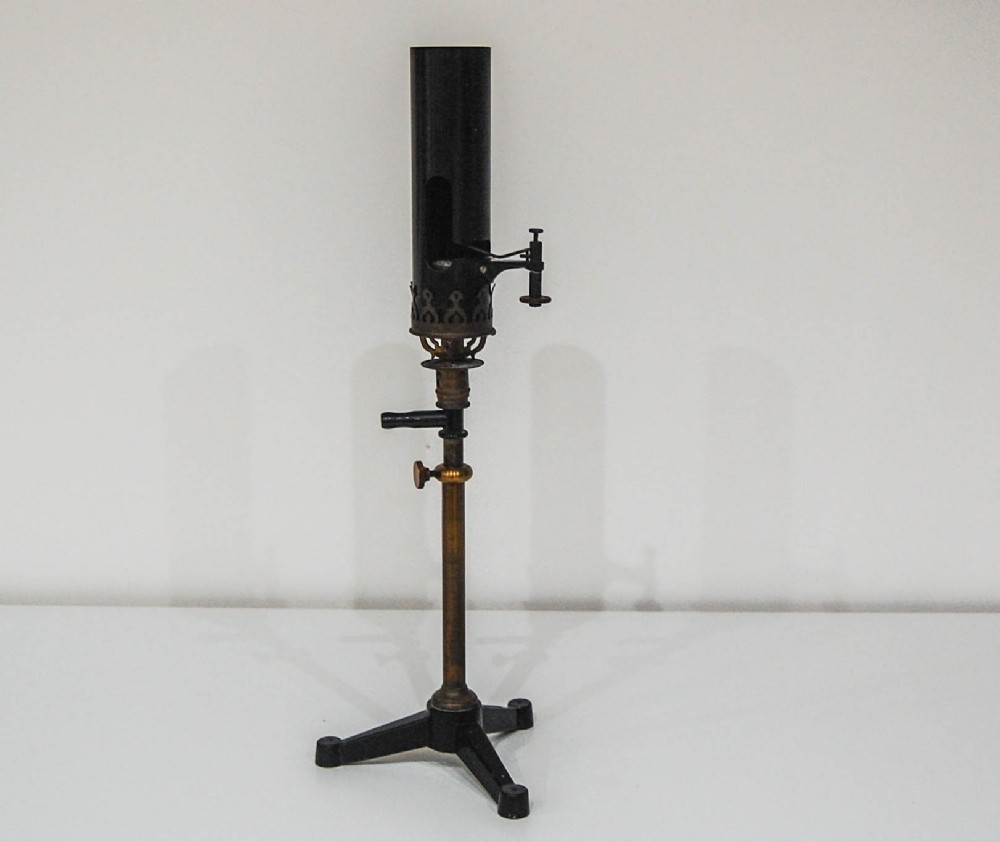
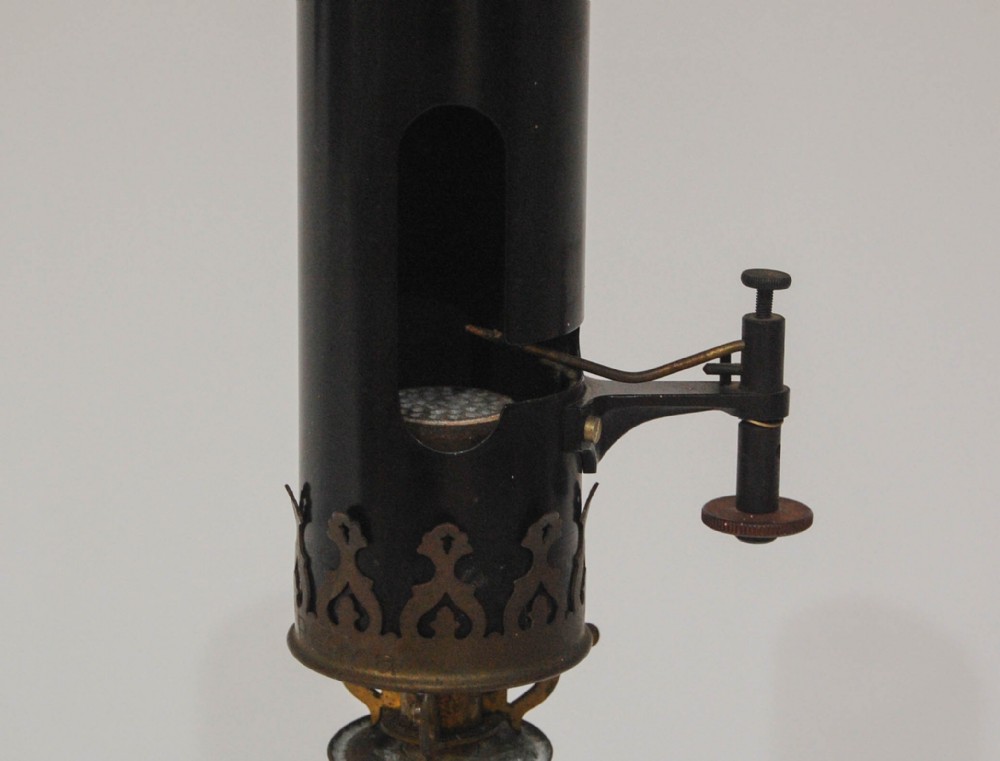
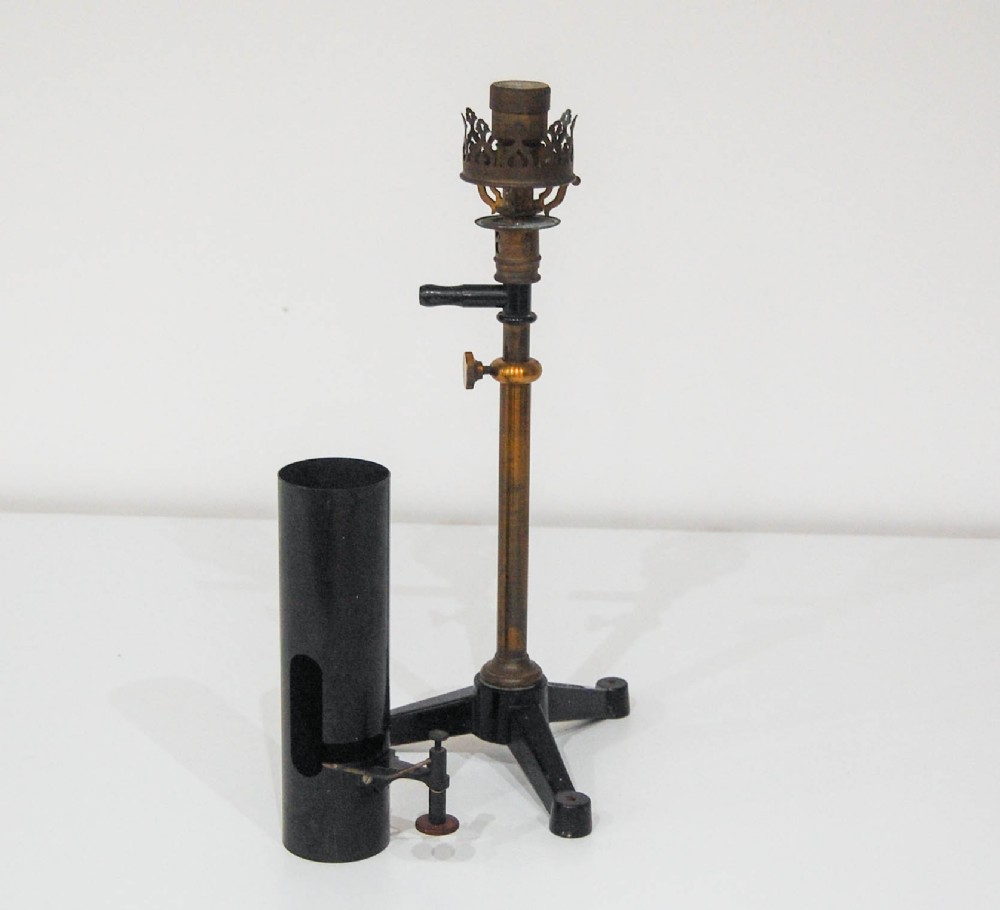
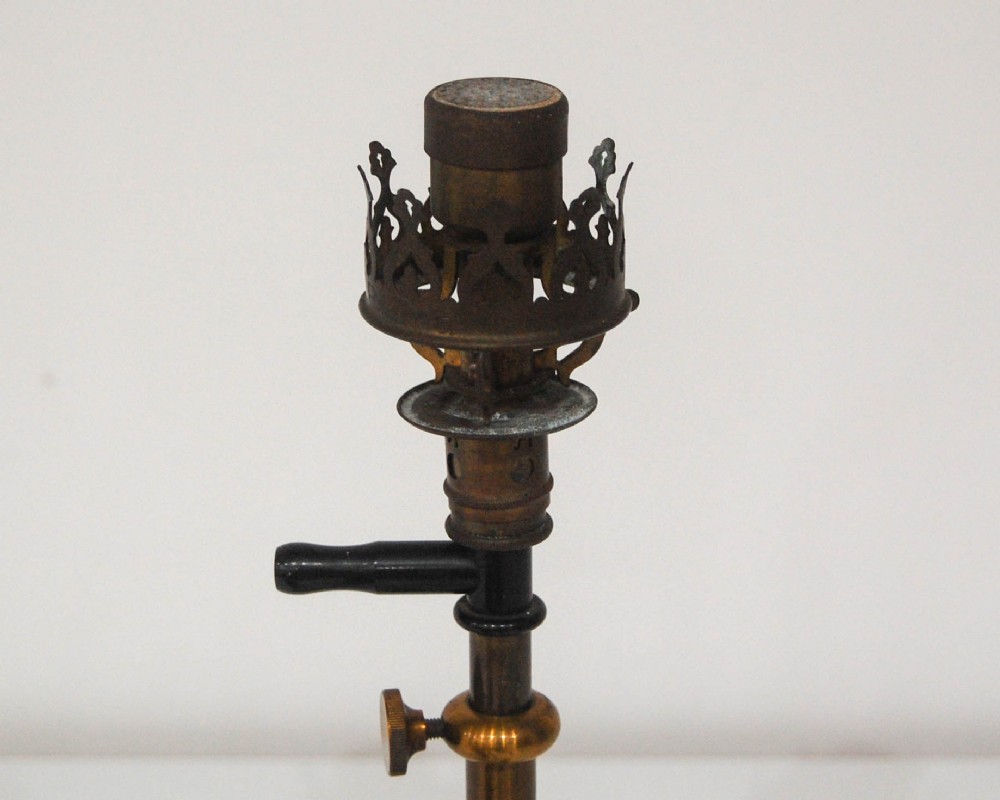
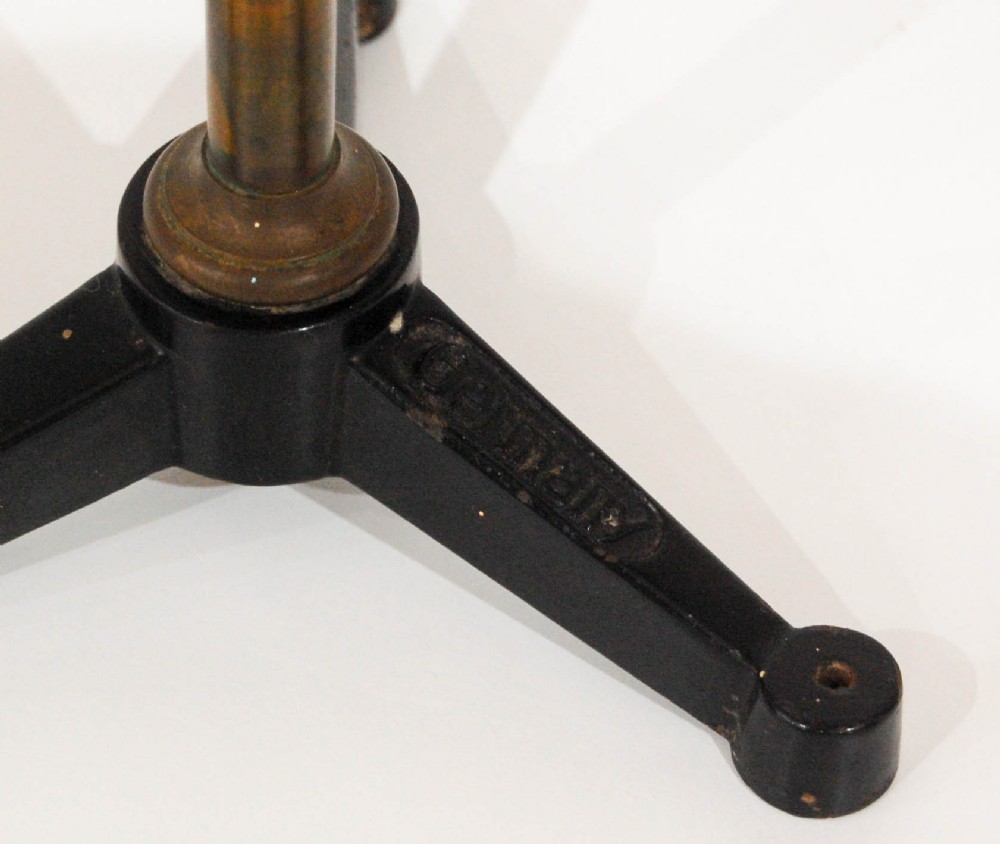
This uncommon instrument is comprised of a tripod base with a two part extendable column. The upper part contains an inlet pipe for a rubber gas tube to be attached with air vent collar and ceramic gas burner above. The burner incorporates a decorative brass punched surround into which a cylinder hood with a small cut-out section is fitted. The hood has a pin attached to a swing arm on which a cotton Thorium soaked gauze would be suspended and lit above the burner. The decorative surround is stamped with the brand “Auerlicht Prima” and a triangle motif with the company’s initials “DGA” inside. It is also stamped “Germany” to the base.
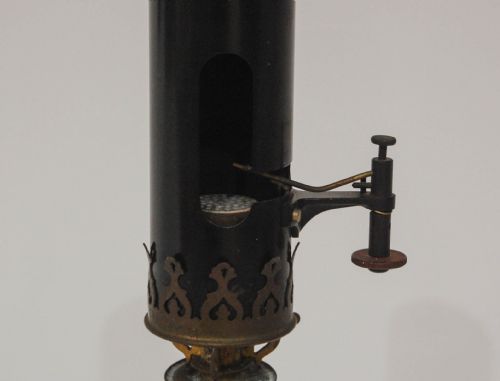
The gas mantle was invented in the 1880’s by the Austrian scientist, Carl Auer Von Welsbach by combining chemicals in order to create a light that burned brighter than any other substance known at that point. His invention was patented in 1885 and in 1890 was improved using a mixture of 99% Thorium and 1% Cerium Oxide impregnated on a cotton gauze. When burnt it produced a white light that was immediately put to numerous uses. The company “Deutsche Gasgluhlicht Aktiengesellschaft” was formed in 1892 by Welsbach and Jewish entrepreneur Geheimrat Leopold Koppel with the brand name Auerlicht created in Welsbach’s honour.
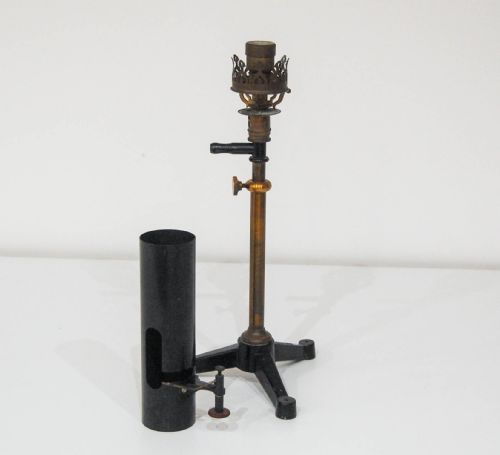
Owing to the effects, the invention was most notably used in street lighting and eventually became the main source of light to almost all European cities during its heyday, however the technology was considered for use in further scientific experimentation. The light emitted would have been usefully adapted in combination with mirror galvanometers for precise readings of electrical current and was also advertised in Max Kohl’s catalogues of the period as an “incandescent gas burner for a reflex galvanometer on tripod and with split cylinder.
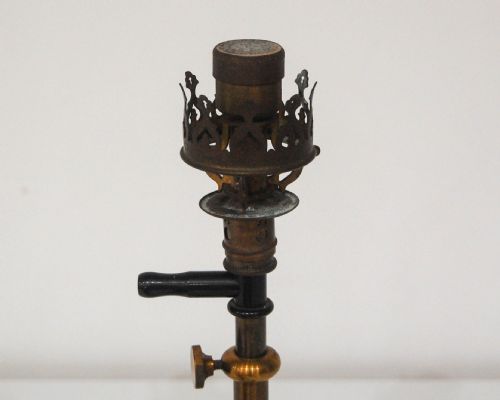
The use was perhaps considered by Welsbach himself given that he had studied under the German scientist, Robert Wilhelm Eberhard Bunsen, inventor of the Bunsen burner which produced a colourless flame for use in more accurately determining chemical elements when burnt. Much like Bunsen’s earlier invention, this example which has obvious similarities in design also includes a brass collar under the burner head which when twisted allows air vents to be opened allowing a gas/air mixture to be introduced.
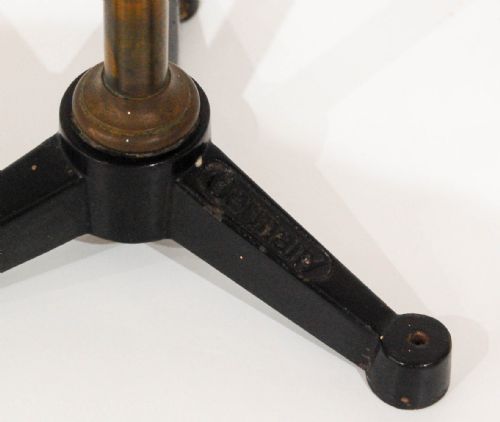
The DGA Company continued to experiment in luminescence, rare earths, radioactivity and uranium and thorium compounds up until the 1930’s when (probably owing to its Jewish ownership) it was forced by The Third Reich to sell out to the German Corporation Degussa. Prior to that, alongside its foreign subsidiaries, it had developed the OSRAM light bulb.

The company, its scientists and its premises were considered hugely important to both The Russians and The Allies towards the close of World War II and the Director and nuclear scientist Nikolaus Riehl spent ten years in the Soviet Union following the war. In response, The Allies bombed some of the company’s premises where stores of uranium and thorium had been detected in order to avoid them falling into Soviet hands. All of which were precursors to the atom bomb and the subsequent cold war.

Circa 1900

Physical Dimensions
Height
52cm (20.47")
Width
18cm (7.09")
Depth
18cm (7.09")
Declaration

Jason Clarke Antiques has dated this piece to the 1900s.

Reference Numbers
Sellingantiques Reference
SA693866
Description
For sale a Late Victorian gas mantle galvanometer lamp by Auerlicht Germany.

This uncommon instrument is comprised of a tripod base with a two part extendable column.

The upper part contains an inlet pipe for a rubber gas tube to be attached with air vent collar and ceramic gas burner above.
Jason Clarke Antiques

The burner incorporates a decorative brass punched surround into which a cylinder hood with a small cut-out section is fitted. The hood has a pin attached to a swing arm on which a cotton Thorium soaked gauze would be suspended and lit above the burner. The decorative surround is stamped with the brand “Auerlicht Prima” and a triangle motif with the company’s initials “DGA” inside. It is also stamped “Germany” to the base.

fig 1. Late Victorian Gas Mantle Galvanometer Lamp by Auerlicht Germany

The gas mantle was invented in the 1880’s by the Austrian scientist, Carl Auer Von Welsbach by combining chemicals in order to create a light that burned brighter than any other substance known at that point. His invention was patented in 1885 and in 1890 was improved using a mixture of 99% Thorium and 1% Cerium Oxide impregnated on a cotton gauze. When burnt it produced a white light that was immediately put to numerous uses. The company “Deutsche Gasgluhlicht Aktiengesellschaft” was formed in 1892 by Welsbach and Jewish entrepreneur Geheimrat Leopold Koppel with the brand name Auerlicht created in Welsbach’s honour.

fig 2. Late Victorian Gas Mantle Galvanometer Lamp by Auerlicht Germany

Owing to the effects, the invention was most notably used in street lighting and eventually became the main source of light to almost all European cities during its heyday, however the technology was considered for use in further scientific experimentation. The light emitted would have been usefully adapted in combination with mirror galvanometers for precise readings of electrical current and was also advertised in Max Kohl’s catalogues of the period as an “incandescent gas burner for a reflex galvanometer on tripod and with split cylinder.

fig 3. Late Victorian Gas Mantle Galvanometer Lamp by Auerlicht Germany

The use was perhaps considered by Welsbach himself given that he had studied under the German scientist, Robert Wilhelm Eberhard Bunsen, inventor of the Bunsen burner which produced a colourless flame for use in more accurately determining chemical elements when burnt. Much like Bunsen’s earlier invention, this example which has obvious similarities in design also includes a brass collar under the burner head which when twisted allows air vents to be opened allowing a gas/air mixture to be introduced.

fig 4. Late Victorian Gas Mantle Galvanometer Lamp by Auerlicht Germany

The DGA Company continued to experiment in luminescence, rare earths, radioactivity and uranium and thorium compounds up until the 1930’s when (probably owing to its Jewish ownership) it was forced by The Third Reich to sell out to the German Corporation Degussa. Prior to that, alongside its foreign subsidiaries, it had developed the OSRAM light bulb.

The company, its scientists and its premises were considered hugely important to both The Russians and The Allies towards the close of World War II and the Director and nuclear scientist Nikolaus Riehl spent ten years in the Soviet Union following the war. In response, The Allies bombed some of the company’s premises where stores of uranium and thorium had been detected in order to avoid them falling into Soviet hands. All of which were precursors to the atom bomb and the subsequent cold war.

Circa 1900

Height
52cm (20.47")
Width
18cm (7.09")
Depth
18cm (7.09")
Date of Manufacture

Jason Clarke Antiques has dated this piece to the 1900s.

Reference Numbers
Sellingantiques Ref
SA693866
Jason Clarke Antiques
Sellingantiques verified Since Jul 2015
Dealer Profile

You can view the stock and full dealer information on the Jason Clarke Antiques Profile Page
PDF SHARE
SAVE
Late Victorian Gas Mantle Galvanometer Lamp by Auerlicht Germany
1 / 5
Archive I Late Victorian Gas Mantle Galvanometer Lamp by Auerlicht Germany
Late Victorian Gas Mantle Galvanometer Lamp by Auerlicht Germany
Archive II Late Victorian Gas Mantle Galvanometer Lamp by Auerlicht Germany View II
Archive III Late Victorian Gas Mantle Galvanometer Lamp by Auerlicht Germany View III
Archive IV Late Victorian Gas Mantle Galvanometer Lamp by Auerlicht Germany View IV
Archive V Late Victorian Gas Mantle Galvanometer Lamp by Auerlicht Germany View V
Enlarged Archival View
Telephone 07815 046645
Location
Newbury
Berkshire
United Kingdom
Verified Since Jul 2015
Items For Sale 80
Items Sold 607
Jason Clarke Antiques
Verified Since Jul 2015
View Dealer Info
Location: Newbury, Berkshire, United Kingdom
Verified
Jul 2015
For Sale
80
Sold
607
Late Victorian Gas Mantle Galvanometer Lamp by Auerlicht Germany
Ref: SA693866
Late Victorian Gas Mantle Galvanometer Lamp by Auerlicht Germany
Detail View 1
Detail View 2
Detail View 3
Detail View 4
Archival Detail
Every single antique dealer on our platform is individually approved by our internal team. We verify their professional trade history, ethical standards, and photographic quality to ensure a secure, high-standard buying environment. Upon joining, every dealer agrees to a strict 9-point code of conduct. While issues can occasionally arise, our dealers typically resolve them swiftly and directly with the buyer. In fact, since our founding in 2002, Sellingantiques has only had to step in to help resolve an issue on roughly five occasions—a true testament to the quality of our dealers and their dedication to your happiness.
Our dealers are highly experienced in packing and shipping fragile, high-value antiques. Because you are in direct contact with the dealer, you will be able to easily go through all available shipping and insurance options together to ensure your item arrives safely.
Antiques are the ultimate green purchase. By choosing historical pieces over newly manufactured goods, you completely eliminate the carbon footprint of modern mass production while preserving exceptional, timeless craftsmanship.
items
Add keywords to the filter
Price
£100
£250000
Era
Movements
Material
Origin
Stock Location
Freshness
Online Payments
Categories