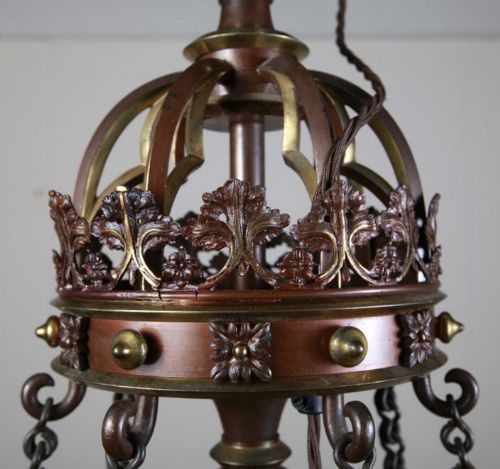
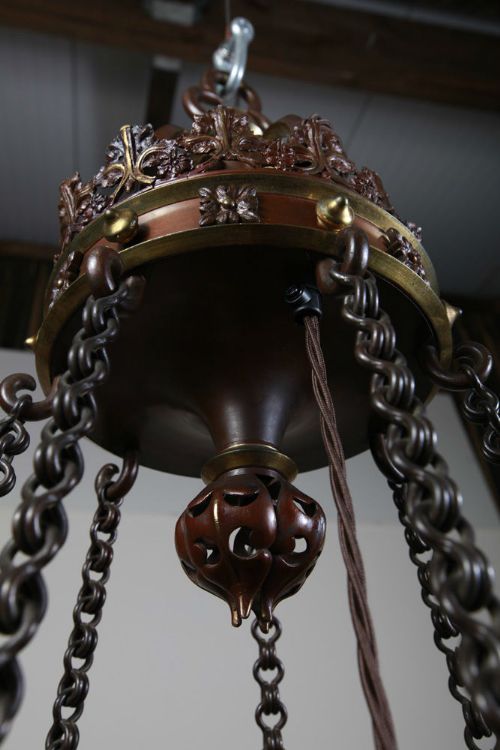
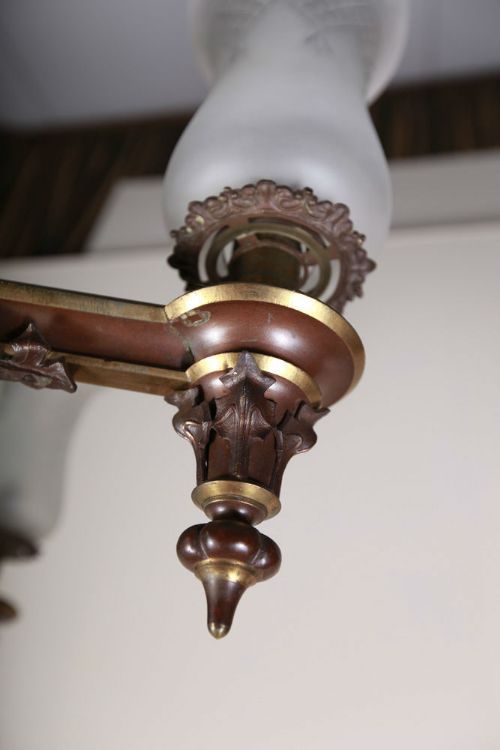
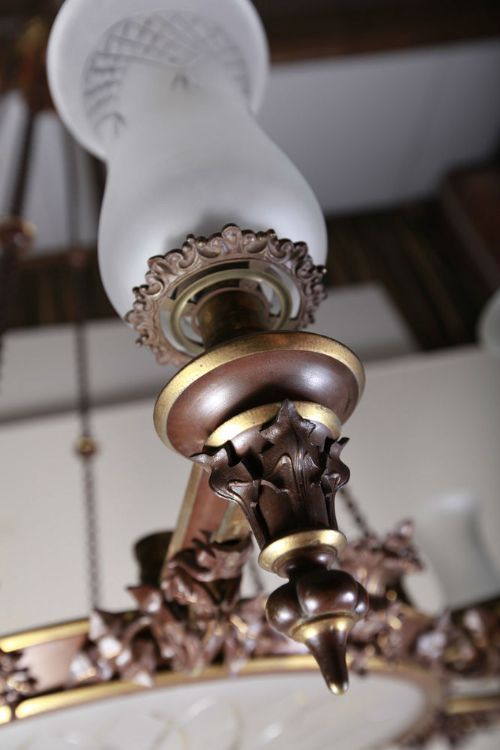
Blank Canvas Antiques has dated this piece to the 19th Century.
Perry & Co.
At the beginning of the 19th century, the firm Parker and Perry was commissioned to create many chandeliers and lanterns for Carlton House, when the Prince of Wales embarked upon a major restoration project. (Parker and Perry was a new firm at this time, having been formed of a partnership between two designers/manufacturers, Samuel Parker (of the eponymously-named company) and William Perry (formerly of Perry & Collins, who were glass manufacturers)).
Completed in 1808, it was 14 feet high and 6 feet 6 inches in diameter. It was considered by Pyne, a contemporary authority on the royal palaces, to be one of the finest chandeliers in Europe.
Following the death of Samuel Parker in 1817, William Perry established himself as glass manufacturer to the Prince Regent. In 1822 he was joined in partnership by his nephew, George, and the firm began trading as William and George Perry.
All the 19th century chandeliers at Carlton House were taken down upon its eventual dismantling in 1826. Many were brought up to date by the company (named George Perry and Co from 1833 onwards) and installed, in 1834, at Buckingham Palace, where they remain to this day.
In 1835, following extensive renovations to Goldsmiths’ Hall in London, and before its grand opening the same year, Philip Hardwick chose Perry and Co out of a list of hopefuls to make and install a series of lights and chandeliers for the Hall, including one of enormous proportions, for the Great Livery Hall, with seventy-two lights and a diameter of nine feet.
In 1841, George Perry was joined in the business by his brother, Richard, upon William’s retirement. In 1842, upon the instructions of Queen Victoria, Perry and Co were responsible for reinstating to the dome of the Banqueting Room at the Brighton Pavilion the famous colossal chandelier which hangs, apparently, from the claws of a golden dragon in flight (indeed, it is likely that this grand chandelier was actually made by Parker and Perry, as they were known at the time of its creation). Also, nine chandeliers, conceived as inverted parasols (a design feature which became a distinctive mark of Perry and Co craftsmanship), were made by the company for the Music Room in the Brighton Pavilion. Many were taken to London upon the sale of the Pavilion by Queen Victoria in 1850. All but four, which remain at Buckingham Palace, were returned to the Pavilion in 1864.
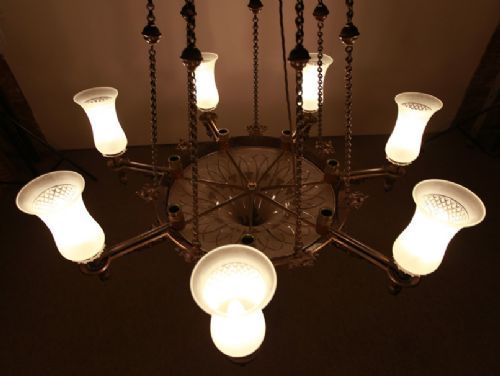
The company’s Bond Street premises were kept until 1890, when it moved to an address in Grafton Street. Perry and Co.’s last premises were at 21 Grafton Street, in 1921. (From about the mid-19th century onwards, the firm was owned by Messrs Willis and John Miley, and changed hands a couple of times over the years, before eventually being dissolved in 1935).
Blank Canvas Antiques has dated this piece to the 19th Century.
You can view the stock and full dealer information on the Blank Canvas Antiques Profile Page
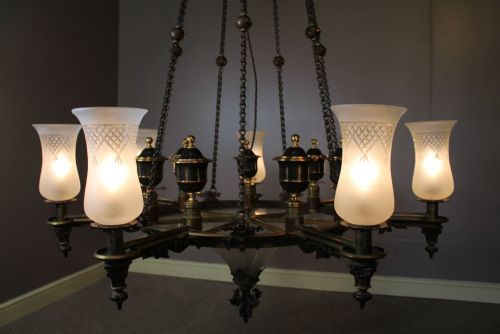
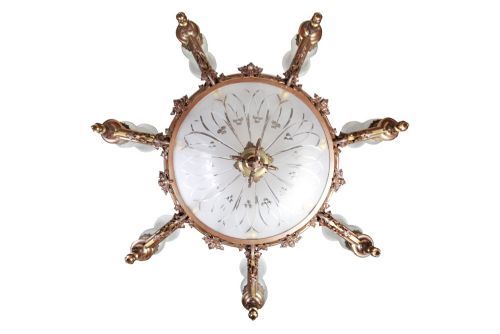
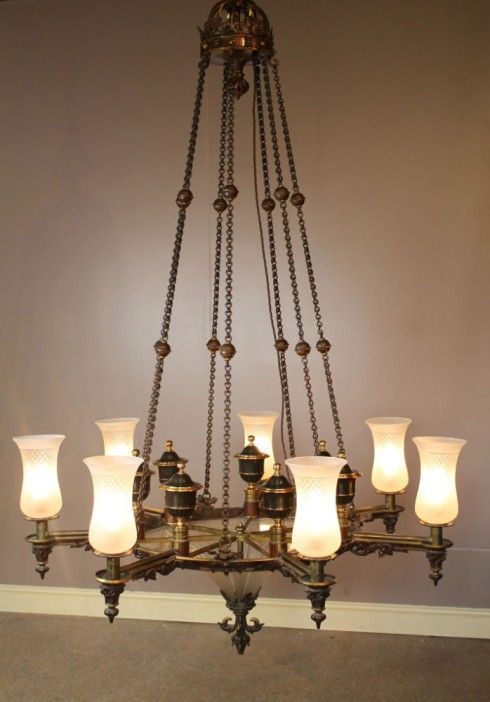
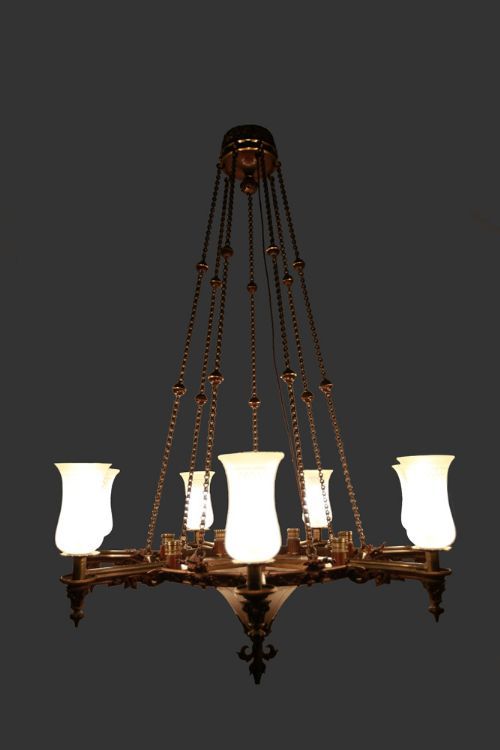
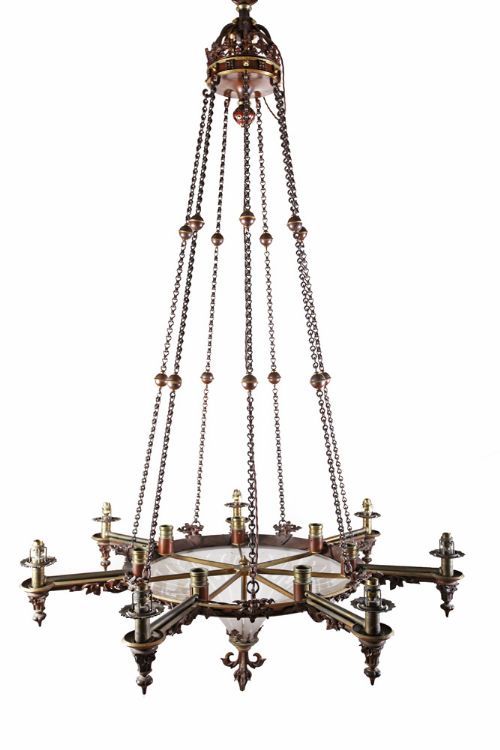
A Large 19th Century Gothic Gilt Bronze Seven-branch Colza Chandelier