27,403  PAGES BROWSED TODAY PAGES TODAY • 100 ANTIQUES UPLOADED TODAYNEW ARRIVALS
GIFTS
100 ITEMS ADDED TODAY
Sort Order
Items Per Page
Antiques dealer?
Join as a Seller
Browse Categories
Sort order
Items per page
sold SA493566
Sorry, but this item has been sold.
Church Street Antiques & Interiors

Church Street Antiques & Interiors

Sellingantiques Verified Since Apr 2011
Browse dealers 445 items
Id #SA493566
SHARE
SAVE

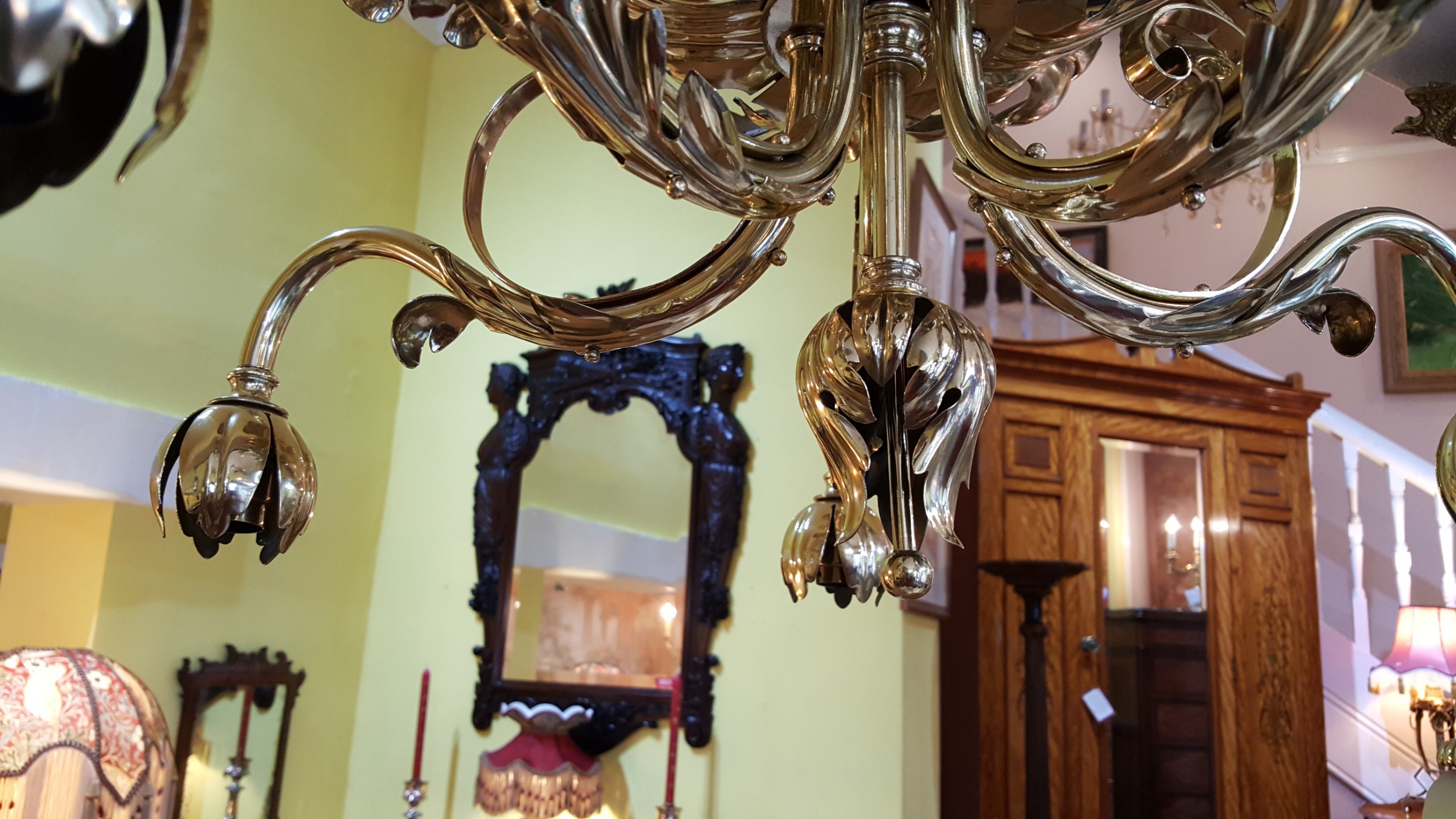
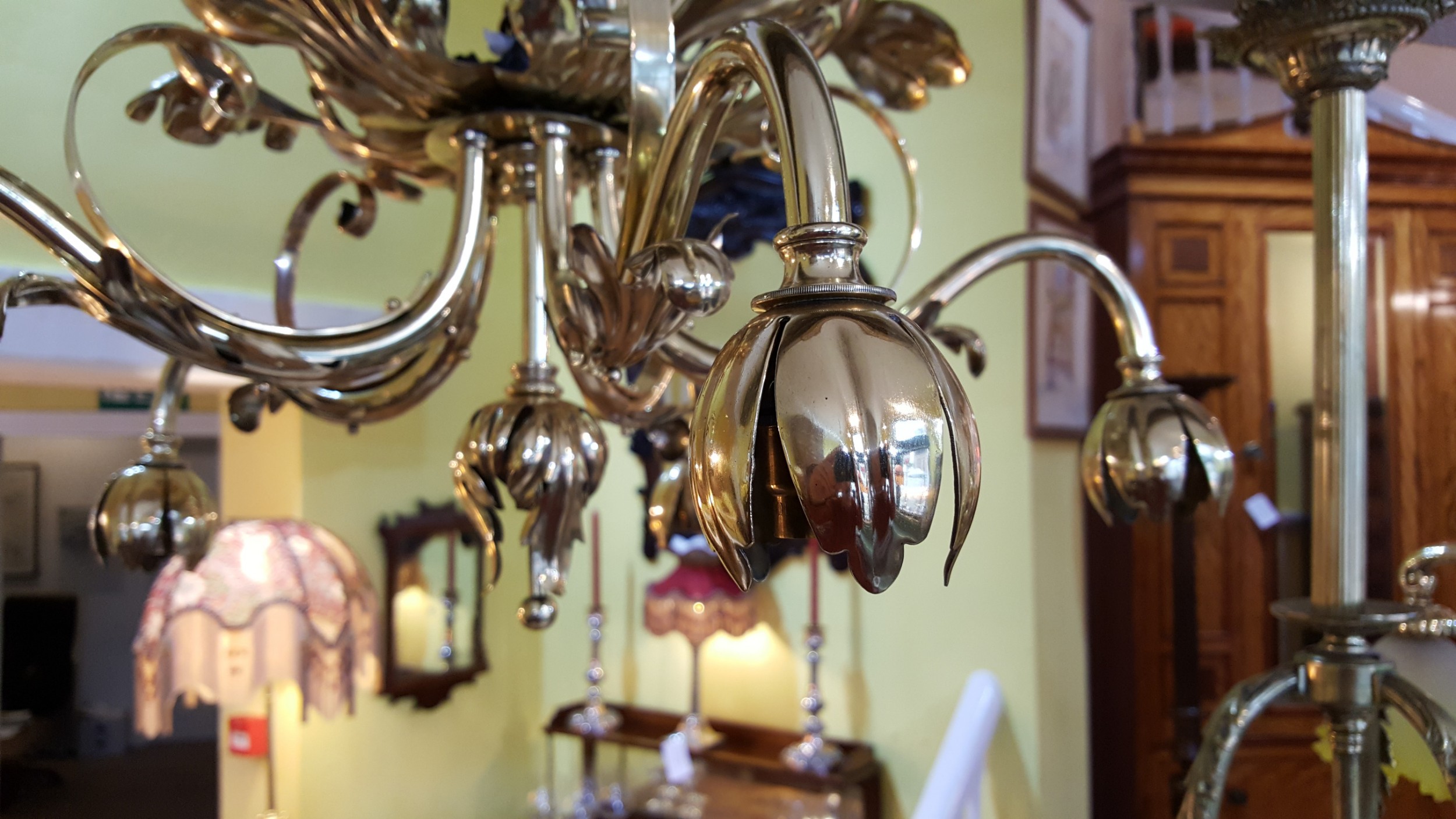
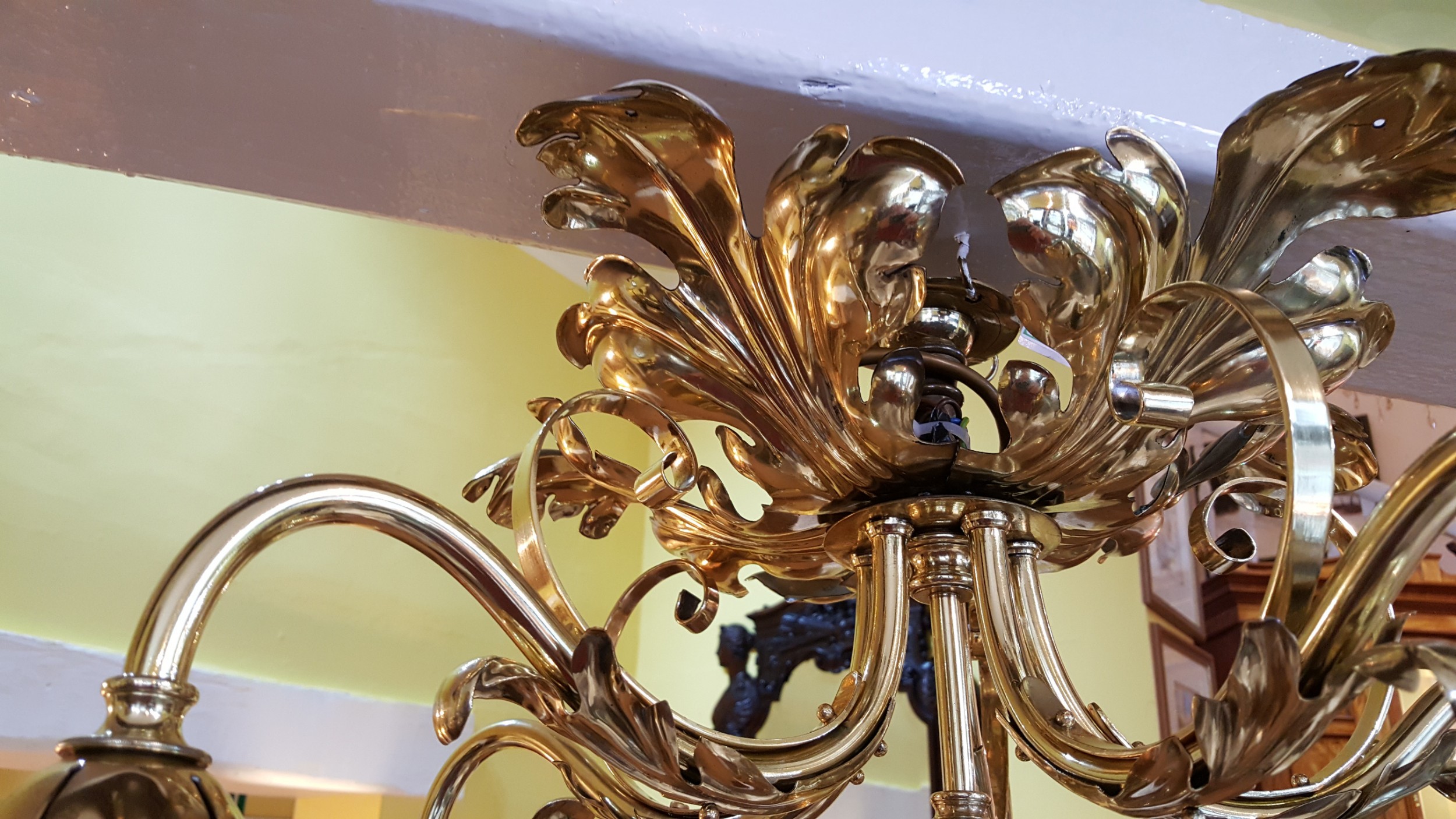
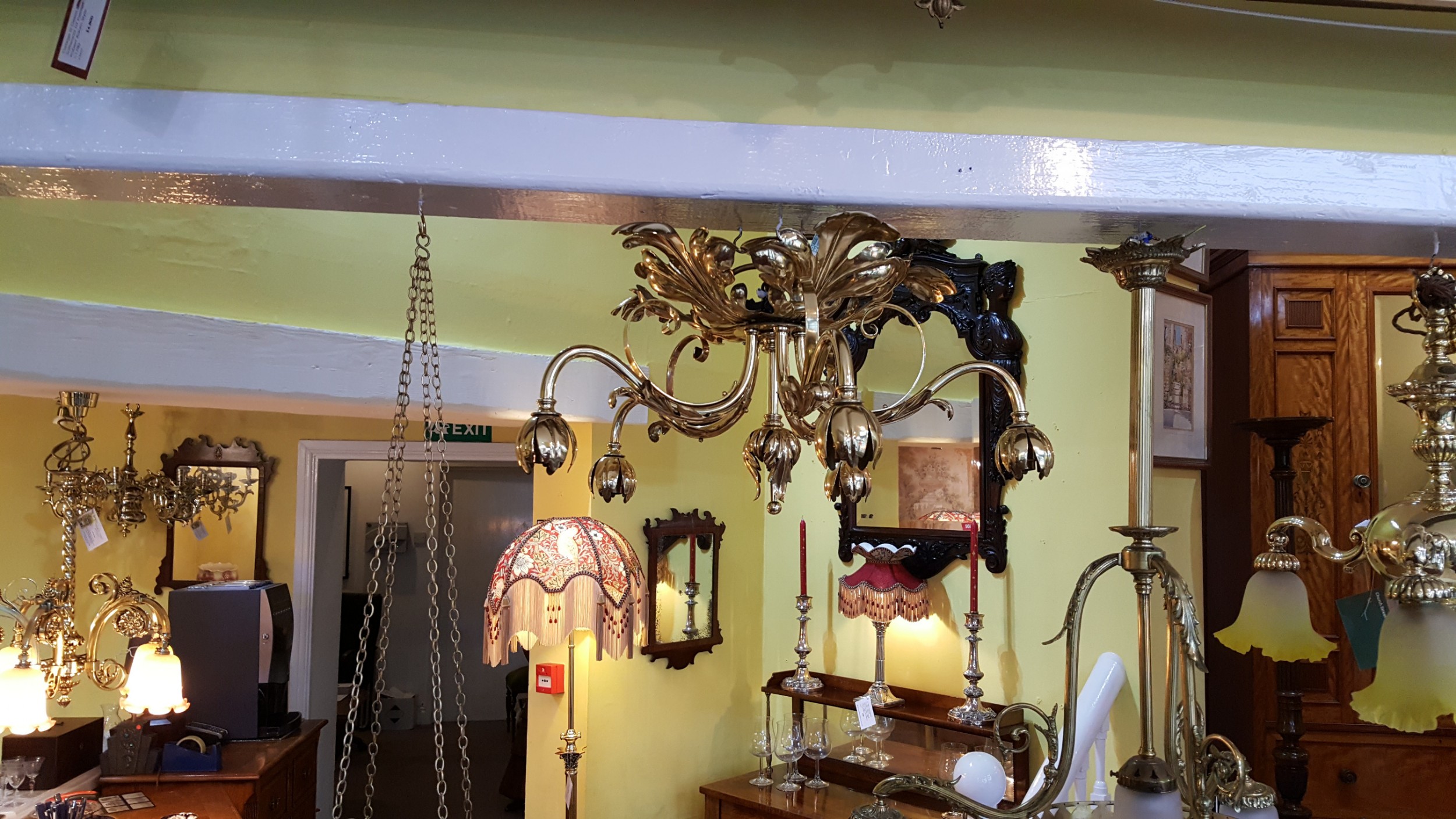
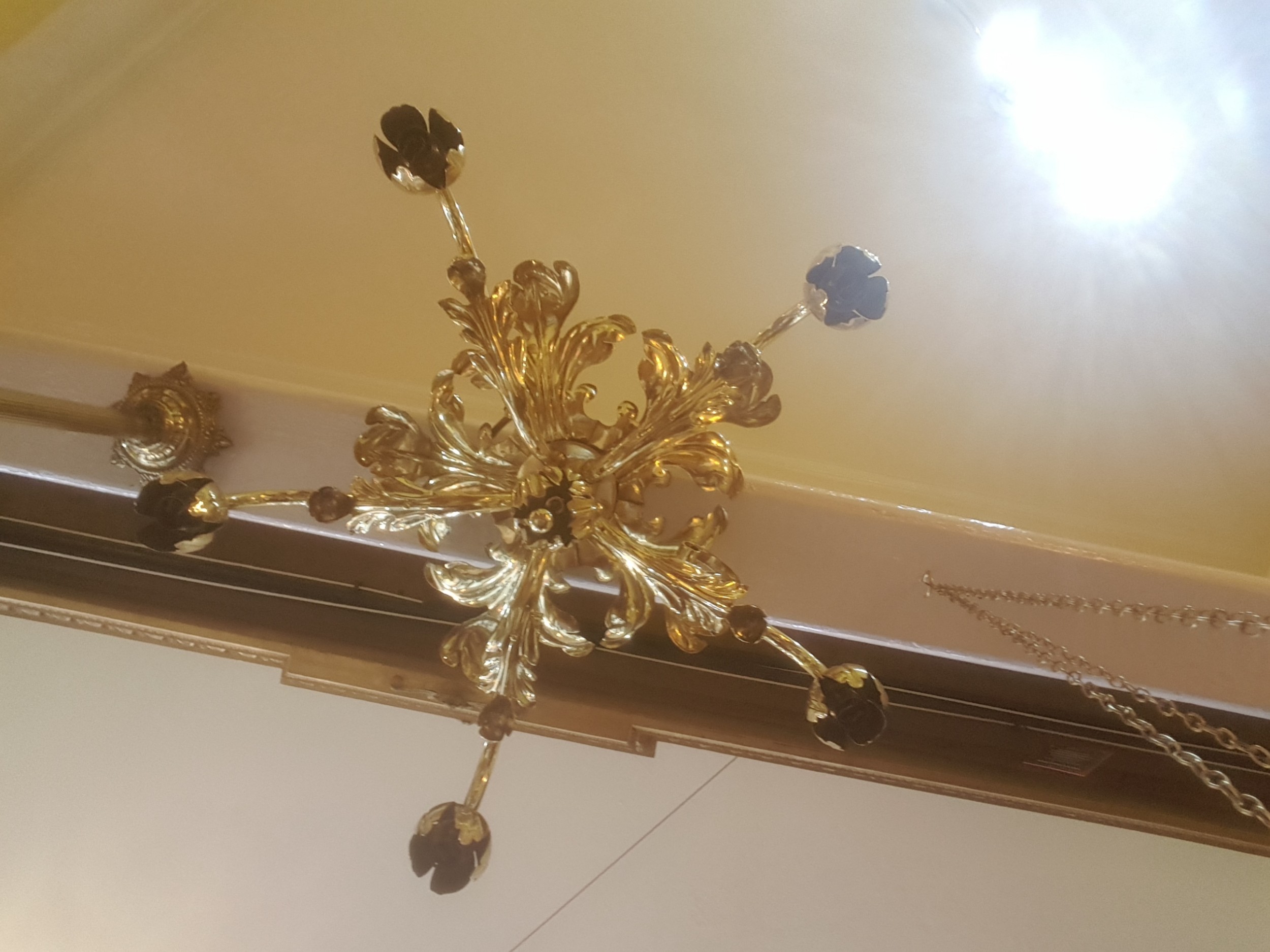
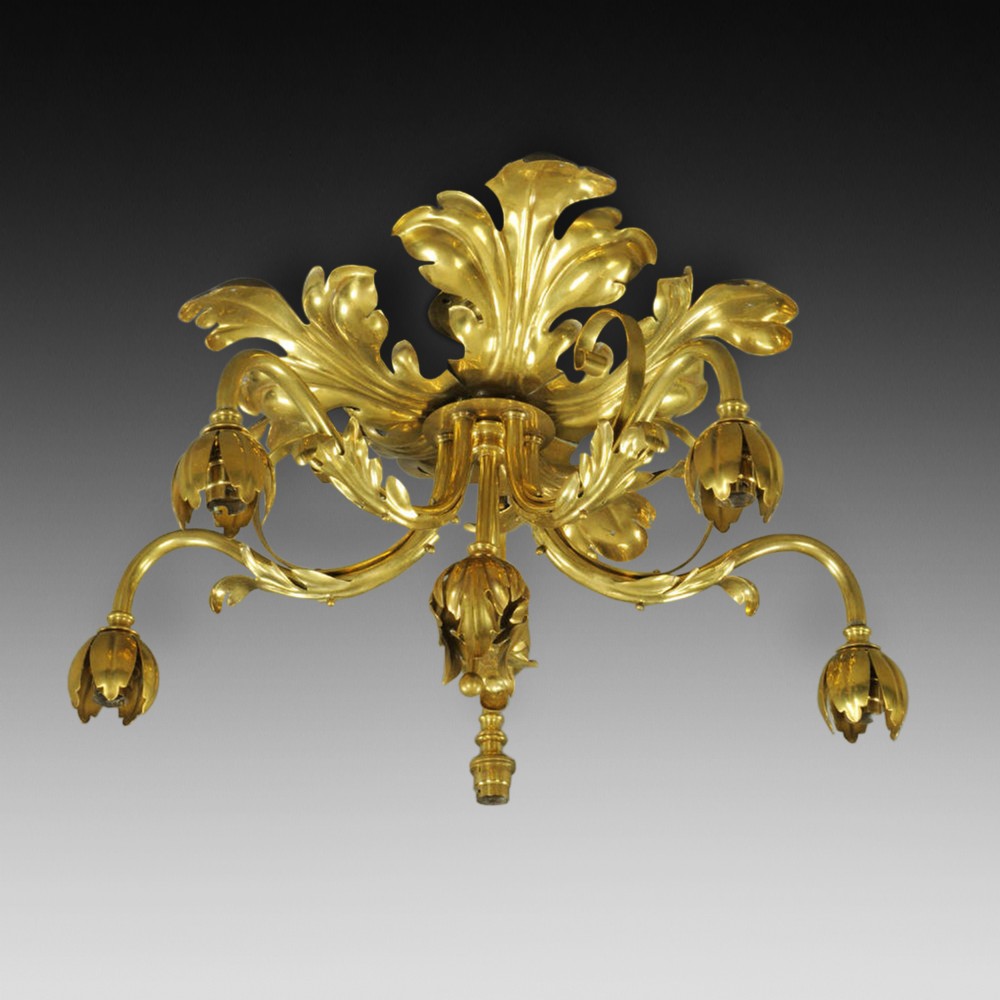
Early 20thc Brass Five Branch Ceiling Light

1900 - 1920
Sold 7 October 2017 · Church Street Antiques & Interiors
This “Early 20thc Brass Five Branch Ceiling Light” found a buyer.

It was listed by Church Street Antiques & Interiors. Sold pieces stay on Sellingantiques as a record of what has passed through, and the next one is rarely far away.

Description

Early 20th century brass five branch electric ceiling light fitting 22"diam x 12.5"h by F&C Osler

The firm of F & C Osler of London and Birmingham, were the leading makers of chandeliers and lighting during the nineteenth century. The glassworks were founded by Thomas Osler in 1807 in Birmingham and specialised in glass furniture and chandeliers for the overseas market.

Thomas Osler was a scholar rather than businessman but when his sons (Follett and Clarkson Osler) joined him in the business they complemented his skills with their energy, which saw the firm thrive and a London house being opened in 1845.

A commission from the ruler of Egypt (Ibrahim Pacha) for a pair of enormous Candelabra to place beside the tomb of the prophet Mahomet at Mecca, generated much interest and as a result Messrs Osler had the honour of a visit from HRH the Prince Consort. A second, even greater Candelabrum was designed by them and exhibited at the Exhibition of Industrial Arts in Birminghan, opened by the Prince Consort. It was this exhibition which gave Prince Albert the idea of a Great Exhibition in London.

As a result by 1850 the firm had been commissioned to make the giant crystal fountain for the 1851 Great Exhibition in Hyde Park, London. The fountain stood some 8.25 meters or 27 feet high and contained 4,000kgs or 4 tons of crystal. At a time when cut glass remained the touchstone of quality the fountain was dependent upon cutters' skills for its appeal. The original catalogue of the exhibition makes particular note of the scale to which this magnificent glass fountain dominated the entrance; 'Forming the centre and, or nearly so, of the entire building, and dividing alike the transept and the nave, rises the gigantic fountain of Messrs. Osler, the culminating point of view from every quarter of the building...'. The brochure also goes on to say that the fountain, '..is perhaps the most striking object in the Exhibition; the lightness and beauty, as well as the perfect novelty of its design, have rendered it the theme of admiration with all visitors.'

In 1856 the firm supplied a large chandelier for St Georges Hall, Liverpool; Liverpool was then the leading and richest port in the country. This was followed by other significant commissions including a thirty six light chandelier for the Mansion House, London.

In 1858, Queen Victoria opened Aston Hall, Birmingham's spectacular Jacobean mansion, to the public and a banquet was held in the Great Dining Room. F & C Osler, produced the table service. According to a history of F & C Osler, 'Her Majesty the Queen was so struck by the unique beauty of the Tudor Service, that she asked permission to take away a beautiful Champagne Glass ... This she took personal charge of throughout the journey to London '.

In 1862 Thomas Osler & Co. exhibited at the Paris Exhibition; a contemporary commentator recorded; "When it is said that these chandeliers are of the usual excellence in material and workmanship, which has for so many years characterised the chandeliers and candelabra of this house."

F. & C. Osler were the leaders in their field and took the art of 'Brilliant Cut Glass' to new heights. This 'brilliant' style emerged in the late 1870's, its name aptly describing it's effect. At its most complex brilliant cutting involved covering the glass surface with intersecting cuts that created innumerable, often fragmentary shapes making up larger patterns. Basic motifs used were stars, hob-nail or polygonal diamonds, strawberry diamonds and fan scallops, out of which a dazzling surface effect was achieved. During the 1880's F. & C. Osler produced ever more complicated designs in this style.

The wealth within India and efficient shipping links led Osler to chose India as his largest market outside the UK and many Osler chandeliers and light fittings survive there to this day.

Date of Manufacture

Church Street Antiques & Interiors has dated this piece to the 1910s.

Physical Dimensions
Height
18cm (7.09")
Width
28cm (11.02")
Depth
28cm (11.02")
Reference Numbers
Sellingantiques Reference
SA493566
Dealers Internal Reference
4650
Early 20thC brass five branch ceiling lightDetail view 1Detail view 2Detail view 3Detail view 4Detail view 5
SOLD6+ MONTHS AGO
1 / 6
1910s · SA493566
Early 20thc Brass Five Branch Ceiling Light
Sorry, but this item has been sold.
Description
Early 20th century brass five branch electric ceiling light fitting 22"diam x 12.5"h by F&C Osler

The firm of F & C Osler of London and Birmingham, were the leading makers of chandeliers and lighting during the nineteenth century. The glassworks were founded by Thomas Osler in 1807 in Birmingham and specialised in glass furniture and chandeliers for the overseas market.

Thomas Osler was a scholar rather than businessman but when his sons (Follett and Clarkson Osler) joined him in the business they complemented his skills with their energy, which saw the firm thrive and a London house being opened in 1845.

A commission from the ruler of Egypt (Ibrahim Pacha) for a pair of enormous Candelabra to place beside the tomb of the prophet Mahomet at Mecca, generated much interest and as a result Messrs Osler had the honour of a visit from HRH the Prince Consort. A second, even greater Candelabrum was designed by them and exhibited at the Exhibition of Industrial Arts in Birminghan, opened by the Prince Consort. It was this exhibition which gave Prince Albert the idea of a Great Exhibition in London.

As a result by 1850 the firm had been commissioned to make the giant crystal fountain for the 1851 Great Exhibition in Hyde Park, London. The fountain stood some 8.25 meters or 27 feet high and contained 4,000kgs or 4 tons of crystal. At a time when cut glass remained the touchstone of quality the fountain was dependent upon cutters' skills for its appeal. The original catalogue of the exhibition makes particular note of the scale to which this magnificent glass fountain dominated the entrance; 'Forming the centre and, or nearly so, of the entire building, and dividing alike the transept and the nave, rises the gigantic fountain of Messrs. Osler, the culminating point of view from every quarter of the building...'. The brochure also goes on to say that the fountain, '..is perhaps the most striking object in the Exhibition; the lightness and beauty, as well as the perfect novelty of its design, have rendered it the theme of admiration with all visitors.'

In 1856 the firm supplied a large chandelier for St Georges Hall, Liverpool; Liverpool was then the leading and richest port in the country. This was followed by other significant commissions including a thirty six light chandelier for the Mansion House, London.

In 1858, Queen Victoria opened Aston Hall, Birmingham's spectacular Jacobean mansion, to the public and a banquet was held in the Great Dining Room. F & C Osler, produced the table service. According to a history of F & C Osler, 'Her Majesty the Queen was so struck by the unique beauty of the Tudor Service, that she asked permission to take away a beautiful Champagne Glass ... This she took personal charge of throughout the journey to London '.

In 1862 Thomas Osler & Co. exhibited at the Paris Exhibition; a contemporary commentator recorded; "When it is said that these chandeliers are of the usual excellence in material and workmanship, which has for so many years characterised the chandeliers and candelabra of this house."

F. & C. Osler were the leaders in their field and took the art of 'Brilliant Cut Glass' to new heights. This 'brilliant' style emerged in the late 1870's, its name aptly describing it's effect. At its most complex brilliant cutting involved covering the glass surface with intersecting cuts that created innumerable, often fragmentary shapes making up larger patterns. Basic motifs used were stars, hob-nail or polygonal diamonds, strawberry diamonds and fan scallops, out of which a dazzling surface effect was achieved. During the 1880's F. & C. Osler produced ever more complicated designs in this style.

The wealth within India and efficient shipping links led Osler to chose India as his largest market outside the UK and many Osler chandeliers and light fittings survive there to this day.
Date1910s
Height18cm (7.09")
Width28cm (11.02")
Depth28cm (11.02")
ReferenceSA493566
Dealer's reference4650
Church Street Antiques & Interiors
Church Street Antiques & InteriorsSellingantiques verified since Apr 2011
SHARE
SAVE
Archive I Early 20thC brass five branch ceiling light SOLD6+ MONTHS AGO

Early 20thc Brass Five Branch Ceiling Light

Archive II Early 20thC brass five branch ceiling light View II
Archive III Early 20thC brass five branch ceiling light View III
Archive IV Early 20thC brass five branch ceiling light View IV
Archive V Early 20thC brass five branch ceiling light View V
Archive VI Early 20thC brass five branch ceiling light View VI
Enlarged Archival View
Telephone 0161 929 5196
Location
4/4a Old Market Place
Altrincham
Cheshire
WA14 4NP
United Kingdom
Verified Since Apr 2011
Items For Sale 445
Items Sold 2,395
Church Street Antiques & Interiors
Verified Since Apr 2011
View Dealer Info
Location: 4/4a Old Market Place, Altrincham, Cheshire, WA14 4NP, United Kingdom
Verified
Apr 2011
For Sale
445
Sold
2,395
Early 20thC brass five branch ceiling light
Ref: SA493566
Early 20thC brass five branch ceiling light
Detail View 1
Detail View 2
Detail View 3
Detail View 4
Detail View 5
Archival Detail
Every single antique dealer on our platform is individually approved by our internal team. We verify their professional trade history, ethical standards, and photographic quality to ensure a secure, high-standard buying environment. Upon joining, every dealer agrees to a strict 9-point code of conduct. While issues can occasionally arise, our dealers typically resolve them swiftly and directly with the buyer. In fact, since our founding in 2002, Sellingantiques has only had to step in to help resolve an issue on roughly five occasions—a true testament to the quality of our dealers and their dedication to your happiness.
Our dealers are highly experienced in packing and shipping fragile, high-value antiques. Because you are in direct contact with the dealer, you will be able to easily go through all available shipping and insurance options together to ensure your item arrives safely.
Antiques are the ultimate green purchase. By choosing historical pieces over newly manufactured goods, you completely eliminate the carbon footprint of modern mass production while preserving exceptional, timeless craftsmanship.
Written by Sellingantiques from the dealer’s photographs and listing
  • Period1900 - 1920
  • SizeH 18 cm (7 in) x W 28 cm (11 in) x D 28 cm (11 in)
items
Add keywords to the filter
Price
£100
£250000
Era
Period
Style
Material
Origin
Stock Location
Recently Added
Online Payments
Categories