8,287  PAGES BROWSED TODAY PAGES TODAY 36  ANTIQUES UPLOADED TODAY NEW ARRIVALS
ID #SA342087
FOR SALE
£4,500
Email
Save
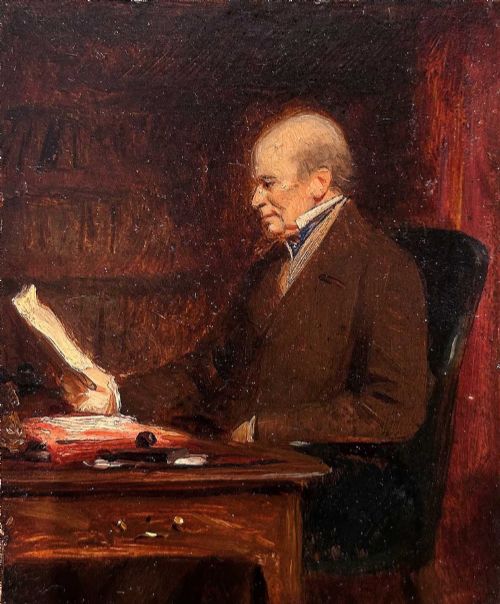
Portrait of George Hudson 1800-1871 "The Railway King"
Artware Fineart
for sale €5,265     $5,715
£4,500

Artware Fineart

Sellingantiques Verified Since Sep 2008
View Dealers Stock Page
Id #SA342087
PDF SHARE
SAVE

Portrait of George Hudson 1800-1871 "The Railway King"

19th century
For Sale by Artware Fineart
Description

English School 19th Century

Portrait of George Hudson 1800-1871 "The Railway King"

oil on canvas

66.04 x 45.72 cm. (26 x 18 in.)

Hudson, George [called the Railway King] (1800–1871), railway promoter and fraudster, was born in March 1800 at Howsham, about 12 miles north-east of York, the fifth son of a farmer who died in 1806. He went to local schools and in 1815 was apprenticed to Bell and Nicholson, a firm of drapers in College Street, York. When his apprenticeship was complete he received a share in the business. Bell retired and the firm became Nicholson and Hudson. In 1821 he married Elizabeth Nicholson, who was the daughter of one of the partners in the firm and five years older than he was. Four of their children survived into adulthood: George, who was called to the bar and became an inspector of factories; John, who entered the army and was killed in the Indian mutiny; William, who became a doctor; and Anne, who married a Polish count, Count Suminski.

In 1827, already a wealthy man, Hudson received a legacy of £30,000 from a great-uncle, Matthew Bottrill. This money enabled him to establish himself in the political and social life of York. He became treasurer of the local tory party at the time of the election following the Reform Bill of 1832, and in 1833 he took a leading part in the establishment of the York Union Banking Company. In 1835 Hudson was elected to the newly reformed York city council and in November of 1837 he became lord mayor. He entertained lavishly and was re-elected in the following year, although he was not strictly eligible to stand. In 1833 Hudson attended a meeting in which the construction of a railway from York to link up with the Leeds to Selby line was proposed. He subsequently subscribed for 500 shares and was the largest shareholder. An act of parliament was obtained in 1837 and Hudson became chairman of the company, known as the York and North Midland Railway Company, with George Stephenson as the engineer.

In 1841 he persuaded the shareholders in eight railway companies engaged, so far unsuccessfully, in building a line from York to Newcastle, to join together to build the section of the line from Darlington to Newcastle and an act of parliament was obtained in 1842 for that purpose. In the same year he obtained control of the North Midland Leeds to Derby line and this was followed by the merger of the Birmingham and Derby and the Midland Counties companies with his own. By 1844 he controlled over 1000 miles of railway and was dubbed the Railway King but his ‘kingdom’ lacked any direct line into London. He, together with George Stephenson, had long planned a line into London from the midlands, and when the Great Northern line from London through Peterborough to York was proposed he made determined and often unscrupulous efforts to block the scheme, unsuccessfully, the act for the line being passed in June of 1846.

Early in 1844 William Gladstone, then president of the Board of Trade, prompted by the large number of railway bills then coming before parliament and alarmed at the intense competition between rival companies, set up a House of Commons committee of inquiry into the railways. This was seen by many railway proprietors as the beginning of state control and a campaign of opposition was headed by Hudson. He had a private meeting with Gladstone and compromise terms were agreed which removed any immediate prospect of railway nationalization.

By this time Hudson was very wealthy, with several estates in Yorkshire, including the Londesborough estate of some 12,000 acres, bought from the duke of Devonshire for £470,000, partly with the aim of blocking a possible competitor from building a line from York to Hull. He bought Newby Park from Earl de Grey in October of 1845 and also owned a large mansion, Albert House, in Knightsbridge. In 1846 he outlined plans

Physical Dimensions
Height
66cm (25.98")
Width
45cm (17.72")
Depth
2cm (0.79")
Declaration

Artware Fineart has dated this Victorian Male Portrait Painting to the 1800s.

Reference Numbers
Sellingantiques Reference
SA342087
Dealers Internal Reference
3732
Description
English School 19th Century

Portrait of George Hudson 1800-1871 "The Railway King"

oil on canvas

66.04 x 45.72 cm. (26 x 18 in.)

Hudson, George [called the Railway King] (1800–1871), railway promoter and fraudster, was born in March 1800 at Howsham, about 12 miles north-east of York, the fifth son of a farmer who died in 1806.
Artware Fineart

He went to local schools and in 1815 was apprenticed to Bell and Nicholson, a firm of drapers in College Street, York. When his apprenticeship was complete he received a share in the business. Bell retired and the firm became Nicholson and Hudson. In 1821 he married Elizabeth Nicholson, who was the daughter of one of the partners in the firm and five years older than he was. Four of their children survived into adulthood: George, who was called to the bar and became an inspector of factories; John, who entered the army and was killed in the Indian mutiny; William, who became a doctor; and Anne, who married a Polish count, Count Suminski.

In 1827, already a wealthy man, Hudson received a legacy of £30,000 from a great-uncle, Matthew Bottrill. This money enabled him to establish himself in the political and social life of York. He became treasurer of the local tory party at the time of the election following the Reform Bill of 1832, and in 1833 he took a leading part in the establishment of the York Union Banking Company. In 1835 Hudson was elected to the newly reformed York city council and in November of 1837 he became lord mayor. He entertained lavishly and was re-elected in the following year, although he was not strictly eligible to stand. In 1833 Hudson attended a meeting in which the construction of a railway from York to link up with the Leeds to Selby line was proposed. He subsequently subscribed for 500 shares and was the largest shareholder. An act of parliament was obtained in 1837 and Hudson became chairman of the company, known as the York and North Midland Railway Company, with George Stephenson as the engineer.

In 1841 he persuaded the shareholders in eight railway companies engaged, so far unsuccessfully, in building a line from York to Newcastle, to join together to build the section of the line from Darlington to Newcastle and an act of parliament was obtained in 1842 for that purpose. In the same year he obtained control of the North Midland Leeds to Derby line and this was followed by the merger of the Birmingham and Derby and the Midland Counties companies with his own. By 1844 he controlled over 1000 miles of railway and was dubbed the Railway King but his ‘kingdom’ lacked any direct line into London. He, together with George Stephenson, had long planned a line into London from the midlands, and when the Great Northern line from London through Peterborough to York was proposed he made determined and often unscrupulous efforts to block the scheme, unsuccessfully, the act for the line being passed in June of 1846.

Early in 1844 William Gladstone, then president of the Board of Trade, prompted by the large number of railway bills then coming before parliament and alarmed at the intense competition between rival companies, set up a House of Commons committee of inquiry into the railways. This was seen by many railway proprietors as the beginning of state control and a campaign of opposition was headed by Hudson. He had a private meeting with Gladstone and compromise terms were agreed which removed any immediate prospect of railway nationalization.

By this time Hudson was very wealthy, with several estates in Yorkshire, including the Londesborough estate of some 12,000 acres, bought from the duke of Devonshire for £470,000, partly with the aim of blocking a possible competitor from building a line from York to Hull. He bought Newby Park from Earl de Grey in October of 1845 and also owned a large mansion, Albert House, in Knightsbridge. In 1846 he outlined plans

Height
66cm (25.98")
Width
45cm (17.72")
Depth
2cm (0.79")
Date of Manufacture

Artware Fineart has dated this Victorian Male Portrait Painting to the 1800s.

Reference Numbers
Sellingantiques Ref
SA342087
Dealers Internal Ref
3732
Artware Fineart
Sellingantiques verified Since Sep 2008
Dealer Profile

You can view the stock and full dealer information on the Artware Fineart Profile Page

PDF SHARE
SAVE
An antique oil portrait painting depicting a 19th-century gentleman with dark curly hair, wearing a dark cravat and jacket against a dark background.
1 / 1
Archive I An antique oil portrait painting depicting a 19th-century gentleman with dark curly hair, wearing a dark cravat and jacket against a dark background.

Portrait of George Hudson 1800-1871 "The Railway King"
FURTHER BROWSING

Visitors also looked at these ⇣

Enlarged Archival View
Telephone 07958 699 645
Location
18 La Gare
51 Surrey Row
London
SE1 0BZ
United Kingdom
Verified Since Sep 2008
Items For Sale 243
Items Sold 223
Artware Fineart
Verified Since Sep 2008
View Dealer Info
Location: 18 La Gare , 51 Surrey Row , London , SE1 0BZ , United Kingdom
Verified
Sep 2008
For Sale
243
Sold
223
An antique oil portrait painting depicting a 19th-century gentleman with dark curly hair, wearing a dark cravat and jacket against a dark background.
Portrait of George Hudson 1800-1871 "The Railway King"
Ref: SA342087
An antique oil portrait painting depicting a 19th-century gentleman with dark curly hair, wearing a dark cravat and jacket against a dark background.
Archival Detail
Every single antique dealer on our platform is individually approved by our internal team. We verify their professional trade history, ethical standards, and photographic quality to ensure a secure, high-standard buying environment. Upon joining, every dealer agrees to a strict 9-point code of conduct. While issues can occasionally arise, our dealers typically resolve them swiftly and directly with the buyer. In fact, since our founding in 2002, Sellingantiques has only had to step in to help resolve an issue on roughly five occasions—a true testament to the quality of our dealers and their dedication to your happiness.
Our dealers are highly experienced in packing and shipping fragile, high-value antiques. Because you are in direct contact with the dealer, you will be able to easily go through all available shipping and insurance options together to ensure your item arrives safely.
Antiques are the ultimate green purchase. By choosing historical pieces over newly manufactured goods, you completely eliminate the carbon footprint of modern mass production while preserving exceptional, timeless craftsmanship.

Victorian portrait paintings are defined by formal compositions, realistic depictions of the subject, and careful attention to period clothing details. Artists frequently utilised dark, atmospheric backgrounds to highlight the face and upper torso of the sitter.

Most portraits from this era were rendered using oil paints applied to stretched flax or linen canvas, as well as wooden panels. Frame construction typically involved carved timber coated with gesso and gold leaf.

Authentic period paintings display natural craquelure across the paint surface, historic oxidation on the canvas backing, and signs of age along the stretcher bars or panel edges. Inspection under ultraviolet light can also reveal historical retouching or varnish layers.

Antique portraits are frequently integrated into modern spaces by hanging them as focal points above sideboards or mantels, or by incorporating them into eclectic gallery walls alongside contrasting modern artwork.

Keep oil paintings away from direct sunlight, high humidity, and extreme temperature fluctuations. Dust the surface gently with a soft, dry brush and consult a professional conservator for cleaning or varnish removal.
items
Add keywords to the filter
Price
£100
£250000
Era
Movements
Material
Origin
Stock Location
Freshness
Online Payments
Categories