60,930  PAGES BROWSED TODAY PAGES TODAY 0  ANTIQUES UPLOADED TODAY NEW ARRIVALS
ID #SA342148
FOR SALE
£3,000
Email
Save
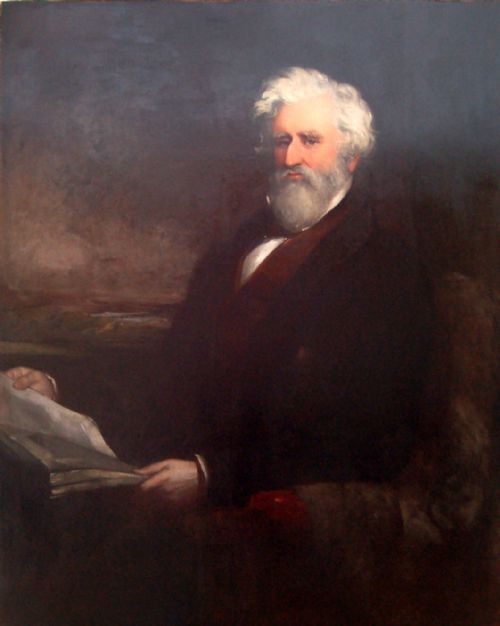
English School 19th Century Portrait of George Osbaldeston 1786 - 1866 Known as "Squire Osbaldeston"
Artware Fineart
Id #SA342148
PDF SHARE
SAVE

English School 19th Century Portrait of George Osbaldeston 1786 - 1866 Known as "Squire Osbaldeston"

19th century
For Sale by Artware Fineart
Description

English School 19th Century

Portrait of George Osbaldeston 1786 - 1866 known as "Squire Osbaldeston"

oil on canvas

30 x 25 cm. (11.3/4 x 9.3/4 in.)

frame measures 44 x 39 x 6 cm. Together with a book titled "Squire osbaldeston, his autobiography, edited by E.D.Cuming and an introduction by Sir Theodore Cook".

George Osbaldeston, (1786–1866), sportsman, was born on 26 December 1786 at Welbeck Street, London, the only son of the five children of George Osbaldeston (1753–1793), previously Wickins, landowner and MP for Scarborough, and his wife, Jane (d. 1821), daughter of Sir Thomas Head. His parents, who were from ecclesiastical, academic, and political families, were from the south of England, but in 1770 Osbaldeston's grandfather had inherited half the Yorkshire estates of his wife's uncle Fountayne Wentworth Osbaldeston (1694–1770), on condition that he took the Osbaldeston name. The family lived in the Osbaldeston house at Hutton Buscel, near Scarborough. When his father died, the estate was left in trust for six-year-old George, whose mother squandered much of it.

Osbaldeston lived at Hutton Buscel until he was nine years old, from which time he attended successively the schools run by the Revd Carr and the Revd Wallington, both at Ealing, London, and then Eton College (1802–3), where sport was his sole interest. Following a wild spell at Brighton (1803–4), he went to Brasenose College, Oxford, where he matriculated in 1805, but sport took precedence over study and he left in 1807 without a degree. His wealth qualified him to be commissioned lieutenant-colonel of the 5th regiment North Riding local militia from 1809 to 1811, and family connections enabled him to be elected as a whig MP for East Retford, Lincolnshire, from 1812 to 1818, although he rarely attended parliament. The appointment as high sheriff for Yorkshire, in 1829, was more to his taste, as it involved much socializing.

Osbaldeston's obsession was to be the best at competitive sports; he was skilled at billiards, cricket, shooting, rowing, tennis, horse-racing, carriage-racing, and especially fox-hunting. He was sixteen when he first bought hounds; they were Southern hounds, and were too slow for him, so he bought Lord Jersey's dwarf foxhounds and built kennels, to Beckford's design, at Hutton Buscel. In 1810, when a fire destroyed Hutton Buscel Hall, he rented a house with his mother, the Palace, Lincoln, where she could entertain, and he hunted the local Burton country, after purchasing the late Lord Monson's pack. He was reputed to have a son, by a Miss Green, a Lincoln prostitute, but the child was sent abroad. For the next twenty-four years he was an itinerant master of foxhounds, serving nine hunts, including the Atherstone (1815–17), the Quorn (1817–21 and 1823–7), and the Pytchley (1827–34), usually subsidizing the cost; he may have been tolerated only for this reason, as he antagonized all ranks of society by his self-centred, arrogant attitudes and his persistent belief that people cheated him. W. Sparrow has suggested that Osbaldeston's great reputation as a huntsman and hound-breeder was mainly due to the skill of his whipper-in, Tom Sebright: after they parted company, Osbaldeston's hunt declined considerably, and he overworked his hounds (Sparrow, xviii). At cricket, he first played at Lord's in 1808 and bowled and batted for the All England team. He rowed competitively, with success from boyhood to middle age. He was a famous shot, both at game birds and at live pigeons, released from traps, at the Old Hat and Red House clubs, although the bore of his gun was 1½ inches, so he may not have been particularly skilful.

Horse-racing was an obsession that Osbaldeston pursued in many forms. Nicknamed the Squire by the press, he was only 5 feet 6 inches tall but weighed 11 stone and was a powerful man, who rode wel

Physical Dimensions
Height
42cm (16.54")
Width
37cm (14.57")
Depth
5cm (1.97")
Declaration

Artware Fineart has dated this 19th Century Oil Portrait to the 1800s.

Reference Numbers
Sellingantiques Reference
SA342148
Dealers Internal Reference
3719
Description
English School 19th Century

Portrait of George Osbaldeston 1786 - 1866 known as "Squire Osbaldeston"

oil on canvas

30 x 25 cm. (11.3/4 x 9.3/4 in.)

frame measures 44 x 39 x 6 cm. Together with a book titled "Squire osbaldeston, his autobiography, edited by E.D.Cuming and an introduction by Sir Theodore Cook".

George Osbaldeston, (1786–1866), sportsman, was born on 26 December 1786 at Welbeck Street, London, the only son of the five children of George Osbaldeston (1753–1793), previously Wickins, landowner and MP for Scarborough, and his wife, Jane (d. 1821), daughter of Sir Thomas Head. His parents, who were from ecclesiastical, academic, and political families, were from the south of England, but in 1770 Osbaldeston's grandfather had inherited half the Yorkshire estates of his wife's uncle Fountayne Wentworth Osbaldeston (1694–1770), on condition that he took the Osbaldeston name. The family lived in the Osbaldeston house at Hutton Buscel, near Scarborough.

When his father died, the estate was left in trust for six-year-old George, whose mother squandered much of it.
Artware Fineart
fig 1. A 19th-century oil portrait of a gentleman with short white hair wearing a high collar, black cravat, and dark coat against a dark background.
fig 1. English School 19th Century Portrait of George Osbaldeston 1786 - 1866 Known as "Squire Osbaldeston"

Osbaldeston lived at Hutton Buscel until he was nine years old, from which time he attended successively the schools run by the Revd Carr and the Revd Wallington, both at Ealing, London, and then Eton College (1802–3), where sport was his sole interest. Following a wild spell at Brighton (1803–4), he went to Brasenose College, Oxford, where he matriculated in 1805, but sport took precedence over study and he left in 1807 without a degree. His wealth qualified him to be commissioned lieutenant-colonel of the 5th regiment North Riding local militia from 1809 to 1811, and family connections enabled him to be elected as a whig MP for East Retford, Lincolnshire, from 1812 to 1818, although he rarely attended parliament. The appointment as high sheriff for Yorkshire, in 1829, was more to his taste, as it involved much socializing.

Osbaldeston's obsession was to be the best at competitive sports; he was skilled at billiards, cricket, shooting, rowing, tennis, horse-racing, carriage-racing, and especially fox-hunting. He was sixteen when he first bought hounds; they were Southern hounds, and were too slow for him, so he bought Lord Jersey's dwarf foxhounds and built kennels, to Beckford's design, at Hutton Buscel. In 1810, when a fire destroyed Hutton Buscel Hall, he rented a house with his mother, the Palace, Lincoln, where she could entertain, and he hunted the local Burton country, after purchasing the late Lord Monson's pack. He was reputed to have a son, by a Miss Green, a Lincoln prostitute, but the child was sent abroad. For the next twenty-four years he was an itinerant master of foxhounds, serving nine hunts, including the Atherstone (1815–17), the Quorn (1817–21 and 1823–7), and the Pytchley (1827–34), usually subsidizing the cost; he may have been tolerated only for this reason, as he antagonized all ranks of society by his self-centred, arrogant attitudes and his persistent belief that people cheated him. W. Sparrow has suggested that Osbaldeston's great reputation as a huntsman and hound-breeder was mainly due to the skill of his whipper-in, Tom Sebright: after they parted company, Osbaldeston's hunt declined considerably, and he overworked his hounds (Sparrow, xviii). At cricket, he first played at Lord's in 1808 and bowled and batted for the All England team. He rowed competitively, with success from boyhood to middle age. He was a famous shot, both at game birds and at live pigeons, released from traps, at the Old Hat and Red House clubs, although the bore of his gun was 1½ inches, so he may not have been particularly skilful.

Horse-racing was an obsession that Osbaldeston pursued in many forms. Nicknamed the Squire by the press, he was only 5 feet 6 inches tall but weighed 11 stone and was a powerful man, who rode wel

Height
42cm (16.54")
Width
37cm (14.57")
Depth
5cm (1.97")
Date of Manufacture

Artware Fineart has dated this 19th Century Oil Portrait to the 1800s.

Reference Numbers
Sellingantiques Ref
SA342148
Dealers Internal Ref
3719
Artware Fineart
Sellingantiques verified Since Sep 2008
Dealer Profile

You can view the stock and full dealer information on the Artware Fineart Profile Page

PDF SHARE
SAVE
A 19th-century oil portrait of a gentleman with short white hair wearing a high collar, black cravat, and dark coat against a dark background.
1 / 2
Archive I A 19th-century oil portrait of a gentleman with short white hair wearing a high collar, black cravat, and dark coat against a dark background.

English School 19th Century Portrait of George Osbaldeston 1786 - 1866 Known as "Squire Osbaldeston"
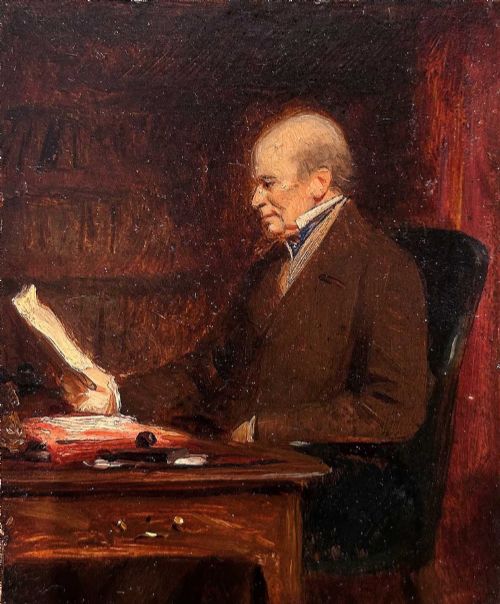
Archive II A 19th-century oil portrait of a gentleman with short white hair wearing a high collar, black cravat, and dark coat against a dark background. View II
FURTHER BROWSING

Visitors also looked at these ⇣

Enlarged Archival View
Telephone 07958 699 645
Location
18 La Gare
51 Surrey Row
London
SE1 0BZ
United Kingdom
Verified Since Sep 2008
Items For Sale 243
Items Sold 223
Artware Fineart
Verified Since Sep 2008
View Dealer Info
Location: 18 La Gare , 51 Surrey Row , London , SE1 0BZ , United Kingdom
Verified
Sep 2008
For Sale
243
Sold
223
A 19th-century oil portrait of a gentleman with short white hair wearing a high collar, black cravat, and dark coat against a dark background.
English School 19th Century Portrait of George Osbaldeston 1786 - 1866 known as "Squire Osbaldeston"
Ref: SA342148
A 19th-century oil portrait of a gentleman with short white hair wearing a high collar, black cravat, and dark coat against a dark background.
Detail View 1
Archival Detail
Every single antique dealer on our platform is individually approved by our internal team. We verify their professional trade history, ethical standards, and photographic quality to ensure a secure, high-standard buying environment. Upon joining, every dealer agrees to a strict 9-point code of conduct. While issues can occasionally arise, our dealers typically resolve them swiftly and directly with the buyer. In fact, since our founding in 2002, Sellingantiques has only had to step in to help resolve an issue on roughly five occasions—a true testament to the quality of our dealers and their dedication to your happiness.
Our dealers are highly experienced in packing and shipping fragile, high-value antiques. Because you are in direct contact with the dealer, you will be able to easily go through all available shipping and insurance options together to ensure your item arrives safely.
Antiques are the ultimate green purchase. By choosing historical pieces over newly manufactured goods, you completely eliminate the carbon footprint of modern mass production while preserving exceptional, timeless craftsmanship.

Nineteenth-century English School portraiture typically features realistic representations of sitters, emphasizing formal attire, restrained colour palettes, and structured compositional techniques developed during the Georgian and Victorian eras.

Portraits from this era were primarily created using oil pigments suspended in linseed oil, applied onto stretched linen or cotton canvas held by wooden stretcher frames.

Authentication involves examining natural craquelure patterns, stretcher construction, historical paint oxidisation, hand-woven canvas backing, and period-appropriate clothing styles depicted on the subject.

Antique oil portraits can be hung individually above key focal points or curated into a larger gallery wall arrangement alongside complementary historic or contemporary artworks.

Keep oil paintings in temperature-controlled environments away from direct sunlight, avoid high humidity, and clean gently using a dry microfibre cloth without liquid detergents.
items
Add keywords to the filter
Price
£100
£250000
Era
Movements
Material
Origin
Stock Location
Freshness
Online Payments
Categories