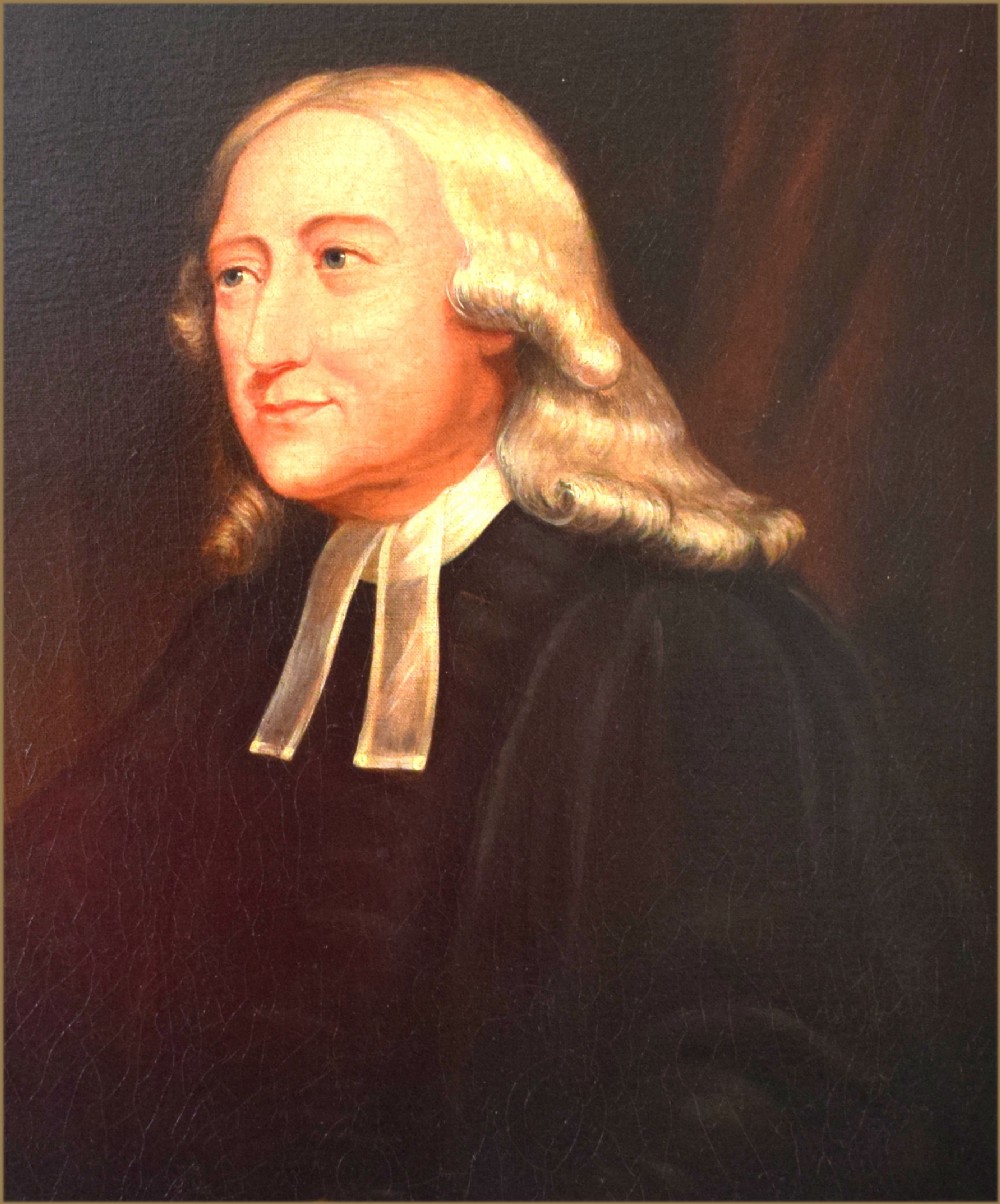
Artware Fineart has dated this John Wesley Oil Portrait to the 19th Century.
Portrait of John Wesley 1703 - 1791 founder of Methodism
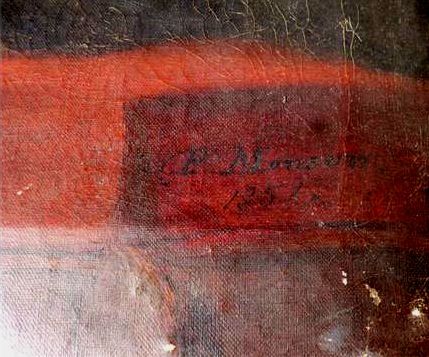
Signed/Inscribed:
C P Monson 1851
oil on canvas
61 x 51cm. (24 x 20in.)
This portrait is signed and dated "C P Monson 1851".
Notes
Wesley [Westley], John (1703–1791), Church of England clergyman and a founder of Methodism, was born on 17 June 1703 at Epworth rectory, Lincolnshire, the thirteenth or fourteenth child and the second of three sons to reach maturity of Samuel Wesley (bap. 1662, d. 1735), rector of Epworth, and his wife, Susanna Wesley (1669–1742), daughter of Samuel Annesley and his second wife, Mary. He was baptized on 3 July at Epworth church (that he was named John Benjamin at his baptism, as sometimes stated, is a nineteenth-century error). Samuel still spelt the family name Westley in 1694 and others occasionally did so later. Both parents, though children of dissenting ministers ejected in 1662, became high-church Anglicans early in life, and puritan influence on John's upbringing is debatable. Early life, 1703–1720 Though much is known about the Wesley family, little but anecdote survives about John himself in this period. It has often been observed that his cool intelligence and passion for order reflect his mother's character, while his brother Charles Wesley's mercurial temperament echoed his father's, but John could be hasty too. Both brothers were junior to their precocious and talented sister, Hetty [see Wright, Mehetabel]. Several events in John's early life have commonly been emphasized as significant for his later development. His parents saw as providential the rescue of their children from a rectory fire in 1709. In 1711 Susanna resolved ‘to be more particularly careful of the soul of this child that thou hast so mercifully provided for’. Later tradition related this to Wesley's adoption of the motto ‘a brand plucked from the burning’ to claim that he was seen as singled out early for a special destiny. However, Wesley's sense of a providential calling came much later (Heitzenrater, Elusive Mr Wesley, 1.40–43). Tight maternal discipline applied to all the children, though with variable results. Regularity was enforced in eating, sleeping, education, and religion. This was a severe, religiously focused version of John Locke's educational principles, and ‘breaking the will’ was seen as the foundation of religion and morality. In 1712, during her husband's absence at convocation, Susanna Wesley conducted informal meetings in the rectory which some have seen as an anticipation of later Methodist practice. In 1716–17 there appeared the Epworth ghost, Old Jeffery, apparently a poltergeist with Jacobite sympathies who knocked loudly when George I was prayed for. The family only gradually concluded that Jeffery was a supernatural visitant, but John Wesley, though absent at the time, believed this from the first, thus signalling a lifelong belief in divine and diabolical intervention. He also seems to have shown early the habit of a reasoned approach as the way to solve even the most personal problems. His father wisely remarked ‘you think to carry everything by dint of argument, but you will find how little is ever done in the world by close reasoning’. John, he said, ‘would not attend to the most pressing necessities of nature unless he had a reason for it’ (Clarke, 2.321). On 28 January 1714 Wesley became a foundation scholar at the Charterhouse on the nomination of his father's patron, the duke of Buckingham. Little but anecdotal traditions survive from this period. Thus Wesley is said to have justified preferring the company of younger boys with the Miltonic assertion ‘Better to rule in hell than s
Artware Fineart has dated this John Wesley Oil Portrait to the 19th Century.
You can view the stock and full dealer information on the Artware Fineart Profile Page
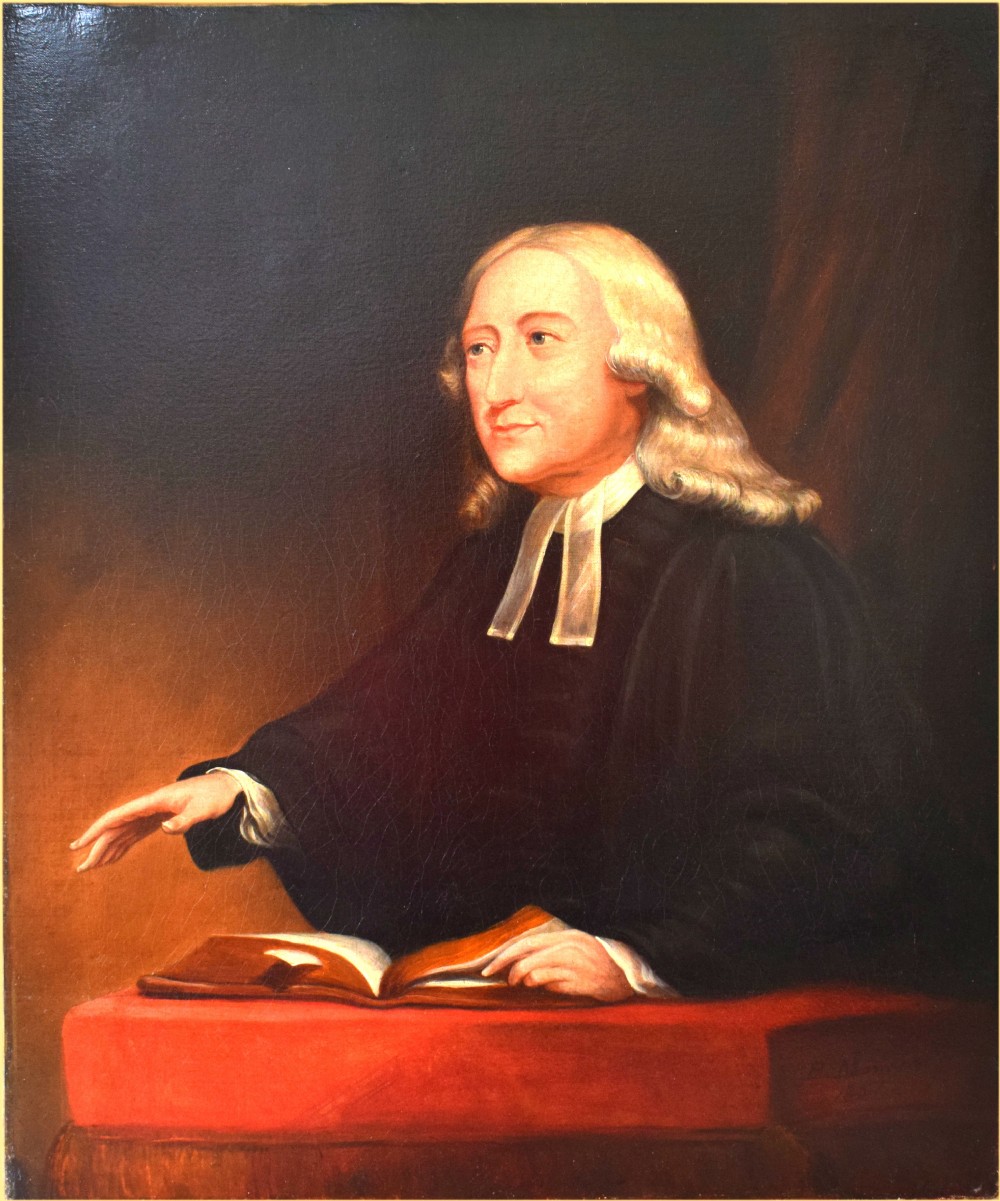
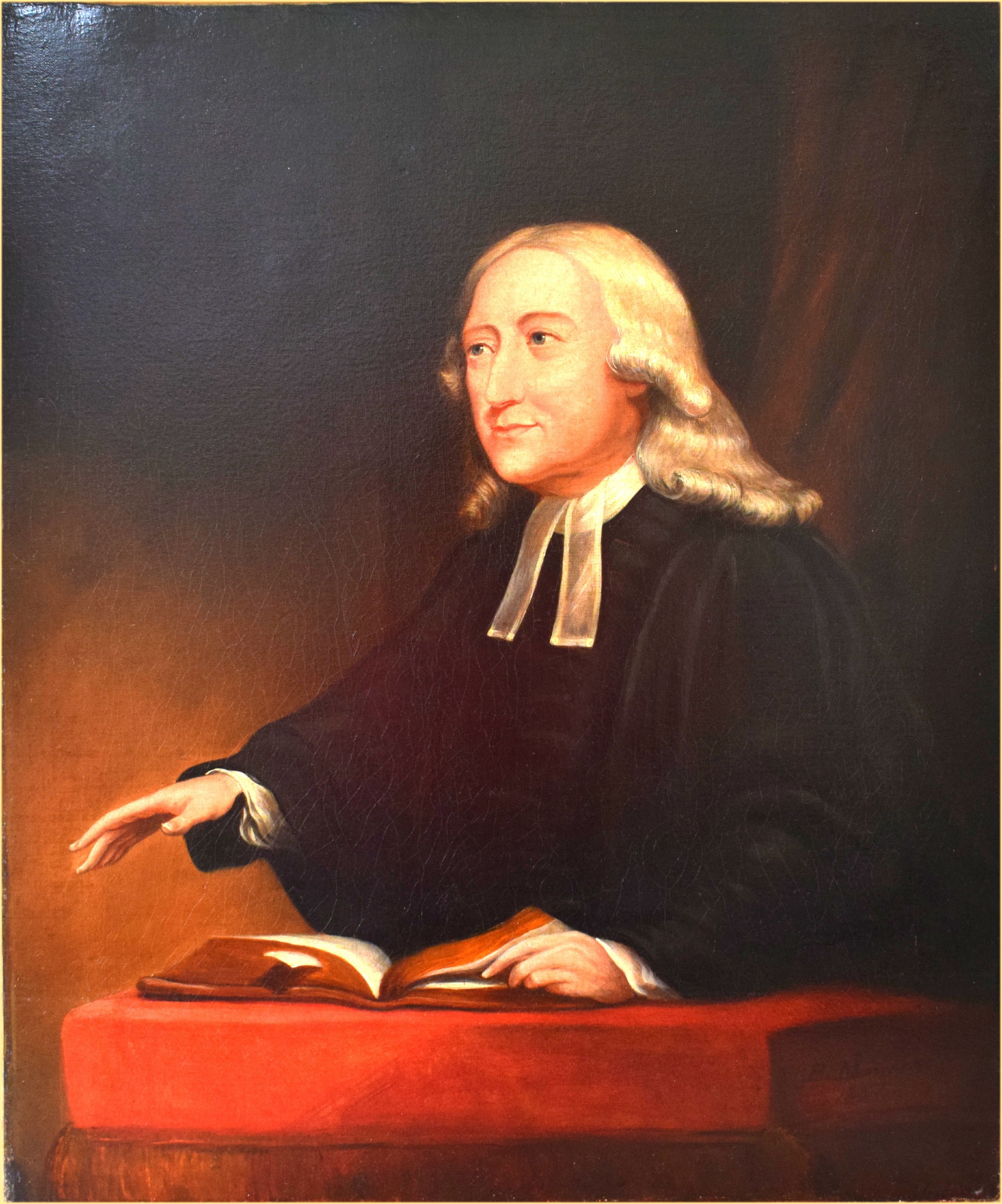
After John Jackson, Ra, 1778 – 1831 Portrait of John Wesley 1703 - 1791 Founder of Methodism