


Clerical Oil Painting
A clerical oil painting captures ecclesiastics, theologians and scholars in oil on canvas, offering a direct window into historical religious life.
Clerical Oil Painting
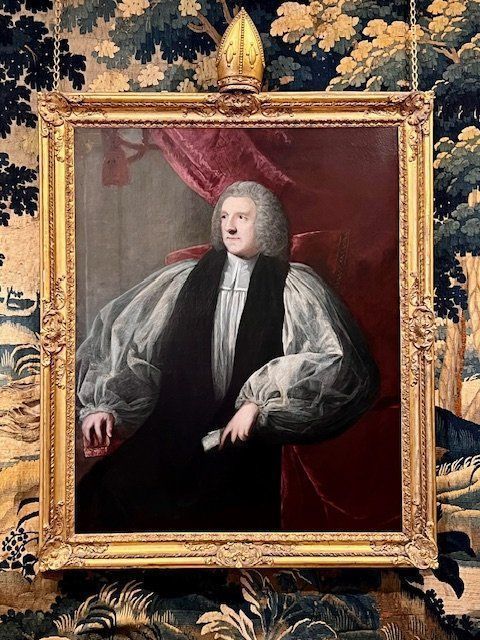
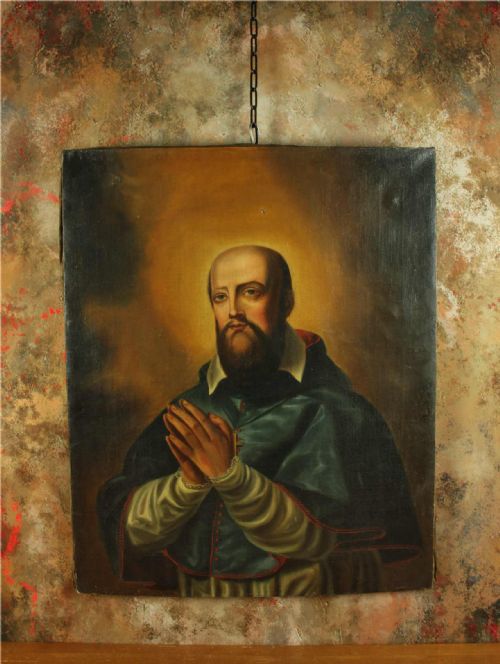
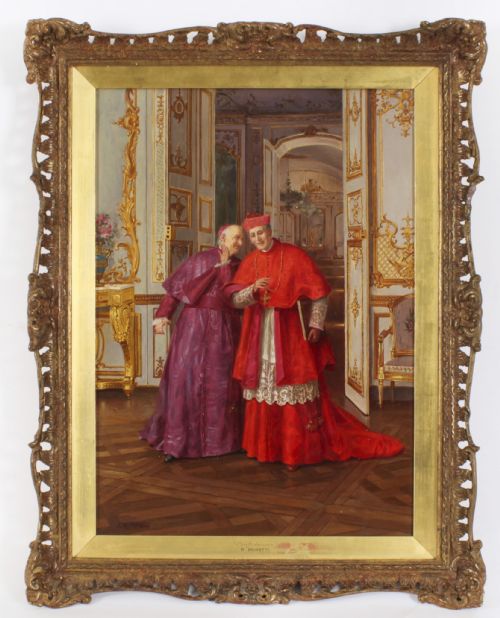
A clerical oil painting depicts figures from church history, ranging from seventeenth-century English divines and Puritan ministers to nineteenth-century cardinals, bishops and monks. These works emerge primarily from seventeenth-, eighteenth- and nineteenth-century European traditions, encompassing English, Italian, Spanish and Academic styles.
Buyers encounter individual portraits of named clergymen, such as bishops, deans and archbishops, alongside genre scenes depicting monks at leisure or cardinals at table. The predominant format across the listings is oil on canvas, though copper panels also appear.
The subjects span notable figures like archbishops, theologians and founders of religious movements, recorded through formal portraiture or narrative painting. These works provide tangible evidence of ecclesiastical history and historical portraiture traditions.
How they were made
Painters applied oil paint directly to stretched canvas, occasionally utilising copper panels for smaller compositions, supported by traditional wooden stretcher frames. Giltwood frames often enclose these works, providing structural support and decorative housing.
The technical execution relies on layered oil pigments to build depth in vestments, flesh tones and background shadows, characteristic of European portrait schools from the seventeenth to the nineteenth century.
Several canvases capture monks enjoying simple earthly pleasures, such as admiring or catching fish.
What varies in quality
The distinction between works rests upon the precision of facial modeling, the handling of textile textures in clerical robes, and the psychological depth captured in the sitter's expression. Master works demonstrate confident brushwork and anatomical accuracy, whereas lesser examples rely on formulaic rendering.
Attribution to documented artists or recognised regional schools elevates the standing of a canvas, as does the survival of original inscriptions, signatures and contemporary framing.
Sir Joshua Reynolds·Renato Moretti·Frank Moss Bennett·Frank Hyde·Alan Ramsay·Adriaen Van der Werff·Ernst Stierhof·Eden Upton Eddis·James Ward·Edward Penny
The Clerical Oil Painting Glossary
- Oil on Canvas
- A painting medium where pigments suspended in drying oils are applied to a woven canvas support. This technique allowed artists to achieve rich colour saturation and subtle tonal gradations.
- Giltwood
- Wood that has been coated with gold leaf or gold paint, frequently used for traditional picture frames. It provides an ornate and protective border for historic paintings.
- Genre Painting
- The pictorial representation of scenes from everyday life, such as monks engaged in ordinary tasks. These works focus on narrative or anecdotal moments rather than formal portraiture.
- Academic Realism
- A style of painting produced under the influence of European academies of art, emphasising precise drawing and realistic representation. It prioritises traditional technical proficiency.
- Baroque
- An artistic style originating in Europe during the seventeenth century, characterised by dramatic lighting, deep shadows and intense emotional expression. Spanish and Italian schools utilised these theatrical elements.
Clerical Oil Painting: Frequently Asked Questions
What subjects appear in a clerical oil painting?
The subjects include archbishops, bishops, puritan ministers, cardinals, deans and monks. Many canvases portray specific historical ecclesiastics, while others show narrative scenes of clergy in daily life.
The selection reflects centuries of religious portraiture and academic realism, recording notable figures and anonymous churchmen alike across British, Italian and Spanish schools.
How do I date a clerical oil painting?
Dating relies on the sitter's clerical dress, the style of the portrait, inscribed dates and recorded artist attribution. Seventeenth-century works often feature distinct ruffs or bands, while eighteenth- and nineteenth-century portraits display evolving clerical attire.
Examining the canvas preparation, stretcher construction and any biographical details of the depicted clergyman provides further chronological context.
Where were these paintings produced?
These works originate primarily from British, Italian and Spanish workshops, reflecting the dominant religious portrait traditions of those regions. Painters worked within established national schools and academic traditions.
Some pieces bear direct association with institutional centres such as the Vatican or English ecclesiastical foundations.
How should I care for an oil on canvas?
Preservation requires stable indoor humidity and temperature away from direct sunlight, which can degrade oil pigments and canvas fibres over time. Dust should be removed gently from the surface without moisture.
Displaying the work within its original or period giltwood frame helps maintain structural integrity and historical context.