


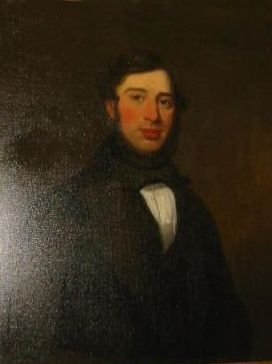
Dark Background Male Painting
A dark background male painting captures male subjects against deep shadows, offering striking contrast and historical presence for your walls.
Dark Background Male Painting
A dark background male painting presents a male portrait set against deep, shadowy tones, drawing immediate focus to the sitter's face and attire. These works span multiple centuries, ranging from seventeenth-century Baroque interpretations to nineteenth-century British realisms and twentieth-century examples.
The subjects depicted include noblemen, military officers, physicians, and clergymen, each rendered with distinct individual character. You will frequently encounter nineteenth-century canvases alongside seventeenth-century Flemish and English school portraits on this page.
Compositions rely on tenebrism and chiaroscuro effects, where light falls selectively across the subject while the surrounding space recedes into obscurity. This stylistic choice creates an intense psychological depth that defines the genre.
Assessing quality and execution
Quality rests upon the skill of the brushwork and the psychological conviction with which the sitter is rendered. Finer works demonstrate precise control over light and shadow, capturing lifelike anatomical details and subtle fabric textures.
The prominence of the artist or school influences the standing of a piece, with circle attributions and documented masters carrying distinct art historical weight. Additionally, the preservation of the canvas and the integrity of the frame contribute to the overall standard.
The selection includes portraits by established schools alongside works attributed to specific historical painters and portraitists.
Hyacinthe Rigaud·Sir Godfrey Kneller·John Raphael Smith·John Irvine·Eden Upton Eddis·Lemuel Francis Abbott·Sir Oswald Hornby Joseph Birley·Henry Wyatt·John Ward Dunsmore
The Dark Background Male Painting Glossary
- Chiaroscuro
- A technique employing strong contrasts between light and dark to give a three-dimensional volume to figures. This method creates dramatic focal points within portraiture.
- Giltwood
- Wood that has been coated with a thin layer of gold leaf or gilt powder. It is frequently seen on traditional picture frames accompanying these portraits.
- Flemish Baroque
- An artistic style originating in Flanders during the seventeenth century characterised by vitality, rich colour, and dramatic lighting. Works from this school often feature deeply saturated dark backgrounds.
- Stucco
- A material made of aggregate, a binder, and water, applied wet and hardening to a dense solid. It appears in the ornamentation of period frames.
- Tenebrism
- A style of painting using profoundly pronounced chiaroscuro with extreme contrasts of light and dark. The darkness becomes a dominating feature of the composition.
Dark Background Male Painting: Frequently Asked Questions
What periods do these paintings cover?
The selection spans from the seventeenth century through the eighteenth and nineteenth centuries, extending into the twentieth century. Examples include seventeenth-century Flemish Baroque works and nineteenth-century British realisms.
Each period brings distinct clothing styles and painting techniques, reflecting the era in which the male subject sat for the artist.
Who are the typical sitters in these portraits?
Sitters include noblemen, military officers, physicians, clergymen, and notable historical figures such as dukes and railway kings. Their attire often indicates their profession or social standing, from military dress to clerical robes and garter robes.
Many portraits record specific individuals documented in British and European history.
How should I display a dark background male painting?
These works suit spaces where directional lighting can accentuate the contrast between the dark backdrop and the illuminated subject. Pairing them with traditional wooden interiors or neutral walls enhances their dramatic impact.
Ensure the canvas is hung away from direct sunlight to preserve the oil pigments over time.
What frames typically accompany these canvases?
Frames are generally period-appropriate constructions made from wood, gilded wood, or giltwood, sometimes incorporating stucco ornamentation. These surrounds are chosen to complement the rich tones of the oil paintings.
Many retain their original framing style, which helps contextualise the age of the piece.