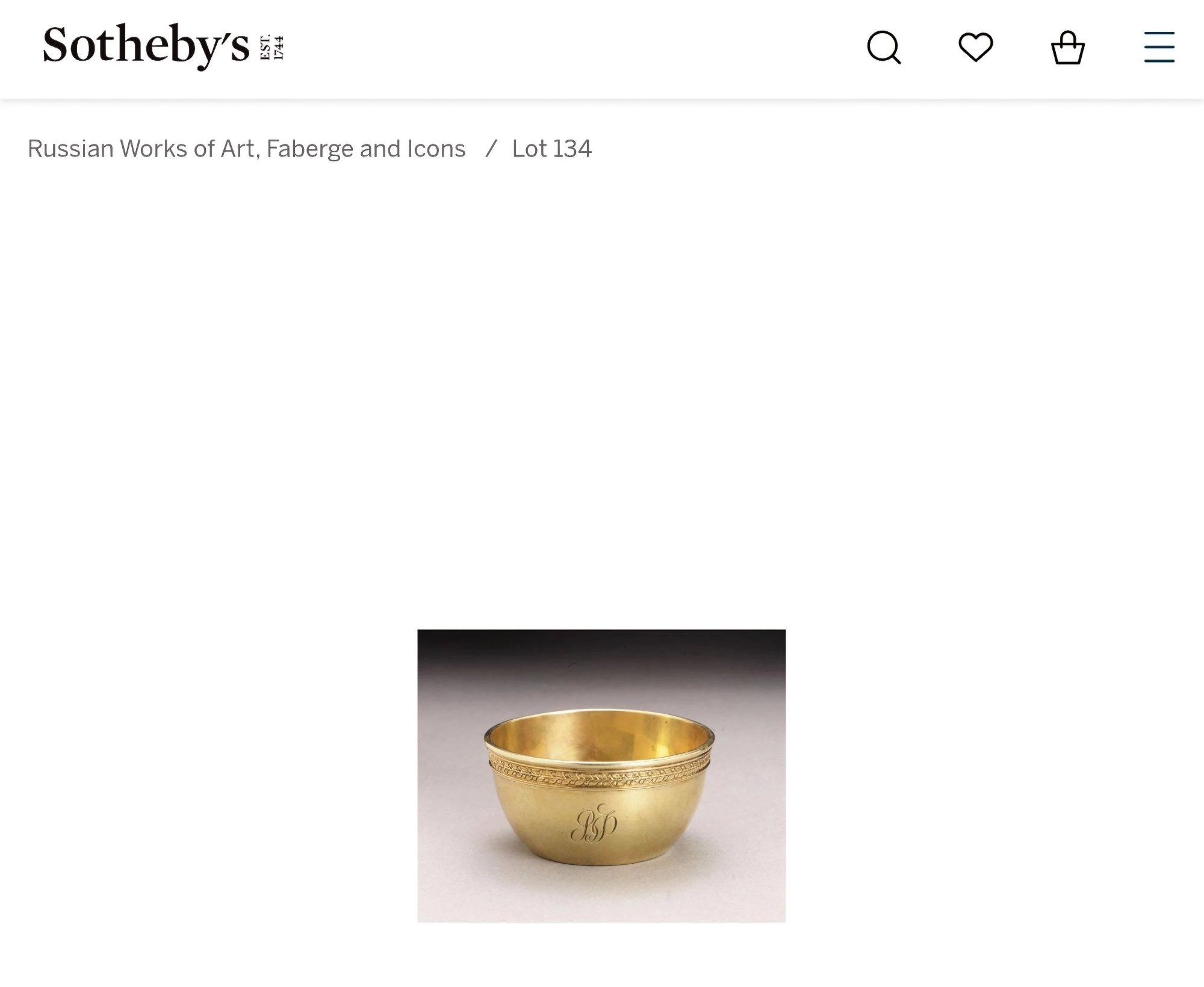
Sandbanks Antiques has dated this Faberge Silver Gilt Bowl to the 1890s.
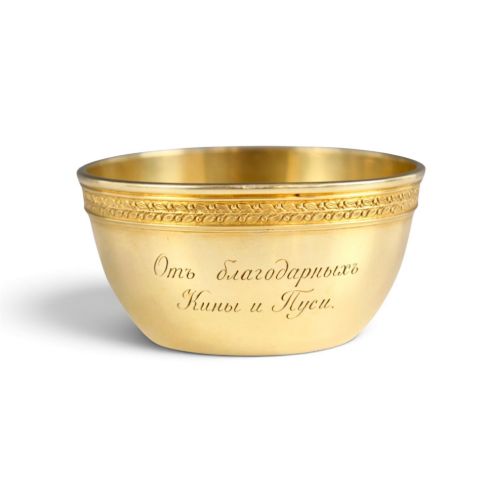
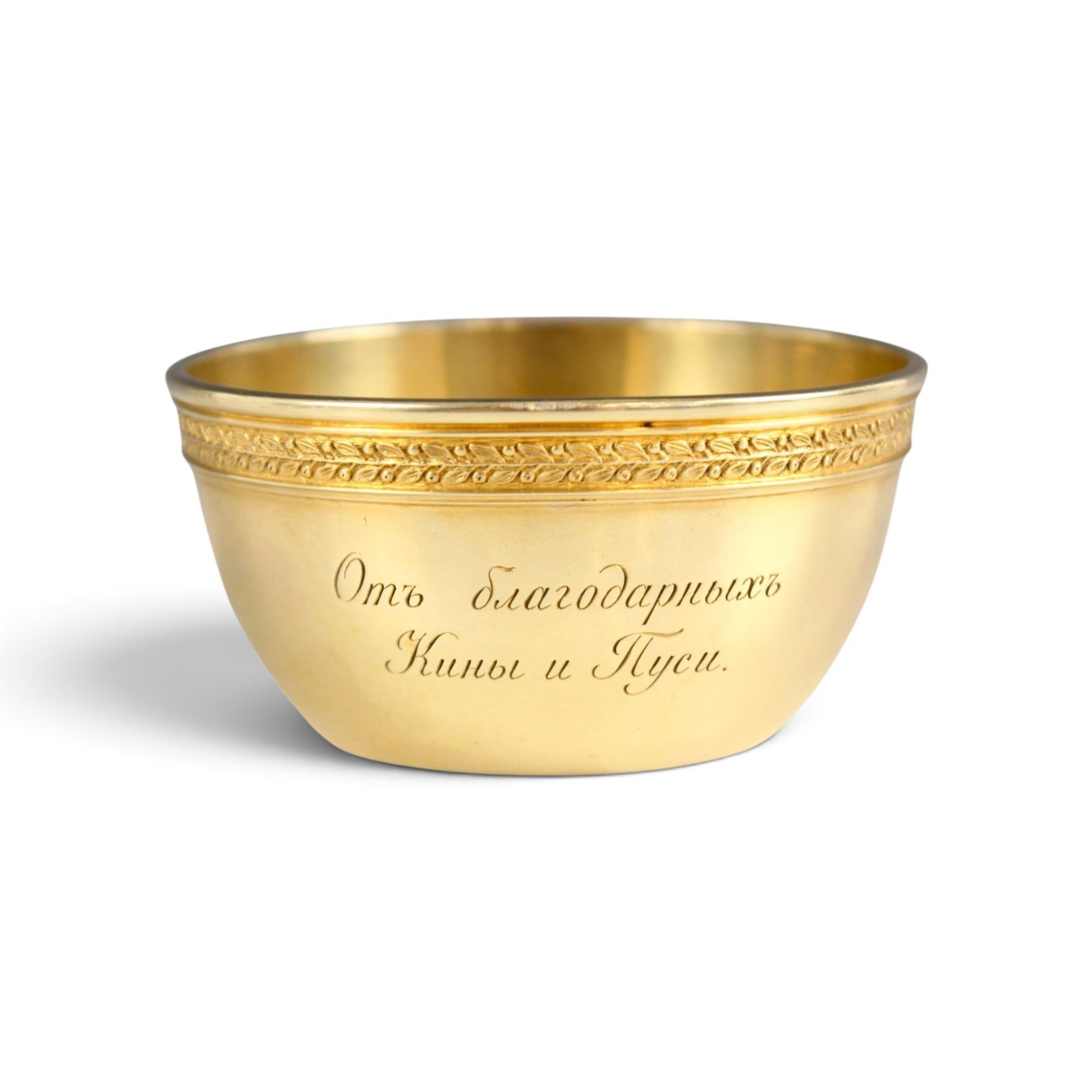
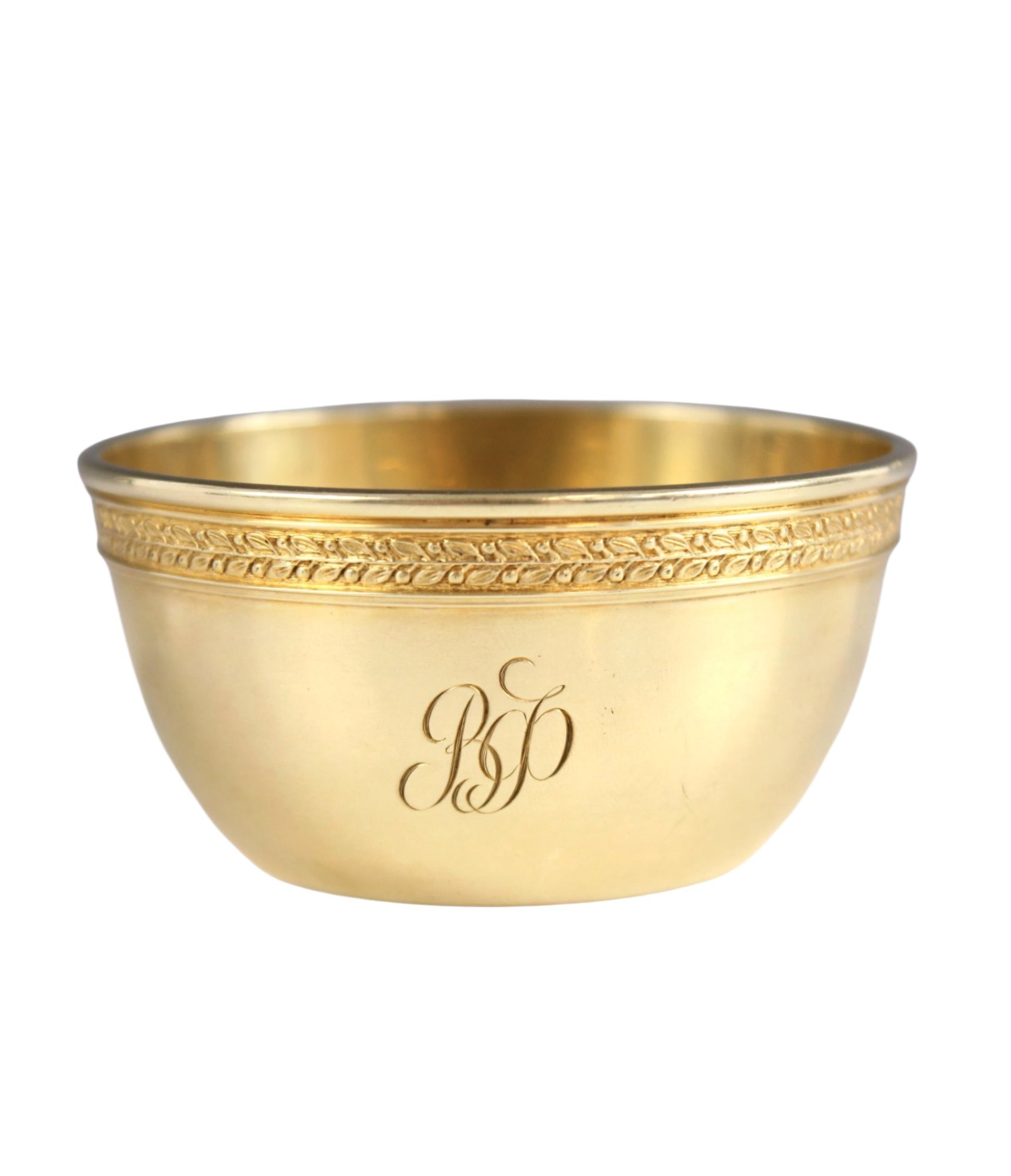
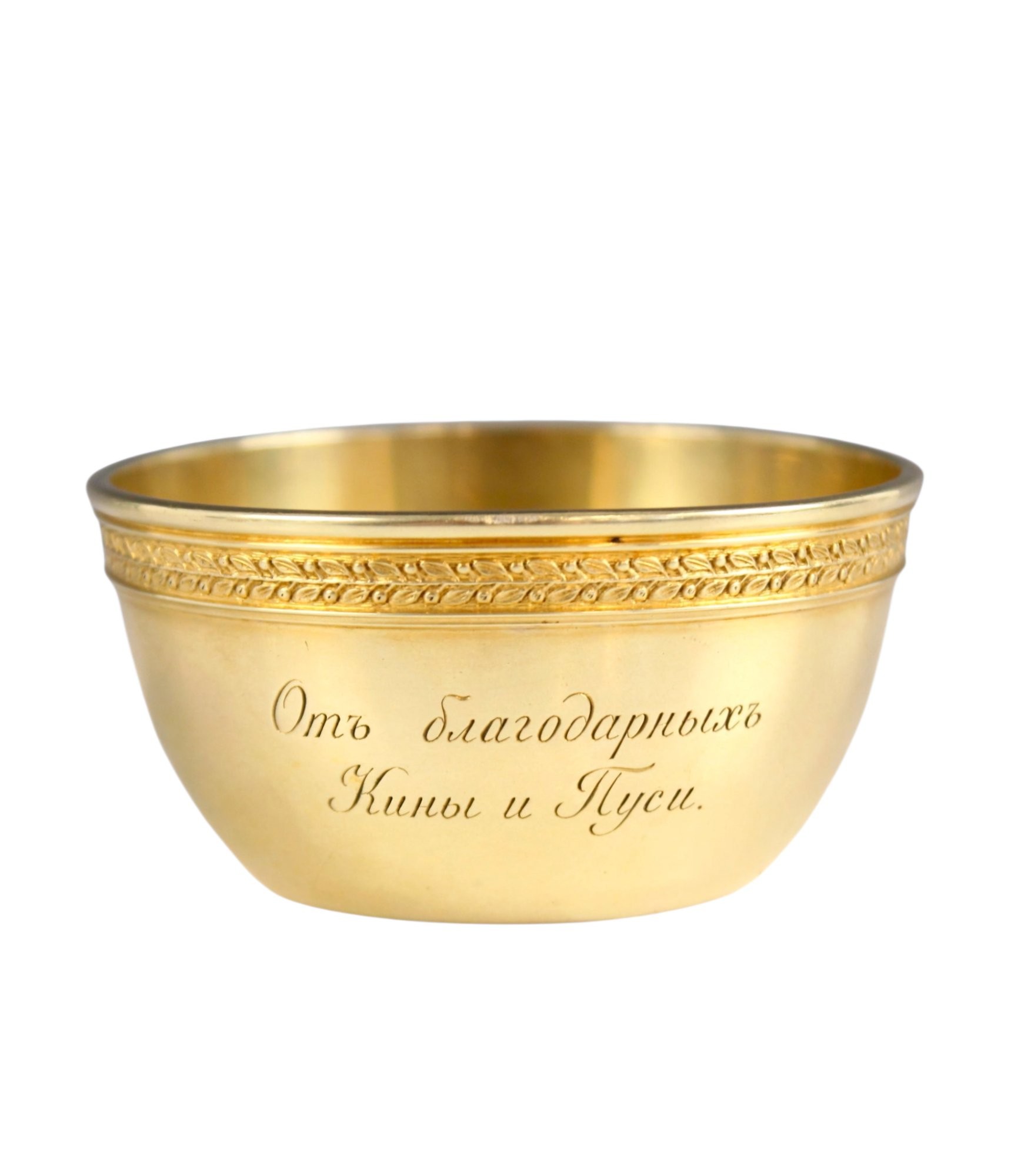
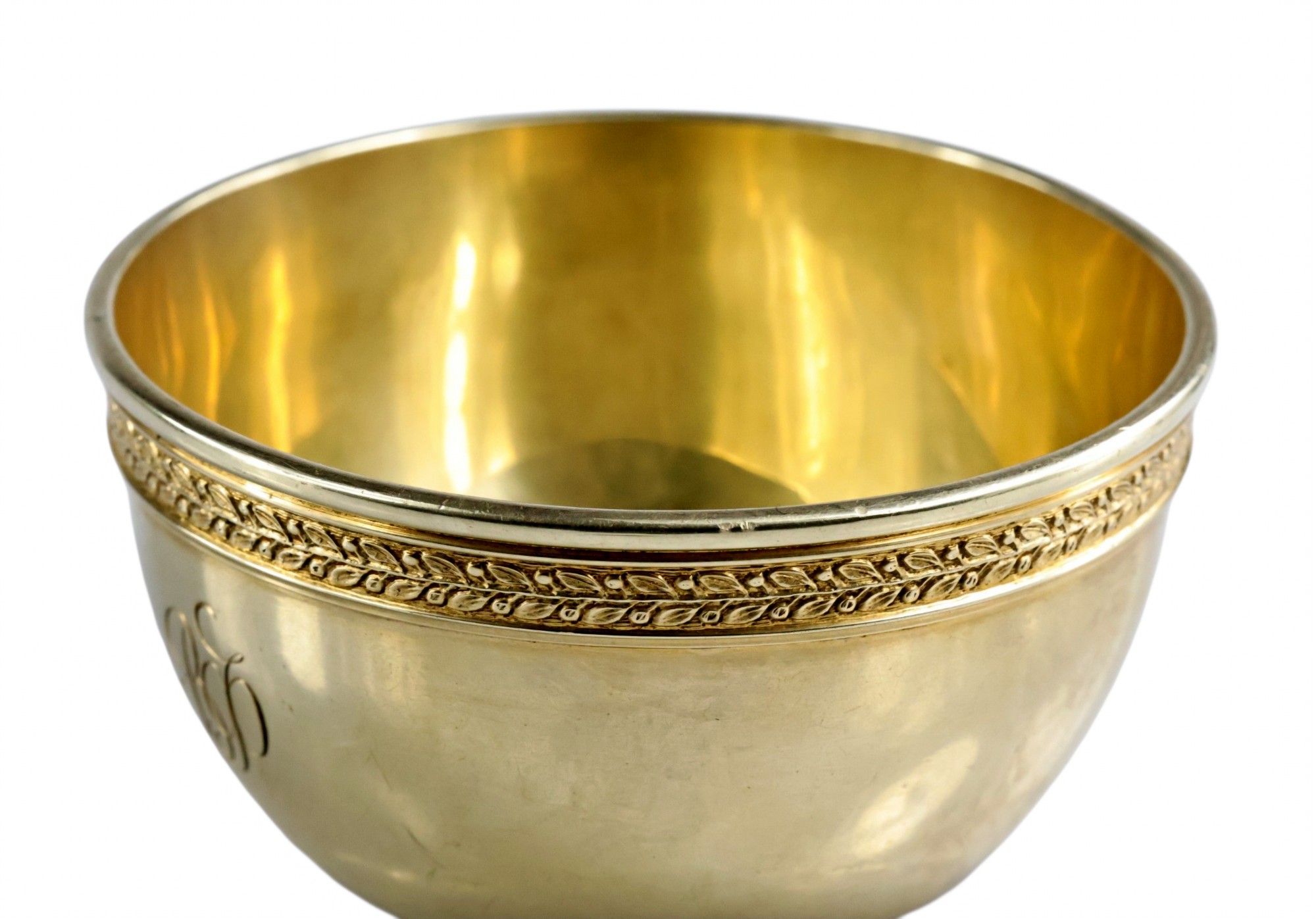
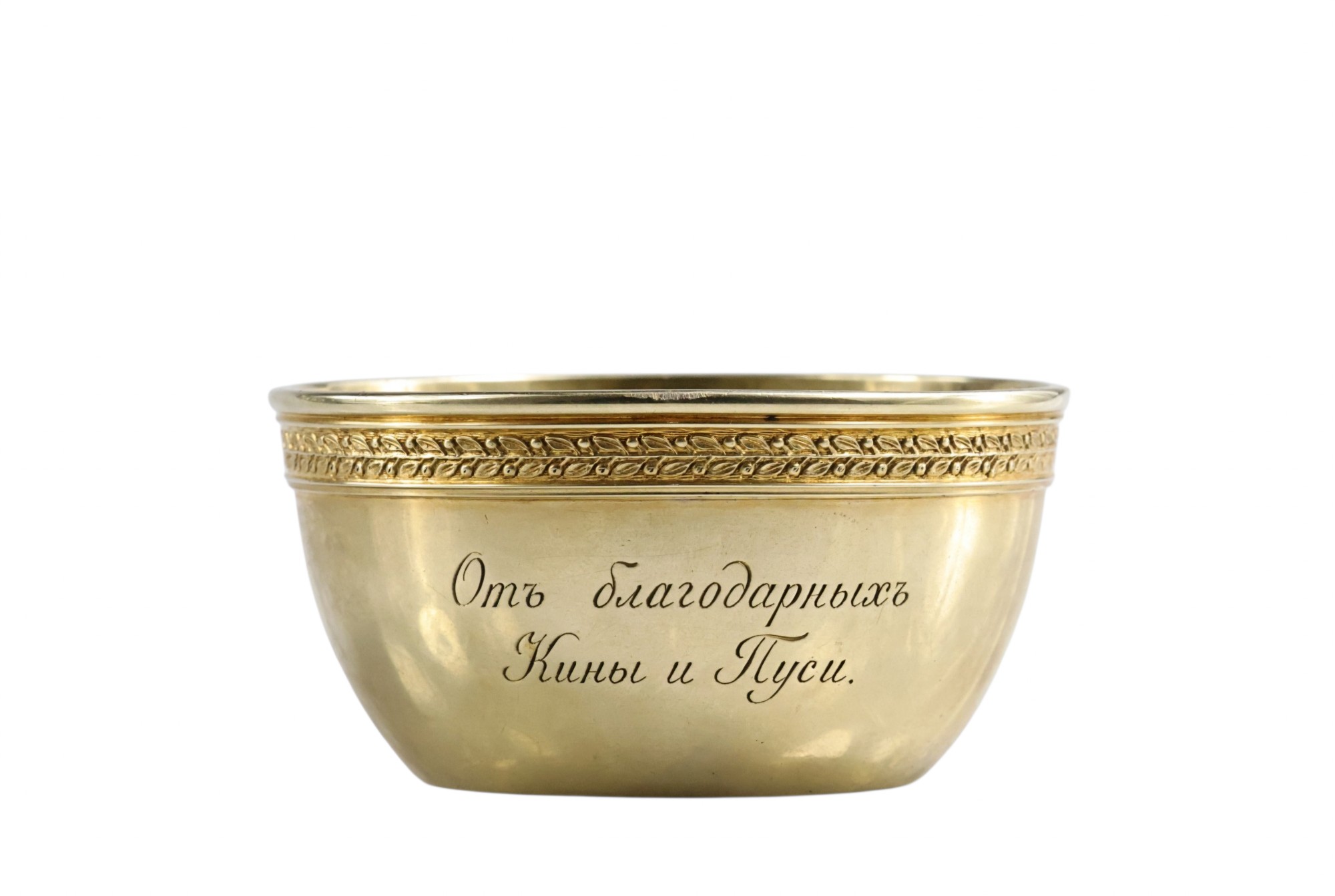
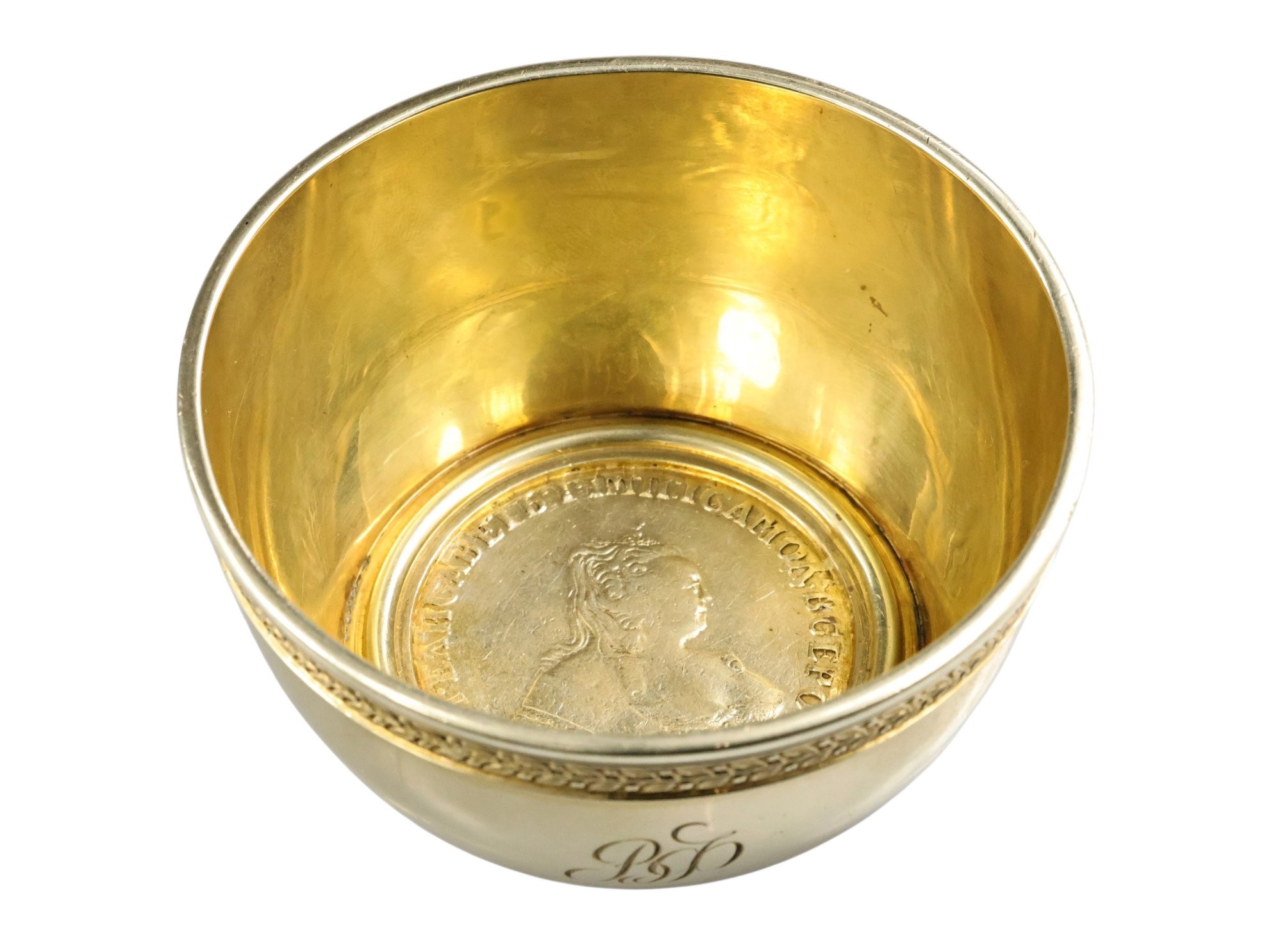
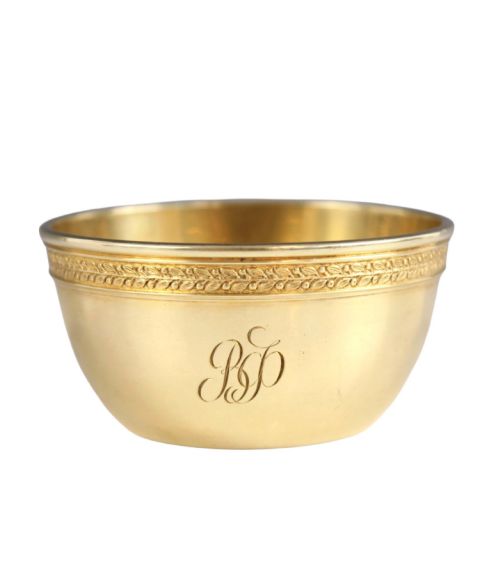
The circular bowl of tapered form is classically decorated with a delicate leaf and berry border to the rim. The plain, highly polished exterior features an engraved Cyrillic presentation inscription translating to "Kina and Pusya are very thankful," centered opposite an intertwined script monogram.
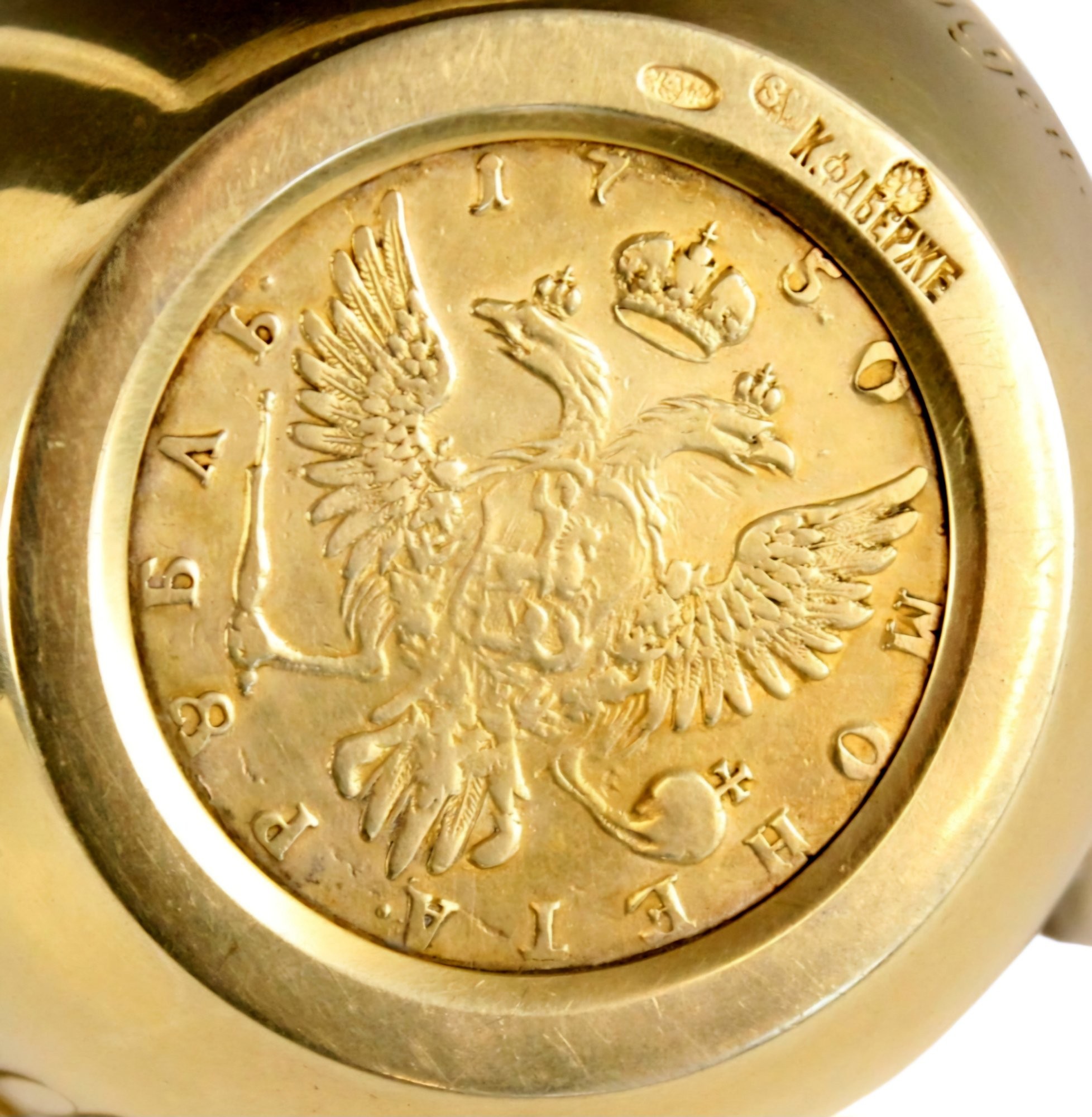
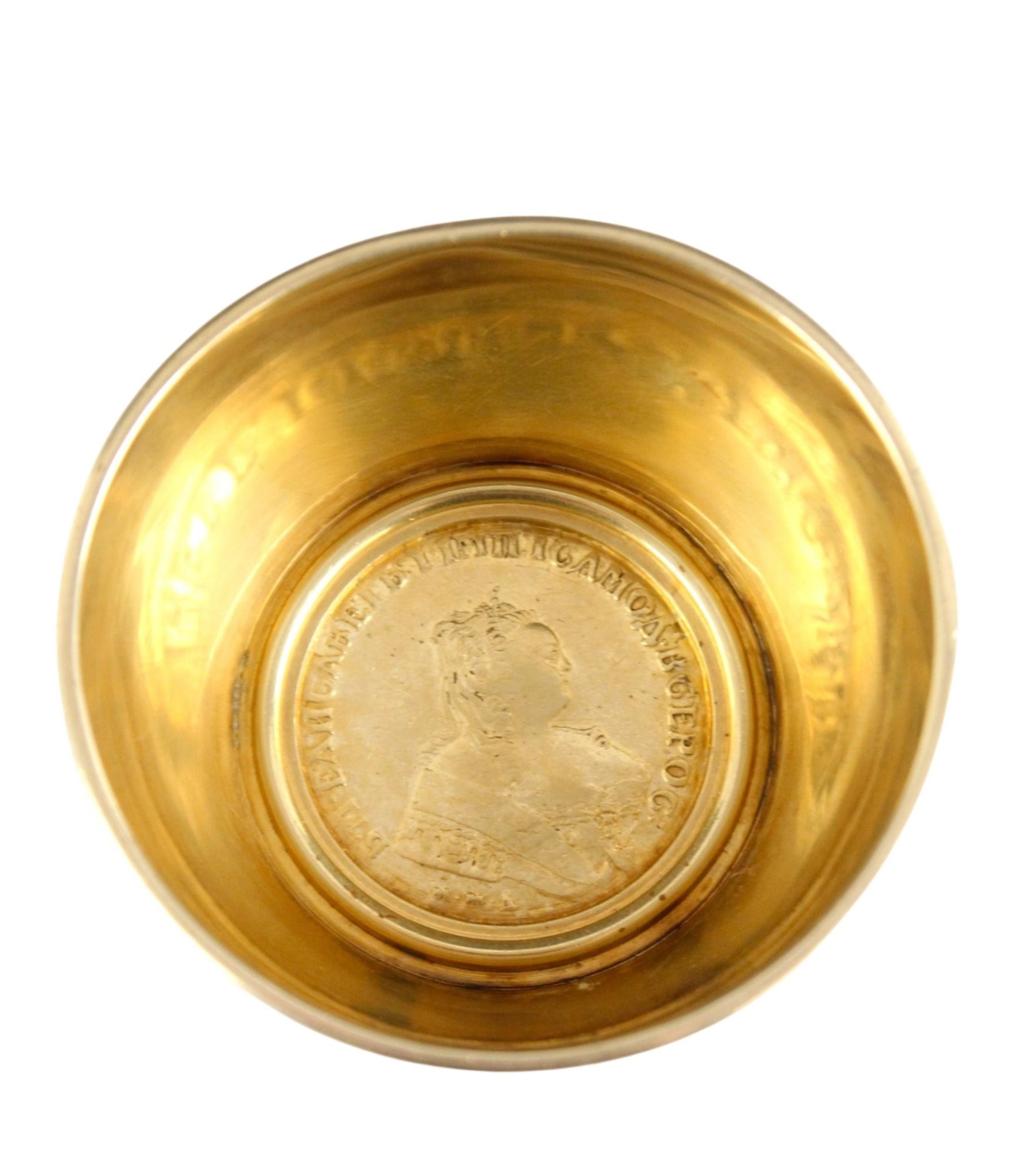
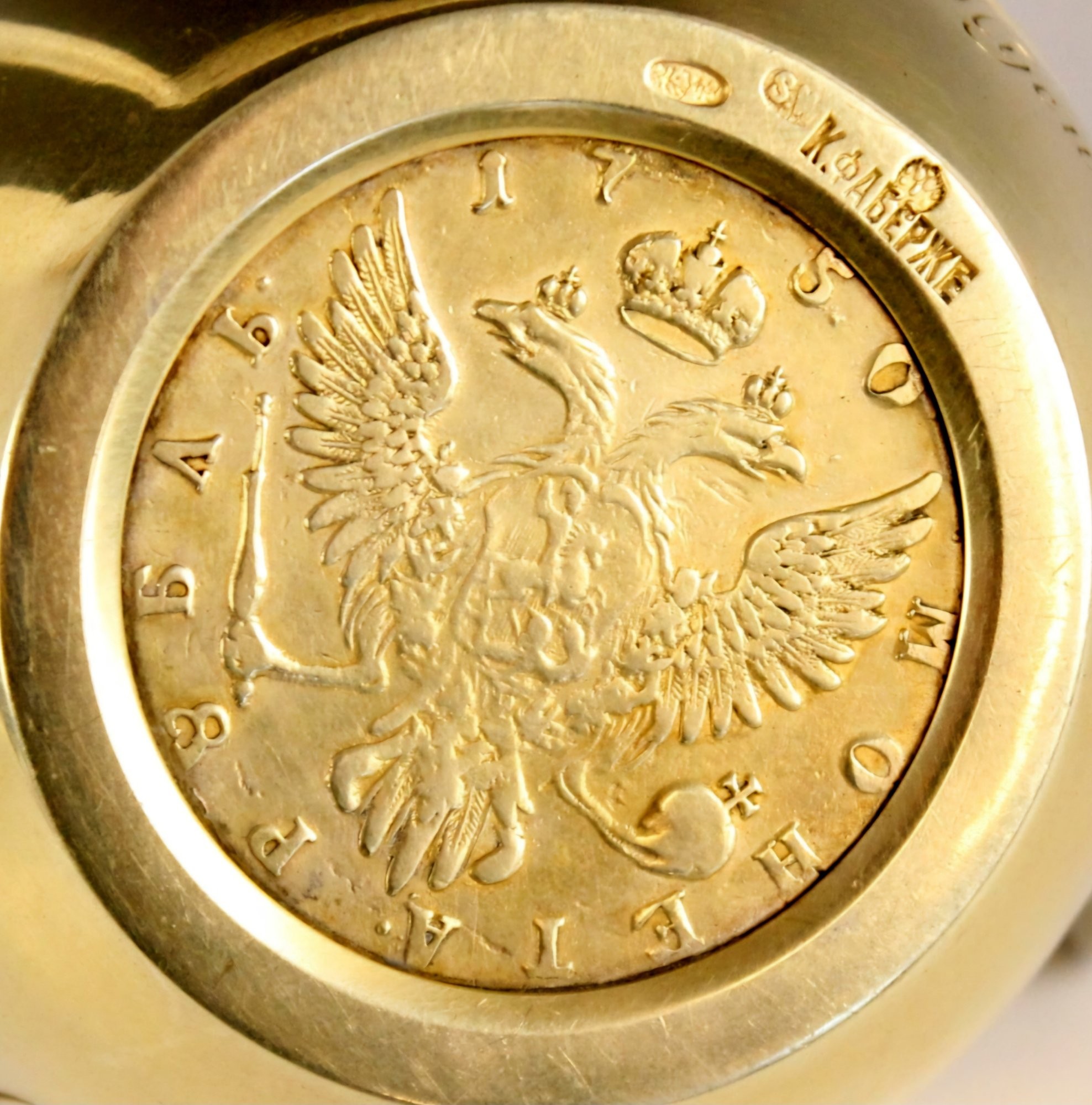
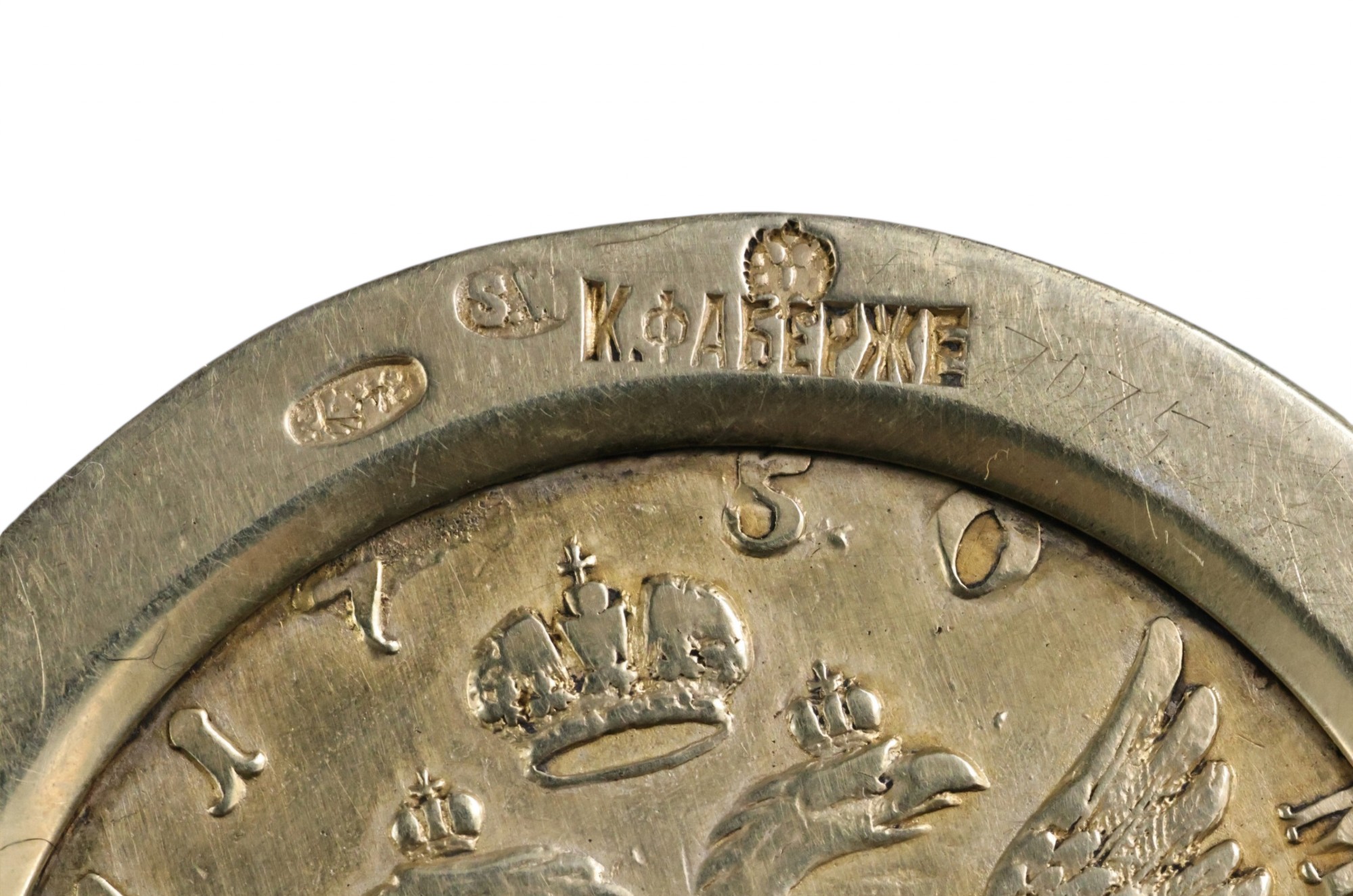
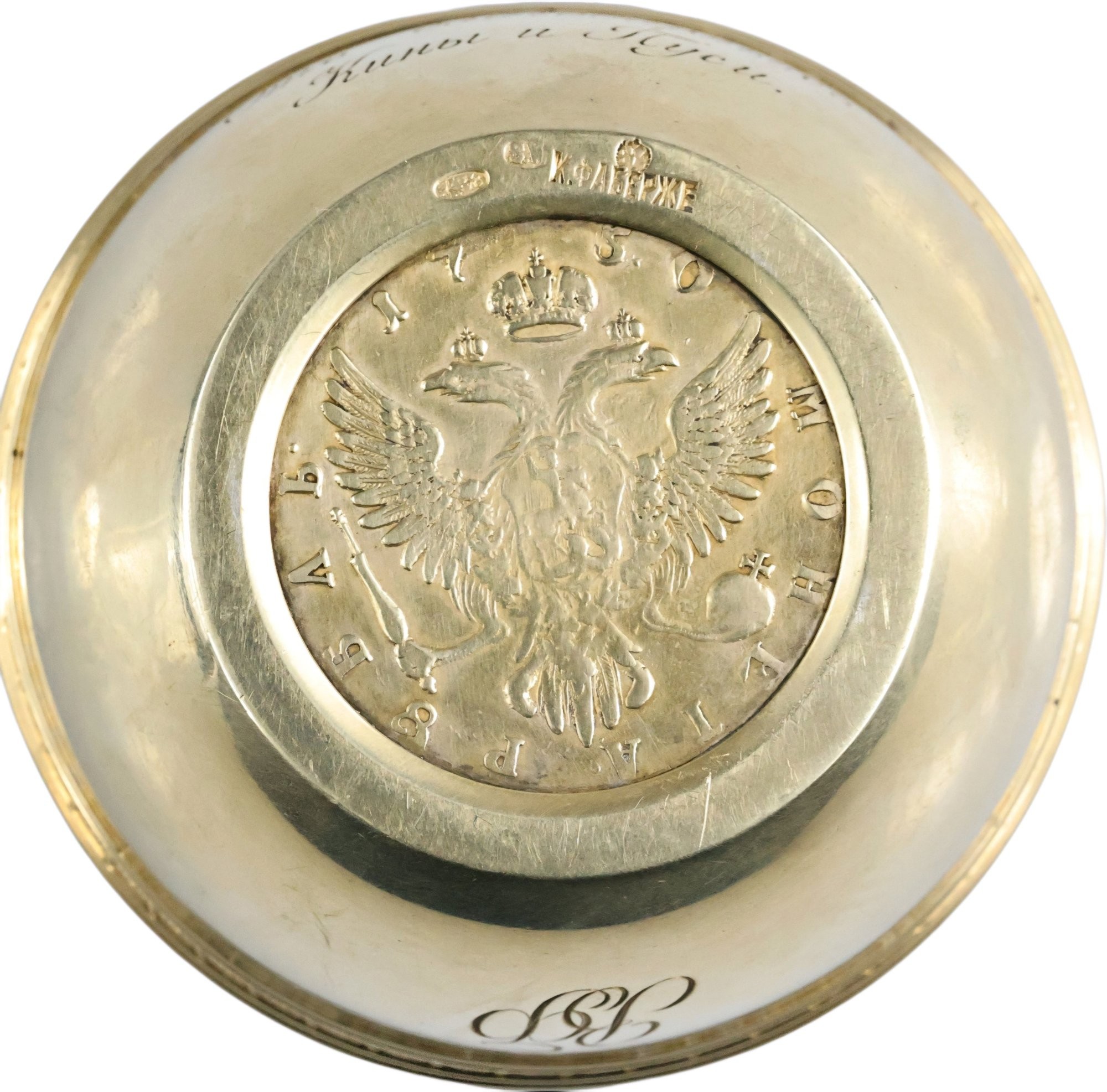
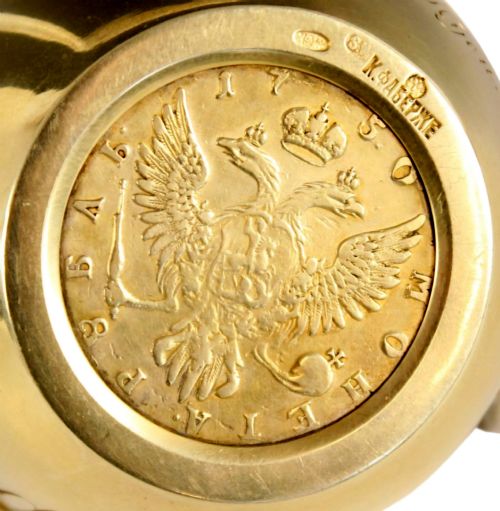
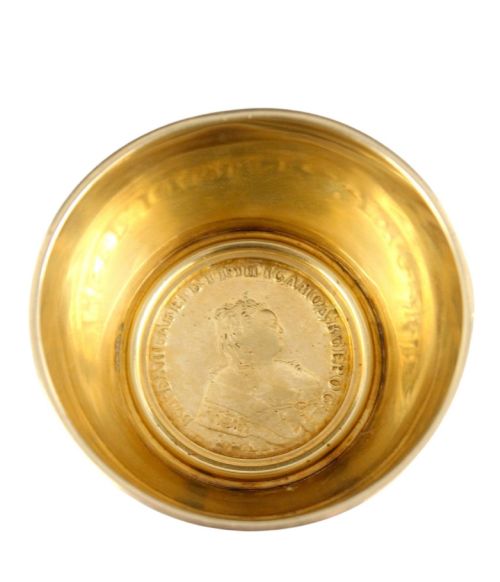
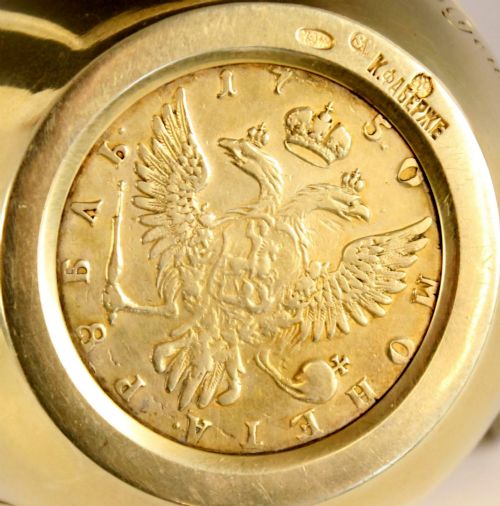
The base of the interior is inset with an authentic Empress Elizabeth of Russia 1750 silver rouble coin, creating a striking contrast against the rich gold wash. The entire vessel is finished in a heavy, bright silver-gilt (vermeil), imparting a uniform warm gold appearance across both the interior and exterior surfaces. The underside is fully struck with the standard 84 zolotnik mark, the Fabergé firm mark under an imperial warrant, and the workmaster's initials SW for Stefan Wekeva, alongside a scratched inventory number 7075.
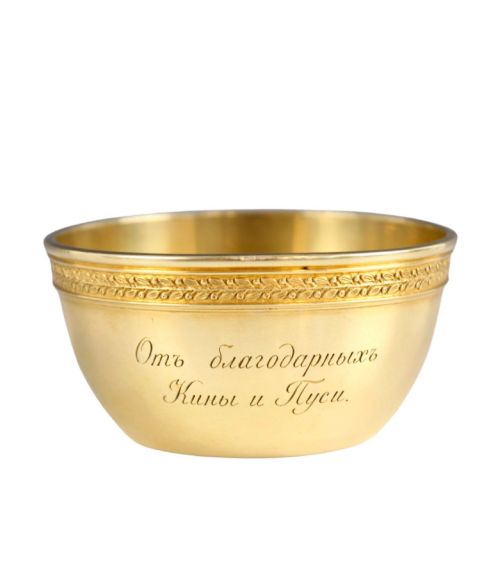
Dimensions: Diameter 7.75 cm, height 4 cm.
Weight: 116.7 g (3.75 ozt).
Condition: The silver-gilt is exceptionally bright and well-preserved throughout with crisp, clear hallmarks and expected light surface wear commensurate with age. (Note: Displays very minor, negligible age-related contour variance to the symmetry upon close inspection).
Provenance:
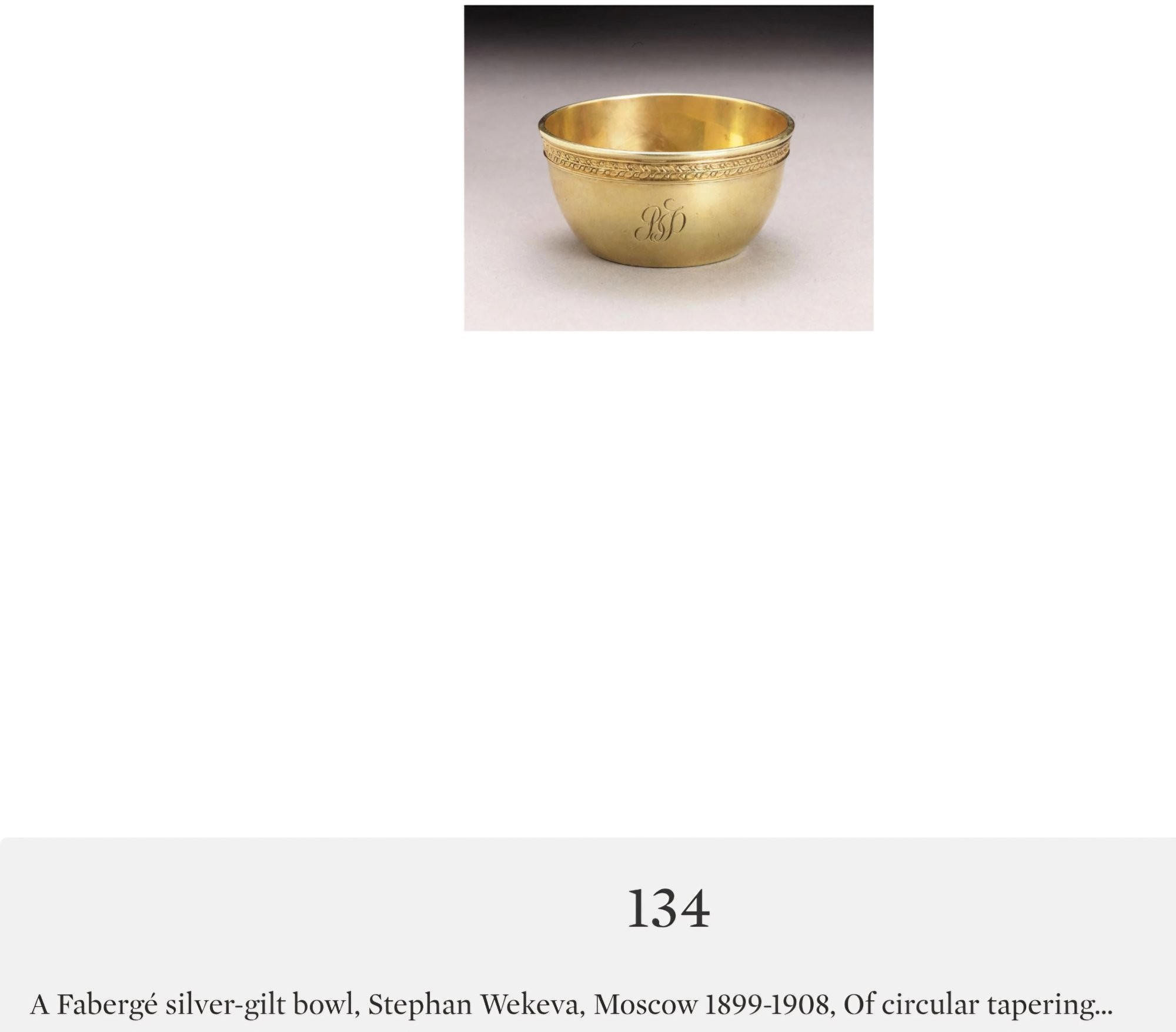
Purchased from the Sotheby's auction Russian Works of Art, Fabergé and Icons (21 November 2002, Lot 134).
The G S. May Esquire Private Collection, London
A similar Fabergé bowl sold at Vickers & Hoad, Sydney, Australia (23 September 2007, Lot 1787
Stephan Wekeva was born in Finland in 1833. He went to St. Petersburg at the age of ten and was apprenticed as a silversmith. In 1856 he qualified as a master and founded his own workshop specialised in tableware, tea sets, tankards and samovars. Wekeva supplied the firm of Gustav Fabergé with silverware and from the late 1870s he had a contract with the company to work exclusively for it.
Stephen had four children: two of them, Alexander and Konstantin, were trained in the family workshop and when their father died in 1910 they took over the business using their own mark. When Konstantin died prematurely in 1902, his wife Jenny was given the right of a mark on her own, known as ‘the widow’s mark’: she was allowed to mark part of the workshop’s production with it, although she wasn’t trained in the craft.
The company kept producing silverware and tableware for Fabergé until 1917, when the outbreak of the Russian Revolution forced the business closure.
Sandbanks Antiques has dated this Faberge Silver Gilt Bowl to the 1890s.
Specialising in antique silver, gold boxes, gold coins and objects de vertu. Rare fine-quality imperial chinese porcelain, jades, cloisonné
You can view the stock and full dealer information on the Sandbanks Antiques Profile Page
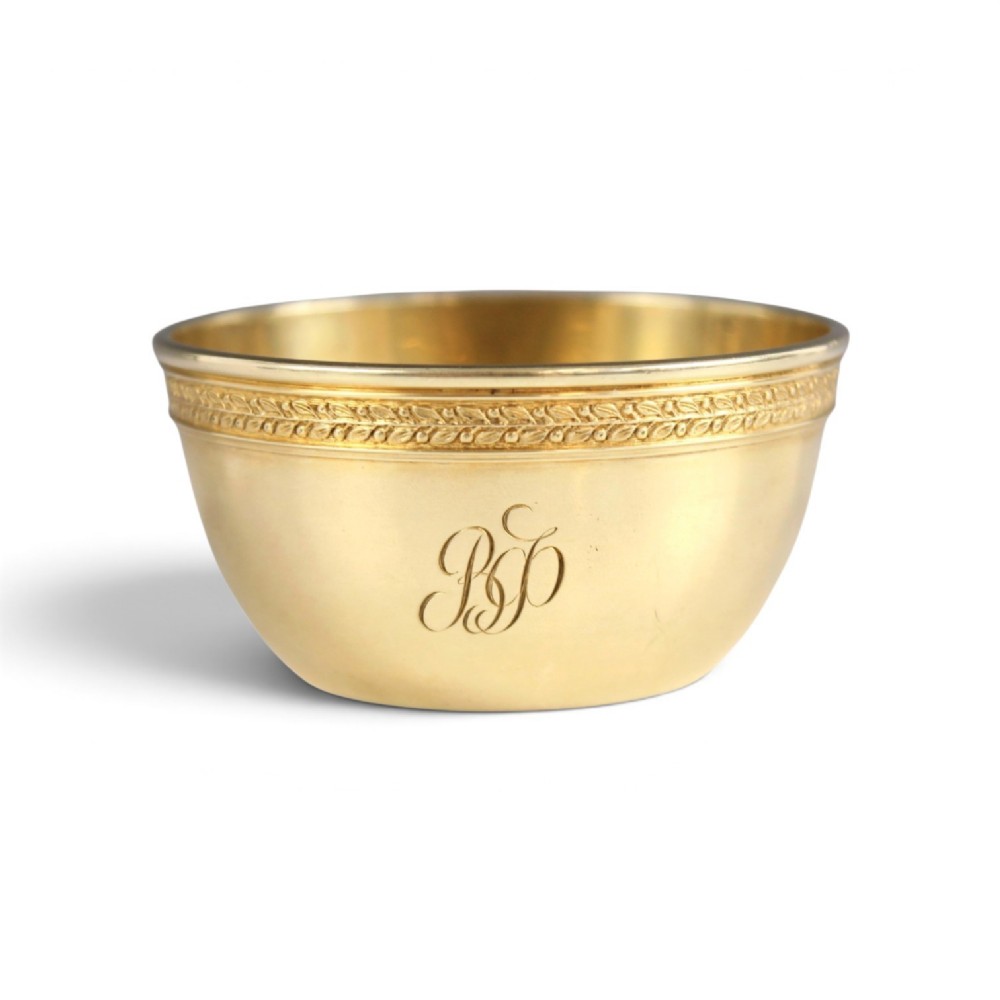
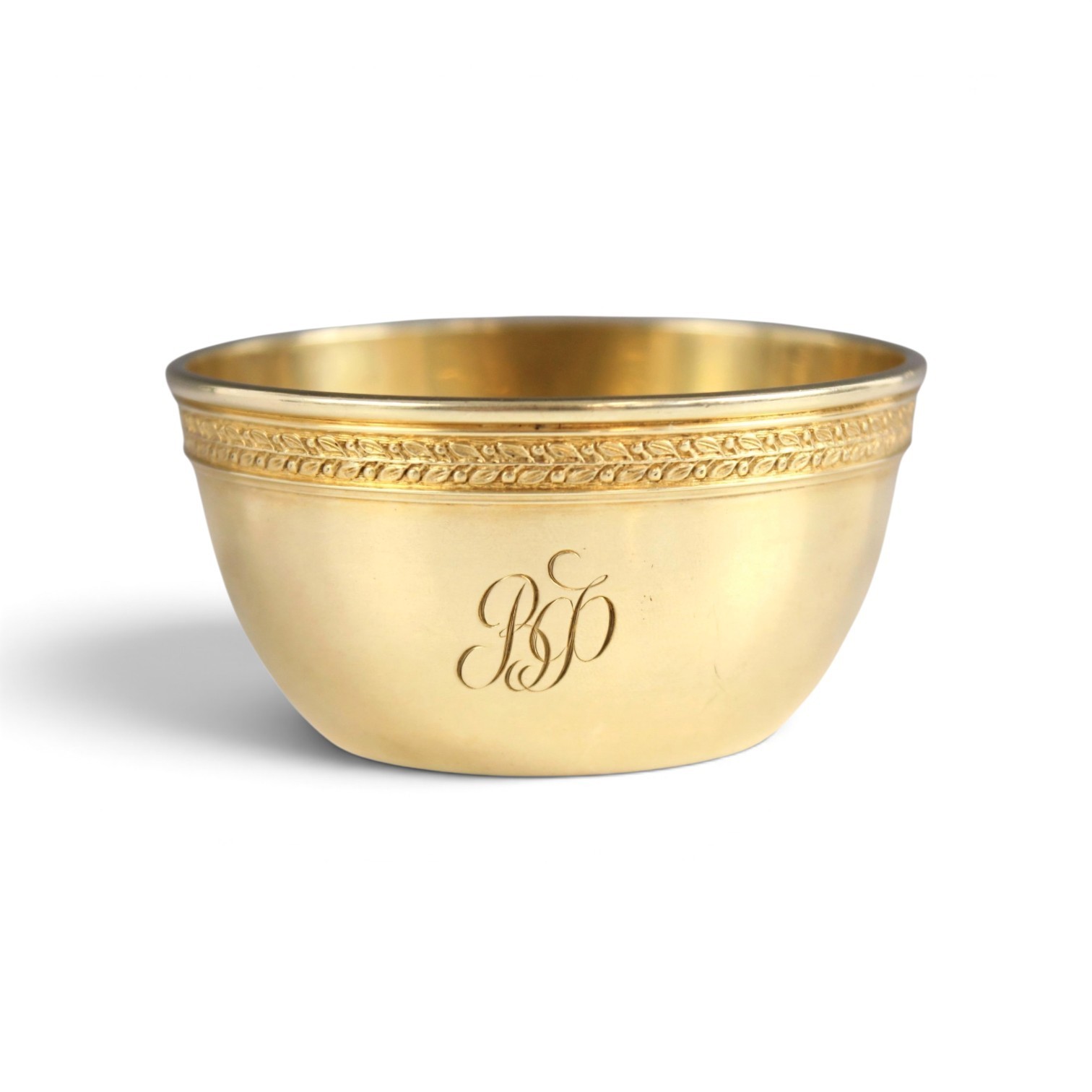
An Important Fabergé Silver-gilt Presentation Bowl Workmaster Stephan Wekeva, Moscow, 1899–1908