Exhibit Antiques has dated this piece to the 1870s.
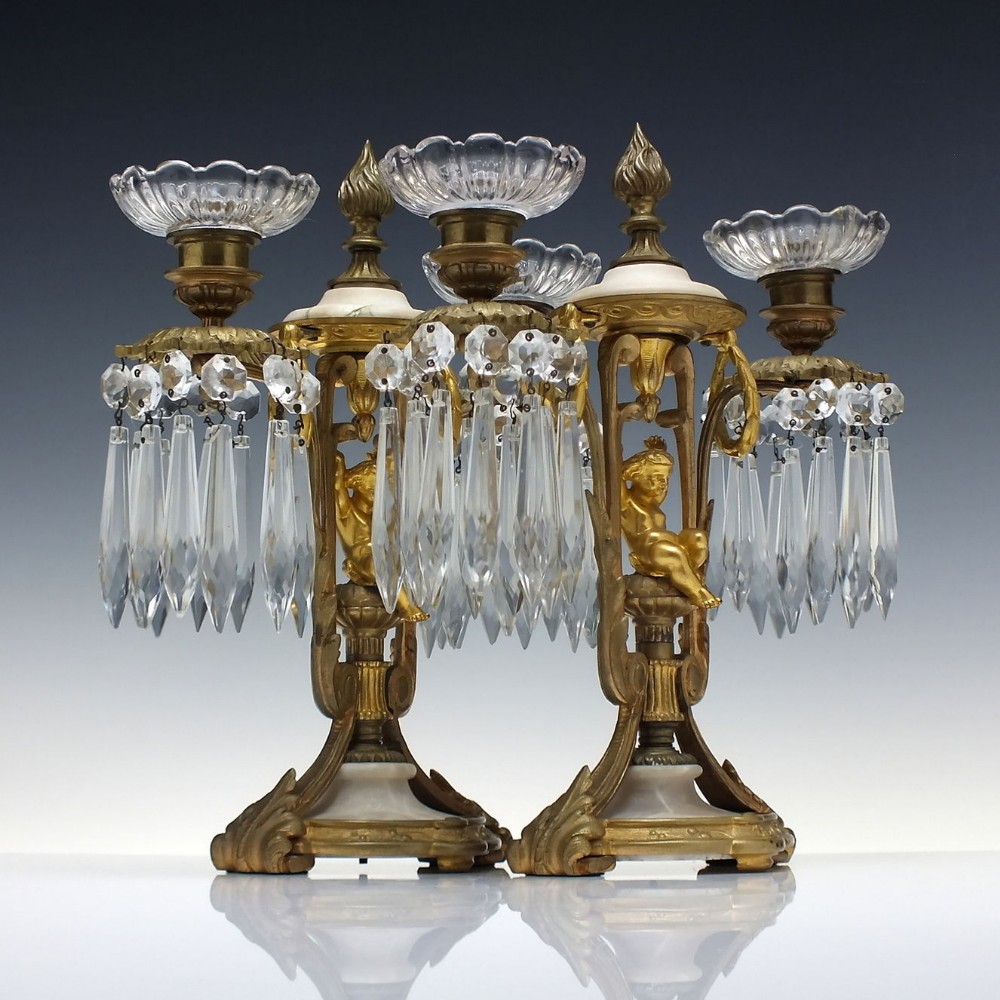
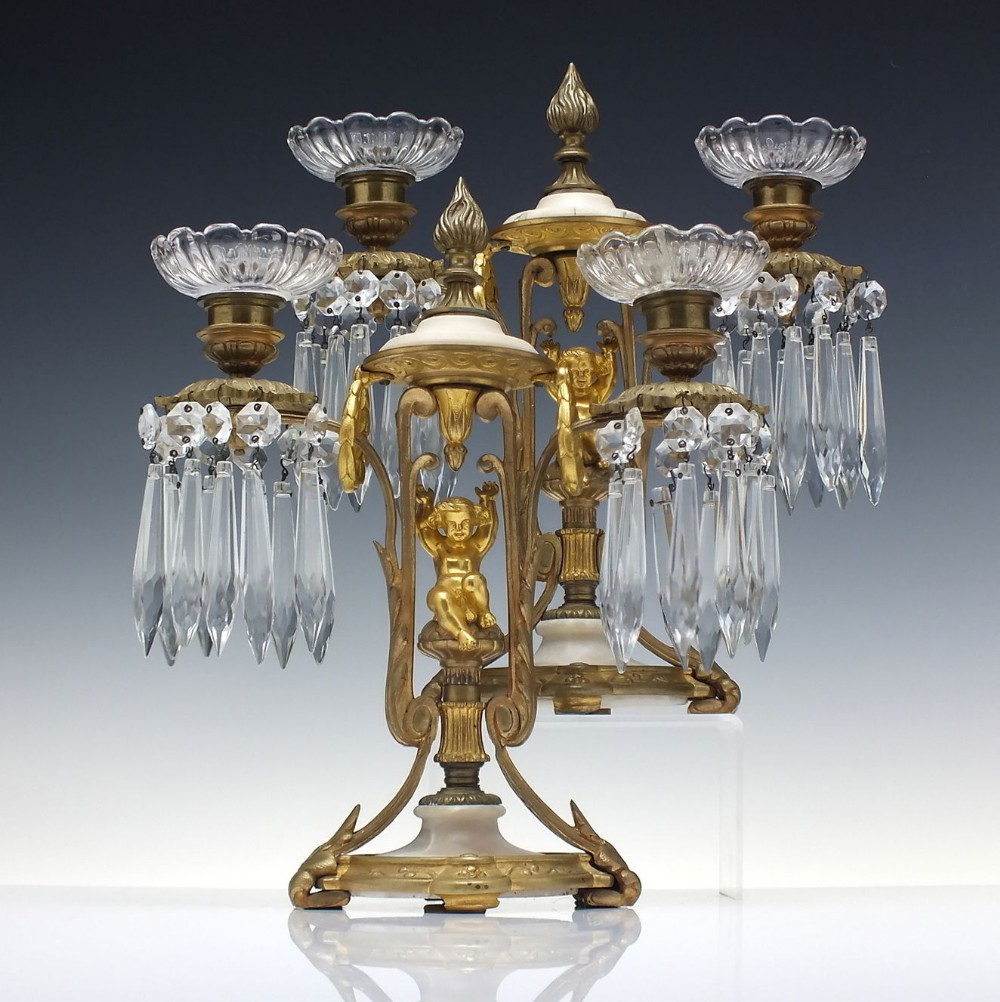
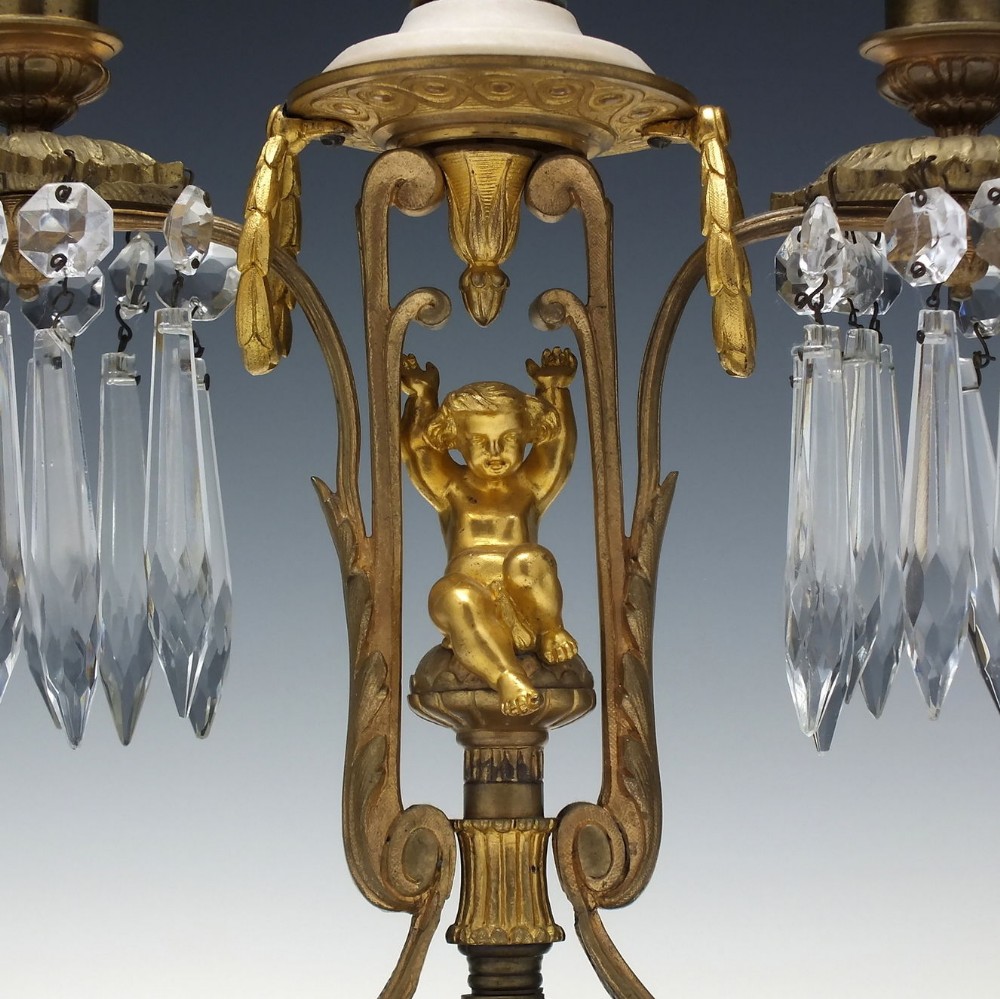
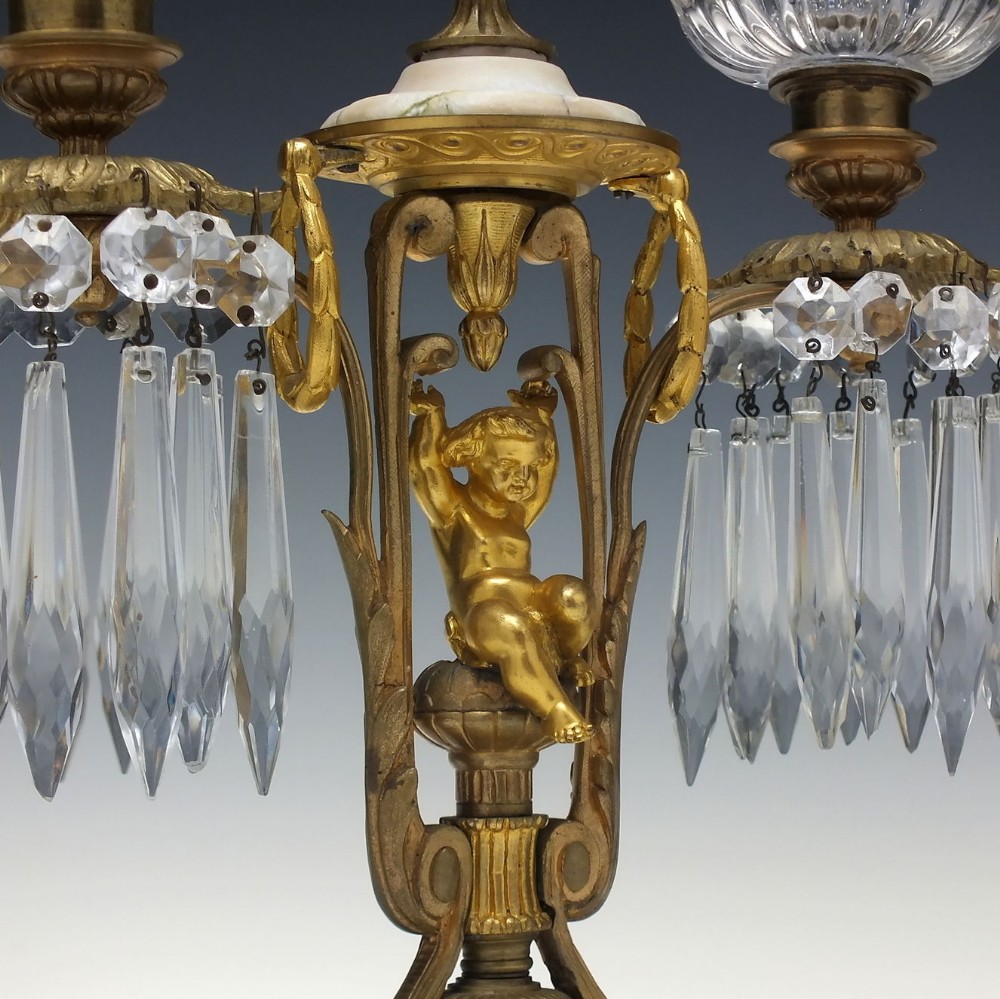
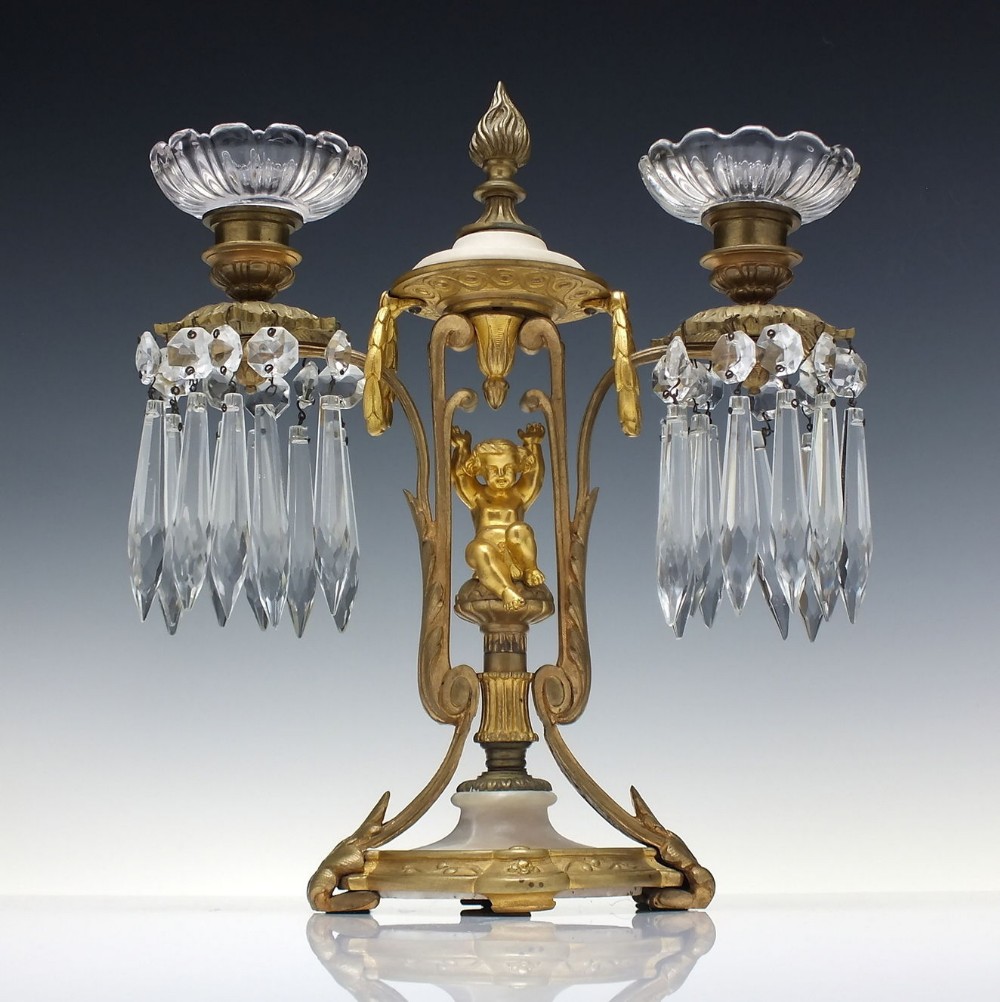
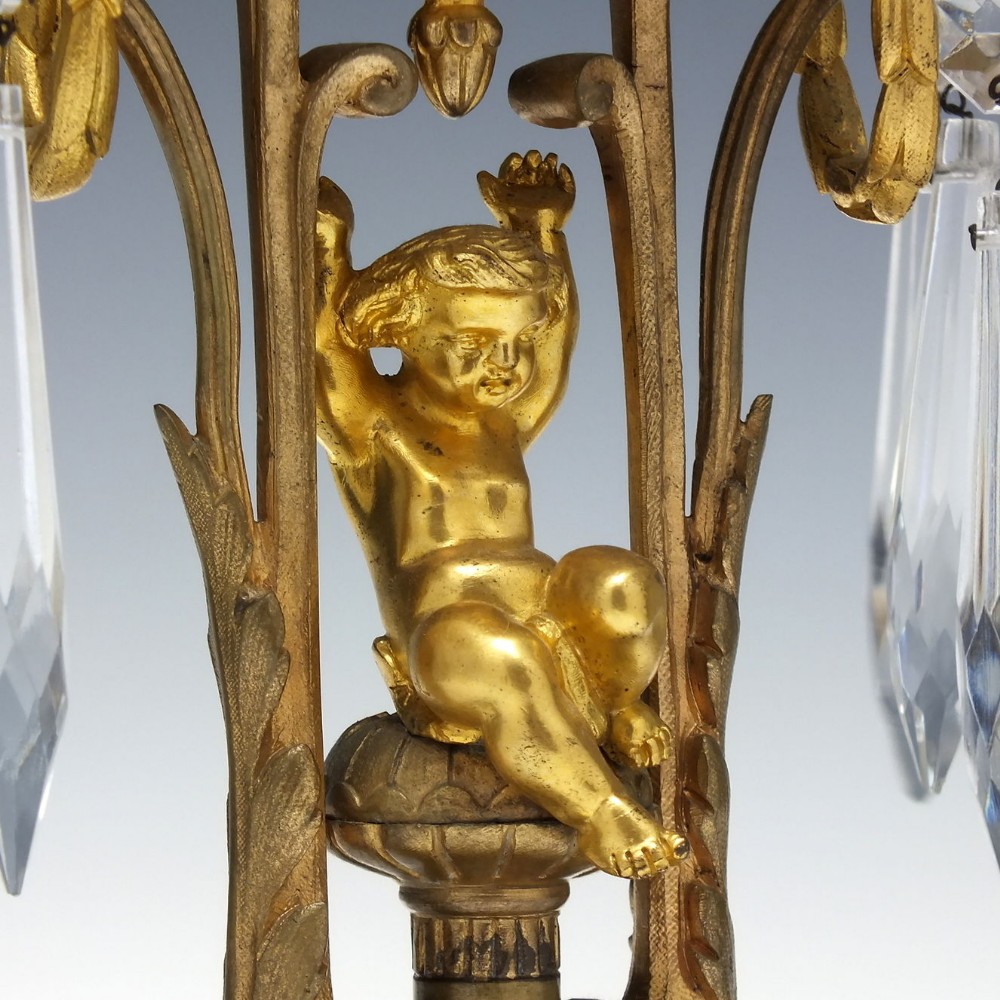
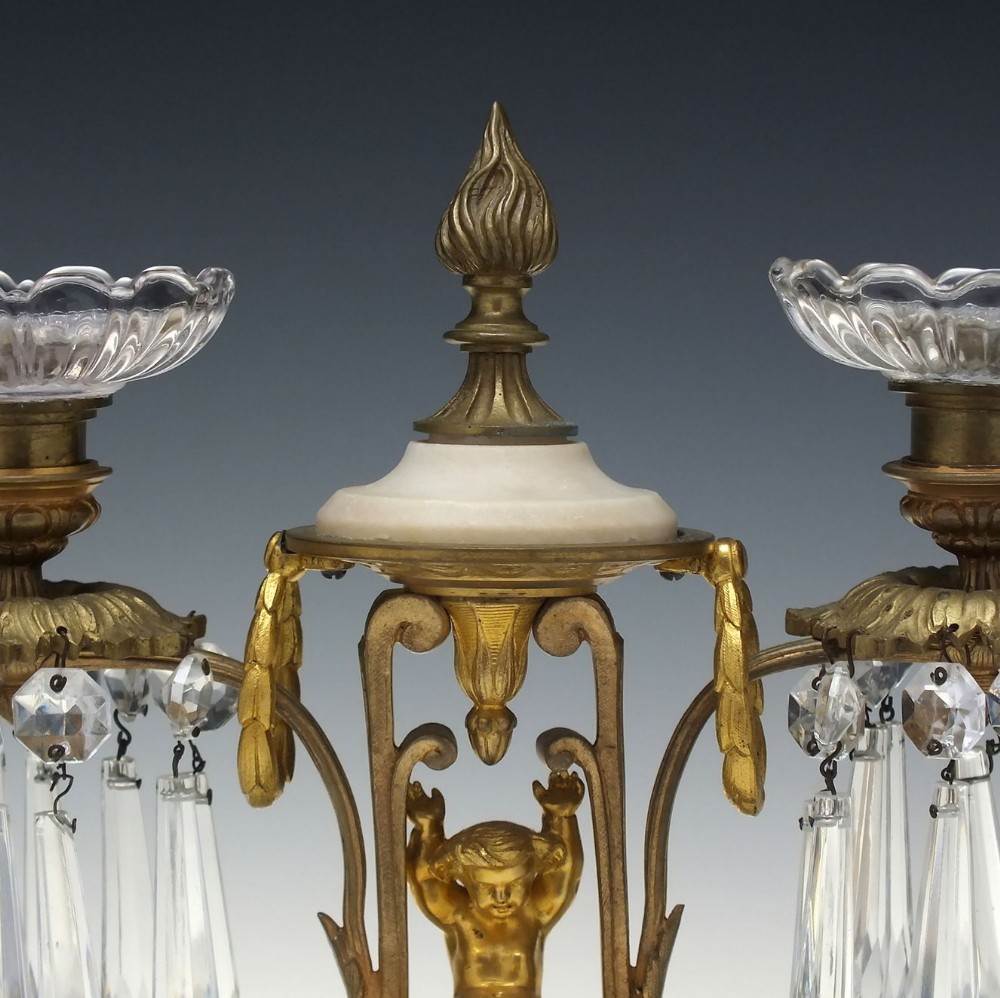
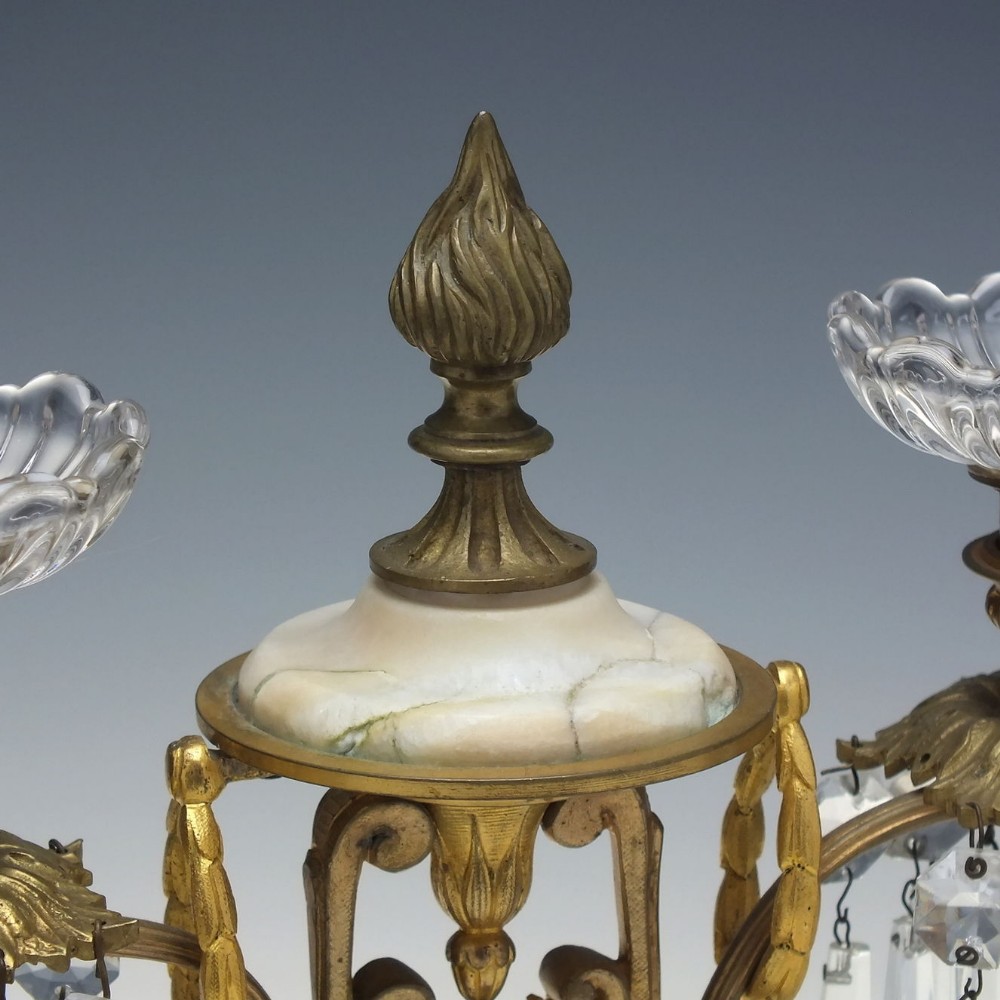
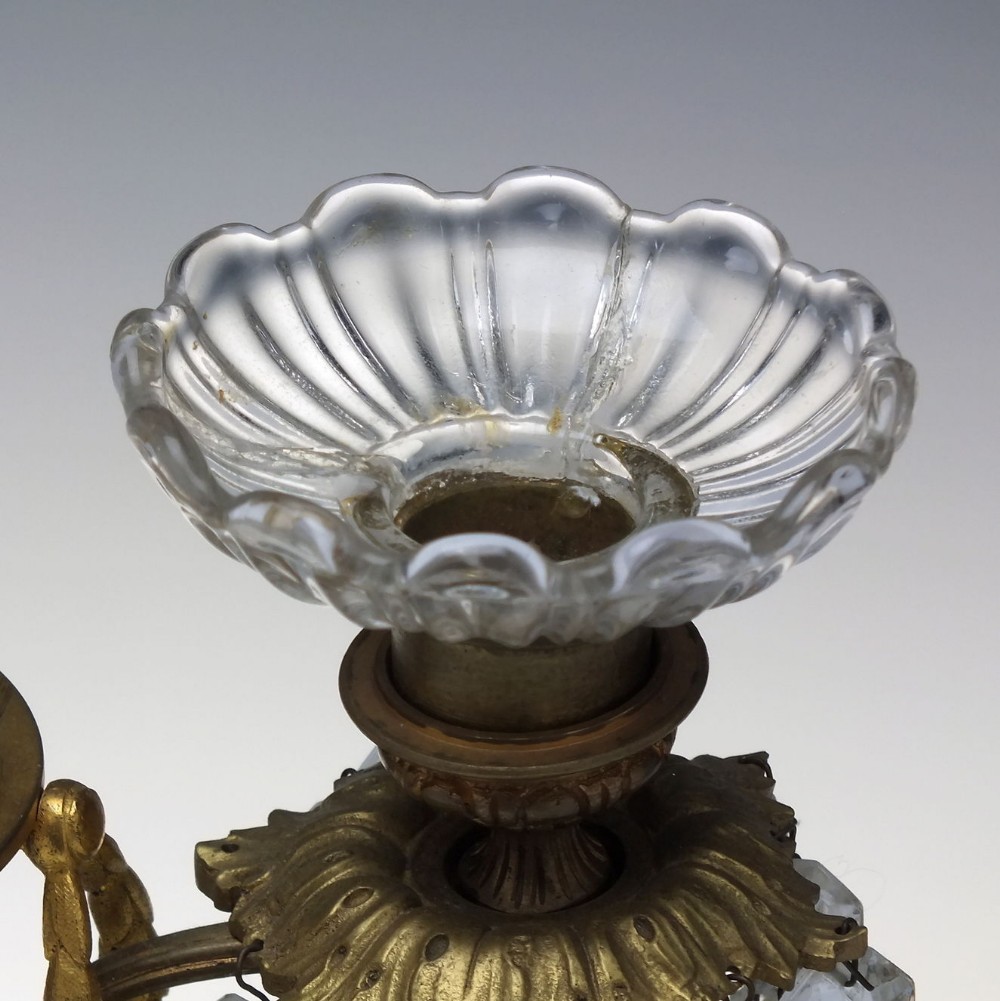
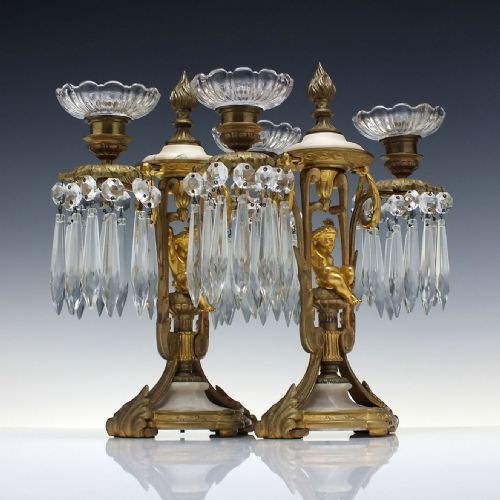
The ormolu gilt covers the bronze Empire-style, acanthus leaf structure, including the centred golden putto, hanging wreaths and torch finial. The upper and lower plinths are made from carved alabaster and shows its natural grain. The moulded glass sconces have a petal form with a scallop rim. Each lustre retains all of its 22 glass droplets, 44 droplets in total.
Date & Origin
France, c1870. Emperor Napoléon III (Charles-Louis Napoléon Bonaparte).
Condition
Restoration of one of the glass sconce plates and some natural fissures to the alabaster, as shown.
Dimensions
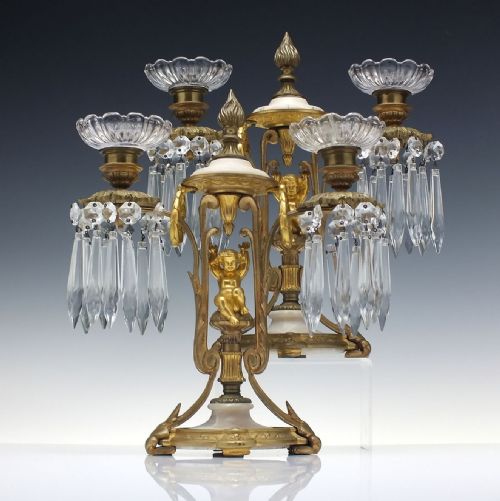
Height: 30cm
Lustre Width: 26cm
Base Width: 14cm
Historical Context
Ormolu is an 18th-19th century decorative technique. Finely ground of applying a high-carat gold is mixed with mercury to form a paste, applied to bronze, and fired in a kiln, evaporating the toxic mercury and leaving a rich gold coating. Popularised in France during the 18th century (Rococo, Neoclassical, and Empire styles), it was banned around 1830, though usage continued in some areas until the 20th century.
Exhibit Antiques has dated this piece to the 1870s.
Specialists in 18th & 19th century antique glass
You can view the stock and full dealer information on the Exhibit Antiques Profile Page
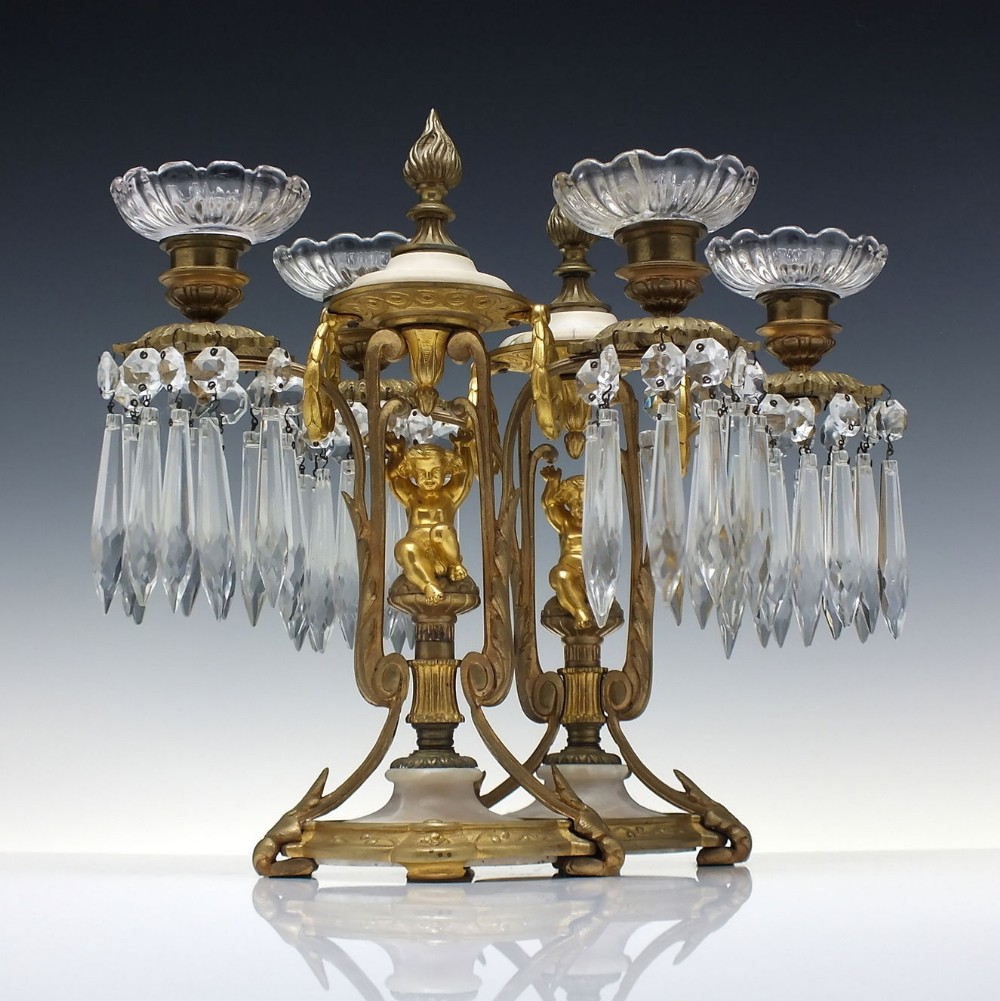
Pair 19th Century French Ormolu & Alabaster Glass Candle Lustres C1870