60,930  PAGES BROWSED TODAY PAGES TODAY 0  ANTIQUES UPLOADED TODAY NEW ARRIVALS
ID #SA1101894
SOLD
Email
Save
Pair of Bronze and Gilt Candelabra C1820
Church Street Antiques & Interiors
sold SA1101894
Sorry, but this item has been sold.
Church Street Antiques & Interiors

Church Street Antiques & Interiors

Sellingantiques Verified Since Apr 2011
View Dealers Stock Page
Id #SA1101894
PDF SHARE
SAVE

Pair of Bronze and Gilt Candelabra C1820

19th century
Description

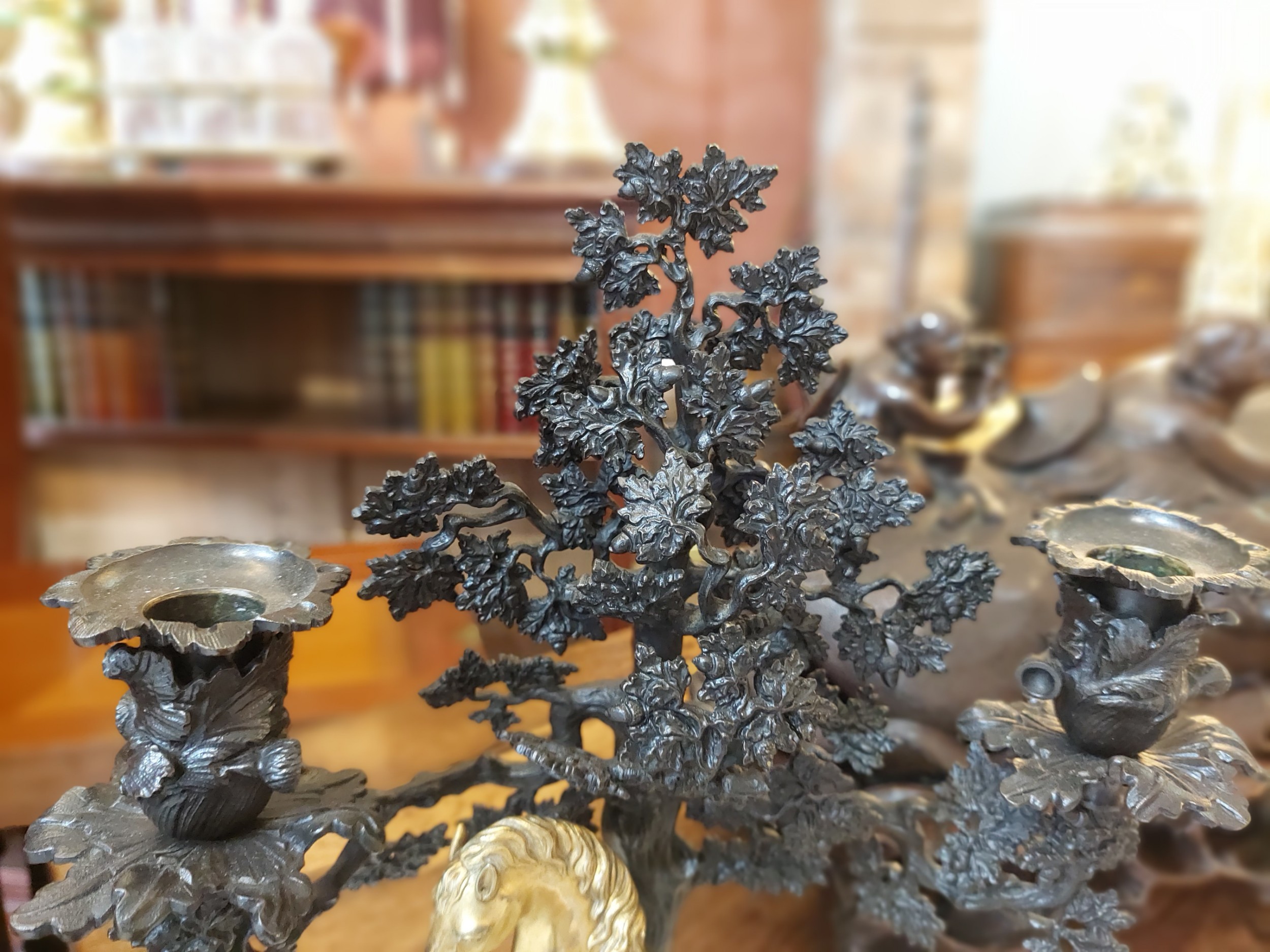
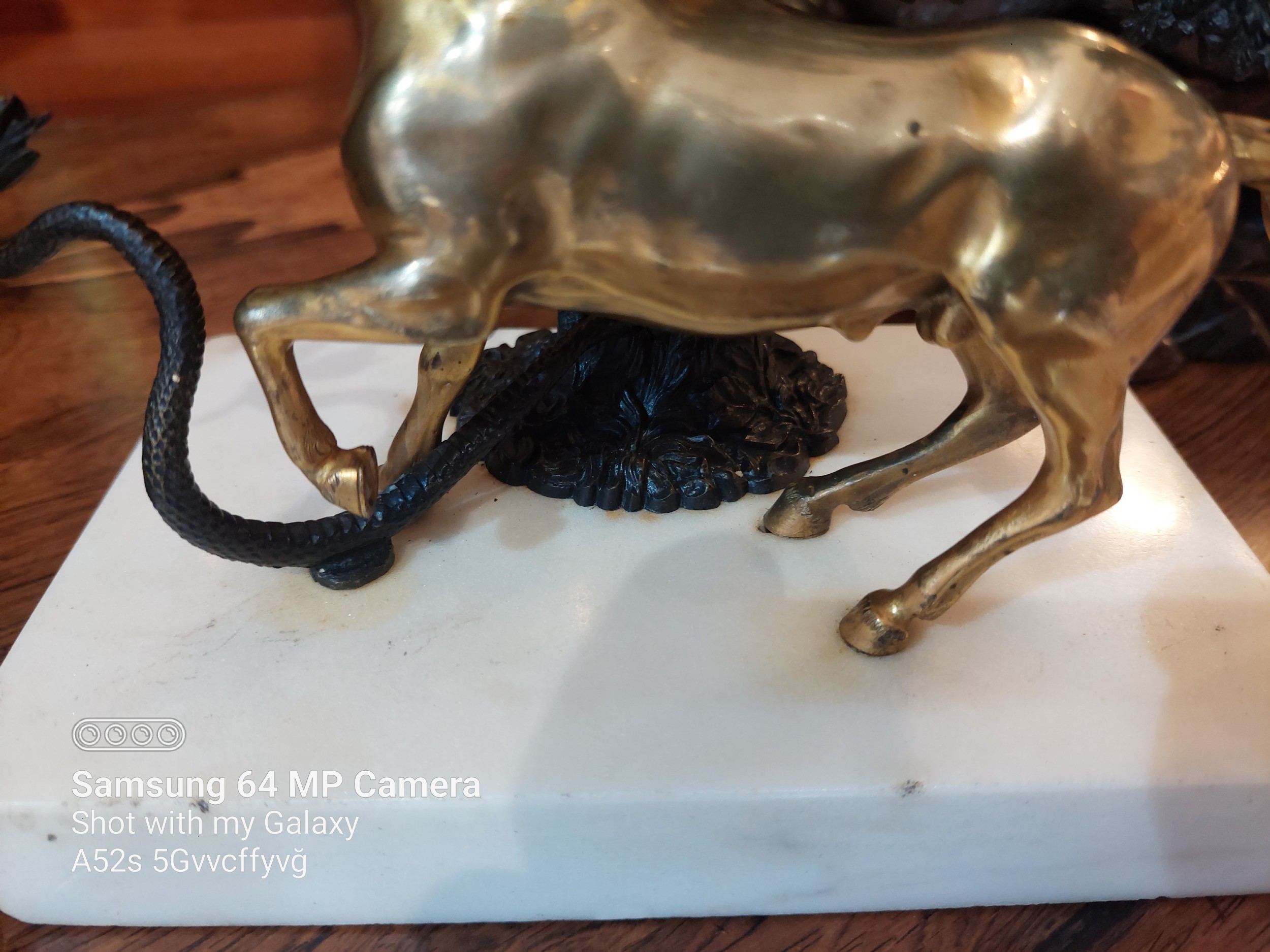
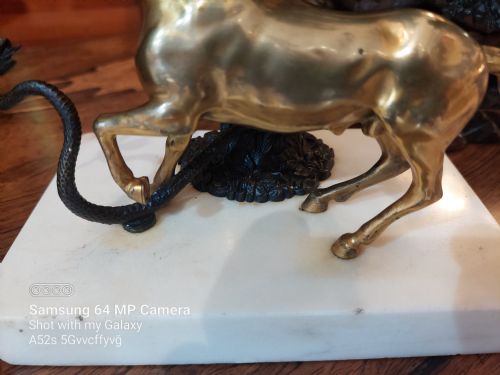
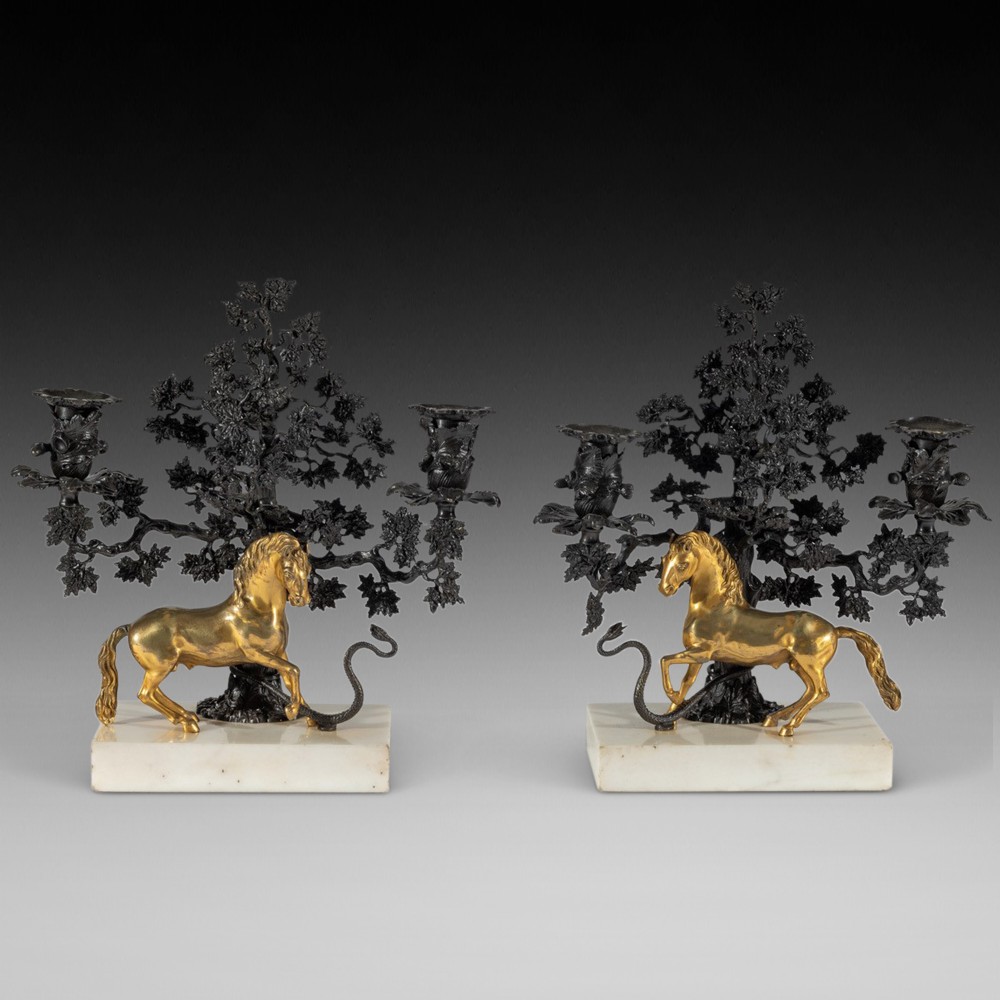
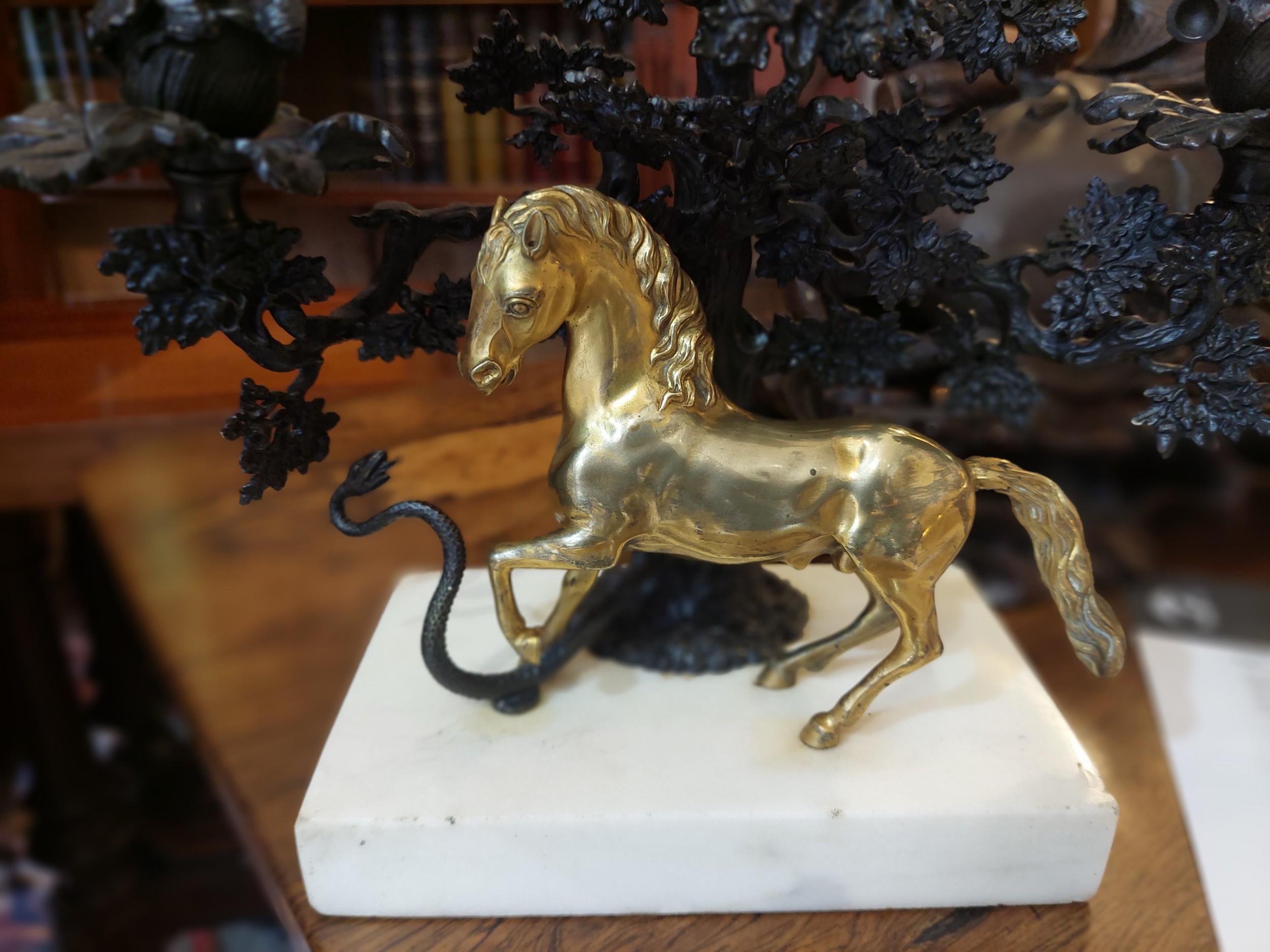
Pair of Bronze and Gilt Candelabra c1820 with a rearing stallion fighting a snake the serpent with its tail coiled around an oak tree - 12"w x 4.5"d x 12"h -

Early 19th century pair of bronze and gilt candlesticks.

Rare pair of bronze and gilt-bronze candelabra, each with a rearing stallion fighting a snake, both realistically portrayed, the serpent with its tail coiled around the patinated bronze oak tree. The boughs of the tree form the two branches supporting acorn-cast candle nozzles and raised on the original statuary marble bases.
The subject may be intended to show the power of the monarchy (the horse) being threatened by the government (the serpent) as it prepared to widen the franchise by passing the Great Reform Act of 1832.
The Representation of the People Act 1832 (also known as the Reform Act 1832, Great Reform Act or First Reform Act) was an Act of Parliament of the United Kingdom that introduced major changes to the electoral system of England and Wales. It abolished tiny districts, gave representation to cities, gave the vote to small landowners, tenant farmers, shopkeepers, householders who paid a yearly rental of £10 or more, and some lodgers. Only qualifying men were able to vote; the Act introduced the first explicit statutory bar to women voting by defining a voter as a male person.
It was designed to correct abuses – to 'take effectual Measures for correcting diverse Abuses that have long prevailed in the Choice of Members to serve in the Commons House of Parliament'.

Elections in Britain were neither fair nor representative. In order to vote, a person had to own property or pay certain taxes to qualify, which excluded most working class people. There were also constituencies with several voters that elected two MPs to Parliament, such as Old Sarum in Salisbury. In these ‘rotten boroughs’, with few voters and no secret ballot, it was easy for those standing for election to buy votes. Industrial towns like Manchester or Birmingham, which had grown during the previous 80 years, had no Members of Parliament to represent them.

There had been calls for reform long before 1832, but without success. The Act that finally succeeded was proposed by the Whigs, led by Prime Minister Charles Grey, 2nd Earl Grey. It met with significant opposition from the Pittite factions in Parliament, who had long governed the country; opposition was especially pronounced in the House of Lords. Nevertheless, the bill was eventually passed, mainly as a result of public pressure. The Act granted seats in the House of Commons to the large cities that had sprung up during the Industrial Revolution, and removed seats from the 'rotten boroughs': those with very small electorates and usually dominated by a wealthy patron. The Act also increased the electorate from about 400,000 to 650,000, making about one in five adult males eligible to vote

Physical Dimensions
Height
30cm (11.81")
Width
30cm (11.81")
Depth
12cm (4.72")
Declaration

Church Street Antiques & Interiors has dated this piece to the Regency era.

Reference Numbers
Sellingantiques Reference
SA1101894
Dealers Internal Reference
6768
Description
Pair of Bronze and Gilt Candelabra c1820 with a rearing stallion fighting a snake the serpent with its tail coiled around an oak tree - 12"w x 4.5"d x 12"h -

Early 19th century pair of bronze and gilt candlesticks.

Rare pair of bronze and gilt-bronze candelabra, each with a rearing stallion fighting a snake, both realistically portrayed, the serpent with its tail coiled around the patinated bronze oak tree.
Church Street Antiques & Interiors

The boughs of the tree form the two branches supporting acorn-cast candle nozzles and raised on the original statuary marble bases.

fig 1. Pair of Bronze and Gilt Candelabra c1820
fig 1. Pair of Bronze and Gilt Candelabra C1820

The subject may be intended to show the power of the monarchy (the horse) being threatened by the government (the serpent) as it prepared to widen the franchise by passing the Great Reform Act of 1832.

fig 2. Pair of Bronze and Gilt Candelabra c1820
fig 2. Pair of Bronze and Gilt Candelabra C1820

The Representation of the People Act 1832 (also known as the Reform Act 1832, Great Reform Act or First Reform Act) was an Act of Parliament of the United Kingdom that introduced major changes to the electoral system of England and Wales. It abolished tiny districts, gave representation to cities, gave the vote to small landowners, tenant farmers, shopkeepers, householders who paid a yearly rental of £10 or more, and some lodgers. Only qualifying men were able to vote; the Act introduced the first explicit statutory bar to women voting by defining a voter as a male person.

fig 3. Pair of Bronze and Gilt Candelabra c1820
fig 3. Pair of Bronze and Gilt Candelabra C1820

It was designed to correct abuses – to 'take effectual Measures for correcting diverse Abuses that have long prevailed in the Choice of Members to serve in the Commons House of Parliament'.

Elections in Britain were neither fair nor representative. In order to vote, a person had to own property or pay certain taxes to qualify, which excluded most working class people. There were also constituencies with several voters that elected two MPs to Parliament, such as Old Sarum in Salisbury. In these ‘rotten boroughs’, with few voters and no secret ballot, it was easy for those standing for election to buy votes. Industrial towns like Manchester or Birmingham, which had grown during the previous 80 years, had no Members of Parliament to represent them.

There had been calls for reform long before 1832, but without success. The Act that finally succeeded was proposed by the Whigs, led by Prime Minister Charles Grey, 2nd Earl Grey. It met with significant opposition from the Pittite factions in Parliament, who had long governed the country; opposition was especially pronounced in the House of Lords. Nevertheless, the bill was eventually passed, mainly as a result of public pressure. The Act granted seats in the House of Commons to the large cities that had sprung up during the Industrial Revolution, and removed seats from the 'rotten boroughs': those with very small electorates and usually dominated by a wealthy patron. The Act also increased the electorate from about 400,000 to 650,000, making about one in five adult males eligible to vote

Height
30cm (11.81")
Width
30cm (11.81")
Depth
12cm (4.72")
Date of Manufacture

Church Street Antiques & Interiors has dated this piece to the Regency era.

Reference Numbers
Sellingantiques Ref
SA1101894
Dealers Internal Ref
6768
Church Street Antiques & Interiors
Sellingantiques verified Since Apr 2011
Dealer Profile

You can view the stock and full dealer information on the Church Street Antiques & Interiors Profile Page
PDF SHARE
SAVE
Pair of Bronze and Gilt Candelabra c1820
1 / 4
Archive I Pair of Bronze and Gilt Candelabra c1820

Pair of Bronze and Gilt Candelabra C1820
Archive II Pair of Bronze and Gilt Candelabra c1820 View II
Archive III Pair of Bronze and Gilt Candelabra c1820 View III
Archive IV Pair of Bronze and Gilt Candelabra c1820 View IV
Enlarged Archival View
Telephone 0161 929 5196
Location
4/4a Old Market Place
Altrincham
Cheshire
WA14 4NP
United Kingdom
Verified Since Apr 2011
Items For Sale 451
Items Sold 2,332
Church Street Antiques & Interiors
Verified Since Apr 2011
View Dealer Info
Location: 4/4a Old Market Place, Altrincham, Cheshire, WA14 4NP, United Kingdom
Verified
Apr 2011
For Sale
451
Sold
2,332
Pair of Bronze and Gilt Candelabra c1820
Ref: SA1101894
Pair of Bronze and Gilt Candelabra c1820
Detail View 1
Detail View 2
Detail View 3
Archival Detail
Every single antique dealer on our platform is individually approved by our internal team. We verify their professional trade history, ethical standards, and photographic quality to ensure a secure, high-standard buying environment. Upon joining, every dealer agrees to a strict 9-point code of conduct. While issues can occasionally arise, our dealers typically resolve them swiftly and directly with the buyer. In fact, since our founding in 2002, Sellingantiques has only had to step in to help resolve an issue on roughly five occasions—a true testament to the quality of our dealers and their dedication to your happiness.
Our dealers are highly experienced in packing and shipping fragile, high-value antiques. Because you are in direct contact with the dealer, you will be able to easily go through all available shipping and insurance options together to ensure your item arrives safely.
Antiques are the ultimate green purchase. By choosing historical pieces over newly manufactured goods, you completely eliminate the carbon footprint of modern mass production while preserving exceptional, timeless craftsmanship.
items
Add keywords to the filter
Price
£100
£250000
Era
Movements
Material
Origin
Stock Location
Freshness
Online Payments
Categories