Artisan Antiques has dated this piece to the Georgian era.
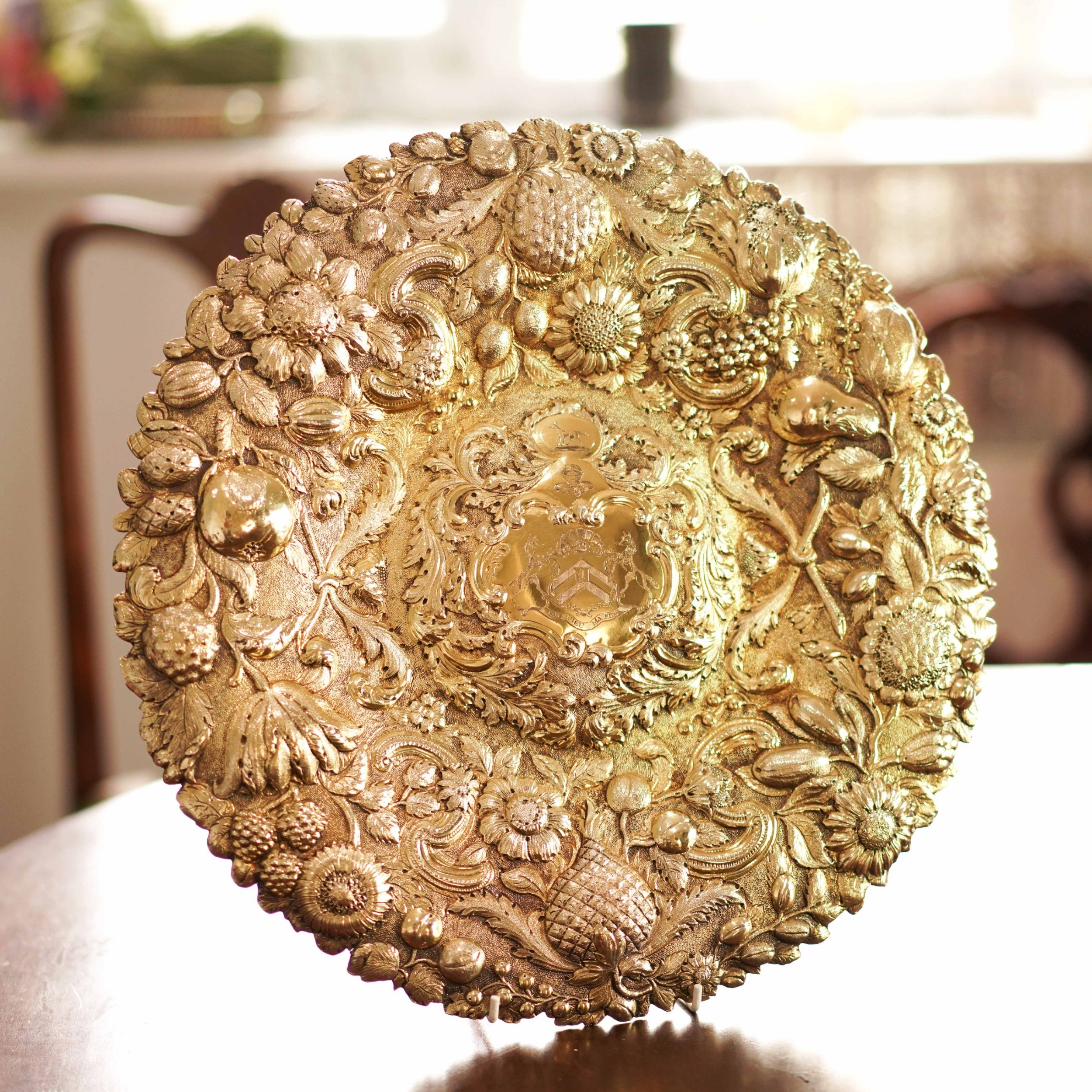
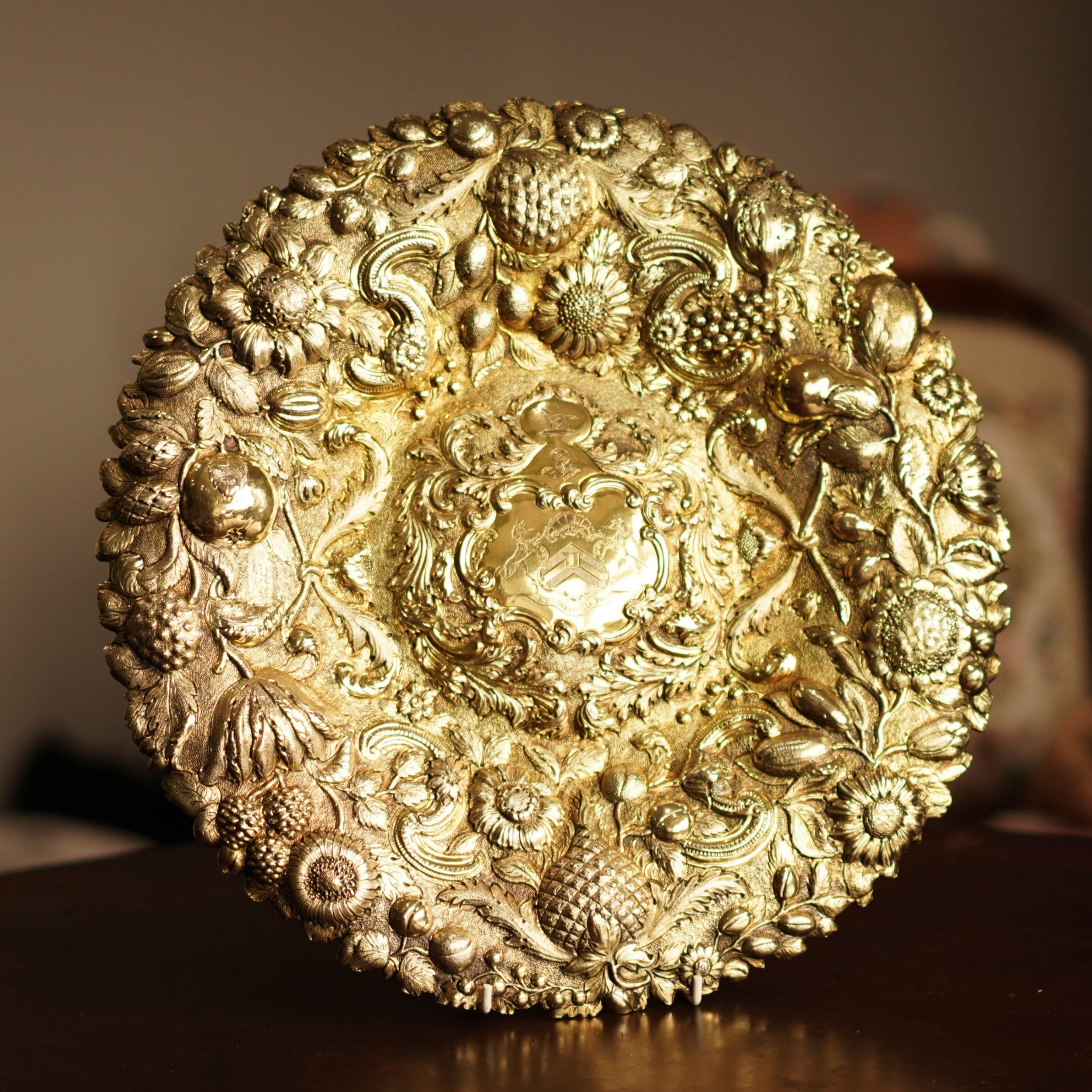
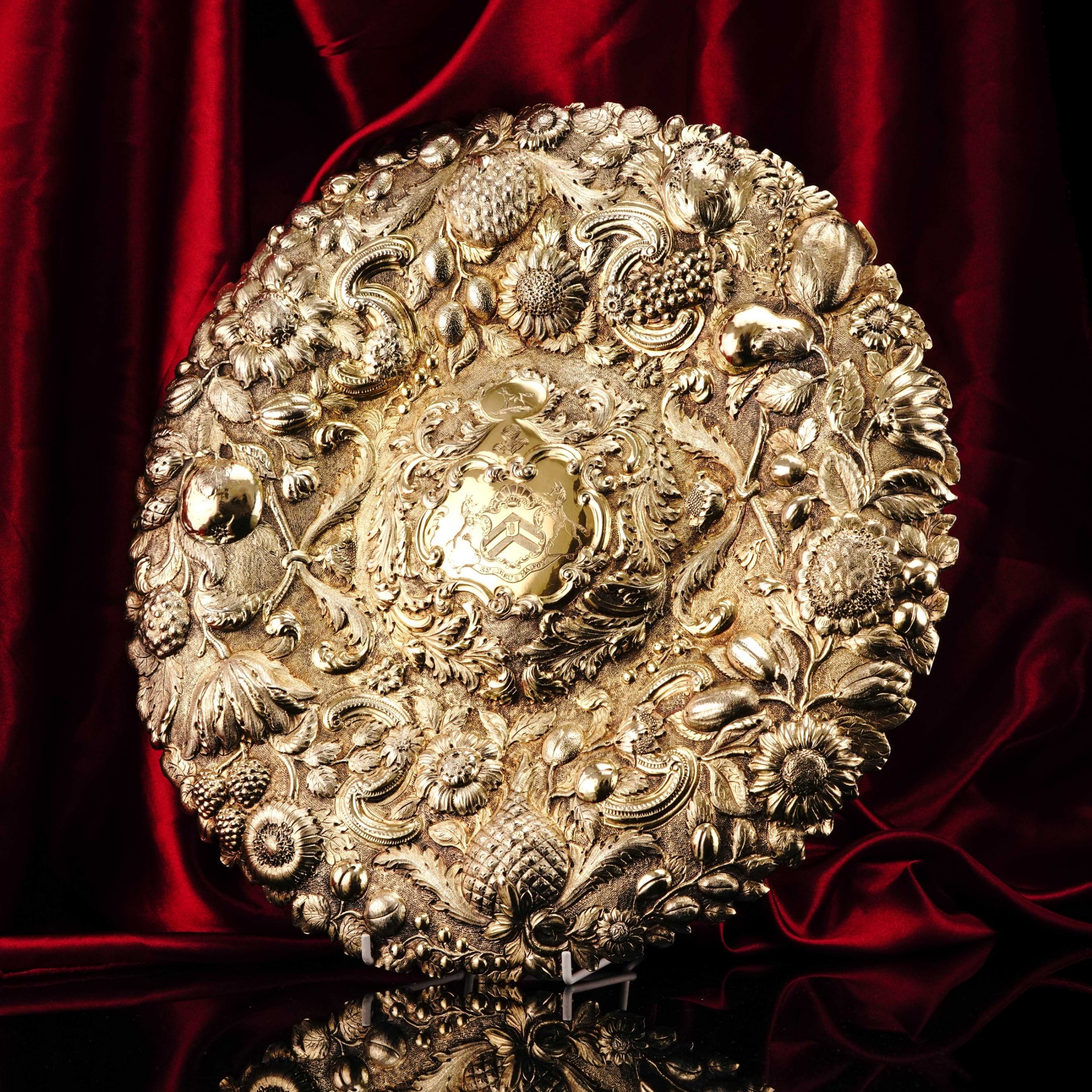
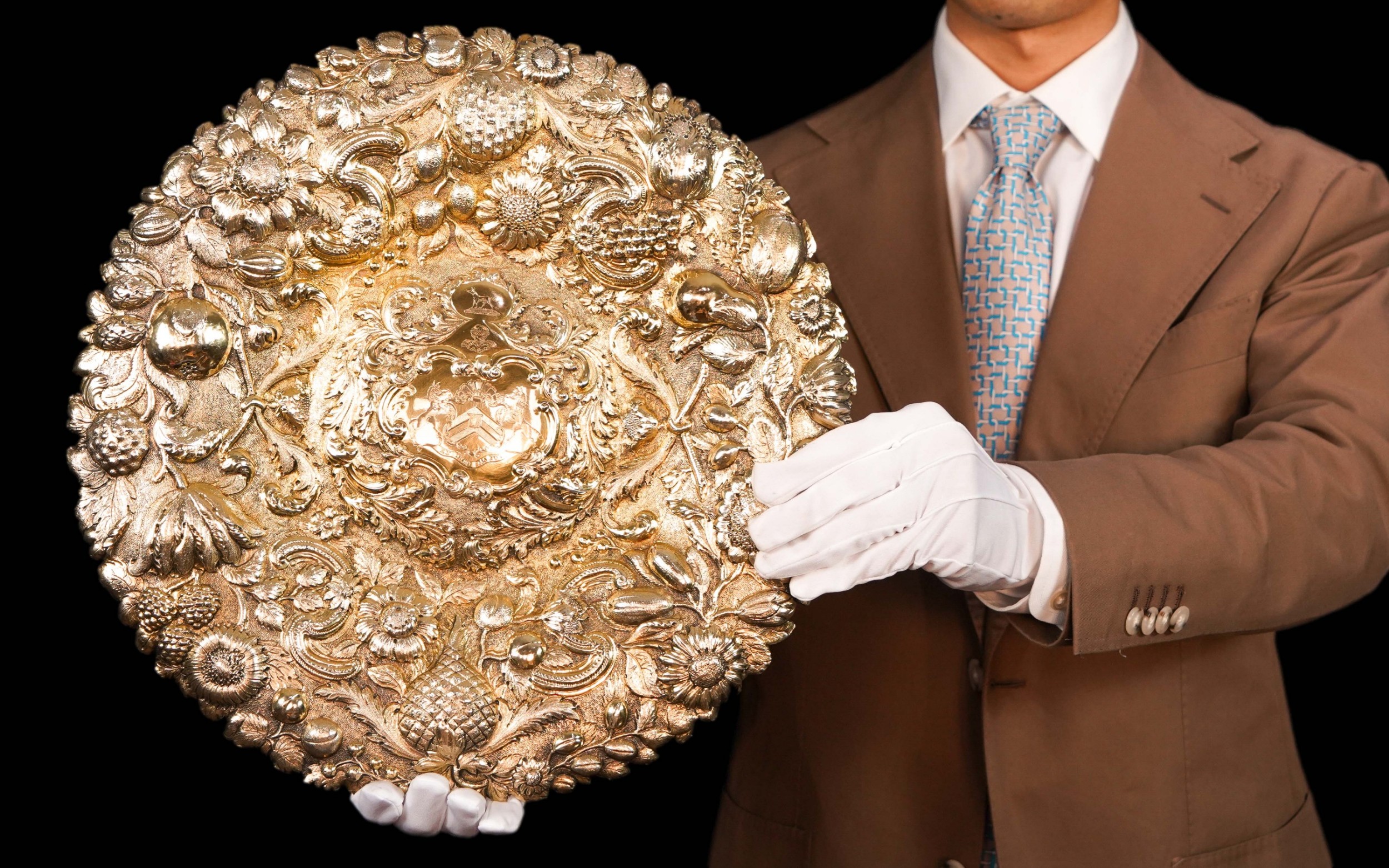
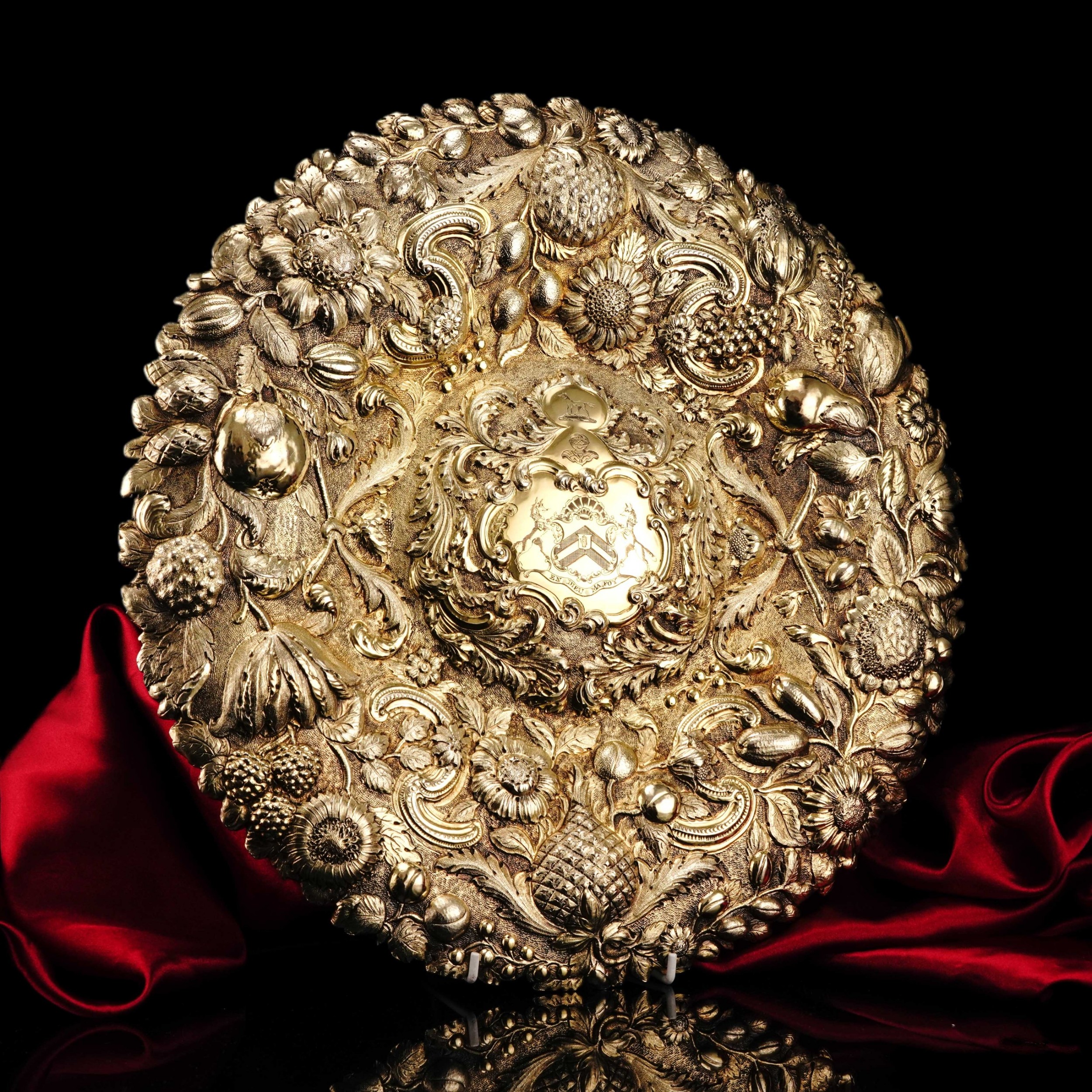
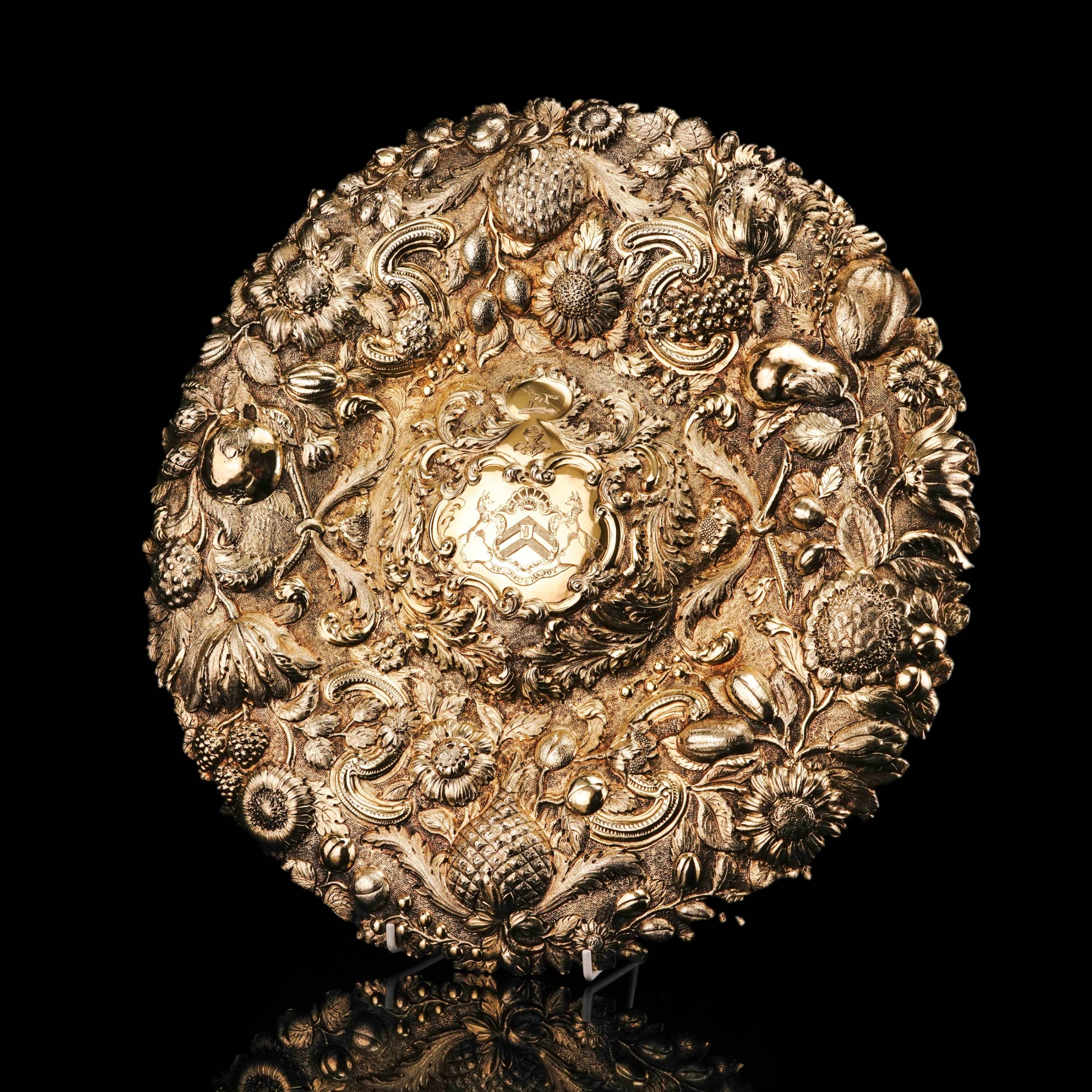
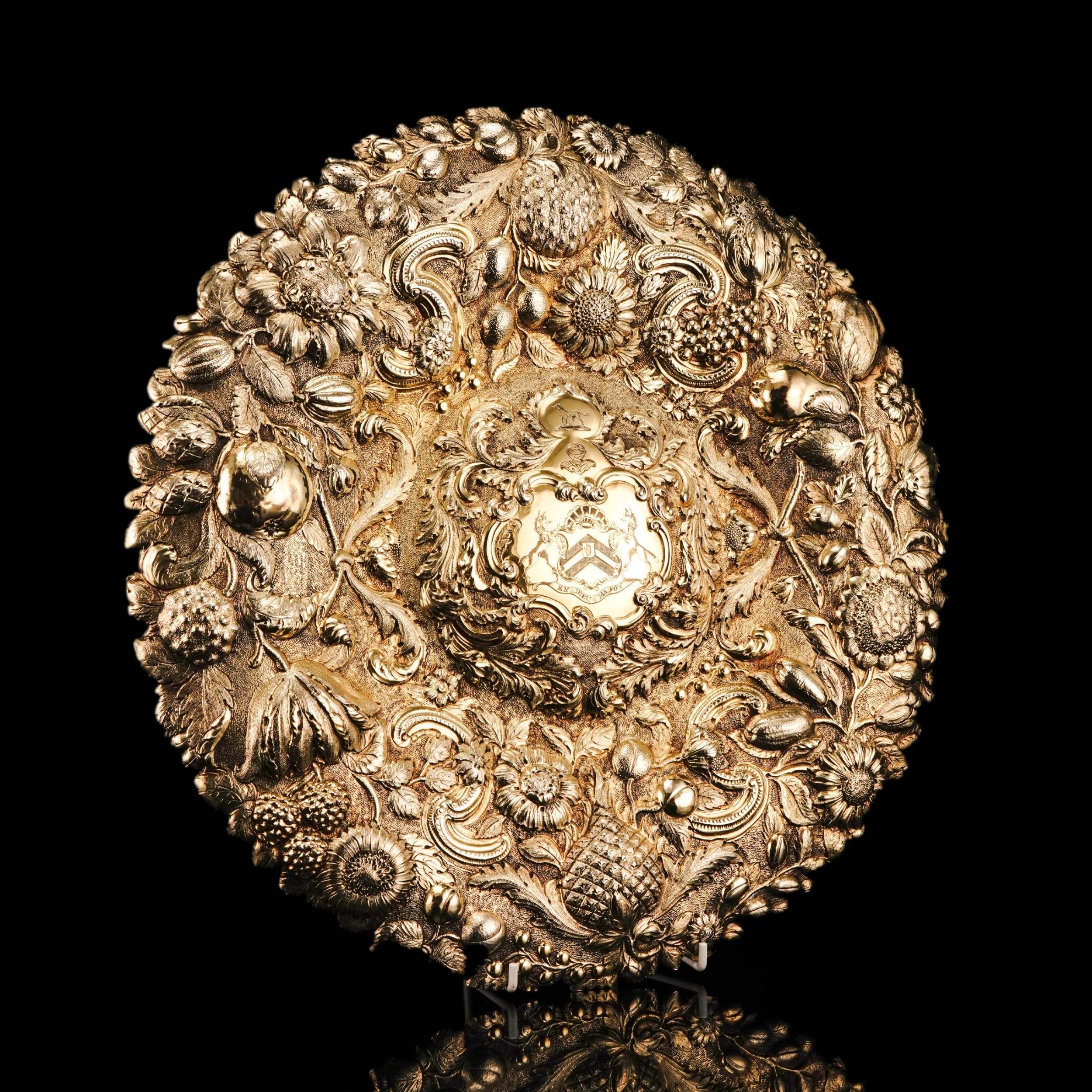
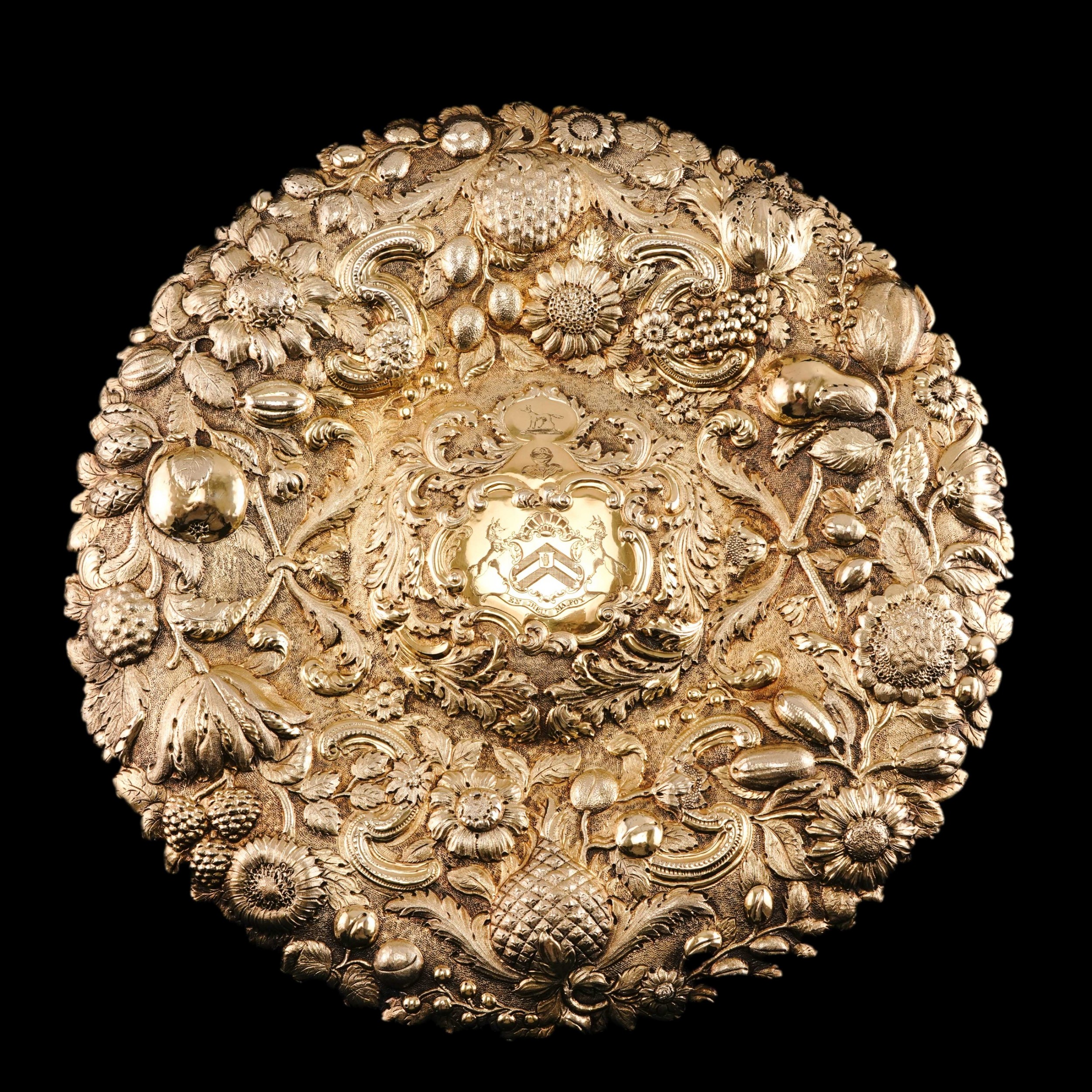
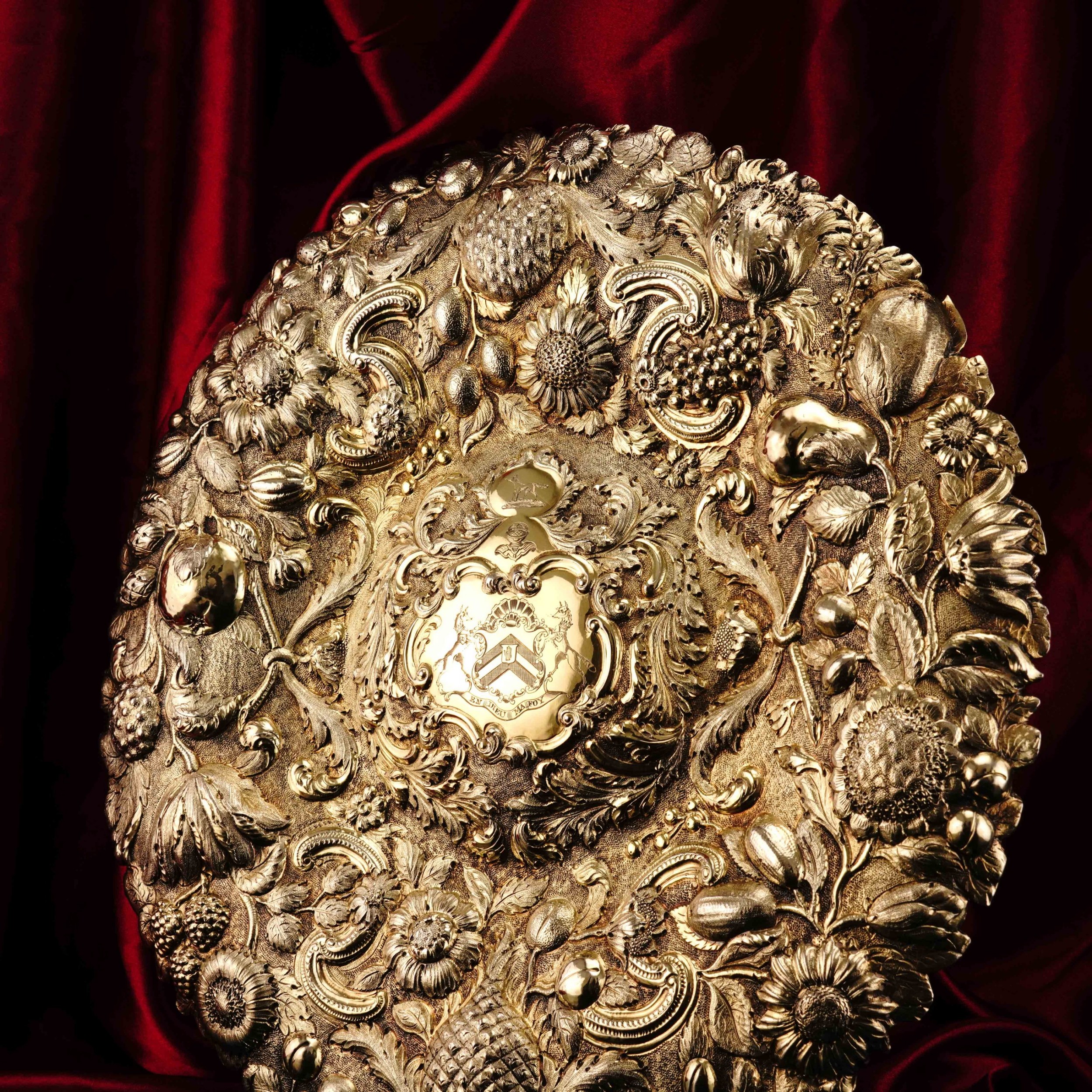
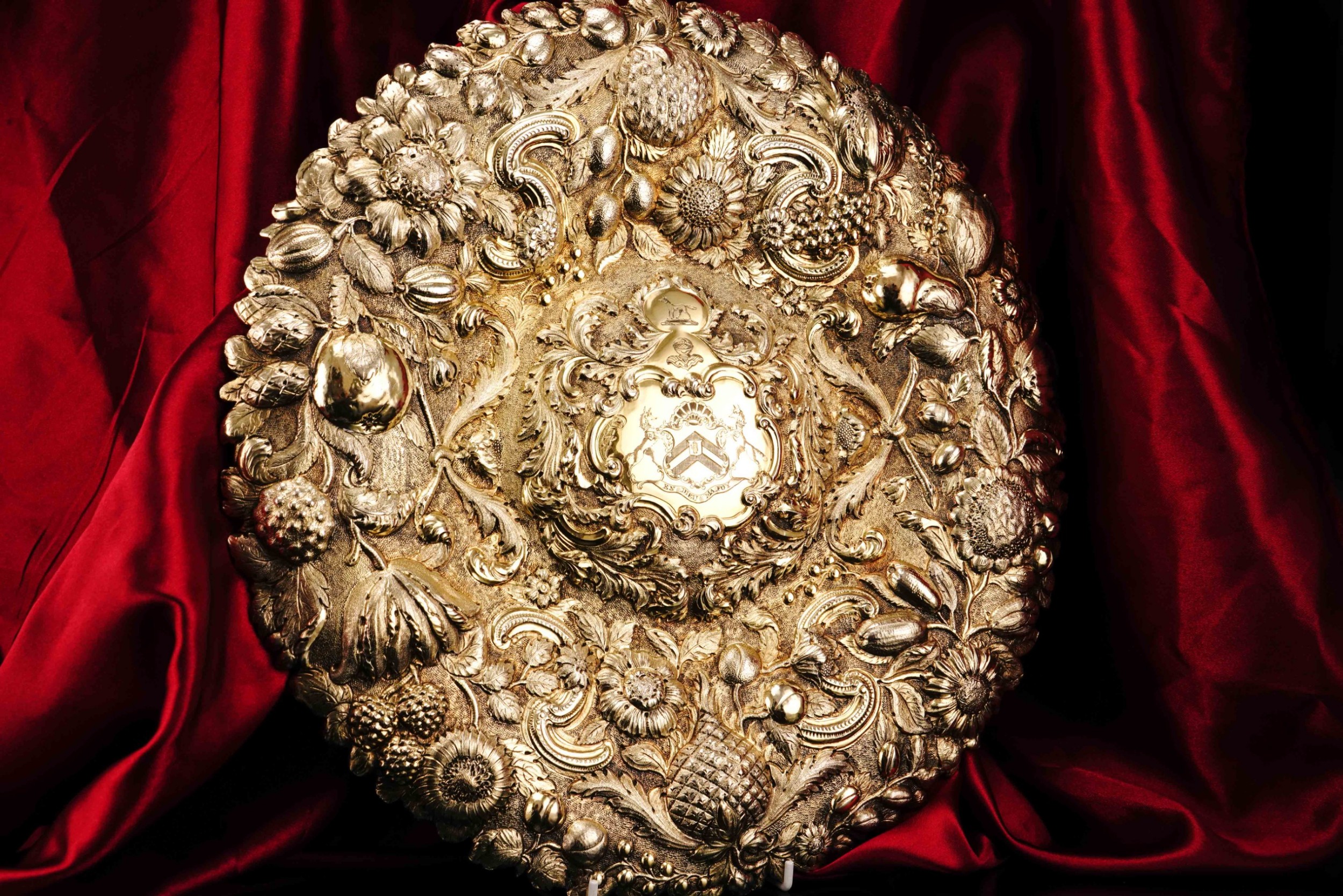
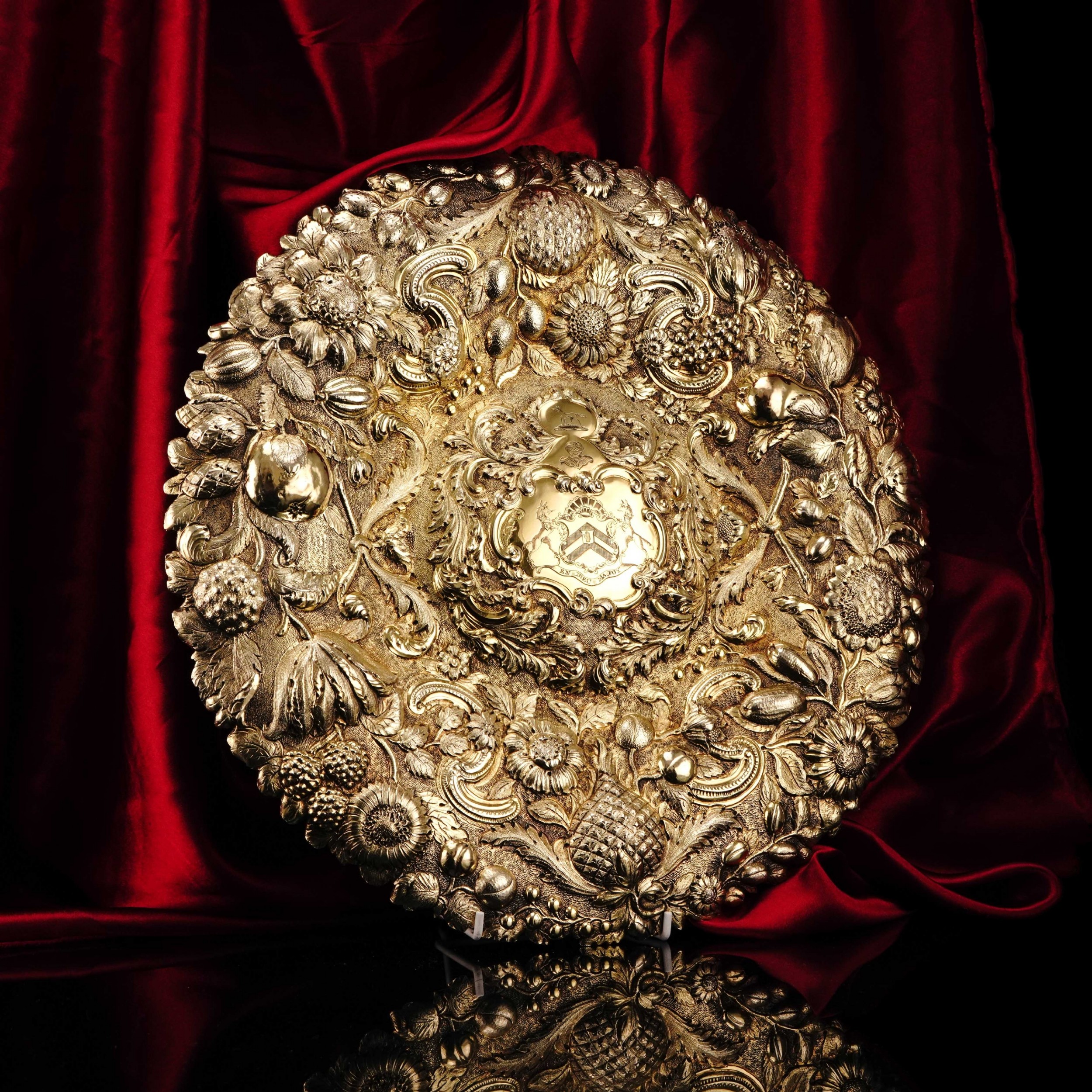
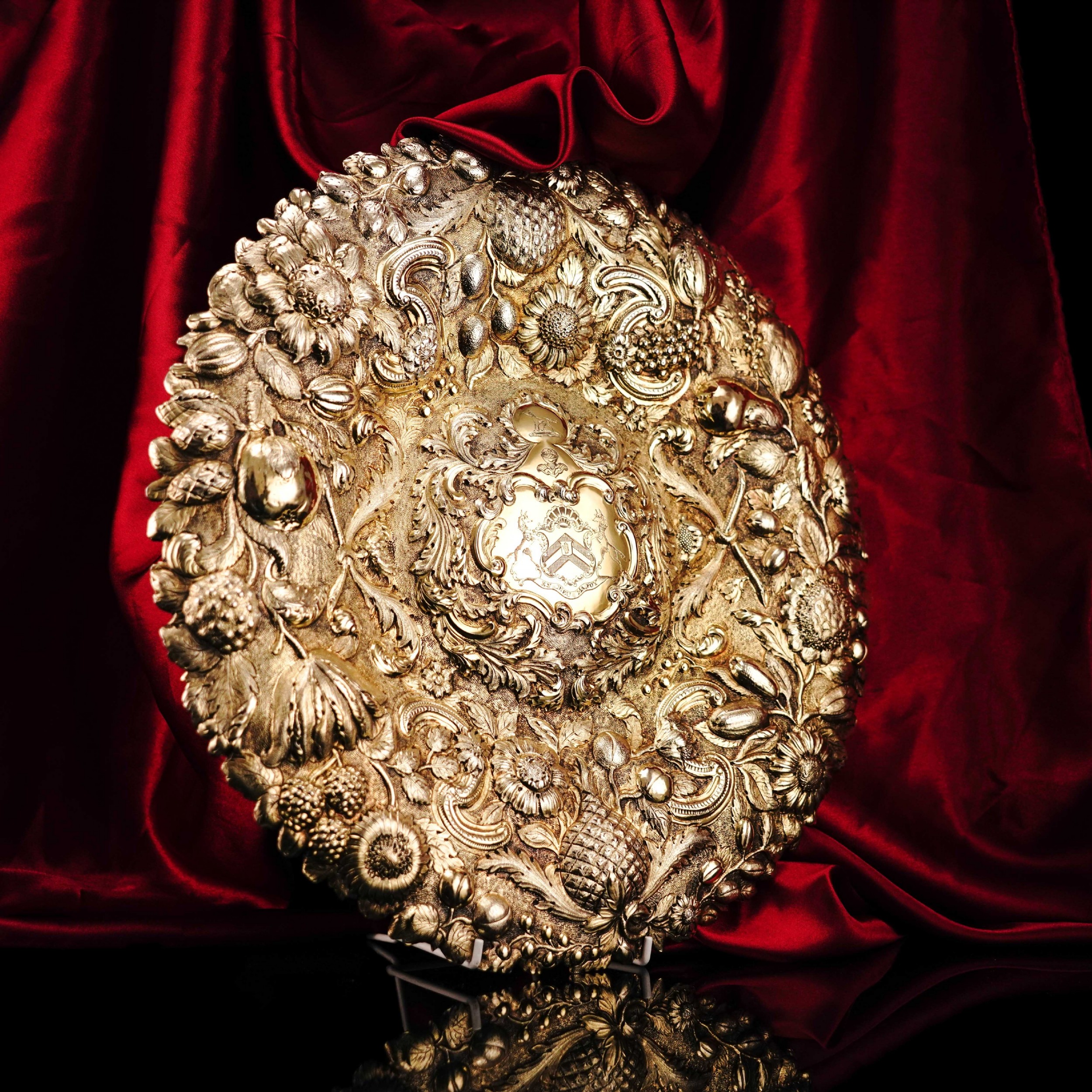
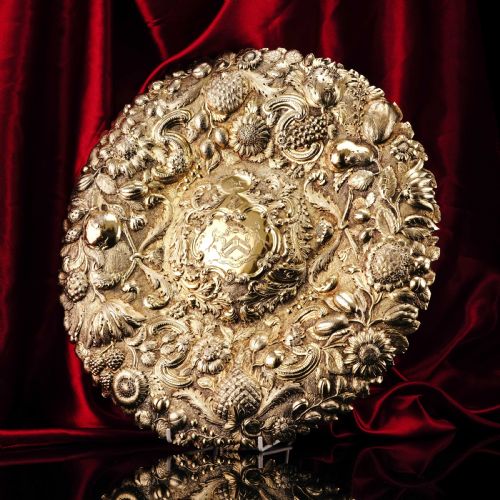
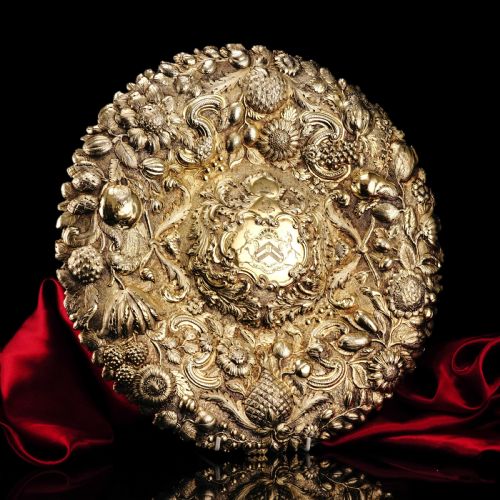
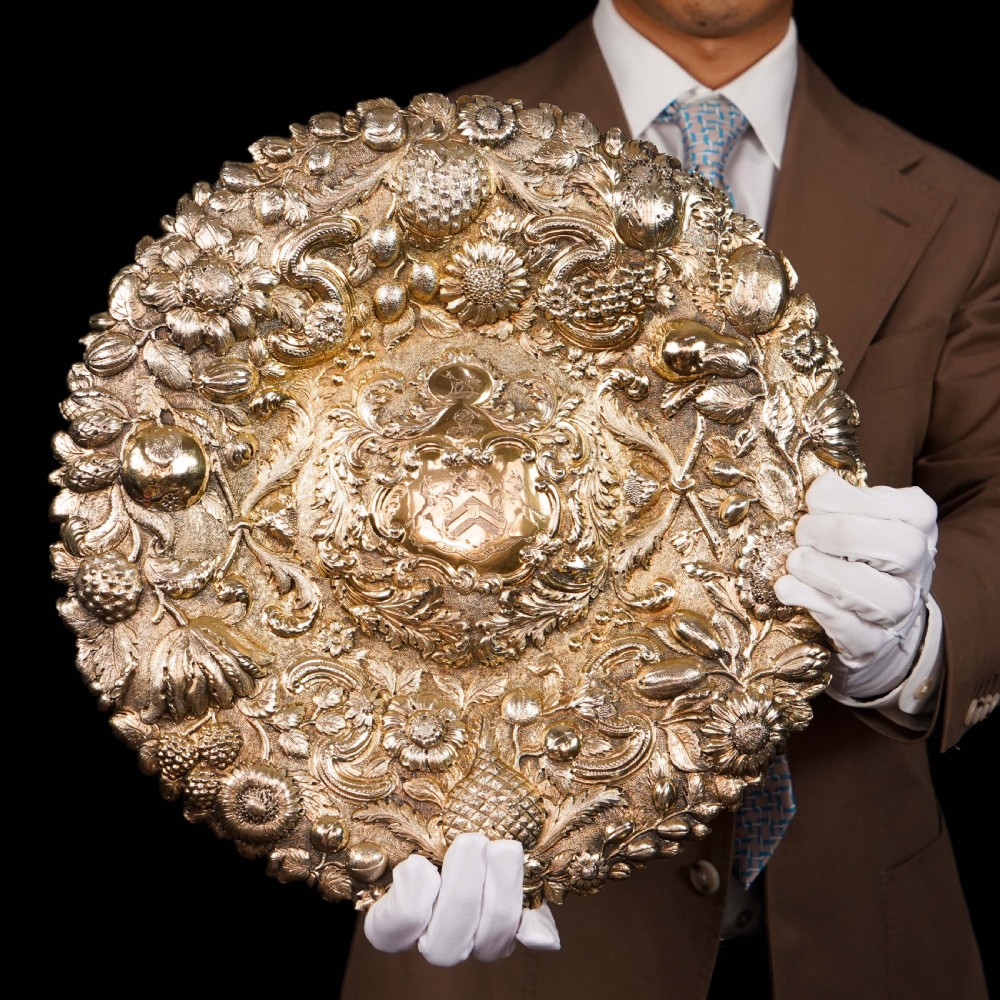
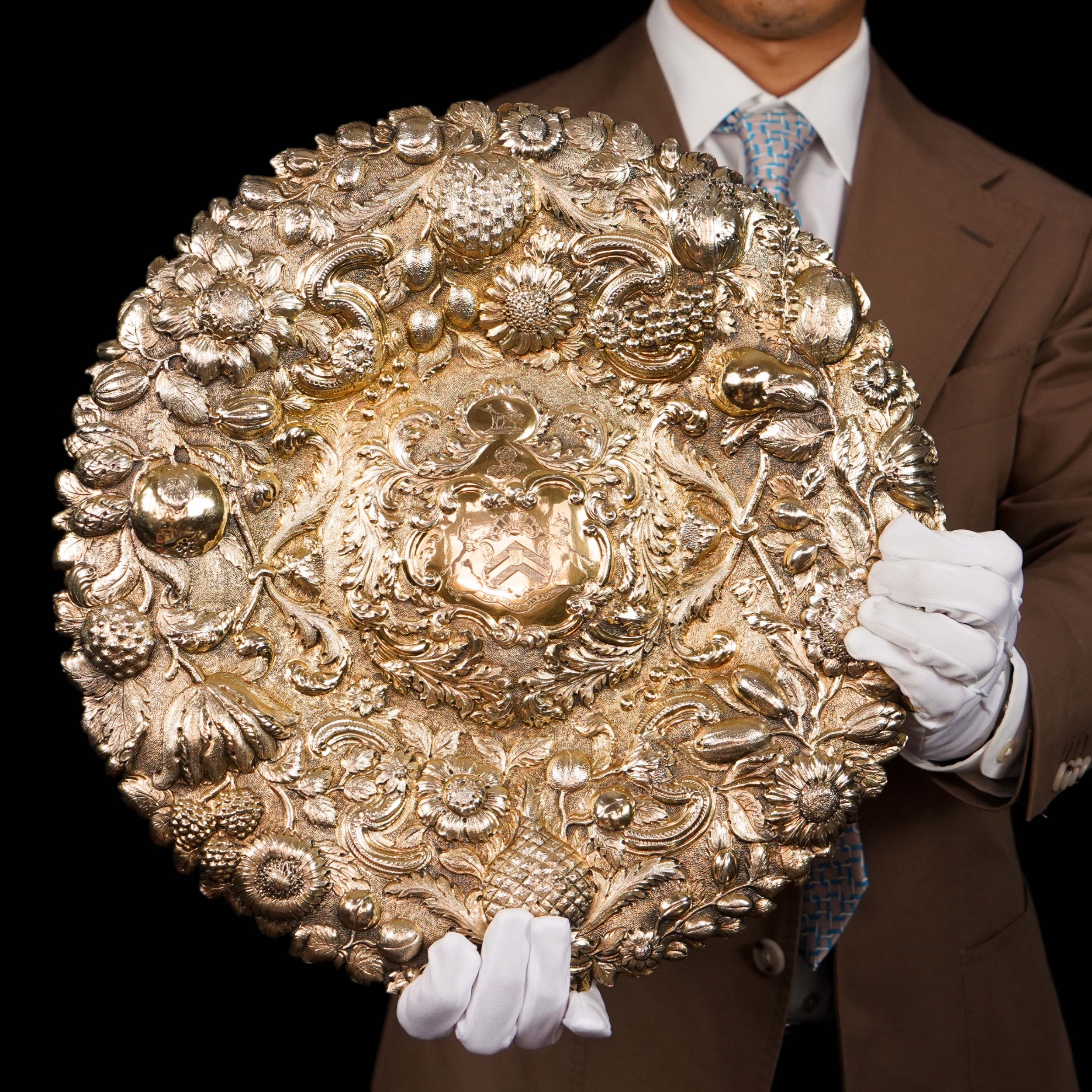
Splendour, grand, dazzling, opulent; with certainly no shortage of choice in describing such an impressionable and ornate piece, this sideboard dish is rather self-explanatory in presenting itself in all its might.
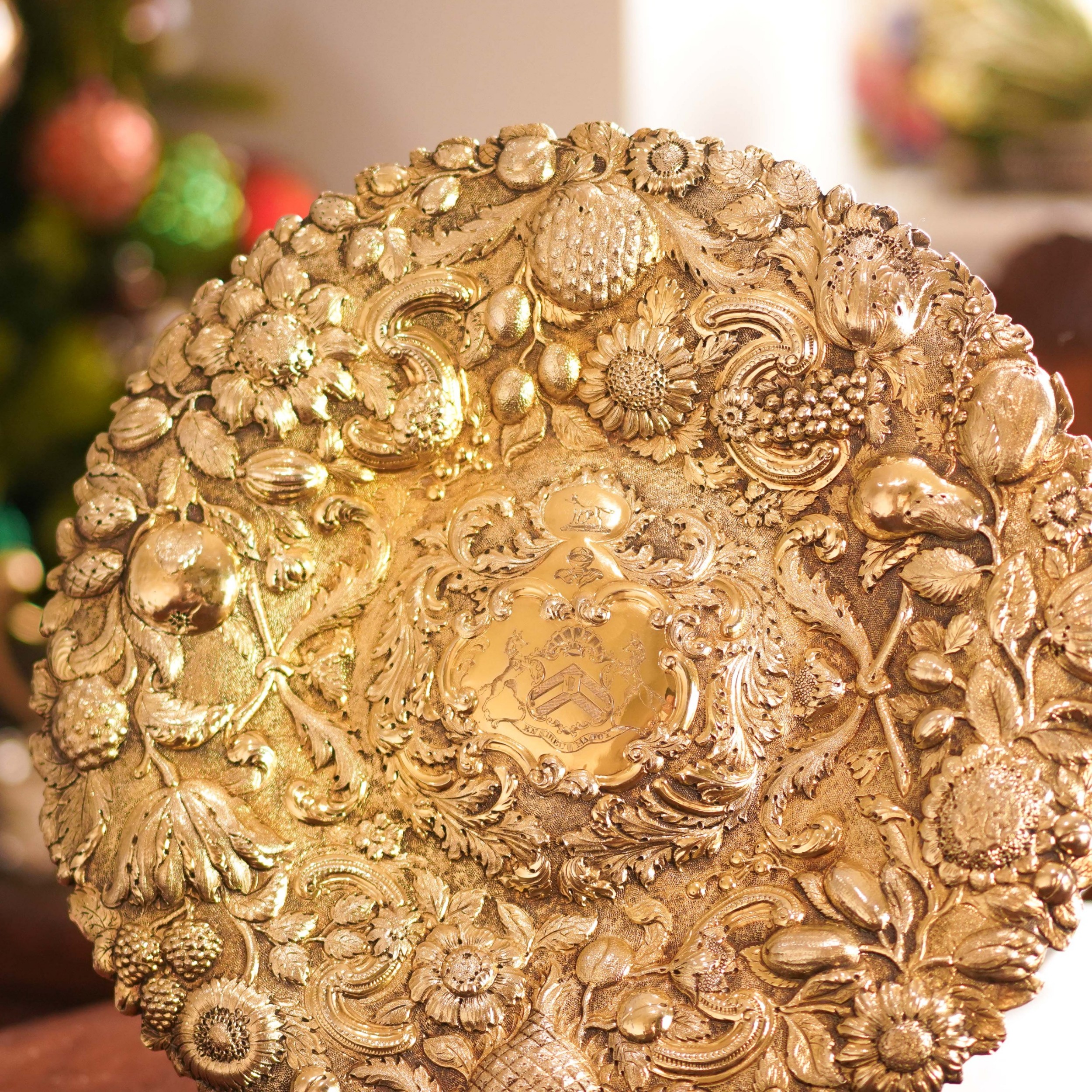
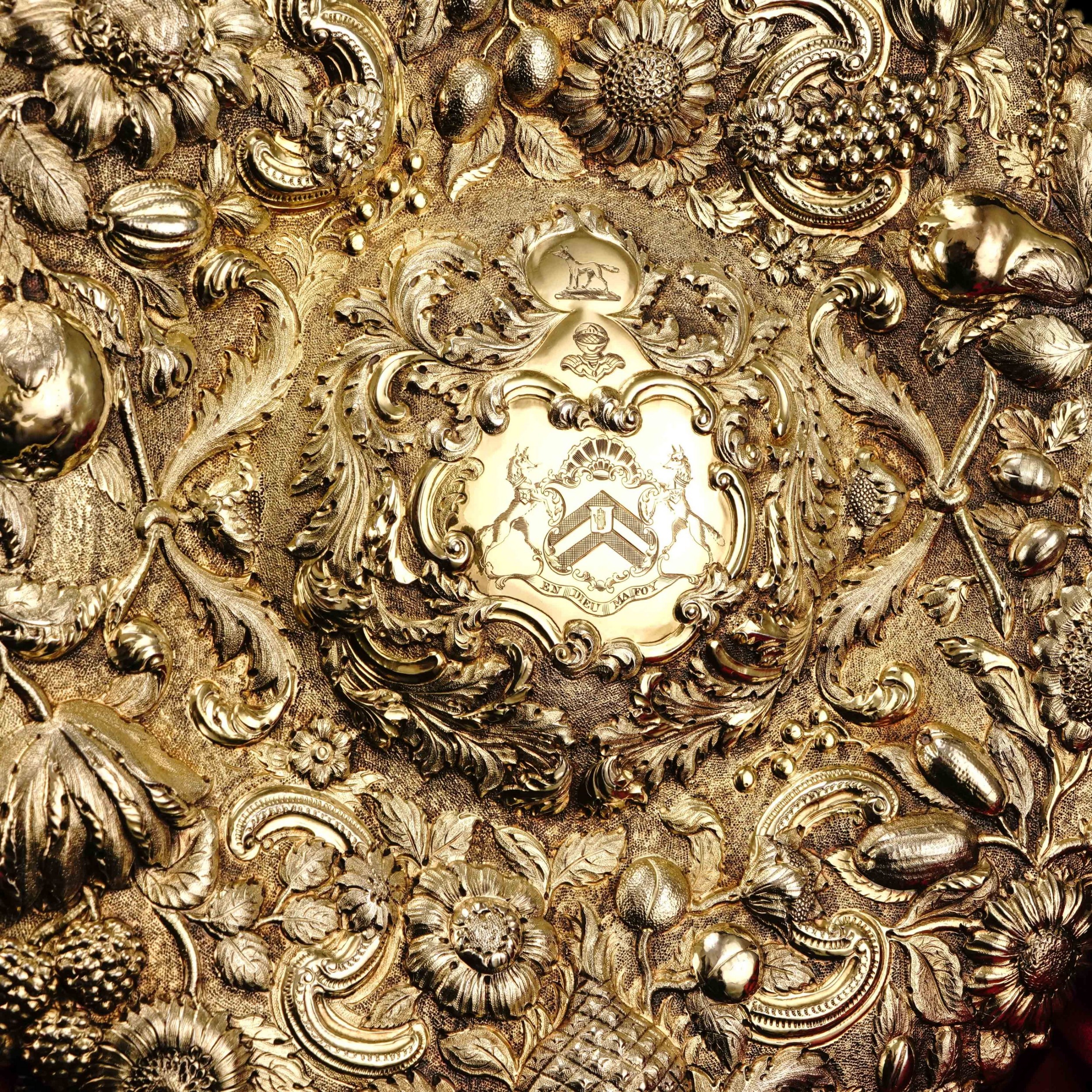
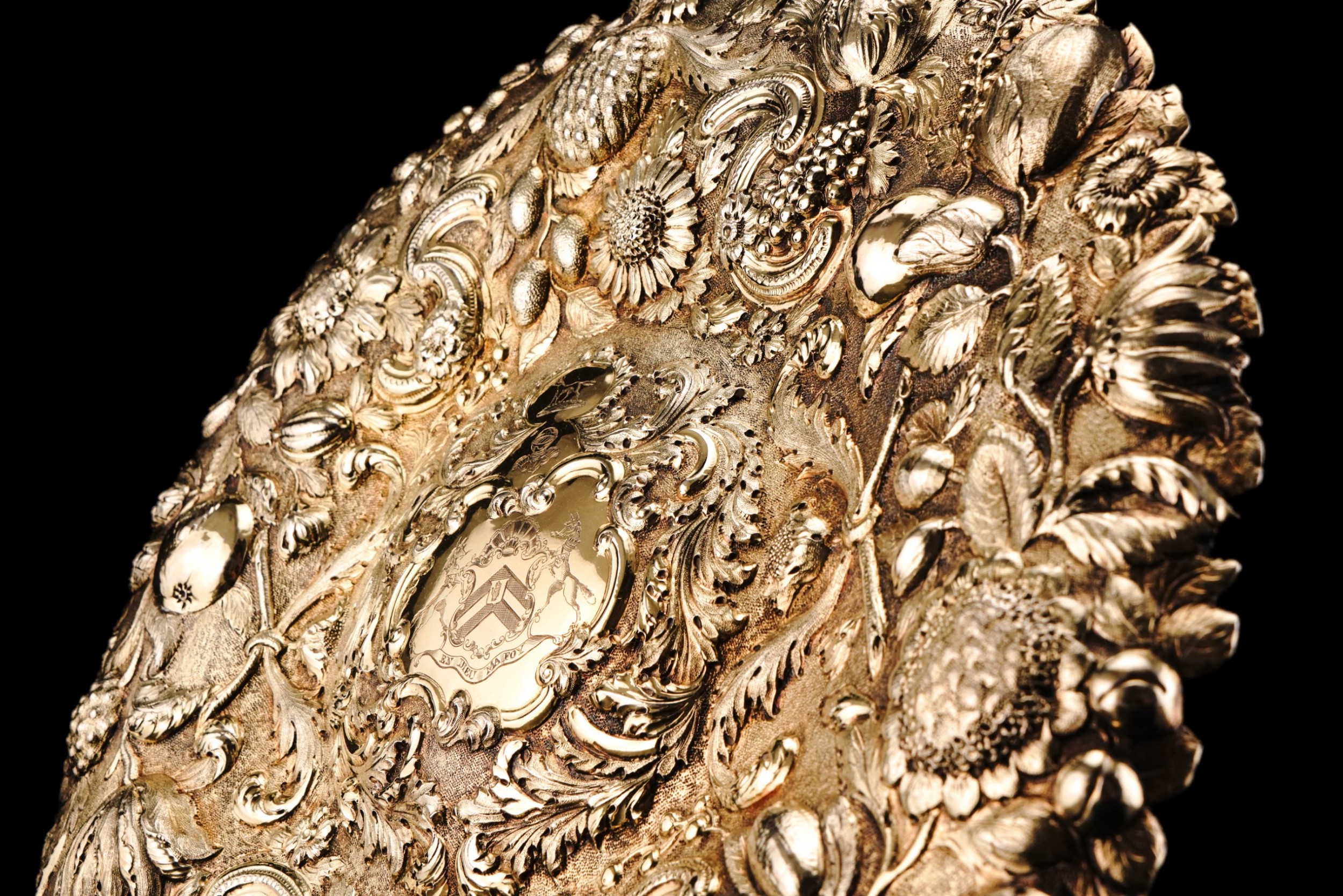
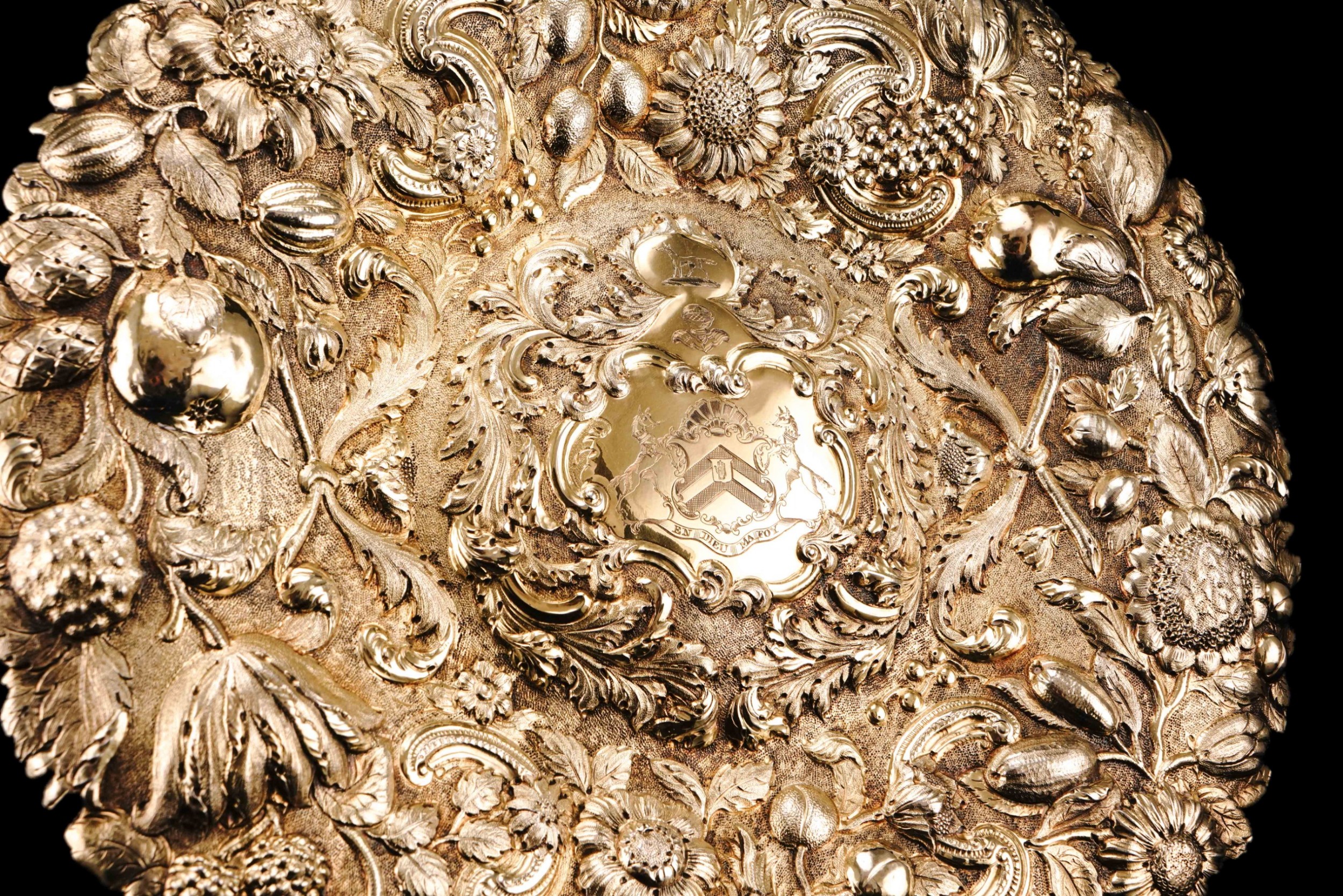
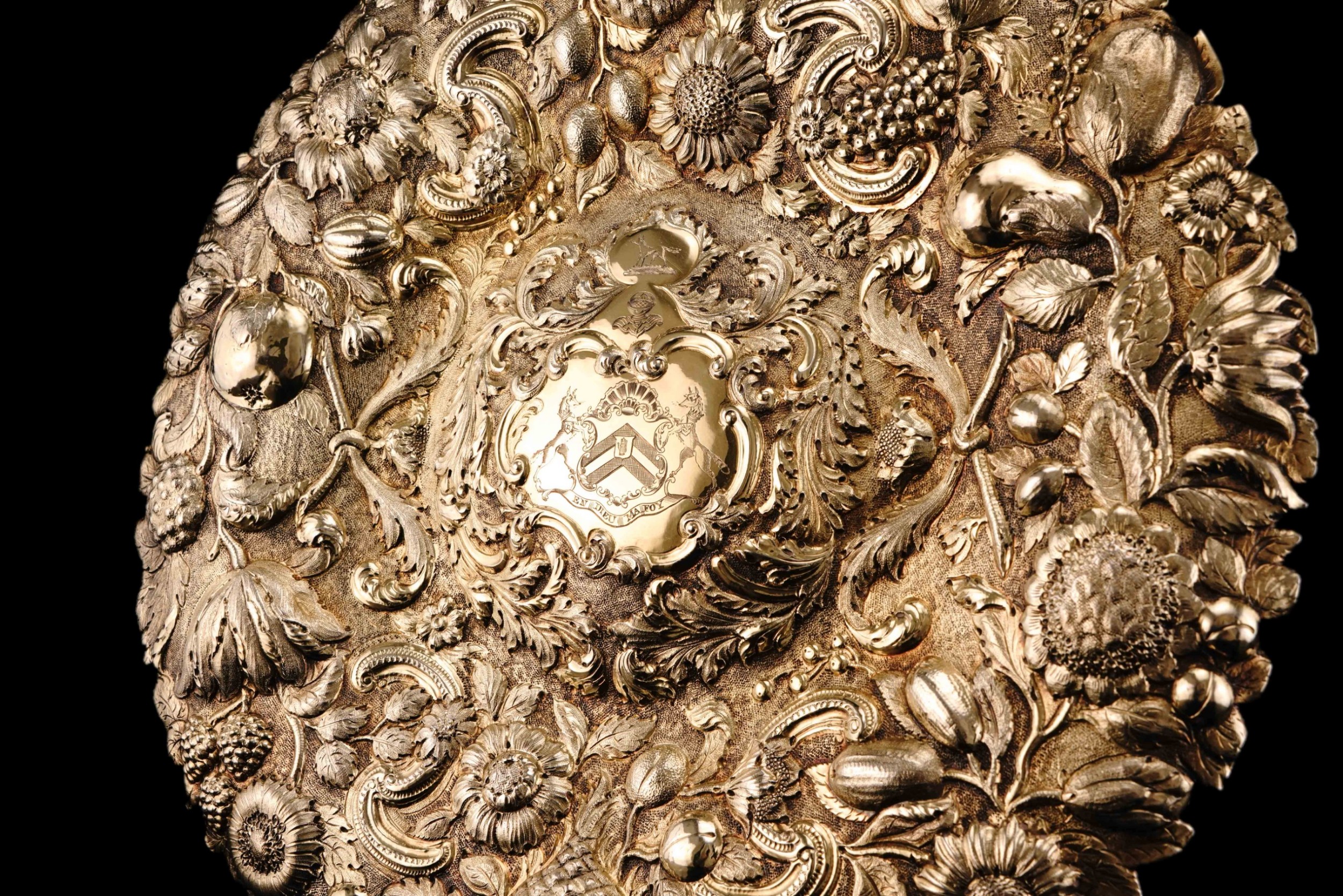
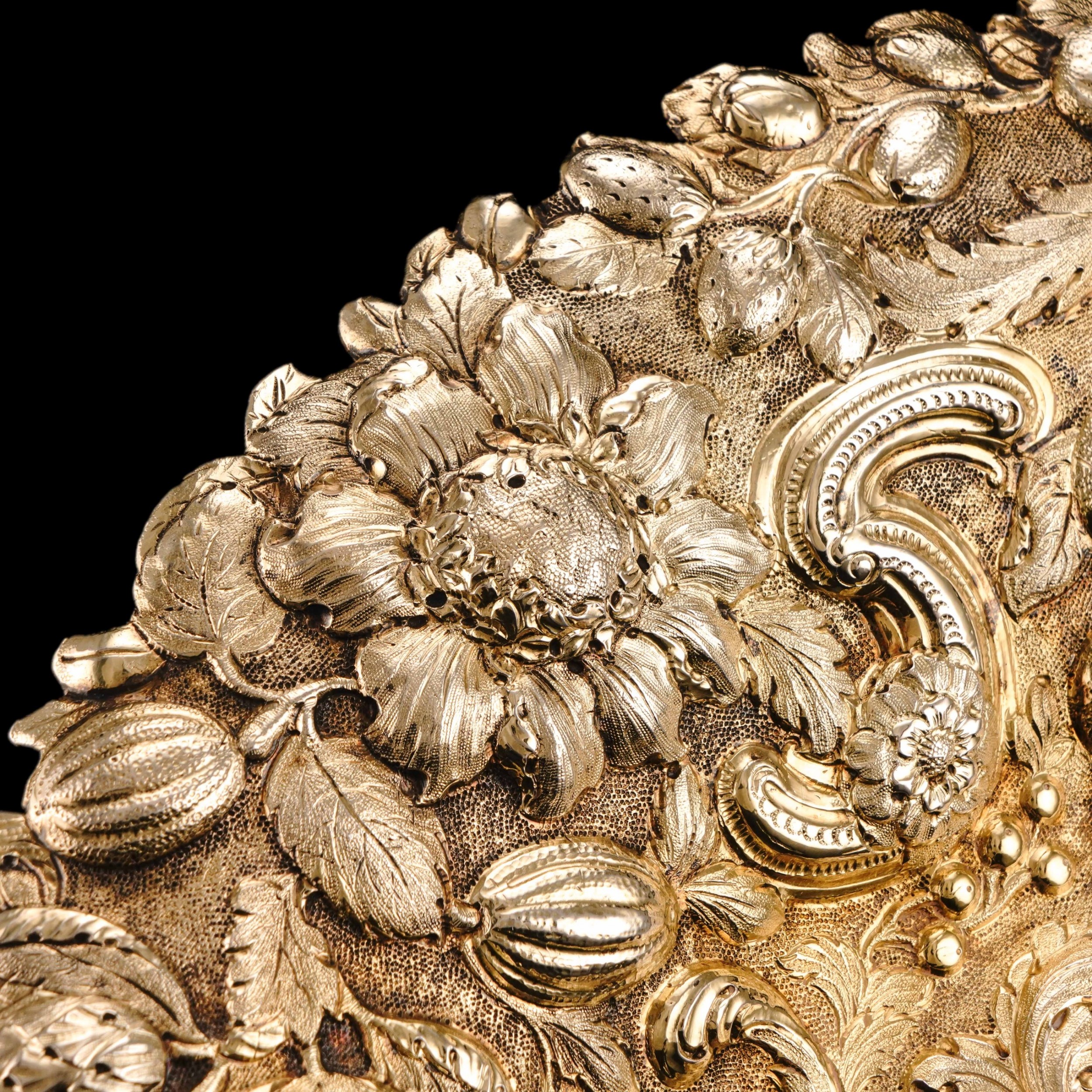
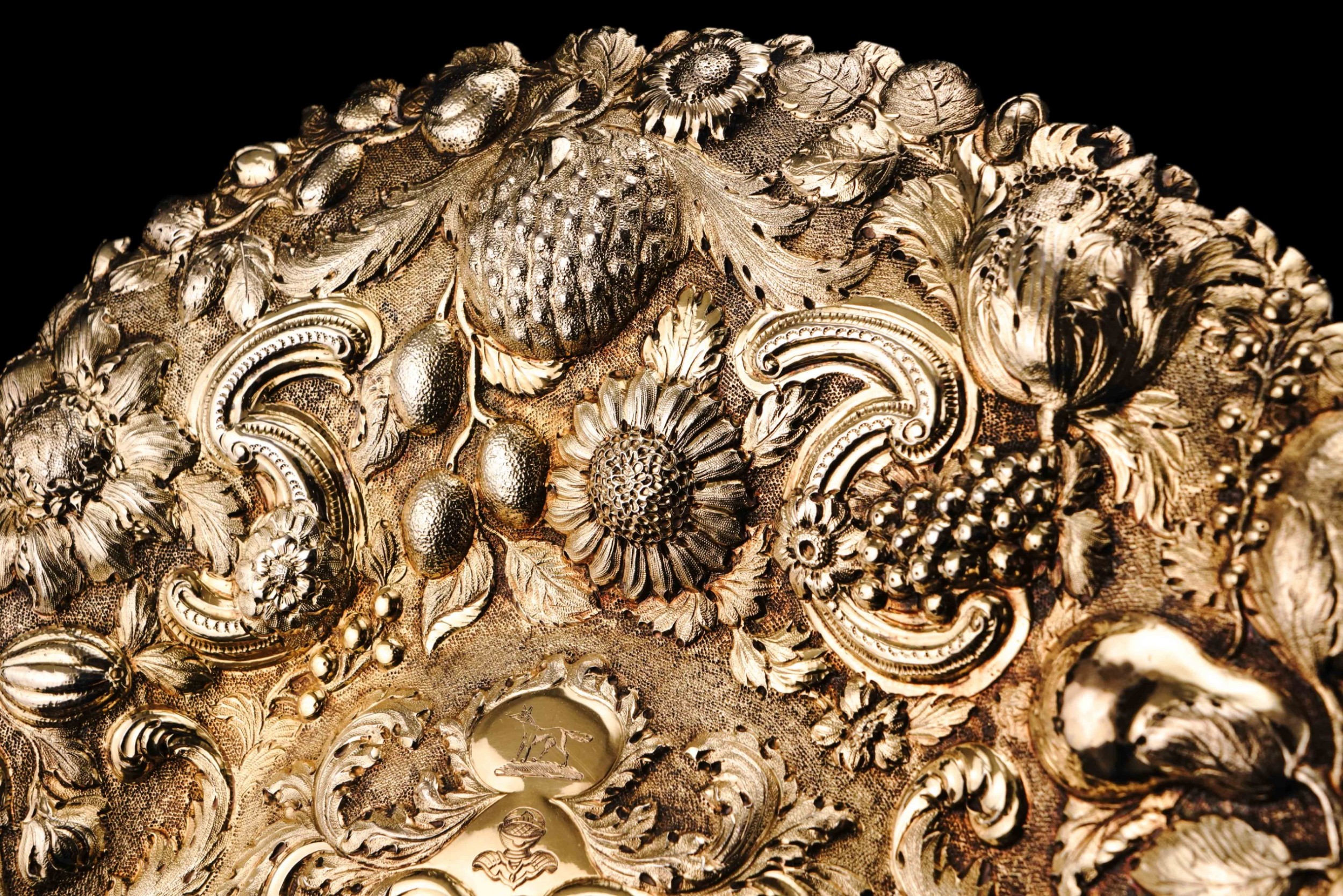
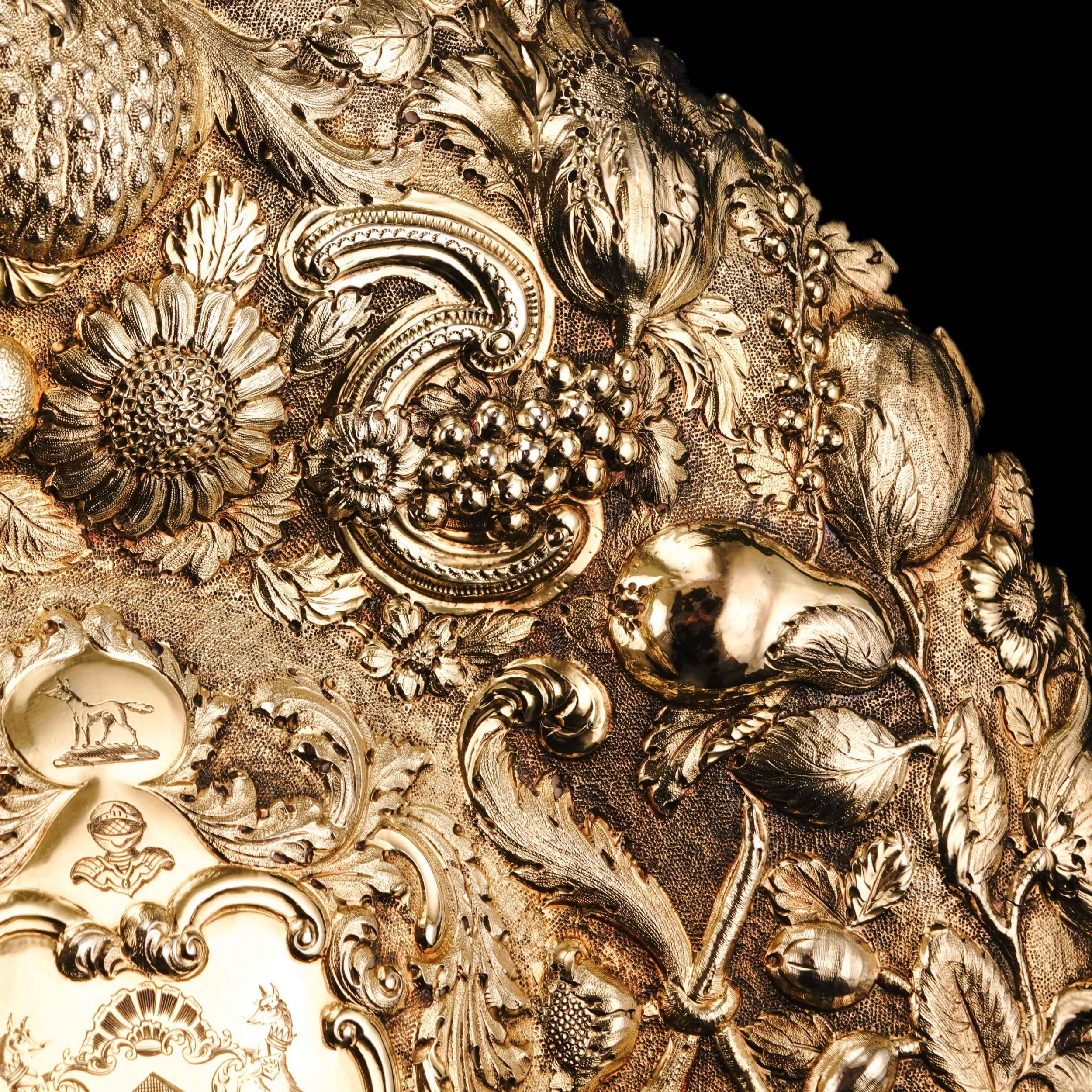
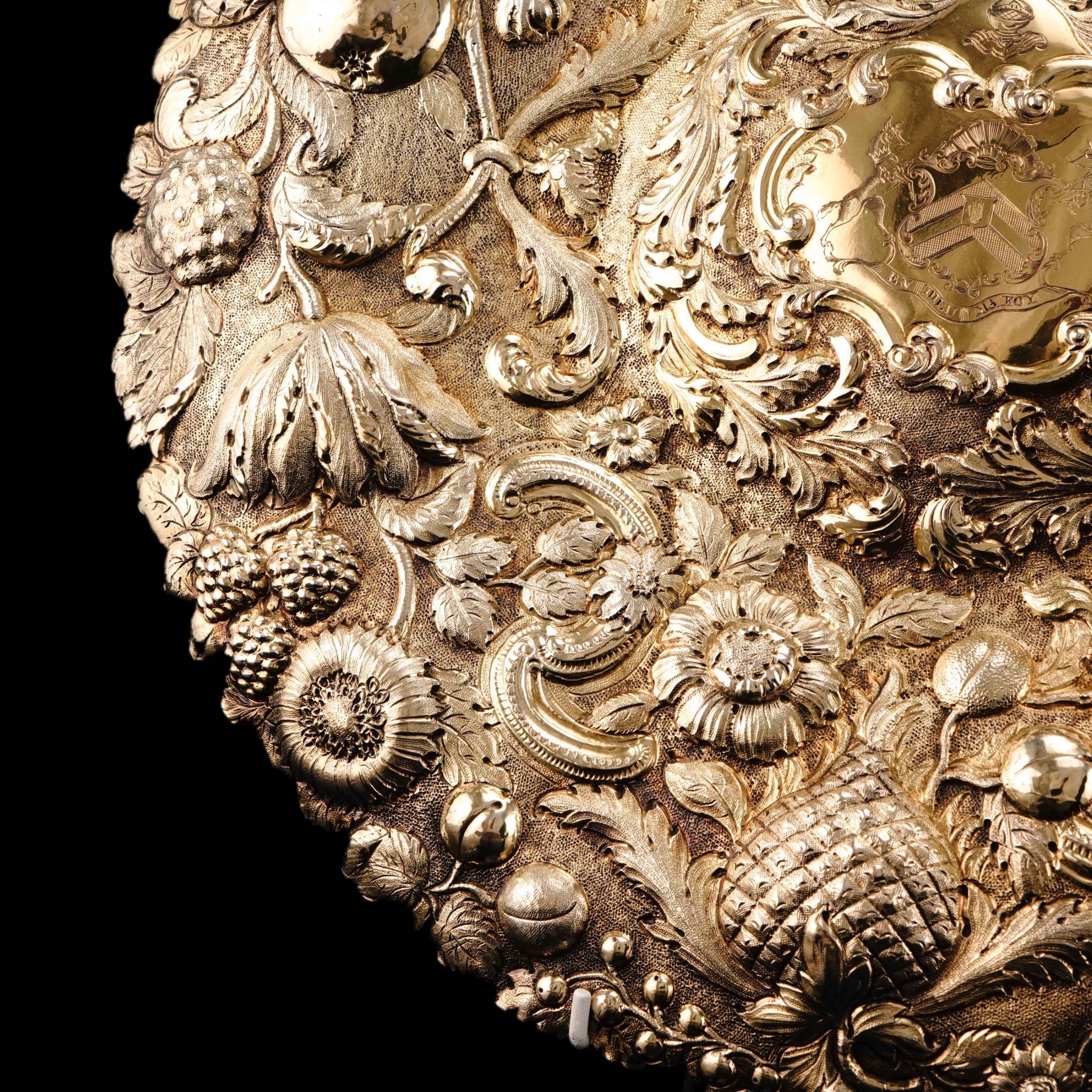
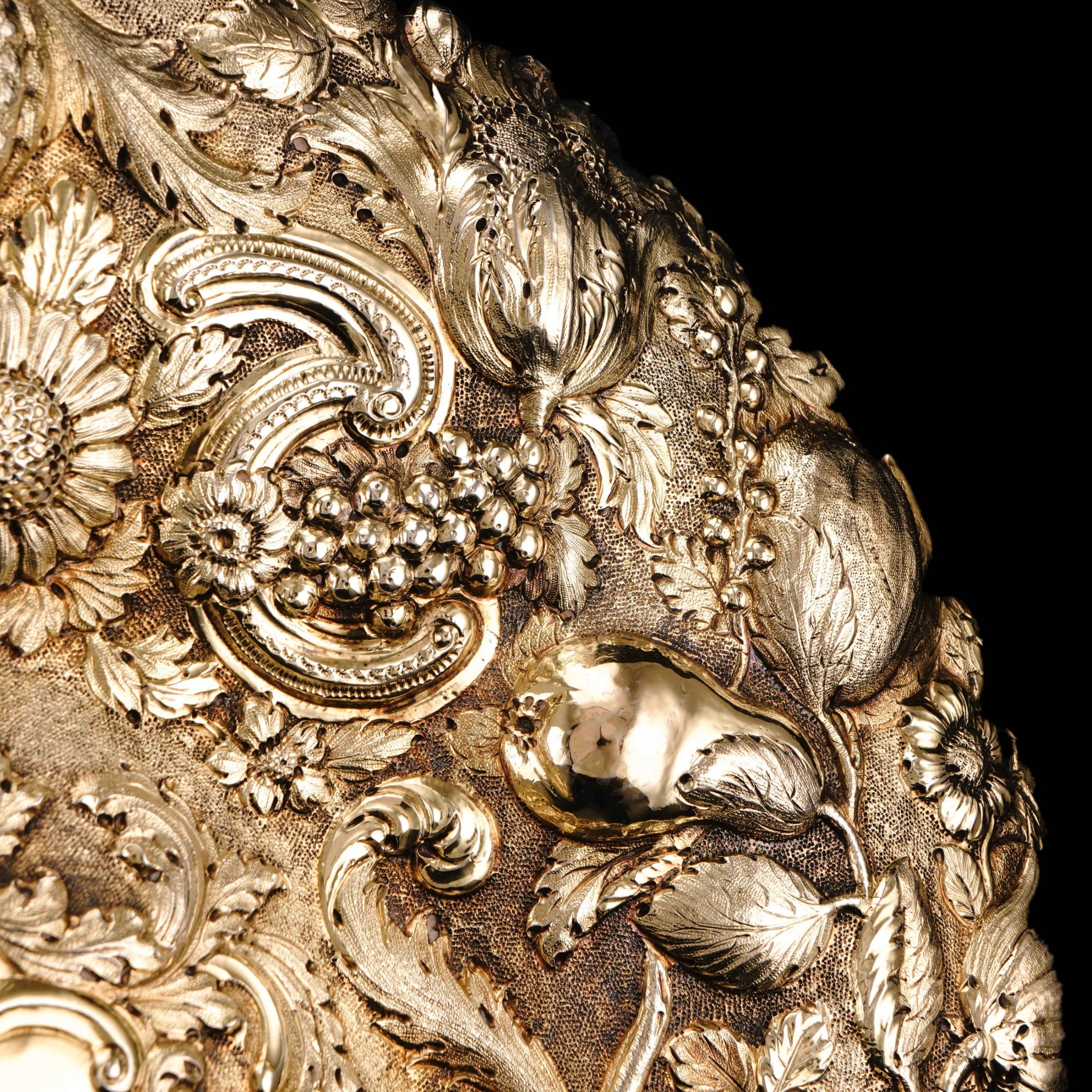
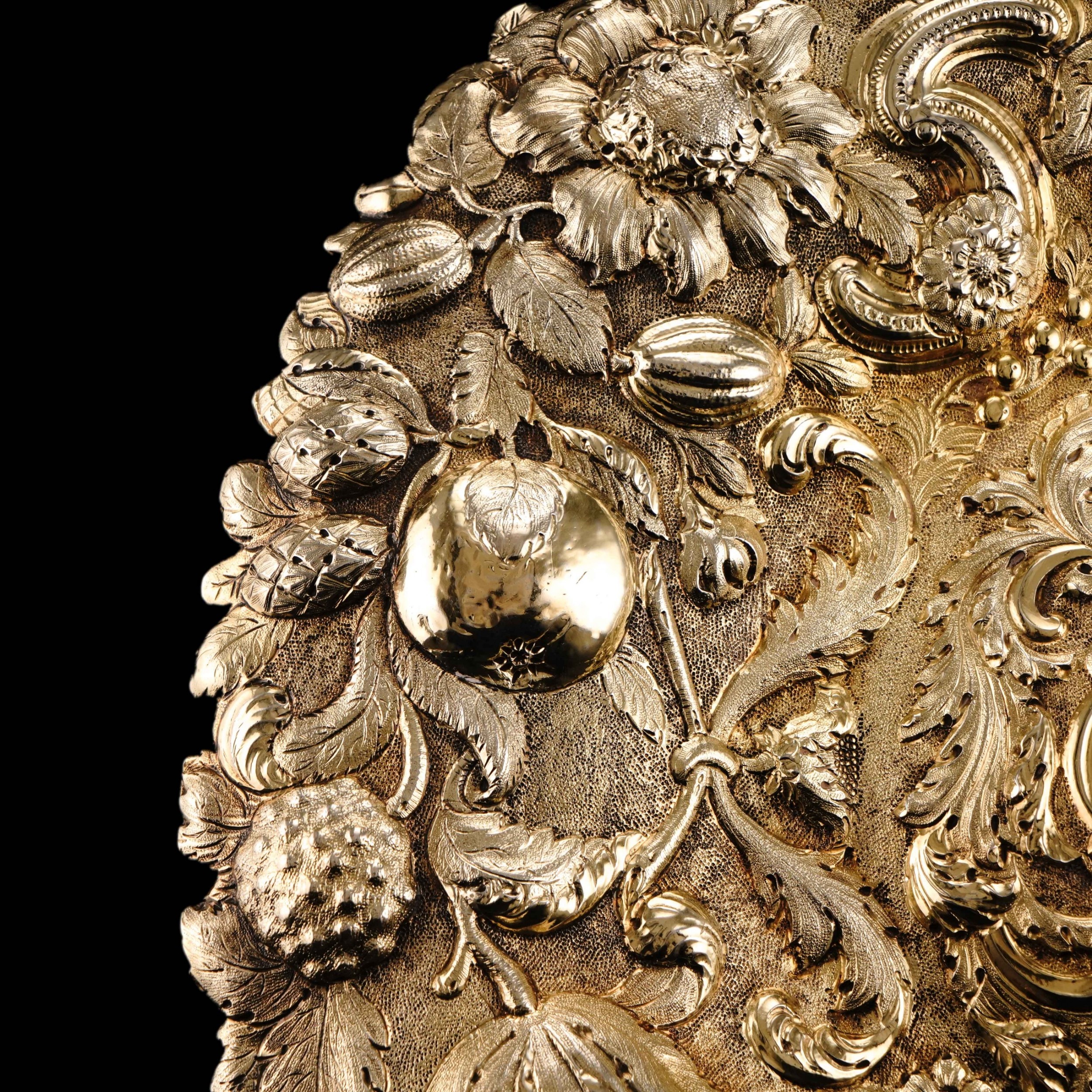
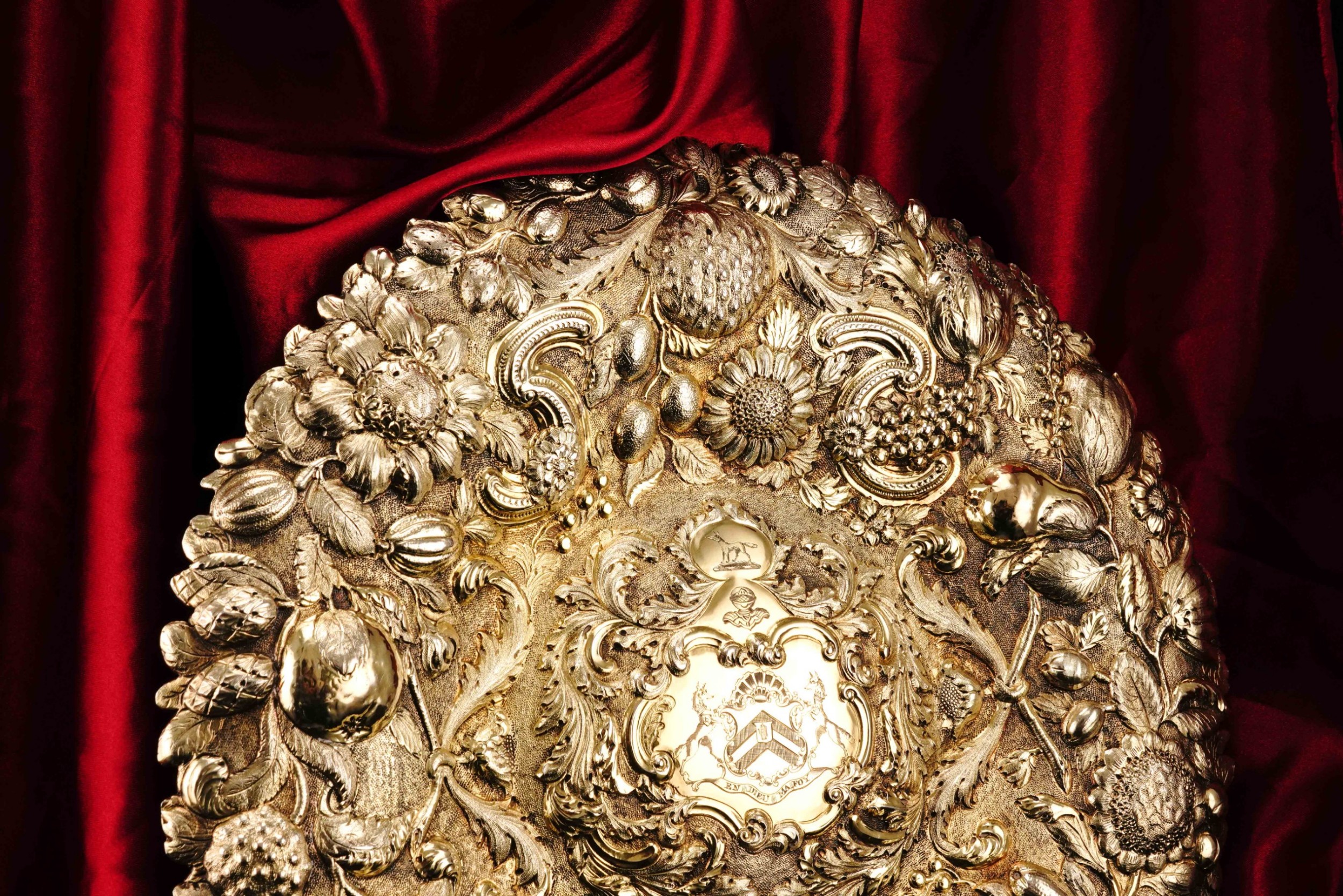
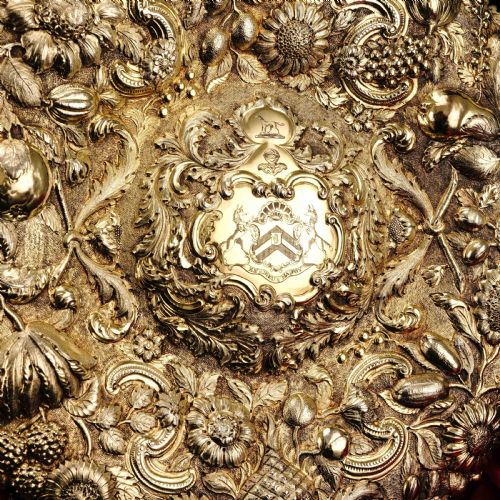
Upon closer inspection, the level of high-relief chasing, intricate stippling and engravings are ever more apparent. The outer wreath consists of wonderful naturalistic motifs of flowers, fruits and foliate scrolls that intertwine.
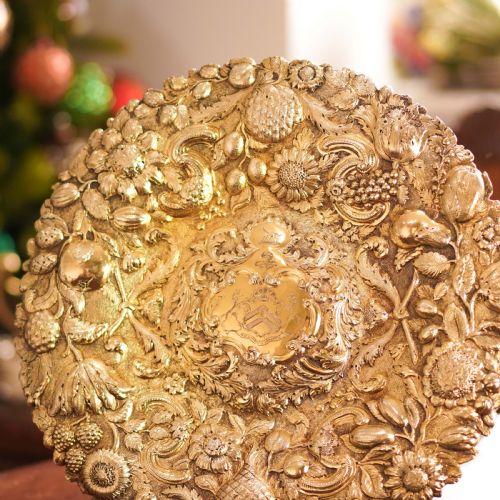
The high relief of the flower petals and fruit makes for a three-dimensional effect, giving a more lifelike appearance as if to invite the onlooker to gaze at this magnificent dish from multiple different angles.
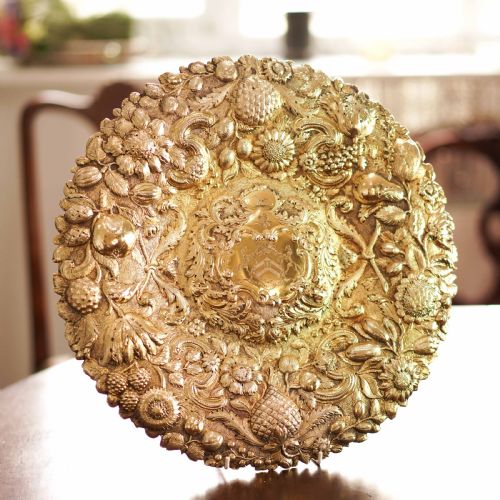
Despite its substantial proportions and profuse embellishments, every decorative element presents an exceptional degree of accuracy and finesse which, even upon close inspection, does not disappoint. Whilst handling and inspecting in person, one can truly appreciate and imagine the painstaking effort, time and cost that would go into fully decorating such an article in an era where candlelight was the norm and no electrical instruments were used. The combined elements of such a grand yet delicately embellished piece make this dish a testament to all the remarkable craftsmanship, skill and quality of a bygone era.
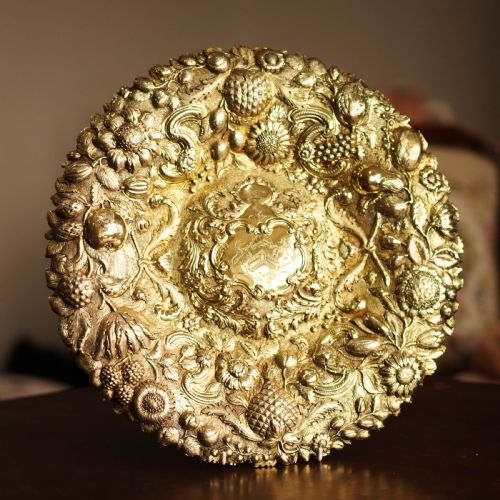
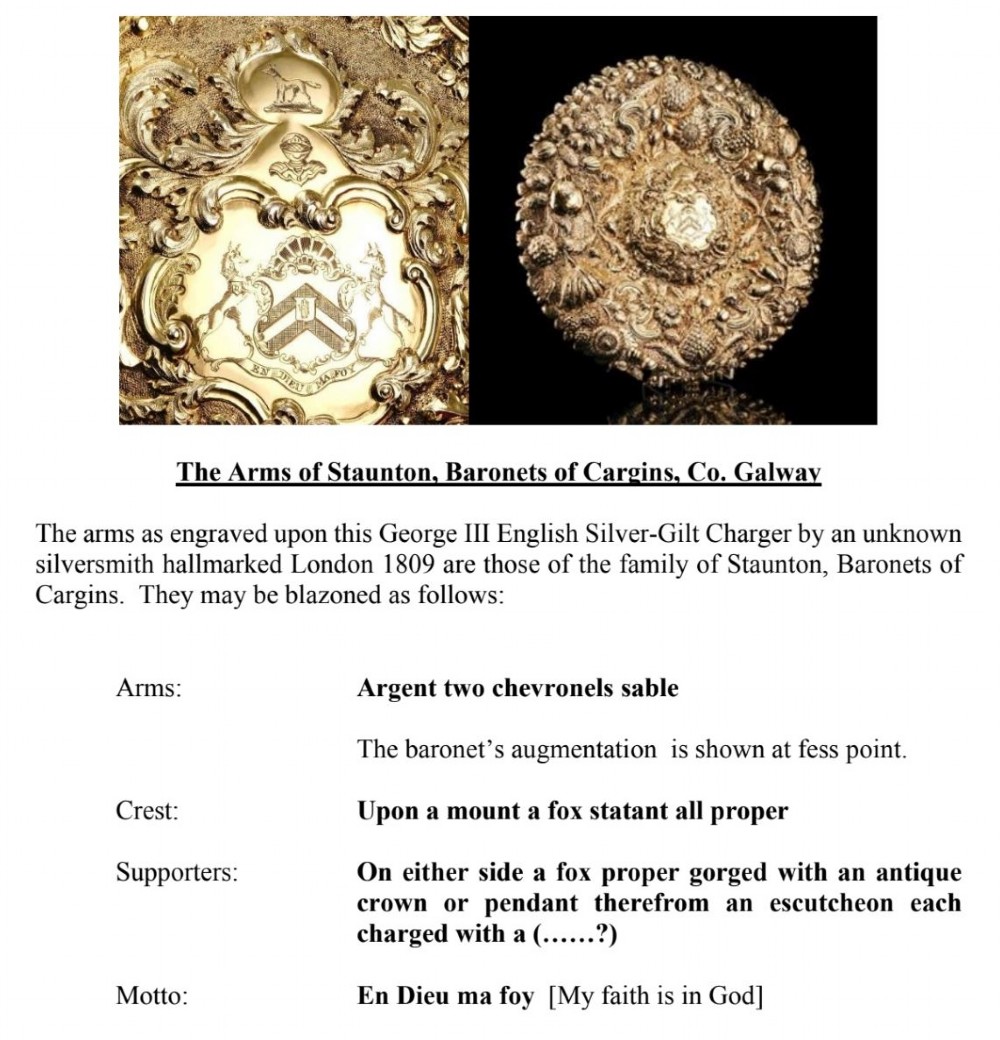
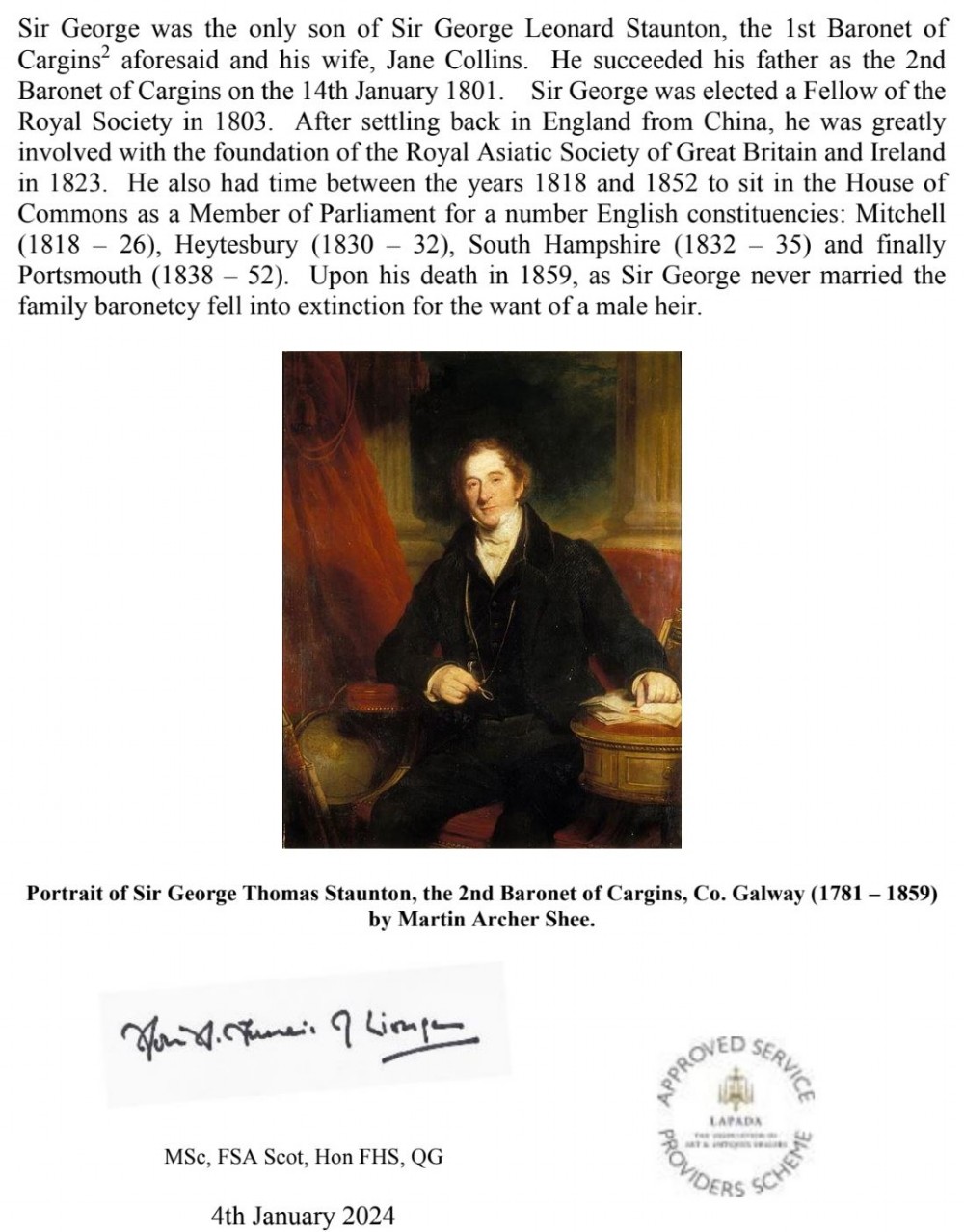
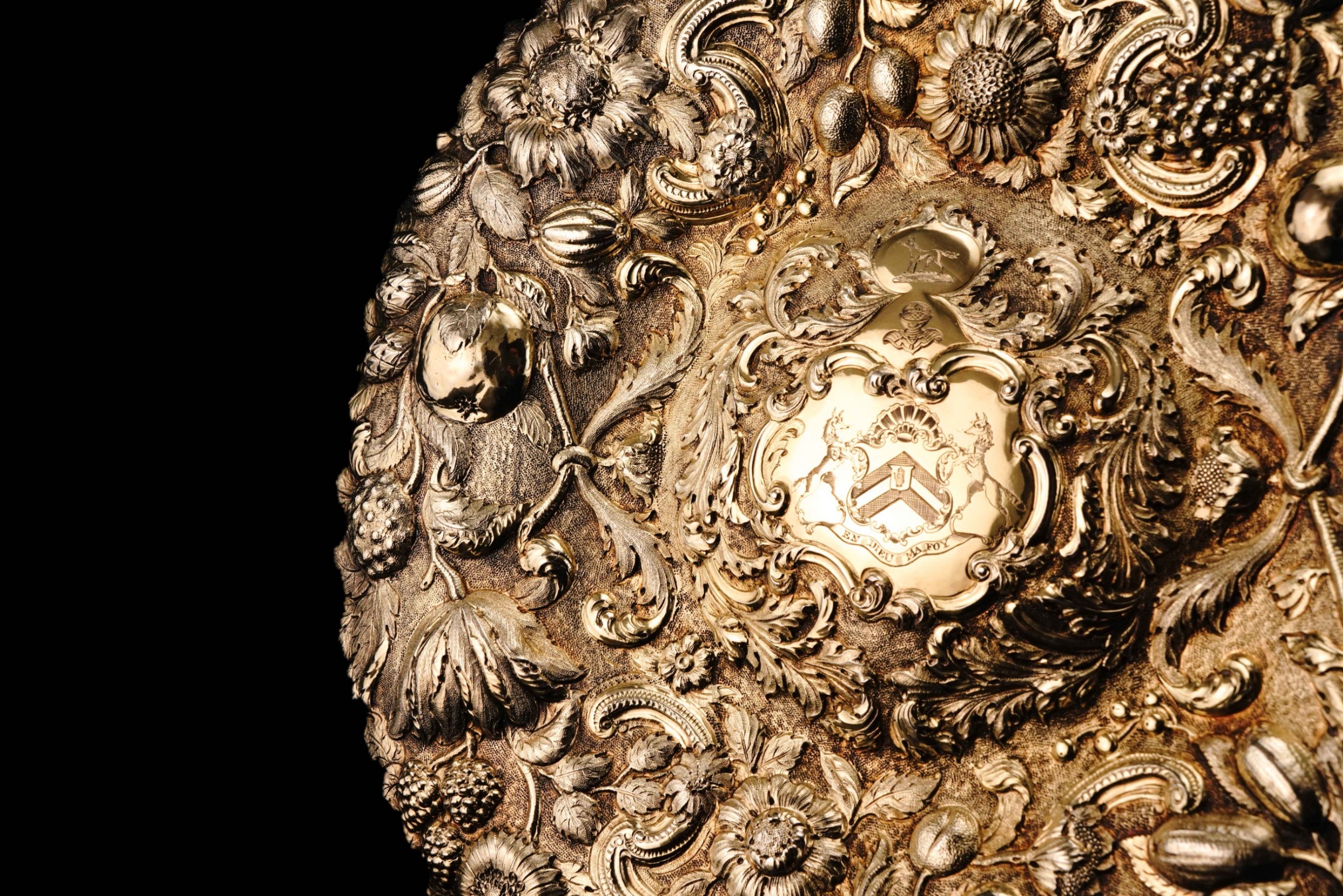
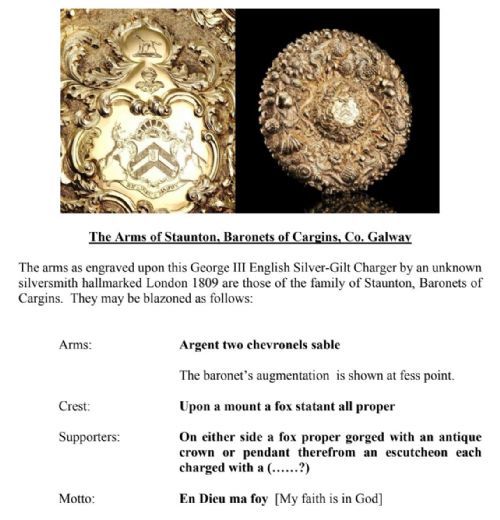
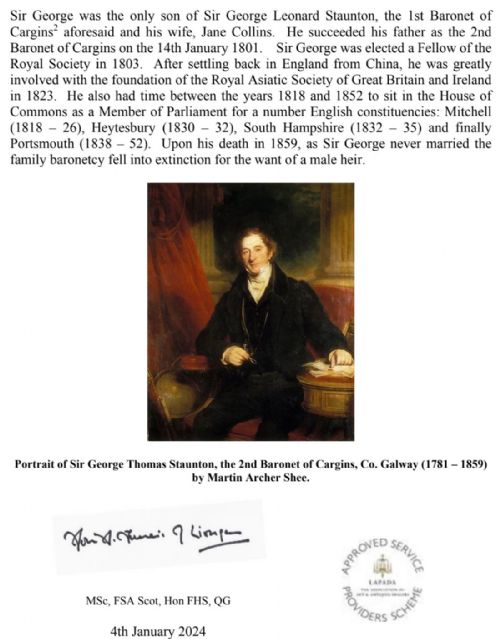
The centre of the dish is raised and features a notable hand-engraved coat of arms that completes the overall design with acanthus leaves encompassing the cartouche. The arms as engraved are those of the family of Staunton, Baronets of Cargins. Given the evidence of the date of hallmarking of this dish, it was undoubtedly in the possession of Sir George Thomas Staunton (born 26th May 1781 died 10th August 1859), the 2nd Baronet of Cargins in the County of Galway.
Sideboard dishes/chargers were usually commissioned for ornamental and display purposes to adorn the owner's interior with fine silver whilst also serving as a symbolic monument of wealth and splendour.
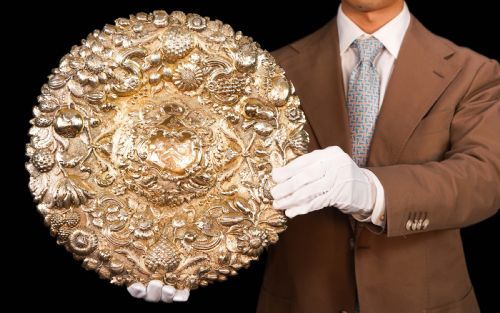
Today such chargers would make for an excellent centrepiece in an interior deocro or as a highlighting point of contrast in opulent settings. Owing to its substantial size and shape, with some creativity, it could be used to hold some fruits (or the likes) as a centrepiece dish on a dining table.
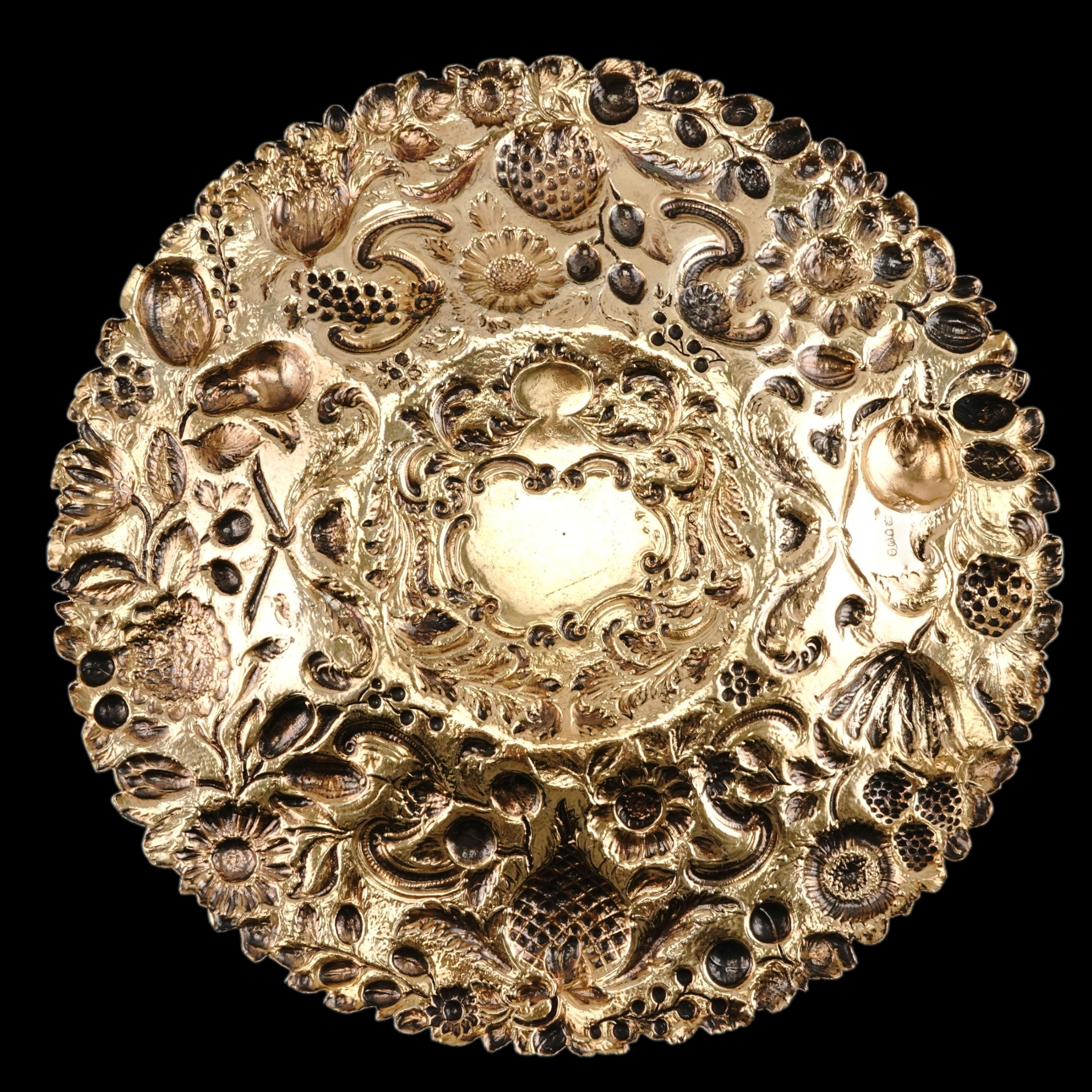
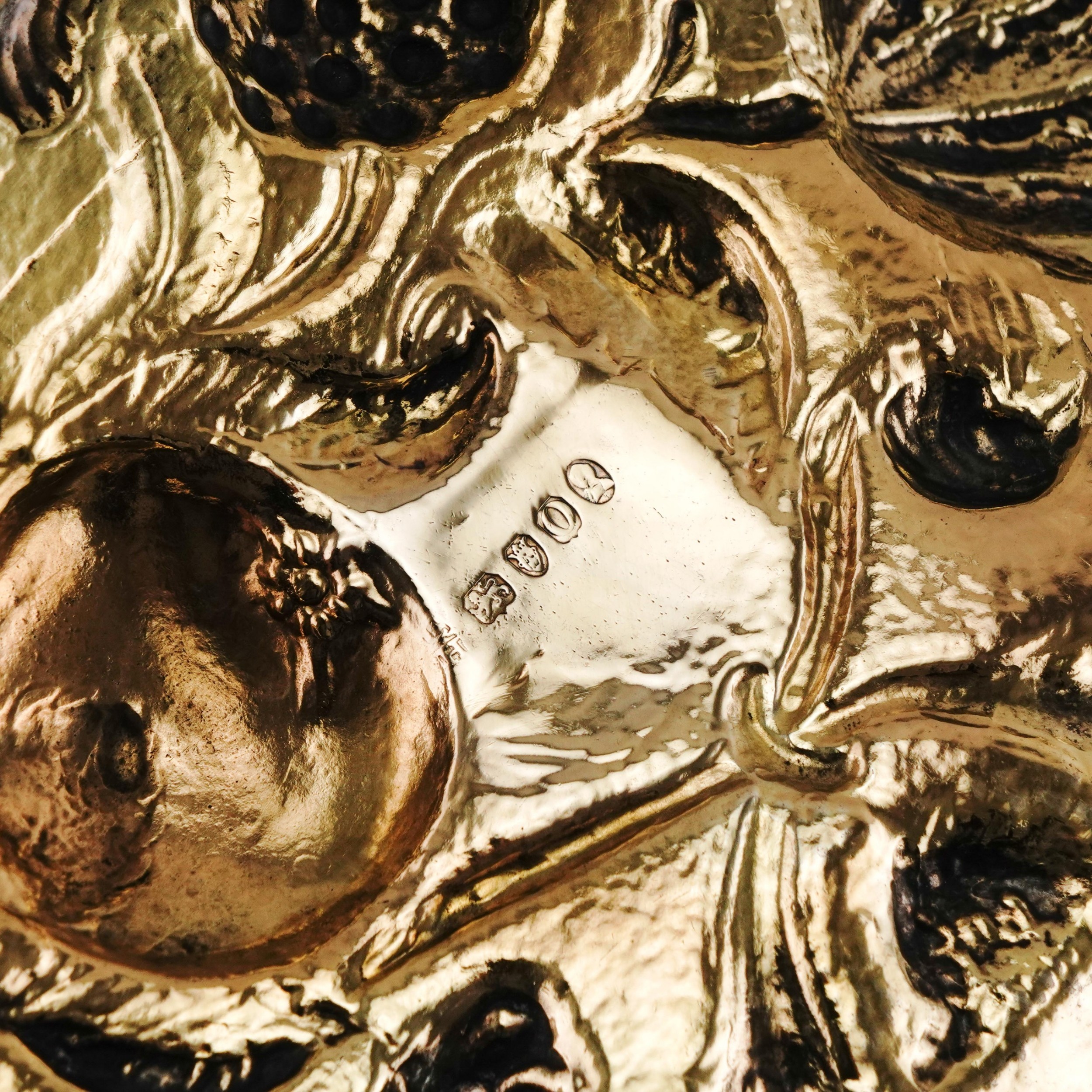
English hallmarks are present on the reverse side of the dish within the chased motifs. Unfortunately, the maker's mark is indistinct.
Please note: all images with other items are for display purposes only, this listing is for the title item only.
SIZE
Size (cm) 39cm x 39cm
Size (inches) 15.3 x 15.3in
Weight: 1203 grams (38.6 Troy oz) total.
CONDITION
Excellent Condition - The sideboard dish is in excellent antique condition, with no damage or issues. There are some very minor wear/surface scratches to the high points commensurate with age however, nothing of significance.
We aim to overemphasize and state these issues to avoid disappointment and thus please rest assured they are not significant nor affect the usage of the items.
Please refer to the photographs to examine the condition in further detail.
FREE SHIPPING
Artisan Antiques offers free global shipping with professional, secure and discreet packaging.
We will always ensure your items are packaged with the utmost care and see the delivery through to the end. In the very rare and unfortunate case of non-delivery/courier loss, you are fully covered with us and we will fully refund you.
All parcels are insured - please rest assured all shipping liabilities other than import/customs duty are covered by Artisan Antiques.
Colours of the product may slightly d
Artisan Antiques has dated this piece to the Georgian era.
Artisan antiques based in london, brings to you a global selection of fine antique silverware.
You can view the stock and full dealer information on the Artisan Antiques Profile Page
Antique Georgian Solid Silver Gilt Charger/sideboard Dish Baronet Coat of Arms - London 1809