
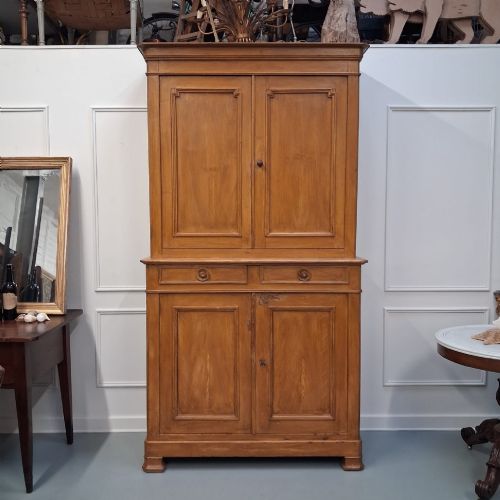
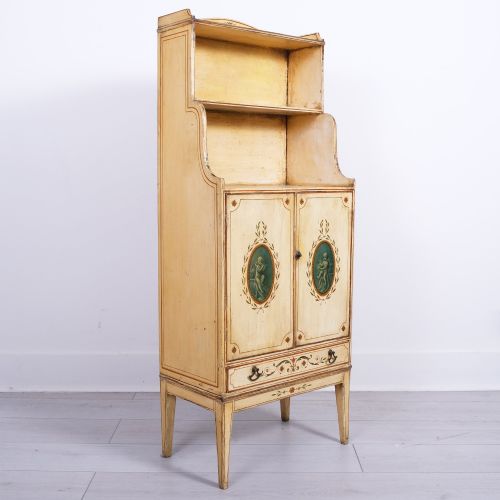
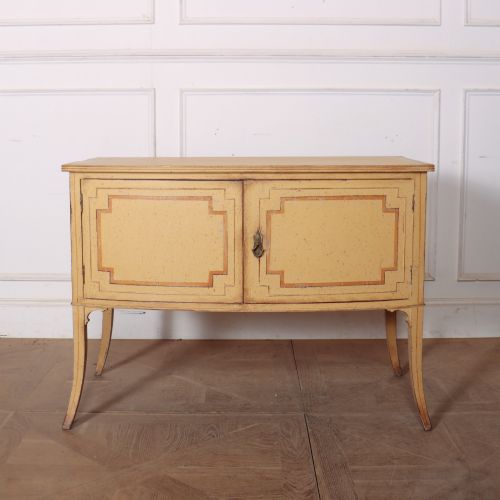
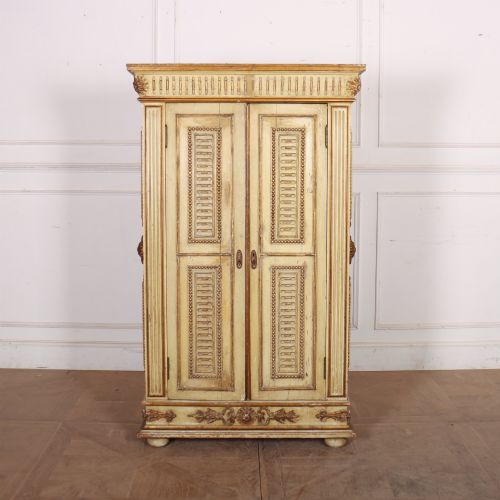
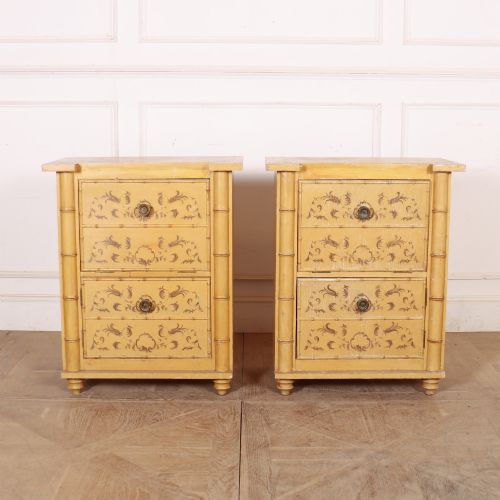
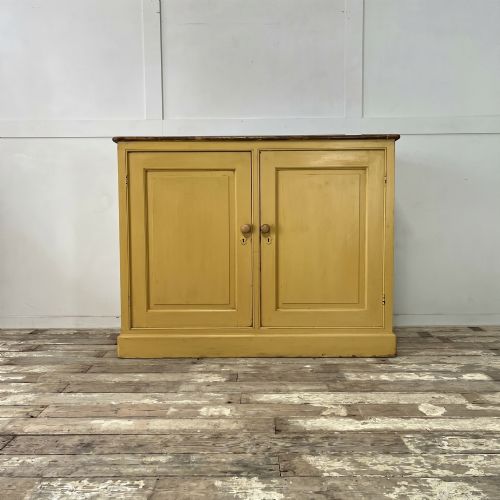


Yellow Painted Cupboard
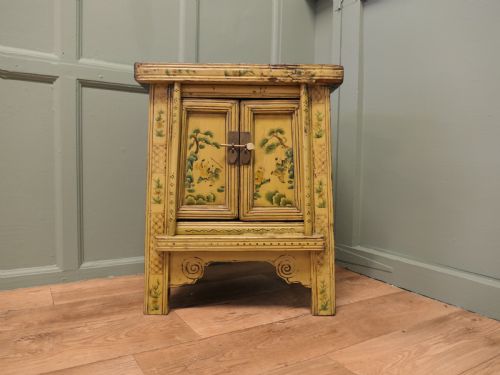
A yellow painted cupboard brings bright regional colour and honest utility into a room, spanning modest country pine to decorative Chinoiserie.
Yellow Painted Cupboard
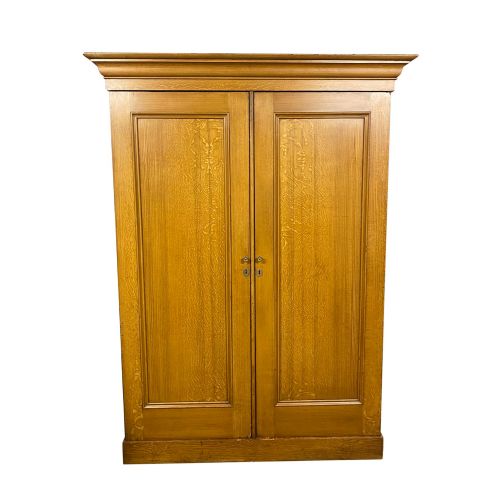
When you search for a yellow painted cupboard, you encounter practical storage pieces built across the eighteenth and nineteenth centuries, often hailing from English country houses, French provincial workshops and Italian estates. These items range from large housekeeper cupboards and linen presses to compact bedside cabinets and corner cupboards.
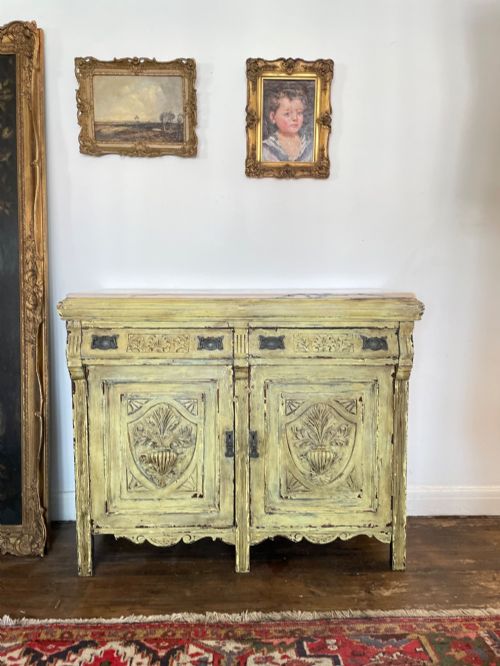
The versions most frequently met on this page are constructed from pine and timber, carrying layers of historical surface treatment such as original paint, scumble faux oak, and ragwork finishes. They serve as functional utility furniture that introduces warmth and distinct character to contemporary interiors.
How they were made
Carpenters typically built these carcasses from solid pine and native timbers, joining structural boards with traditional methods suited to everyday domestic use. Iron and brass hardware such as hinges and handles secured doors and drawers.
Surfaces received multiple coats of paint or specialised decorative treatments like scumble work and ragwork, sealing the wood while creating enduring visual depth.
Some nineteenth-century pieces arrive with faux bamboo turning and simulated oak scumble, proving our ancestors loved a clever optical illusion.
What varies in quality
Quality rests heavily on the integrity of the surface, distinguishing pieces retaining untouched original paint or decorative ragwork from those subjected to later redecoration. The subtlety of the brushwork and the preservation of the underlying timber structure determine the overall character.
Construction details also dictate distinction, separating sturdy vernacular joinery executed by local cabinetmakers from simpler utilitarian boxes.
The Yellow Painted Cupboard Glossary
- Scumble
- A translucent layer of darker glaze manipulated over a lighter ground to imitate the grain of costlier woods like oak. This technique allowed provincial makers to achieve a grander aesthetic on accessible pine.
- Ragwork
- A decorative paint application where rags are used to dab or wipe wet colour, creating mottled or textured patterns. It is frequently seen on nineteenth-century Scandinavian and country pieces.
- Housekeeper cupboard
- A large storage piece traditionally used in country houses for linens, dry goods, and household provisions. These tall double-door units often feature interior shelving and lower drawers.
- Chinoiserie
- European imitation and adaptation of Chinese artistic traditions, characterised by painted motifs and figures. It appears on refined cabinets and bookcases from the eighteenth and nineteenth centuries.
- Compactum
- A fitted wardrobe designed with internal divisions, drawers, and hanging space to maximise storage within a single footprint. They are valued for their clever internal architecture.
Yellow Painted Cupboard: Frequently Asked Questions
How do I identify original paint?
Original paint exhibits natural wear, craquelure, and harmonious fading that matches the age of the timber underneath. Inspect corners and recessed mouldings for consistent layering and the absence of modern primers.
Examine the tactile quality of the surface under good light to spot signs of historical brush application rather than modern spray finishes. Genuine early paint surfaces show a depth that builds up over decades of cleaning and exposure.
Where were these cupboards used?
These pieces originated across domestic spaces, from farmhouses and West Country rectories to provincial French and Italian homes. They functioned in kitchens, sculleries, bedrooms, and hallways for storing provisions, linen, and books.
In modern homes, they transition easily into living rooms, kitchens, and bootrooms as statement storage units. Their painted exteriors allow them to anchor a room while offering deep internal capacity.
How do I care for painted surfaces?
Maintain historical painted finishes by dusting gently with a dry, soft cloth and avoiding chemical cleaners or excessive moisture. Keep wooden pieces away from direct heat sources and severe humidity fluctuations to prevent wood movement.
Wax polish should be used sparingly and only on unpainted interior timber, as modern waxes can damage delicate historic paint layers. Letting the surface breathe preserves both the pigment and the patina.
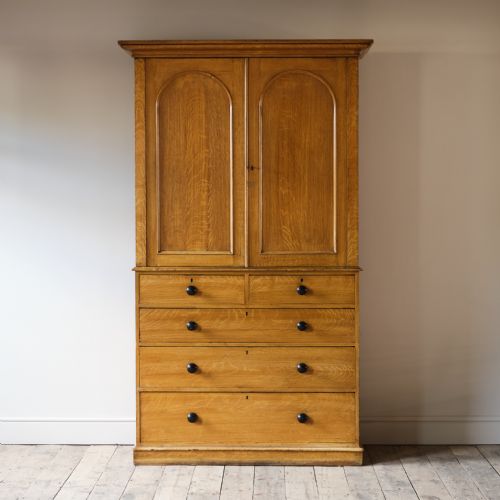
What is a linen press?
A linen press is a tall piece of furniture featuring upper sliding trays or shelves enclosed by doors, positioned above a base of wider drawers. They were designed to keep household textiles flat and organised.
Over time, many of these presses have had their internal trays removed to accommodate modern clothes rails. Examples found today retain various configurations depending on their regional origins.