
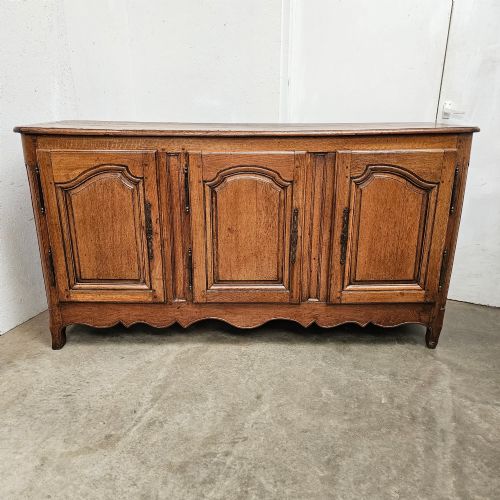
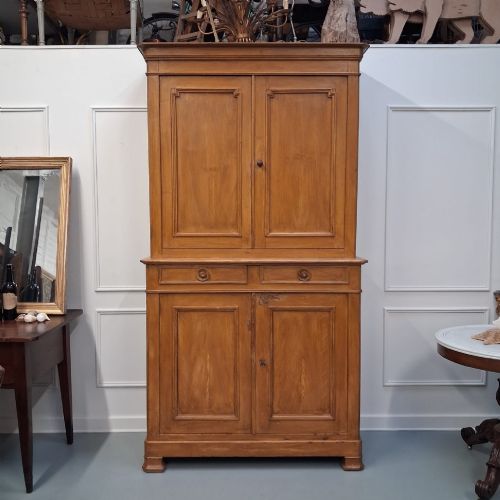


Rustic French Dresser Base
A rustic french dresser base brings heavy provincial timber, deep drawers and working iron hardware straight into a modern kitchen.
Rustic French Dresser Base
A rustic french dresser base is a heavy low storage piece built in French provincial workshops to hold tableware and kitchen provisions. You see these forms listed across the eighteenth and nineteenth centuries, often categorised alongside sideboards and housekeepers cupboards.
The versions you meet here are dominated by solid oak, cherrywood and fruitwood frames, sometimes carrying old painted finishes or panelled chestnut construction. They sit low on the floor with banks of drawers above cupboard doors, offering generous surface space and deep interior storage.
How they were made
Local artisans built these bases using heavy timbers like oak, cherrywood and fruitwood, joined with traditional pegged framing and robust panelled construction. Carpenters relied on solid hardwoods rather than veneers, ensuring the carcase could withstand daily rural domestic use.
Metalwork played a practical role, with blacksmiths hammering wrought iron and steel for hinges and plates, whilst brass appeared on finer handles and escutcheons. Surfaces were often left bare to weather naturally, though some examples received early painted finishes that softened over decades of service.
The listings show regional woods including oak, cherrywood, chestnut, fruitwood and burr elm across the eighteenth and nineteenth centuries.
What varies in quality
The standard of a rustic french dresser base rests on the selection of timber and the depth of figure in woods like cherry, burr elm and oak. Superior pieces display carefully chosen grain across wide panels and drawer fronts, rather than utilitarian planks thrown together in haste.
Construction details also separate the ordinary from the exceptional, visible in the hand-cut joints of the drawers and the weight of the original iron or brass hardware. The integrity of the timber movement and the survival of an honest surface patination dictate the standing of each example.
The Rustic French Dresser Base Glossary
- Enfilade
- A long sideboard or buffet featuring a sequence of doors in a single line along the front. This form is common in French provincial dining spaces.
- Vaisselier
- A traditional tall dresser designed specifically to display and store plates and ceramics. The base section provides enclosed storage beneath the upper plate racks.
- Housekeepers cupboard
- A large storage cabinet traditionally used to store linens, dry goods and household provisions. These pieces often feature panelled doors and deep internal shelving.
- Fruitwood
- Timber milled from fruit-bearing trees such as cherry, pear or apple. Cabinet makers valued it for its fine grain and warm tone.
Rustic French Dresser Base: Frequently Asked Questions
What is a rustic french dresser base?
A rustic french dresser base is a heavy low storage unit designed in rural French regions during the eighteenth and nineteenth centuries. These pieces typically feature a combination of drawers and panelled cupboards.
They served as practical working surfaces and storage for kitchens and dining areas. Today they function as sideboards or kitchen islands in contemporary homes.
How do I date a french dresser base?
Dating these pieces relies on examining the timber species, construction methods, and the style of the hardware. Earlier eighteenth-century examples often show hand-adzed boards and pegged joinery.
Nineteenth-century pieces frequently introduce machine-sawn elements alongside traditional hand-cut dovetails. Comparing the panel construction and surface patination helps narrow down the period of manufacture.
Where were these dresser bases made?
These pieces originated in various provincial regions across France, where local cabinet makers utilised regional timbers like cherry, chestnut, oak and fruitwood. Each area developed slight variations in moulding profiles and door panel designs.
Workshop traditions dictated whether a piece received a painted finish or was left to show the natural grain of the hardwood. Transport limitations meant makers sourced their materials from nearby forests.
How do I care for antique timber?
Antique provincial timber requires stable indoor humidity levels to prevent the wood from splitting or warping over time. Keeping these pieces away from direct heat sources and strong sunlight protects the historic surface.
Feeding the dry wood with appropriate natural waxes preserves the patination accumulated over centuries of use. Regular dusting with a soft cloth is usually sufficient for daily maintenance.