




French Country Armoire
A french country armoire brings generous storage and rustic rural character into a room, spanning periods from the seventeenth century onward in solid oak, pine and fruit wood.
French Country Armoire
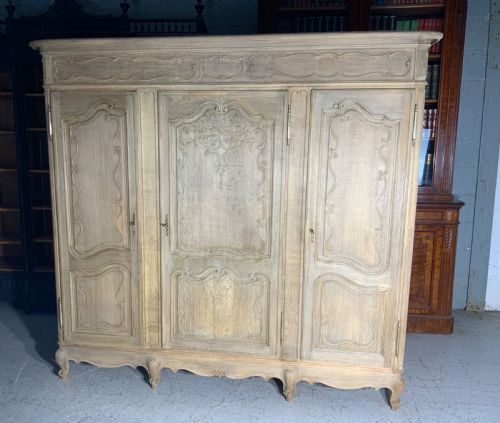
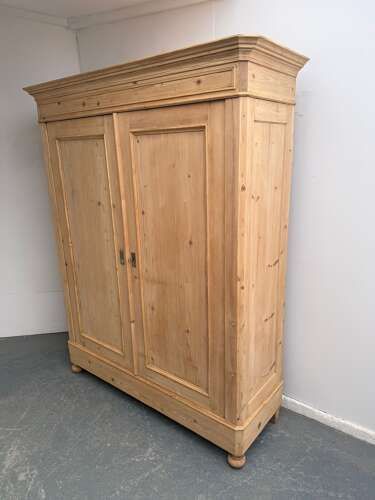
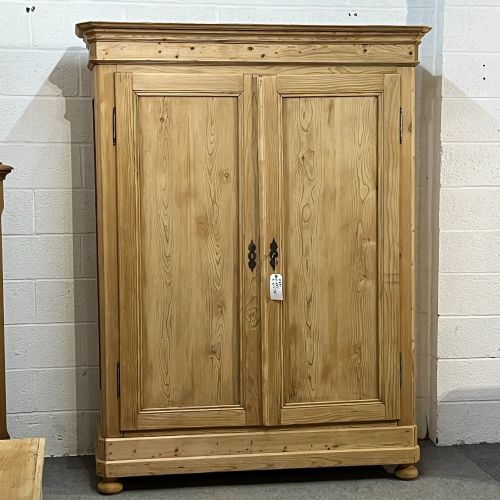
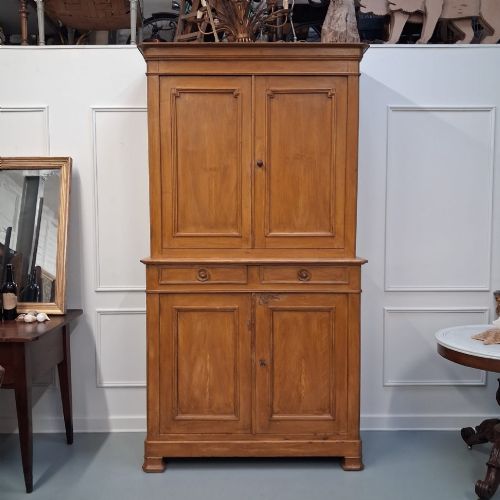
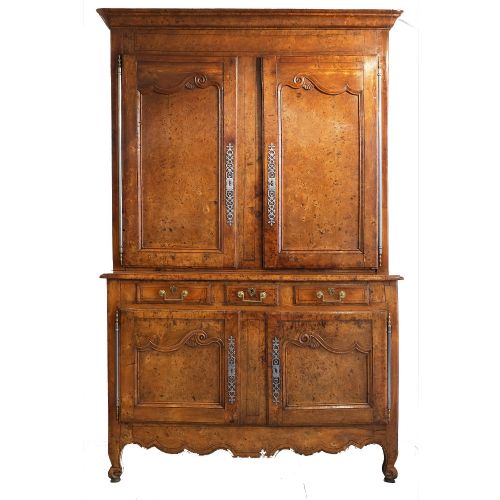
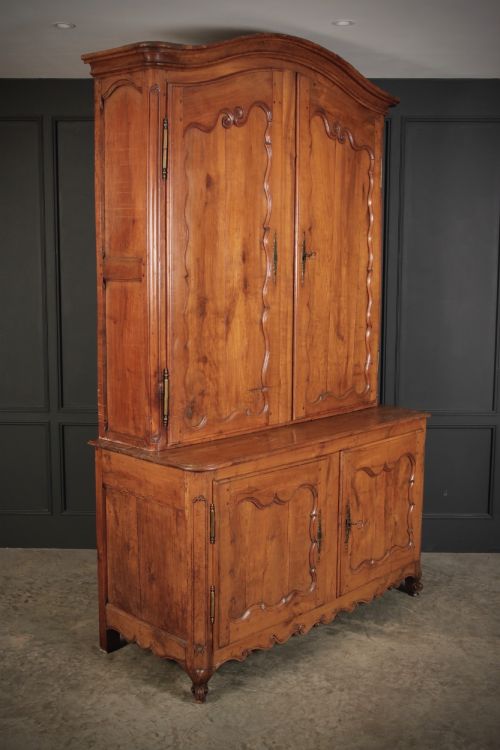
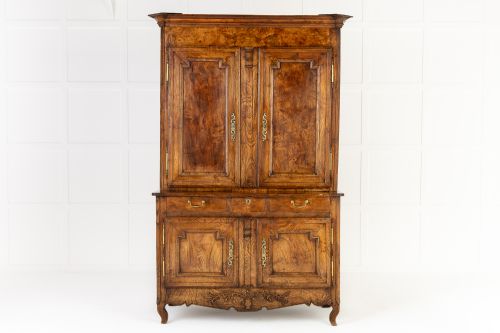
A french country armoire is a large storage piece designed for garments, linen or food, originating from provincial regions outside Paris. You will frequently encounter pine and oak examples dating from the eighteenth and nineteenth centuries, ranging from simple double wardrobes to grand two-tier buffets.
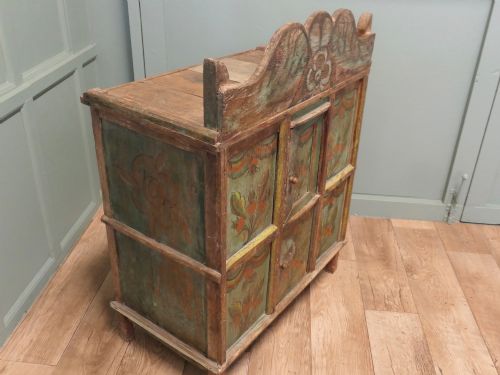
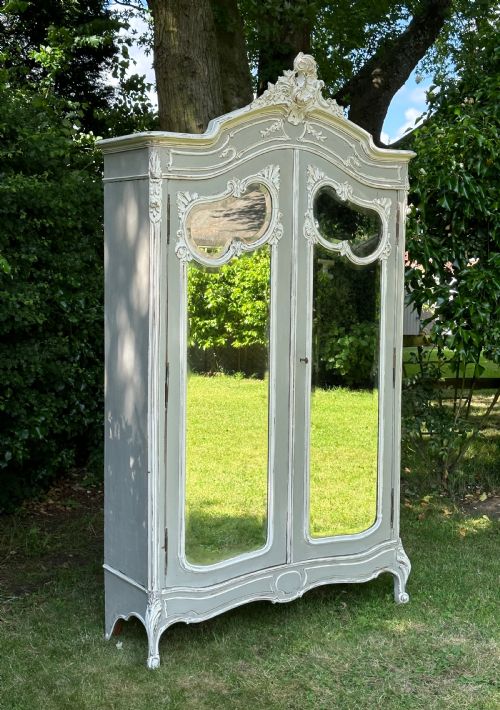
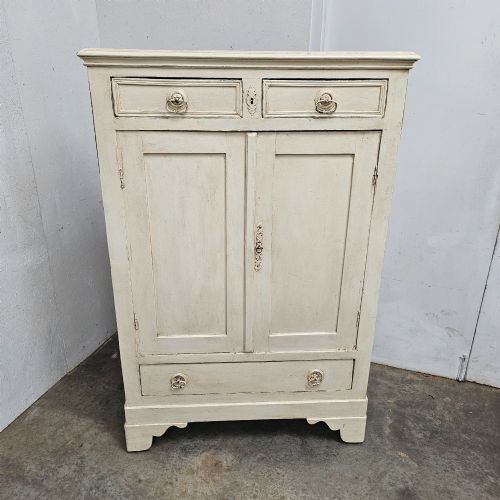
The form adapts to local regional tastes, encompassing everything from Breton folk art designs to Louis XVI mahogany models and painted country cupboards. These pieces served practical domestic functions in farmhouses and village homes before becoming focal points for modern interiors.
Materials and Construction
Cabinetmakers utilised local timber such as oak, ash, elm, walnut, cherry and pine, often selecting woods that were readily available in the surrounding countryside. Surfaces were left natural, bleached, or finished with painted decoration, while iron and brass provided hinges, latches and mounts.
Joinery relied on traditional panel construction and pegged joints to accommodate seasonal movement in unheated rural properties. Larger storage vessels were frequently constructed in two sections, known as deux corps, to allow easier transport through narrow rural doorways.
French Country Armoire Retail Price Guide 2026
Typical asking prices for french country armoire among the pieces listed under this phrase on Sellingantiques today, from the lower quarter to the upper quarter. They describe what is for sale here now, not the wider market.
Listings feature timbers including oak, pine, walnut, cherry, ash, elm, and pitch pine across the eighteenth and nineteenth centuries.
Evaluating Quality and Proportion
The distinction between standard utility cupboards and finer provincial armoires lies in the depth of hand-carving, the selection of figured timber like cherry or walnut, and the balance of the overall proportions. Master cabinetmakers balanced heavy cornices and substantial doors with subtle panel moulding and refined hardware.
Original surface treatments, whether aged paint or untouched patinated oak, heavily influence the desirability of a piece. Altered interiors, replacement hardware or stripped surfaces that lose their historic texture separate standard examples from those retaining genuine period integrity.
The French Country Armoire Glossary
- Armoire
- A large upright cupboard or wardrobe used primarily for storing clothes or linen. These pieces typically feature panelled doors enclosing adjustable shelves or hanging space.
- Buffet à deux corps
- A large two-tier cupboard featuring a smaller upper cabinet set upon a deeper base section. This regional form offered extensive storage for household provisions and tableware.
- Bonnetière
- A tall, narrow single-door cupboard originally designed for storing bonnets and caps. They are valued for fitting into tighter wall spaces while retaining traditional provincial detailing.
- Lit-clos
- An enclosed box bed built into wooden panelling, occasionally adapted into cabinets or bookcases after being removed from Breton homes. This construction reflects regional woodworking traditions from rural France.
- Provincial
- Refers to furniture made outside major metropolitan centres by local craftsmen. These pieces often incorporate regional stylistic interpretations and native timbers.
French Country Armoire: Frequently Asked Questions
How do I date an old armoire?
Dating relies on examining construction methods, timber choice, and hardware marks. Hand-cut peg joints, wrought iron hinges, and native woods like unrefined oak or fruit wood point toward earlier centuries.
Later nineteenth-century examples often incorporate machine-sawn timber, pine, and brass fittings. Stylistic cues such as provincial carving patterns or neoclassical motifs also help narrow down the period of manufacture.
Will an armoire fit through my door?
Many large french country armoires and two-tier cupboards were built to dismantle completely for transport. Panels, cornices, and bases often separate into manageable components.
It is essential to check whether a specific wardrobe disassembles or remains fixed as a single rigid unit before attempting delivery.
How do I care for antique pine?
Antique pine requires protection from direct sunlight and extreme humidity fluctuations to prevent wood splitting. Regular dusting with a dry cloth keeps the surface clean without damaging the patina.
Avoid modern chemical polishes that leave residues and instead apply natural beeswax sparingly to nourish unsealed timber surfaces.
What is the difference between a wardrobe and an armoire?
While both terms describe large storage cupboards, an armoire is a traditional continental European term often encompassing linen presses, food cupboards, and general storage units. Wardrobes specifically focus on hanging garments with internal rails or hooks.
Many antique provincial pieces feature multi-purpose interiors that can be adapted for modern clothing storage.