

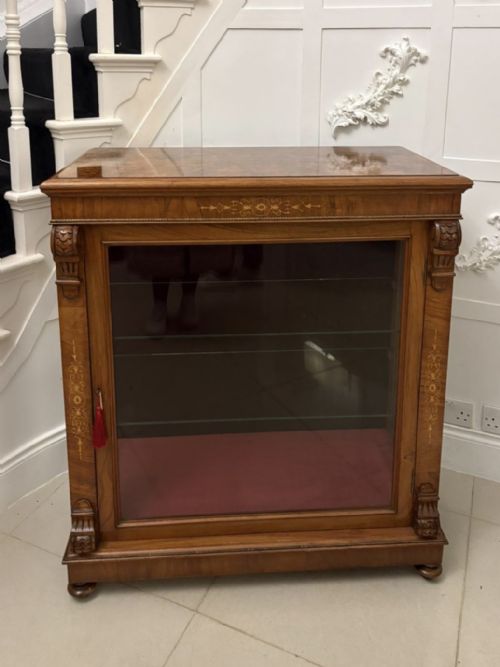
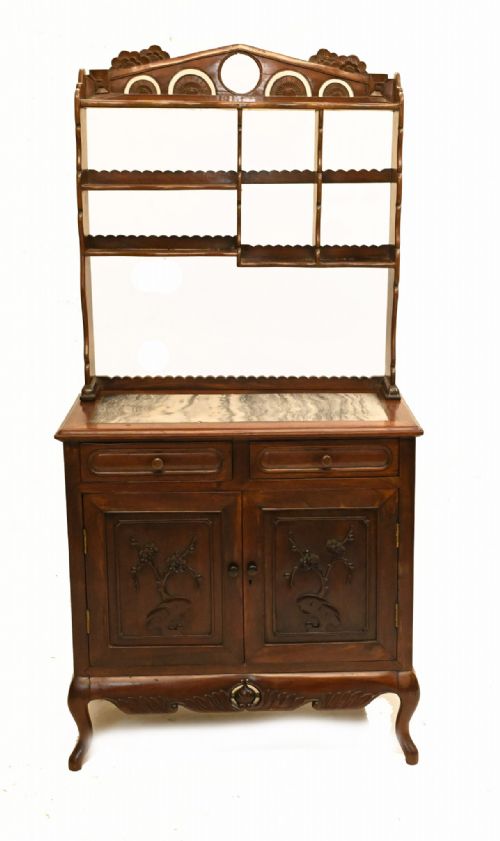
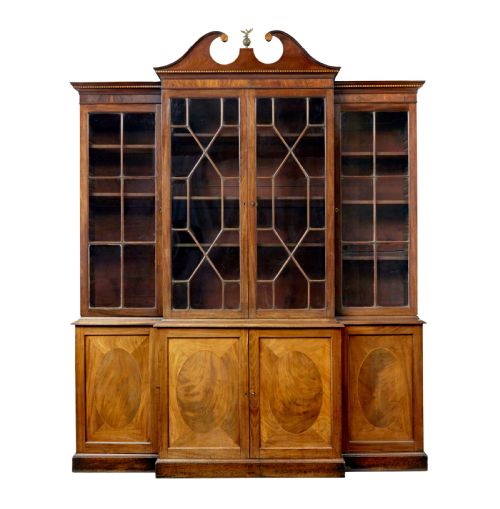


Mid 19th Century Cupboard
A mid 19th century cupboard delivers substantial storage and period presence, spanning vernacular pine housekeepers' presses to formal mahogany library bookcases.
Mid 19th Century Cupboard
A mid 19th century cupboard encompasses a diverse group of storage furniture produced during the Victorian era and the broader nineteenth century. Buyers searching for a mid 19th century cupboard encounter everything from rustic painted pine pieces originating in Scandinavia and rural Britain to formal mahogany and rosewood display cabinets and bookcases.
The domestic forms recorded range from compact bedside pot cupboards and tall press cupboards to large estate hall pieces and housekeeper variants. These items served practical storage needs in nineteenth century households, utilising enclosed doors, drawers, or glazed upper sections to protect linen, china, and provisions.
Regional diversity shapes the selection available on this page, including Dutch colonial ebony pieces, French provincial designs, and Chinese export lacquered items alongside traditional British hardwoods. This variety allows buyers to choose between plain utility storage and highly decorative exhibition furniture.
How they were made
Cabinetmakers constructed these pieces primarily from solid and veneered timbers, relying heavily on rich figured mahogany, burr walnut, and rosewood for formal items, while utilitarian examples utilised native pine and birch. Cabinet construction often incorporated hand-cut dovetailing for drawers and robust panelled doors hung on iron or brass hinges.
Surface treatment varied according to origin and purpose, ranging from transparent French polish highlighting flame mahogany grains to layered hand-painted finishes on folk art and housekeepers cupboards. Decorative detailing included carved elements, inlaid woodwork, and applied mouldings, reflecting styles from Chinese Qing Dynasty motifs to Victorian revivalism.
Samuel Pepys makes a cameo in the timber record, lending his name to an antique ebony cabinet.
What varies in quality
The choice of timber and the dexterity of the cabinetmaker dictate the grade of a piece, separating utilitarian pine work from elite cabinet work in rosewood or walnut. Superior examples display carefully matched wood grains, precise joinery, and intact original hardware such as brass locks and hinges.
Proportion and surface patina fundamentally divide ordinary items from exceptional ones. Pieces retaining an undisturbed, faded historic patina and balanced architectural proportions command greater appreciation than those with altered surfaces or clumsy proportions.
Japy Frères·Druce And Co
The Mid 19th Century Cupboard Glossary
- Chiffonier
- A low sideboard or cabinet featuring enclosed cupboards below and often a shelf or mirrored back above. Victorian dining rooms frequently utilised these for storing silver and serving food.
- Housekeeper's cupboard
- A large storage piece, usually built from pine or oak, designed for household linen and dry goods. These utilitarian items typically feature multiple doors and internal shelving.
- Patina
- The surface sheen and colour developed by wood through age, handling, and light exposure. A fine patina indicates minimal harsh intervention over decades.
- Compactum
- A large, multi-section wardrobe designed to provide comprehensive clothing storage within a single unit. They often incorporate central hanging spaces flanked by linen drawers and shelves.
- Bookcase cabinet
- A dual-purpose piece featuring enclosed shelving or glazed display areas above a lower cupboard base. They were staple furnishings in nineteenth century libraries and parlours.
Mid 19th Century Cupboard: Frequently Asked Questions
What is a pot cupboard?
A pot cupboard is a small bedside or freestanding cabinet originally designed to house a chamber pot. These compact pieces typically feature a single door enclosing a shelf and sometimes a small drawer.
Over time, their domestic function shifted, making them versatile modern side tables or bedside lockers. Their small footprint makes them particularly useful in contemporary bedrooms and narrow hallways.
How do I identify a housekeepers cupboard?
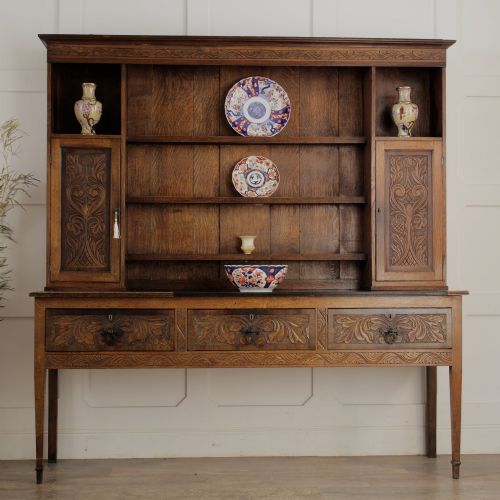
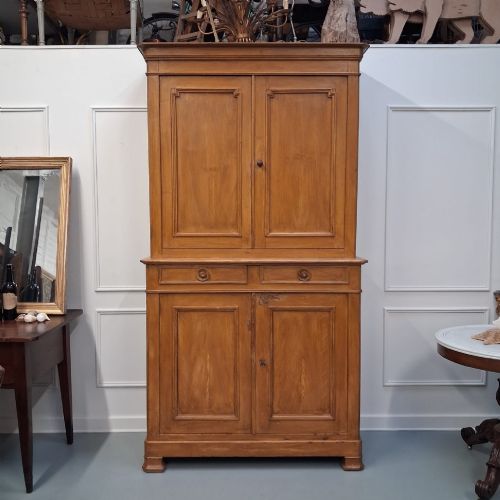
A housekeepers cupboard is a large, utilitarian storage piece traditionally used for linens, dry goods, and kitchen provisions. They are most commonly constructed from sturdy pine or oak and feature multiple panelled doors.
Unlike formal wardrobe furniture, these pieces prioritise practical storage capacity over delicate ornament. They remain popular today as statement kitchen larders or hallway storage units.
What is flame mahogany?
Flame mahogany is a highly figured wood veneer derived from the branch junctions of the mahogany tree. It displays a distinctive, swirling pattern resembling flickering flames.
Cabinetmakers utilised this striking grain on the primary doors and drawer fronts of high-status nineteenth century furniture. It provides a dramatic visual contrast against simpler surrounding timbers.
Where were chiffoniers used?
Chiffoniers were principally used in Victorian dining rooms, parlours, and drawing rooms as auxiliary serving and storage furniture. The lower enclosed cupboards held tableware and dining linens.
The upper surfaces provided a convenient platform for displaying decorative objects, while associated back shelves often held glassware. They bridged the gap between a side table and a full sideboard.