

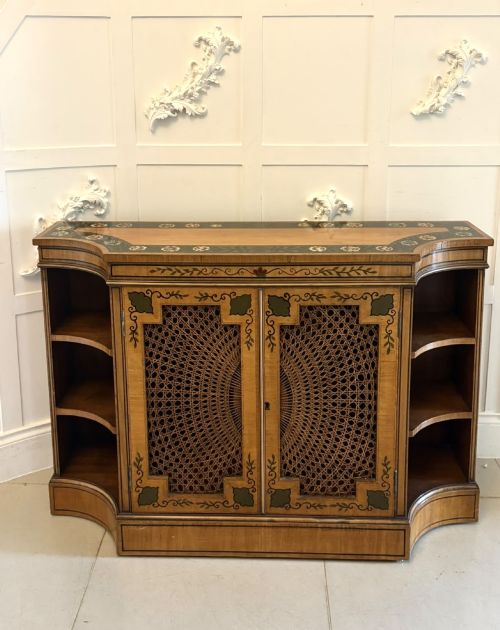
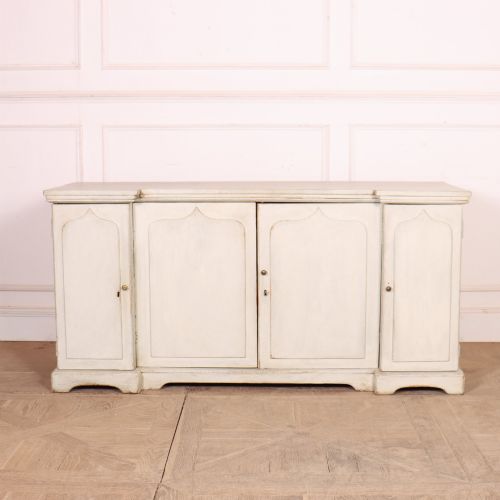
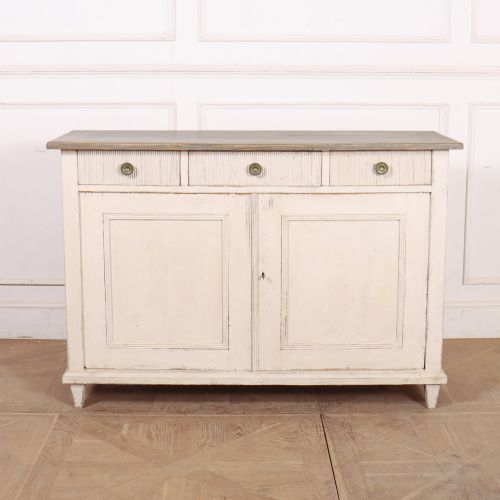
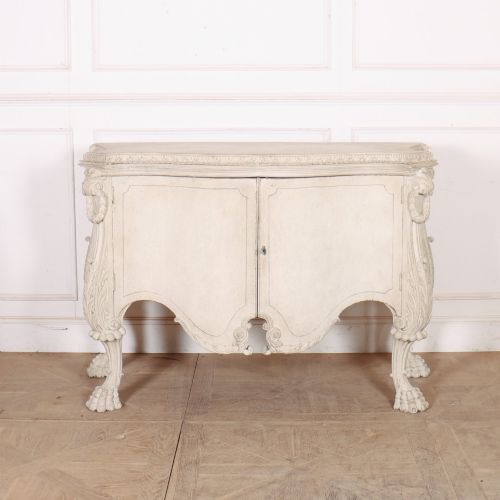

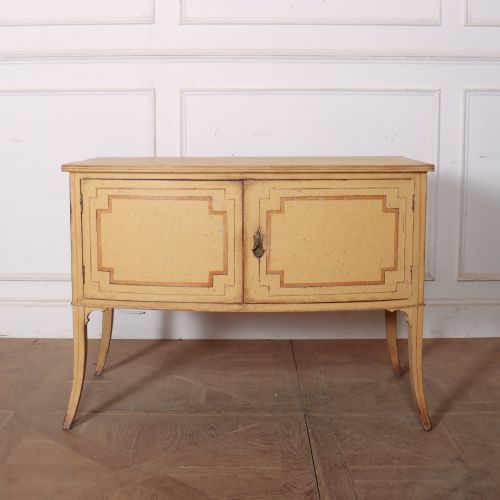

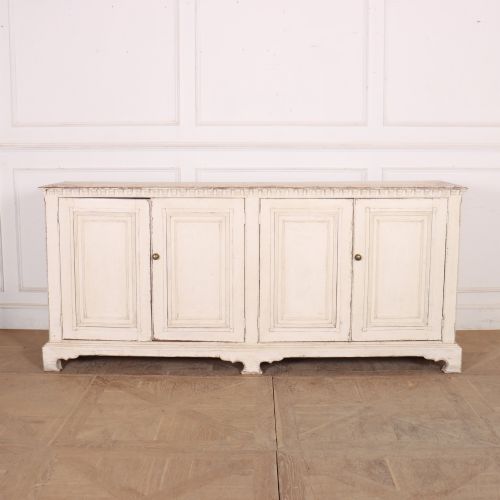


Painted Wooden Credenza
A painted wooden credenza brings sturdy storage and layered colour into a room, offering practical surface space alongside a softened decorative finish.
Painted Wooden Credenza
When you search for a painted wooden credenza, you are looking at substantial storage forms that serve as sideboards, buffets, dresser bases, and side cabinets. These pieces function as low storage units or surface platforms in dining rooms, kitchens, and hallways.
The selections on this page span the 18th century, 19th century, Regency, and Victorian periods, drawing on English, French, Italian, Scandinavian, and Hungarian workshops. You will encounter English country house dresser bases alongside Swedish ragwork cupboards and Continental buffets.
Forms range from shallow low storage cupboards and wide kitchen dressers to enfilades and linen cabinets. Most examples rely on sturdy timbers finished in original paint, historical pigments, or later decorative surfaces.
How they were made
Construction relies primarily on solid pine, oak, and walnut, providing a stable carcass for daily domestic use. Joinery is straightforward and robust, designed to support heavy tableware and household linens.
Surfaces are finished with applied paint layers, often including original pigment, ragwork, or simulated wood grains like rosewood. Hardware typically consists of iron and brass handles, hinges, and latches that secure doors and drawers.
Painted Wooden Credenza Retail Price Guide 2026
Typical asking prices for painted wooden credenza among the pieces listed under this phrase on Sellingantiques today, from the lower quarter to the upper quarter. They describe what is for sale here now, not the wider market.
Listings span the eighteenth and nineteenth centuries, featuring pine, oak, and walnut across English, French, Italian, and Scandinavian origins.
What varies in quality
The integrity of the painted surface determines much of the character, distinguishing untouched historical pigments from later decorative layers. Original surface treatments retain the subtle wear of centuries of domestic life.
Structural heft and timber selection set individual examples apart, from dense oak and walnut builds to lighter pine country furniture. Proportion, hardware originality, and regional decorative details complete the distinction between standard utility items and finer regional pieces.
Melissa White
The Painted Wooden Credenza Glossary
- Credenza
- A sideboard or buffet cabinet used for storing and displaying dining items. It typically sits low to the ground with enclosed cupboards.
- Dresser Base
- The lower portion of a kitchen or dining dresser, featuring cupboards and drawers beneath a flat top surface. These form sturdy standalone sideboards.
- Enfilade
- A long sideboard or buffet featuring a continuous line of multiple cabinet doors. This formal Continental form provides extensive interior storage.
- Ragwork
- A decorative paint technique where rags or cloths are used to manipulate wet glaze or paint over a base coat. It creates mottled or textured patterns on pine furniture.
- Chinoiserie
- European decorative style imitating Chinese artistic motifs and lacquerwork. It appears on specialised cabinets through painted figural scenes and motifs.
Painted Wooden Credenza: Frequently Asked Questions
What is a painted wooden credenza used for?
These pieces provide heavy-duty storage for dining ware, linens, and household provisions while offering a flat surface for serving or display.
Their substantial proportions make them suitable as focal points in dining rooms, kitchens, and large hallways.
How do I date an antique credenza?
Dating relies on examining the construction methods, timber types, and the composition of the paint layers. Regional styles and hardware fixings also point towards specific decades within the eighteenth and nineteenth centuries.
Original paint surfaces often exhibit craquelure and wear patterns consistent with age and domestic use.
Are these pieces made of solid wood?
The listings consist primarily of solid timbers such as pine, oak, and walnut. Carcasses and drawer linings are built to withstand heavy daily handling.
Secondary woods may appear in internal framing or drawer construction depending on regional workshop traditions.
Where do these painted cabinets originate?
The collection includes pieces from English country houses, French chateaux, Italian estates, and Scandinavian rural communities. Each geographic origin brings distinct proportions and local painting traditions.
Swedish and Hungarian examples frequently feature pale or patterned pine finishes distinct from English oak and walnut.
How do I care for original paint?
Preserve original painted surfaces by avoiding harsh chemical cleaners and modern solvents. Dust gently with a dry cloth and maintain stable room humidity to prevent flaking.
Wax finishes on pine or hardwood can be maintained with traditional beeswax applied sparingly.