


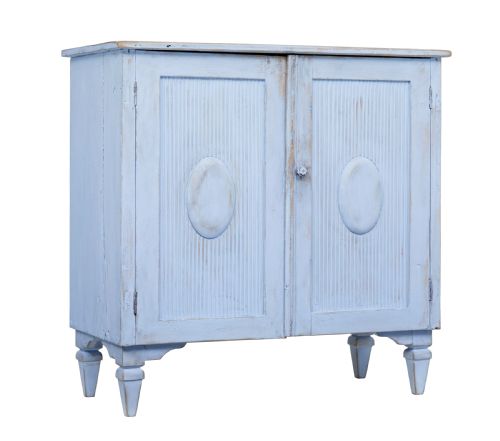


Gustavian Style Cupboard
A gustavian style cupboard brings pale Scandinavian elegance and practical storage into a room.
What a gustavian style cupboard is
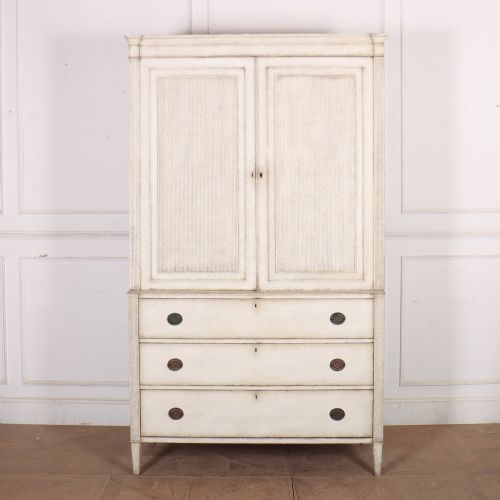
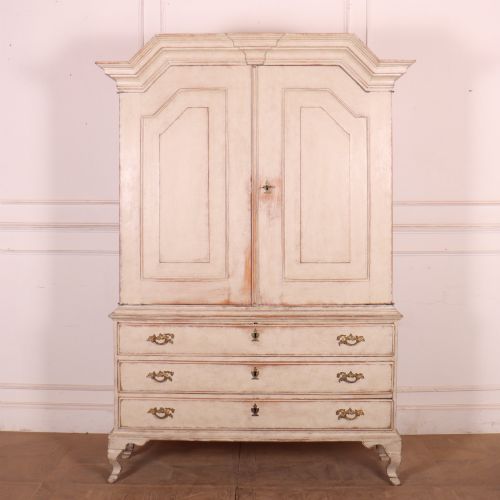
The aesthetic relies on light painted surfaces rather than heavy dark woods, aligning with the neoclassical tastes adopted in Sweden during the late eighteenth century. Most examples you meet on this page date from the nineteenth century, maintaining the clean lines and muted palette of the earlier period. They serve as functional storage units that double as decorative focal points in a modern or traditional interior.
How they were made
Joiners built these cupboards primarily using pine, a softwood readily available across Scandinavia that accepts paint well. Construction methods involved traditional frame and panel techniques to ensure stability across seasonal temperature changes. Metal elements such as iron and brass hardware were fitted for hinges, locks, and handles.
Makers applied multiple layers of paint to the pine surfaces, often achieving distinct patinas through original scraped paint finishes or aged layered coats. This painted treatment protected the wood while reflecting ambient light around the room. Iron fixtures provided sturdy structural support, while brass details occasionally accented key escutcheons and pulls.
Retail Price Guide 2026
Typical UK retail prices for gustavian style cupboard, calculated from the Sellingantiques database of over a million retail prices indexed since 2003. This retail price guide relies exclusively on Sellingantiques data; no external sources or auction records are used, so the figures do not describe the wider market.
Several cupboards retain their original key, proving that the person who locked the linen away two centuries ago had the same peace of mind we seek today.
What varies in quality
The distinction between average and exceptional pieces rests in the integrity of the painted surface and the subtlety of the proportions. Original scraped paint that reveals authentic historic colour layers holds greater appeal than later repainting. Well-preserved pine structures with minimal timber replacement command deeper appreciation from collectors.
Proportion and restraint in decorative carving also define the upper tier of these pieces. Refined neoclassical mouldings and balanced door panels reflect skilled workshop execution rather than rustic provincial output. The survival of original iron and brass hardware further elevates the standing of a cupboard.
The Gustavian Style Cupboard Glossary
- Gustavian
- The Swedish neoclassical style spanning the late eighteenth and early nineteenth centuries, characterised by lighter tones and restrained classical detailing. It draws inspiration from French Louis XVI design but maintains a distinct Scandinavian simplicity.
- Linen cupboard
- A tall storage cabinet traditionally utilised for storing household textiles, bedsheets, and garments. These pieces usually feature internal shelving enclosed by one or two wooden doors.
- Scraped paint
- A conservation technique or historic state where upper layers of modern paint are carefully removed to reveal the original or early decorative paint scheme beneath. This preserves the authentic texture and tone applied by the original maker.
- Cupboard on stand
- A cabinet form raised off the floor on a distinct base or frame, often featuring legs or a small plinth. This elevation lightens the visual weight of the piece in a room.
Frequently Asked Questions
How do I date a painted Swedish cupboard?
Dating relies on examining the construction joints, timber species, and the underlying paint layers. Eighteenth-century pieces typically exhibit hand-planed surfaces and older wrought ironwork, whereas nineteenth-century examples often use machine-sawn components.
The evolution of the paint surface also offers clues, as early pigments and binding media age differently from later oil or acrylic paints. Comparing the hardware style with documented Scandinavian furniture timelines helps narrow down the decade of manufacture.
Where should I place a linen cupboard at home?
These cupboards suit dining rooms, hallways, or bedrooms where their tall silhouettes provide vertical storage without occupying excessive floor space. Their pale painted finishes work well against neutral or softly coloured walls to reflect light.
Ensure the room maintains stable humidity levels to protect the historic pine timber and painted surfaces from cracking. Positioning them away from direct heat sources preserves both the wood and the original finish.
What is the difference between a dresser and a sideboard?
A miniature dresser generally incorporates open shelving or a stepped upper section above a lower cabinet or drawer base. They were traditionally used to display ceramics alongside concealed storage.
A sideboard functions primarily as a low-level serving or storage cabinet with enclosed cupboards and drawers beneath a flat top surface. In Scandinavian country furniture, these forms prioritise clean vertical or horizontal lines.
How do I care for historic painted pine?
Dust the surface regularly with a soft, dry cloth to prevent dirt accumulation on the delicate painted finish. Avoid using modern chemical cleaners or polishes that can soften or strip historic paint layers.
Keep the piece out of direct sunlight to prevent fading of the original pigments. Maintaining consistent indoor humidity prevents the underlying pine from expanding and contracting excessively.