
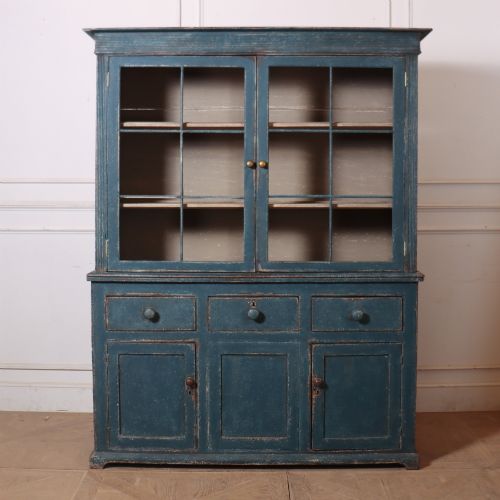
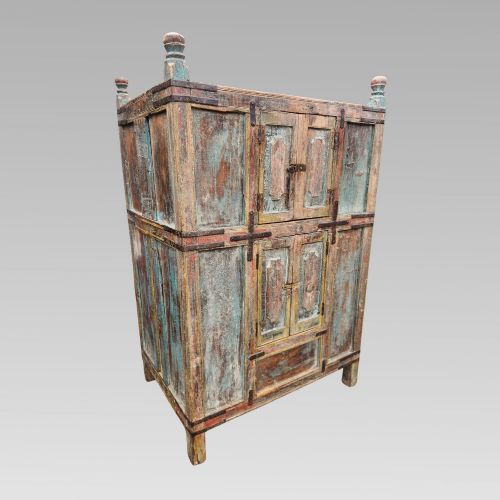
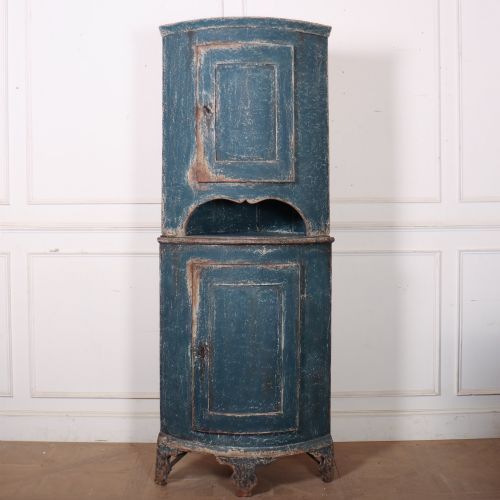
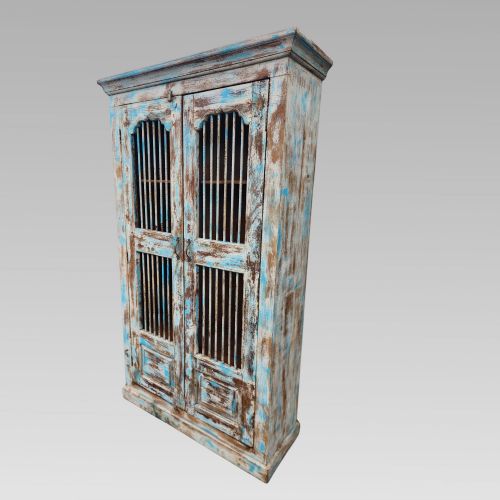
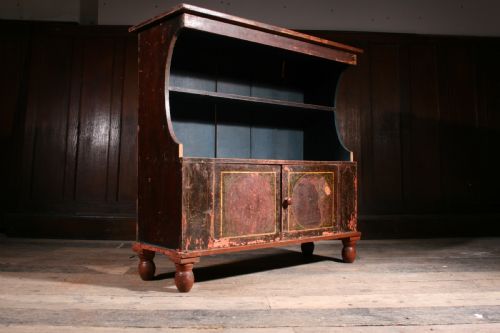
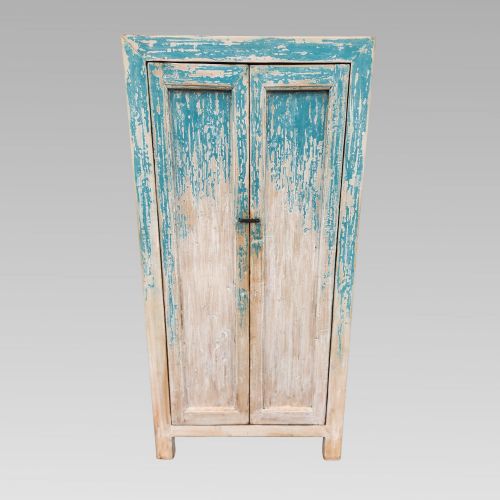


Distressed Blue Cabinet
A distressed blue cabinet brings practical storage and aged surface character together, drawing the eye with layers of worn pigment over timber.
Distressed Blue Cabinet
A distressed blue cabinet encompasses storage furniture finished in weathered blue paint, spanning origins from English country houses to Scandinavian farmsteads. When searching for a distressed blue cabinet, buyers encounter utilitarian cupboards, linen presses, and corner units shaped by regional vernacular traditions.
How they were made
Construction relies primarily on solid pine, teak, and cedar, joined using traditional methods suited to regional cabinet makers. Iron and brass hardware such as hinges, latches, and pulls secure the doors and drawers while adding functional metal detail.
Surfaces receive layers of oil or water-based paint over timber, which develops natural wear, flaking, and patination through decades of domestic use. This organic degradation of the pigment creates the characteristic distressed finish valued in country furniture.
Listings feature pieces from the 18th century, 19th century, and early 20th century, constructed in pine, teak, cedar, and painted wood.
What varies in quality
Quality rests in the integrity of the timber frame, the survival of genuine early surface paint, and the balance of regional proportions. Pieces retaining their original historic finish and untouched iron or brass fittings hold greater visual coherence.
The sophistication of regional joinery, from West Country vernacular framing to Gustavian decorative restraint, dictates the structural refinement of each cupboard or commode.
The Distressed Blue Cabinet Glossary
- Vernacular
- Domestic furniture built by local craftsmen using regional traditions and readily available timber rather than following high-style metropolitan designs. These pieces reflect the specific practical needs of rural households.
- Gustavian
- The Swedish interpretation of neoclassical design, characterised by restrained carving, lighter proportions, and pale painted finishes. It developed during the late eighteenth century under royal influence.
- Commode
- A low cabinet or chest of drawers designed for domestic storage, often featuring decorative painted surfaces. The form evolved significantly across European workshops during the eighteenth and nineteenth centuries.
- Almirah
- A freestanding cupboard or wardrobe originating from the Indian subcontinent, frequently constructed from durable hardwoods like teak. These storage pieces often display traditional panel work and painted or polished finishes.
- Patina
- The surface sheen and textural change acquired by wood and paint over decades through handling, light exposure, and wear. It serves as an indicator of age and continuous use.
Distressed Blue Cabinet: Frequently Asked Questions
How do I clean a painted cabinet?
Dust the surface regularly with a soft, dry cloth to prevent dirt accumulation within the textured paint layers. Avoid using chemical solvents or harsh detergents that might strip or soften the historic pigment.
Maintain a stable indoor environment away from direct heat sources to prevent the timber from warping and the old paint from flaking further. Gentle care preserves the existing surface character without altering the patination.
Are these cabinets suitable for kitchen use?
Many of these pieces originated as kitchen dressers, larders, or linen cupboards, making them well-suited for storing tableware and dry goods. Their deep shelves and robust timber construction accommodate everyday storage demands.
Consider the interior depth and door clearance when placing a cupboard in a smaller kitchen space. Proper ventilation helps protect both the antique timber and its painted finish from excessive moisture.
What is Gustavian style?
Gustavian style represents Sweden's local adoption of French neoclassical design during the late eighteenth century, featuring simplified lines and pale painted surfaces. It combines classical symmetry with the practical restraint typical of Scandinavian craftsmanship.
Cabinets from this movement often display subtle fluting, delicate panel moulding, and muted blue or grey paintwork. This aesthetic provides a lighter alternative to heavier darkwood antique furniture.
How can I tell original paint from later decoration?
Original paint shows natural craquelure, integrated wear around handles and edges, and uniform ageing consistent with the timber beneath. Multiple underlying layers often emerge where the topmost blue pigment has worn thin through handling.
Later repainting can sometimes appear flat or lack the subtle tonal variations accumulated over centuries of domestic wear. Examining the hardware fixing points helps determine whether the finish predates modern restoration.