


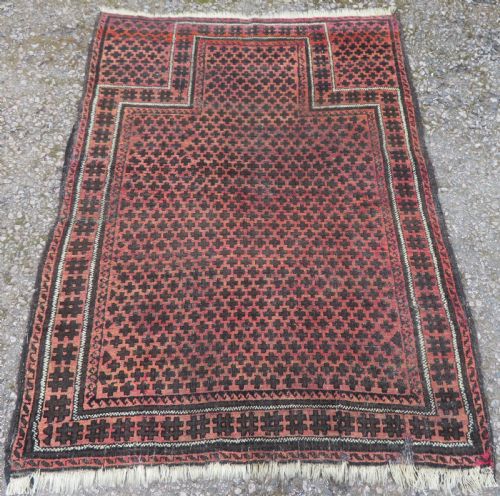

Wool Prayer Mat
A wool prayer mat brings centuries of tribal and village weaving traditions into modern interiors through portable formats designed for daily devotion.
Wool Prayer Mat
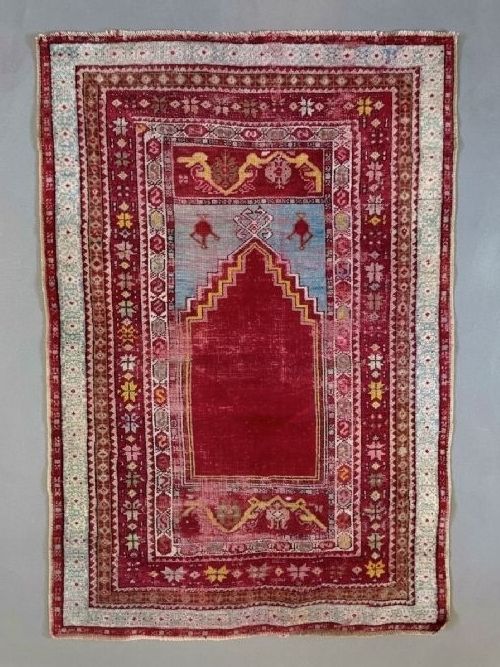
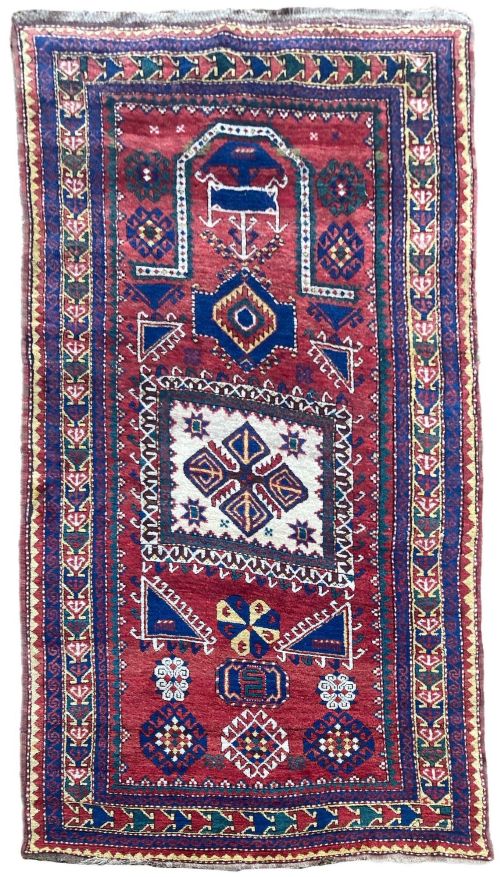
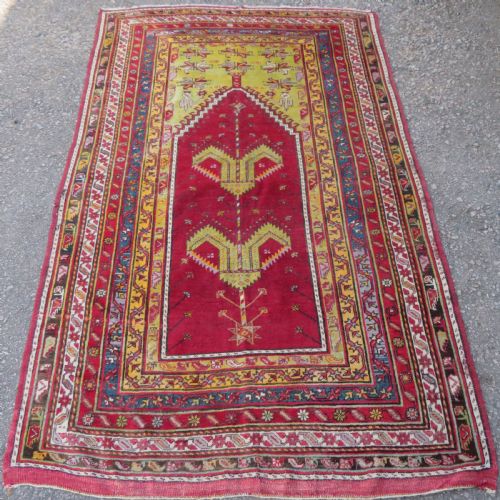
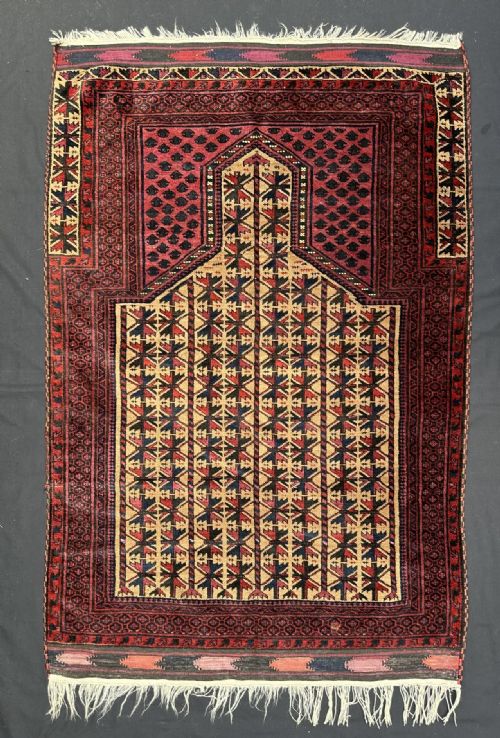
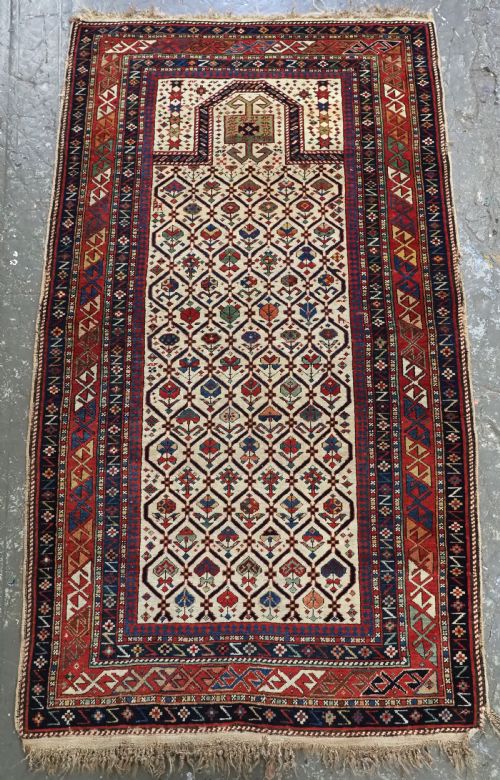
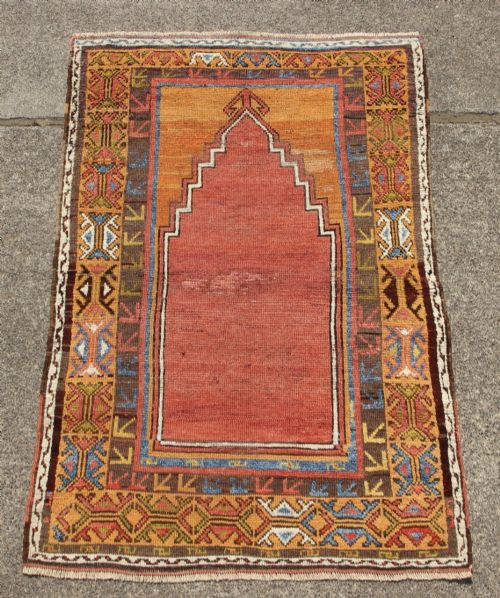
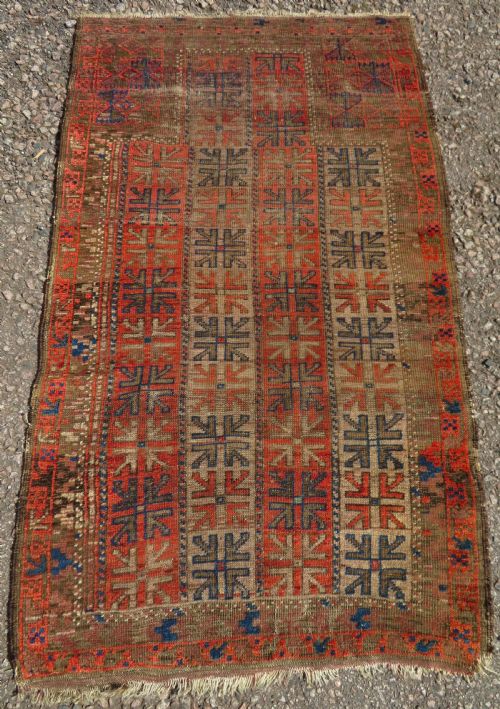
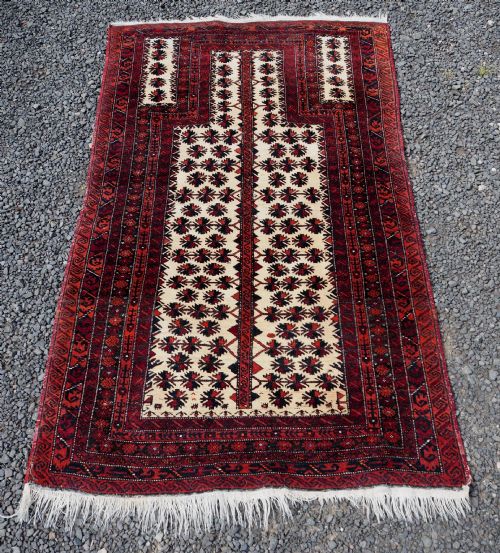
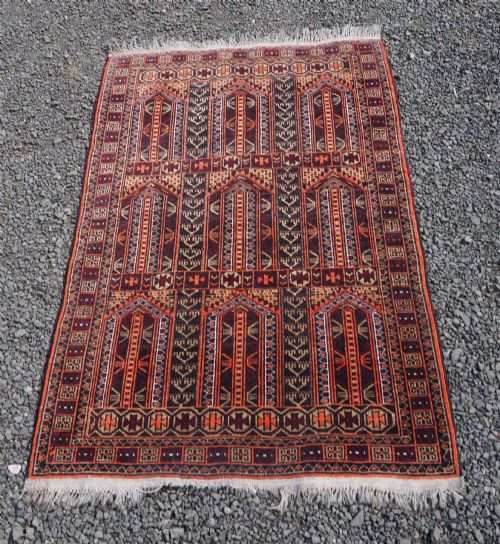
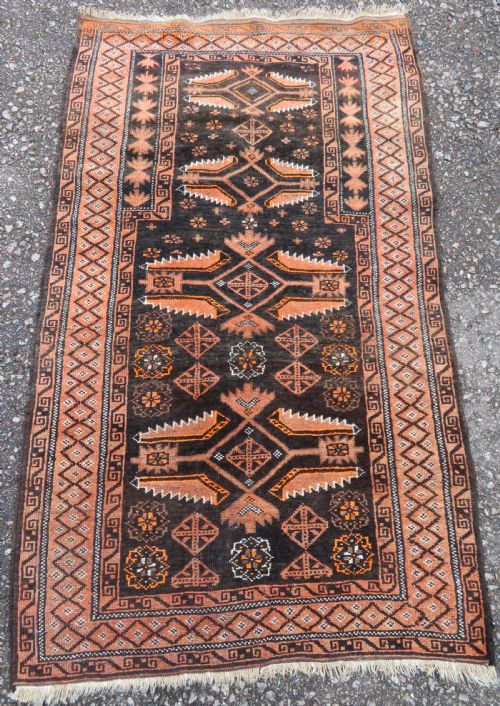
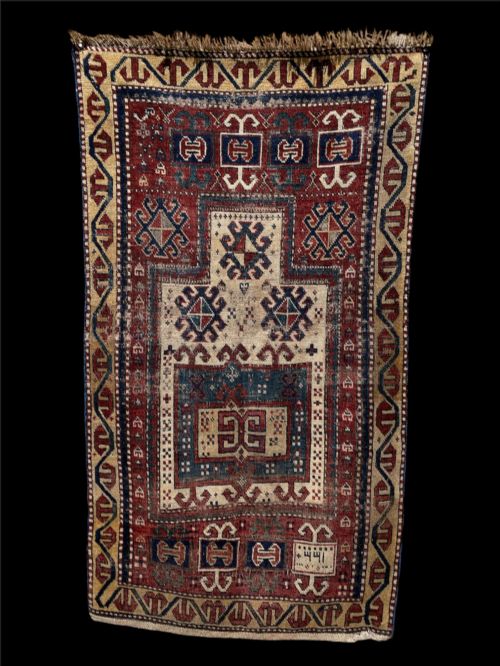
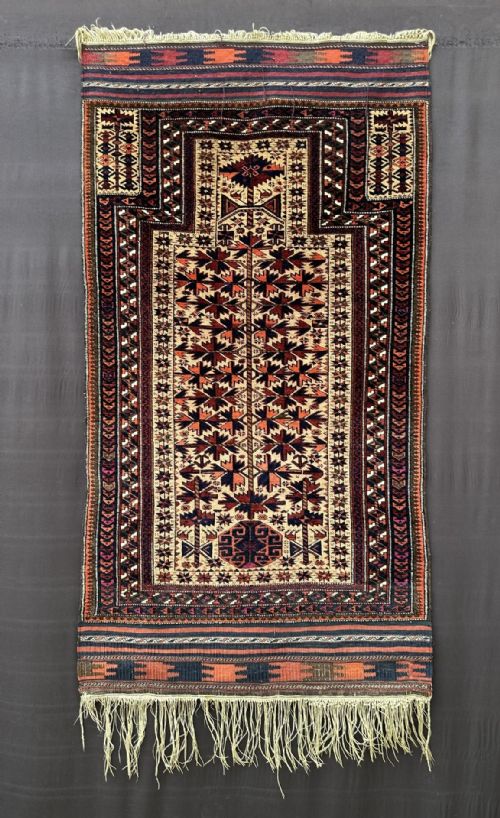
Buyers browsing this selection encounter pieces from specific regional traditions such as Caucasian Kazak, Anatolian Konya and Ghiordes, or Baluch and Timuri tribal borderlands. Many examples display single or double mihrabs, while others incorporate hooked motifs, lanterns or long kilim ends. The scale remains intimate, suited for hanging on walls or placement on floors as distinct focal points.
Materials and construction methods
These textiles rely principally on sheep wool, sometimes supplemented by hand-spun wool, cotton foundations, camel wool or goat hair for added durability in the pile and warps. Artisans utilise natural dyes to achieve deep earthy tones, ivory grounds and rich blue fields that patinate gracefully over decades of age. The hand-knotting process secures the dense wool pile to sturdy structural foundations.
Regional workshops and nomadic tribes apply varied knotting densities and asymmetrical or symmetrical knots depending on local custom. Mixed techniques appear in specific tribal pieces, incorporating flatweave kilim ends alongside knotted pile sections to prevent fraying and provide structural stability.
Wool Prayer Mat Retail Price Guide 2026
Typical asking prices for wool prayer mat among the pieces listed under this phrase on Sellingantiques today, from the lower quarter to the upper quarter. They describe what is for sale here now, not the wider market.
Factors influencing execution and grade
The distinction between standard village production and top tier pieces rests on the precision of the knotting, the saturation and complexity of the natural dyes, and the crispness of the geometric or floral drawing. Superior examples exhibit tightly packed piles, balanced proportions within the mihrab field, and crisp secondary borders that frame the composition without distortion.
Material selection also dictates overall quality, with hand-spun wool displaying subtle variations in tone that absorb natural dyes more richly than uniform machine-processed yarns. Preservation of original kilim ends, selvedges and balanced fringe terminations contributes significantly to the integrity of older specimens.
The Wool Prayer Mat Glossary
- Mihrab
- The arched architectural niche depicted on the field of a prayer rug, symbolising the direction of prayer.
- Kazak
- A distinct style of Caucasian rug known for bold geometric patterns, primary saturated colours and heavy wool construction.
- Kelim
- A flatwoven textile or border end lacking a pile, produced by tightly interweaving warp and weft threads.
- Natural Dyes
- Colourants derived from plant, insect or mineral sources rather than synthetic chemical compounds.
- Selvedge
- The reinforced side edges of a rug formed by wrapping lateral weft threads over the outermost warps to prevent unraveling.
Wool Prayer Mat: Frequently Asked Questions
How do I identify a prayer rug?
A prayer rug is distinguished by its primary architectural feature, the mihrab arch, which points toward Mecca during ritual use. These pieces often feature compact dimensions designed for individual portability rather than large room coverage.
Secondary design elements like hanging lanterns, floral lattices or directional motifs further separate them from standard area carpets and tribal floor coverings.
Where were these rugs made?
Production centres span Anatolia, the Caucasus, Persia and the borderlands between North-East Persia and North-West Afghanistan. Specific regions include towns and tribal groups like Konya, Ghiordes, Kirsehir, Baluch and Timuri.
Each geographic area developed distinct knotting techniques, wool grades and symbolic motifs characteristic of local village or nomadic weaving traditions.
Are these rugs made with natural dyes?
Many older pieces utilise natural dyes sourced from plants, roots and minerals, which yield rich, complex tones that mellow gracefully over time. These organic colourants interact uniquely with hand-spun wool and camel hair.
Such dyes often display subtle abrash, or tonal shifts within a single colour field, caused by variations in dye batches and wool absorption.
How should I care for an antique rug?
Display the textile out of direct sunlight to protect natural wool fibres and organic dye compounds from fading over extended periods. Vacuum gently using low suction without a rotating brush bar to prevent snagging the hand-knotted pile.
Professional specialist cleaning is recommended for antique wool and cotton textiles to maintain the structural integrity of the foundation.