

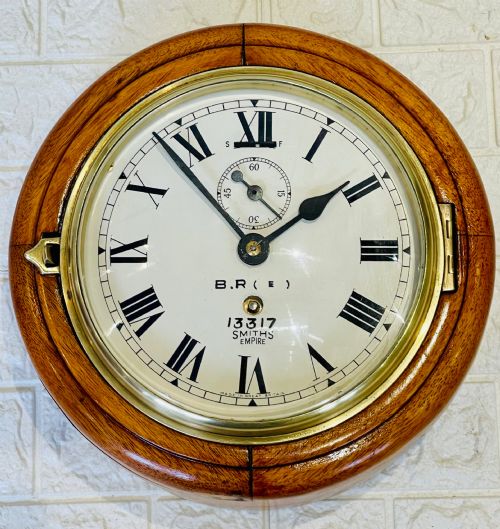
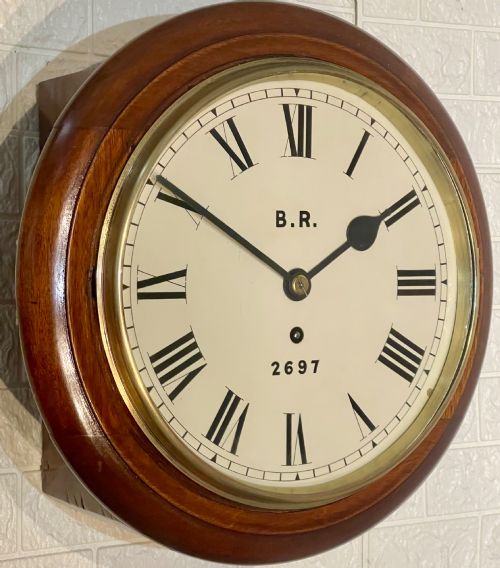
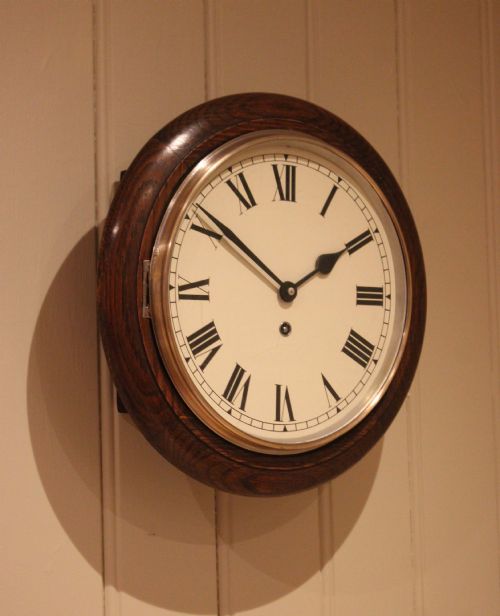
Wooden Dial Wall Clock
When you search for a wooden dial wall clock, you are looking at utilitarian timepieces built for railways, offices, and stations.
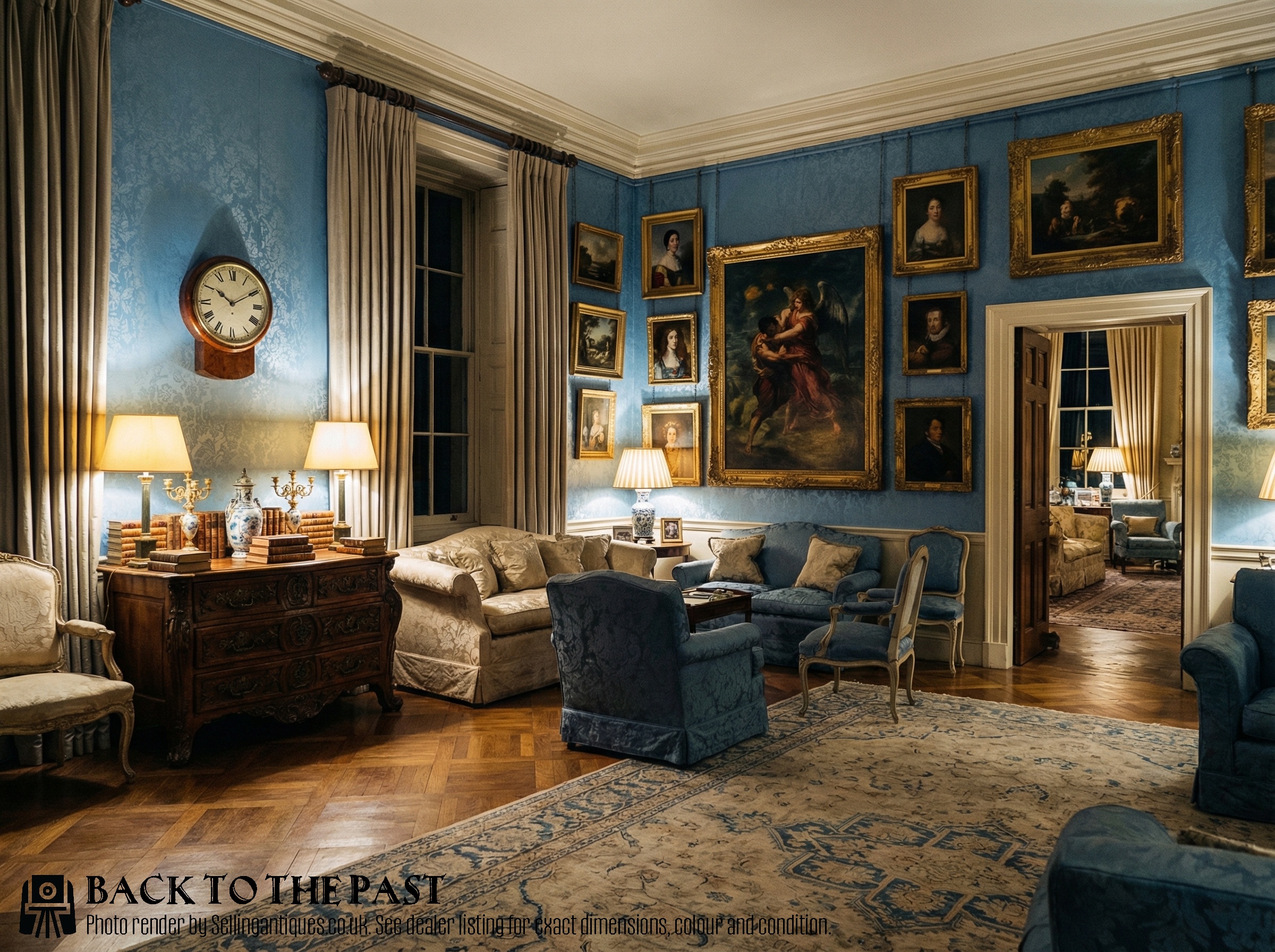
Wooden Dial Wall Clock
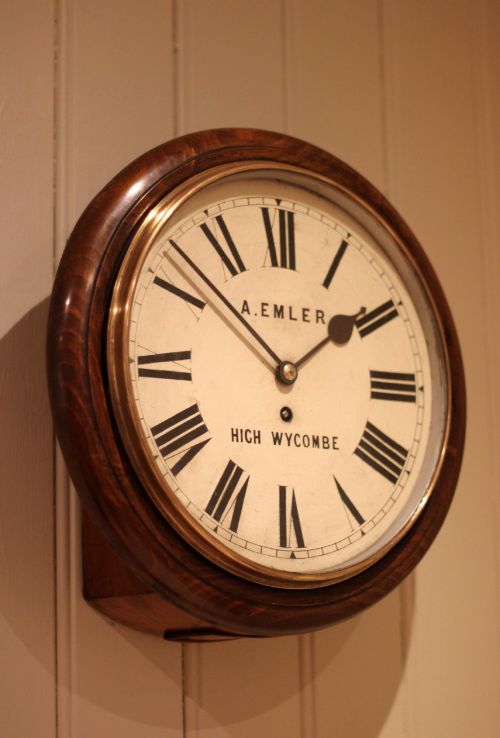
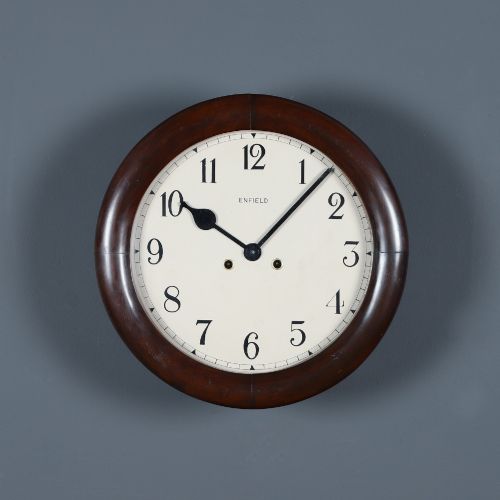
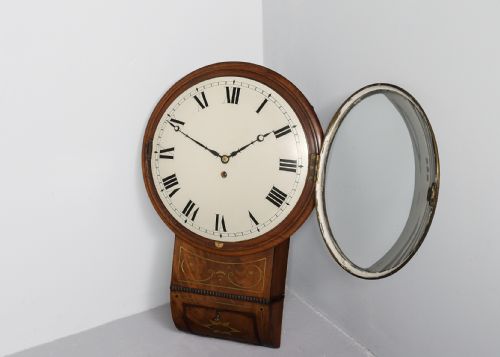
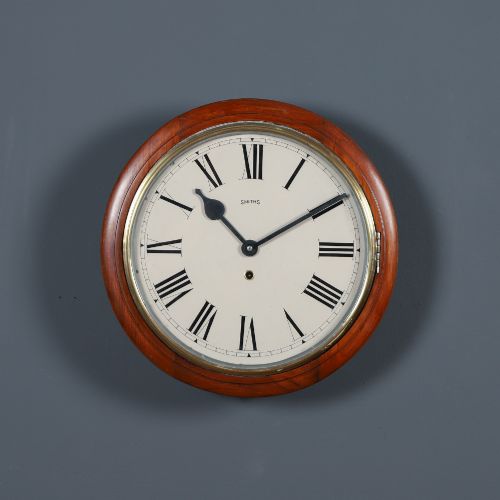
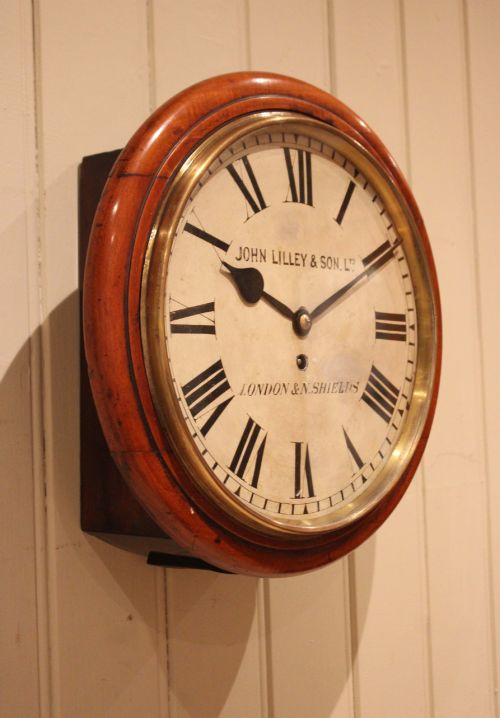
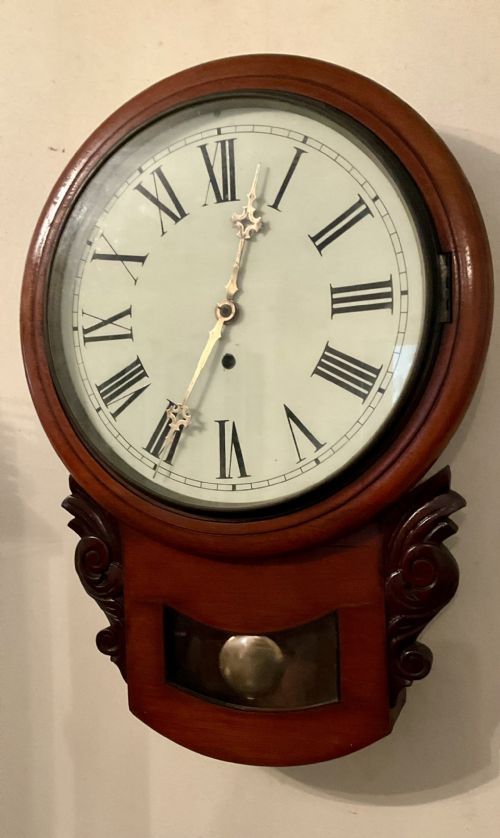
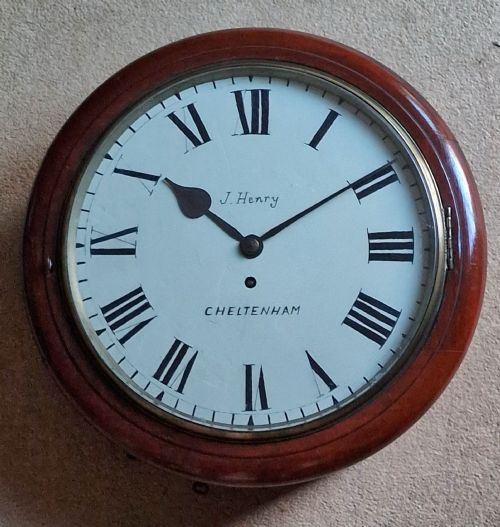
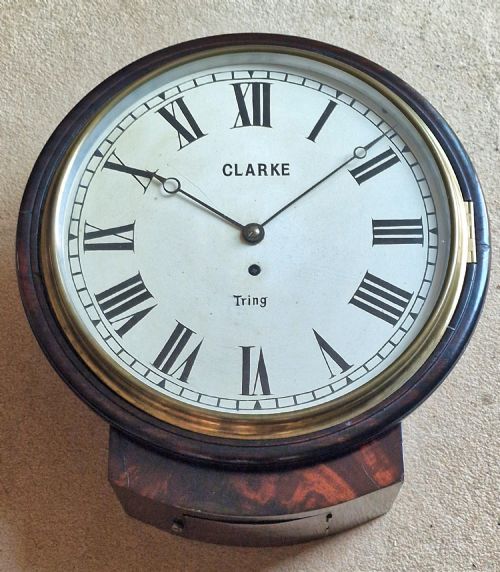
A wooden dial wall clock spans the Georgian, Regency, and Victorian eras through to the mid-twentieth century, with a strong showing of railway and station examples. Most pieces take the form of round dial wall clocks or drop-dial variants housed in sturdy timber frames. These objects originated as functional time keepers for public spaces, transport networks, and municipal buildings.
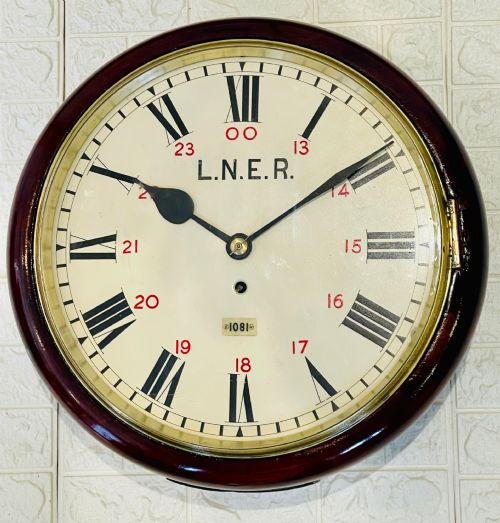
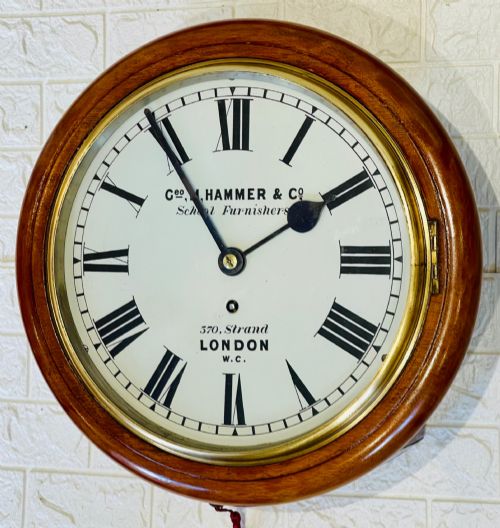
The selection ranges from small six-inch dial variants to large fifteen-inch station clocks bearing company initials such as GWR, LNER, and GPO. Mahogany and oak predominate, frequently featuring brass bezels and glass covers designed to protect the painted or wooden face. Buyers encounter both single chain fusee movements and eight-day striking mechanisms across these periods.
How they were made
Cases are constructed from dense timbers like mahogany, oak, walnut, and beech, joined with precise cabinetwork to house the heavy mechanical movements securely. Bezels are fabricated from brass or carved wood, often hinged to allow access to the dial and hands.
Dials are executed in painted wood, iron, or metal, carrying roman or arabic numerals driven by fusee or eight-day striking movements. Makers utilised glass panels within brass surrounds to shield the face from dust and damage in busy environments.
Wooden Dial Wall Clock Retail Price Guide 2026
Typical asking prices for wooden dial wall clock among the pieces listed under this phrase on Sellingantiques today, from the lower quarter to the upper quarter. They describe what is for sale here now, not the wider market.
Railway and station clocks dominate the selection, alongside rarer painted tavern clocks from the nineteenth century.
What varies in quality
The standard of a wooden dial wall clock rests on the crispness of the timber case carving and the original integrity of the painted dial. Finer examples retain their matching signature on the movement and dial face, executed by named makers or reputable firms.
Execution of the brass work, the weight of the timber framing, and the preservation of original railway or institutional lettering separate ordinary timepieces from those with distinguished provenance. Mechanisms that retain their original fusee chains and untouched components command greater appreciation.
Thwaites and Reed·Thomas Harrison·Barraud·George Clarke·J Henry·Samuel Chave·Alex Purvis·D and J Wellby·Engström by Zenith
The Wooden Dial Wall Clock Glossary
- Fusee
- A conical pulley used in older clocks to maintain even tension on the chain as the mainspring unwinds. This mechanism ensures consistent timekeeping throughout the running period.
- Drop dial
- A clock case featuring a rounded dial top and an extended lower trunk to accommodate the pendulum swing. This form was widely adopted for railway and office use during the nineteenth century.
- Bezel
- The brass or wooden ring that holds the glass cover in place over the clock face. It typically opens on a hinge to allow hand adjustment.
- Tavern clock
- A large pendulum-driven wall clock with an oversized dial and a long trunk, common in public houses and coaching inns during the eighteenth and nineteenth centuries.
- Dial
- The visible face of the clock where numerals are painted or applied. On these pieces, dials are frequently formed from wood, iron, or brass.
Wooden Dial Wall Clock: Frequently Asked Questions
How do fusee wall clocks work?
A fusee movement relies on a conical pulley and a chain to equalise the declining power of the mainspring as it unwinds. This clever gearing delivers constant force to the escapement.
Such systems were favoured in locations requiring strict punctuality, such as railway stations and administrative offices, because they reduced timekeeping errors.
Where were these clocks originally hung?
These timepieces were mounted high on the walls of railway station platforms, telegraph offices, schools, and municipal boardrooms for clear visibility. Their robust timber cases and large dials suited public and working environments.
Today, collectors place them in hallways, kitchens, and living spaces where their industrial and utilitarian heritage provides a strong focal point.
How do I wind a wall clock?
Winding involves inserting a key into the winding hole on the dial face and turning it gently until resistance is felt. Care must be taken not to overwind the mainspring.
Most fusee and eight-day movements require attention once a week to maintain accurate time, following the established routines of past centuries.
How can I identify a railway clock?
Railway clocks often feature painted initials on the dial or casing corresponding to companies like the GWR, LNER, or LMS. Stamped numbers on the timber case also indicate official railway or post office property.
These pieces were strictly maintained by company horologists, leaving behind a clear paper trail of service marks and institutional history.