
Wooden Captains Desk Chair
A wooden captains desk chair brings sturdy country craftsmanship and deep curved armrests to your workspace, rooted in nineteenth and early twentieth century traditions.
Wooden Captains Desk Chair
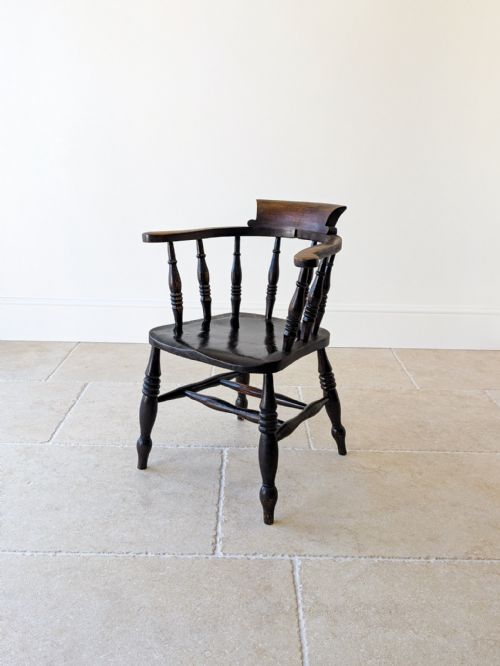
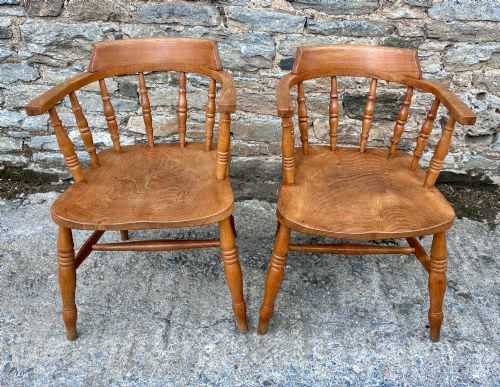
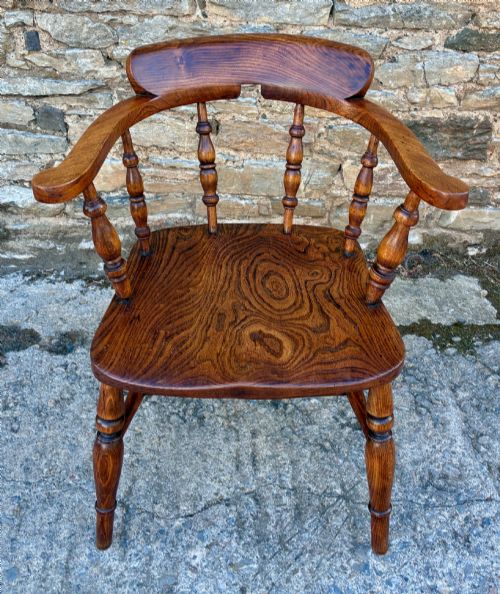
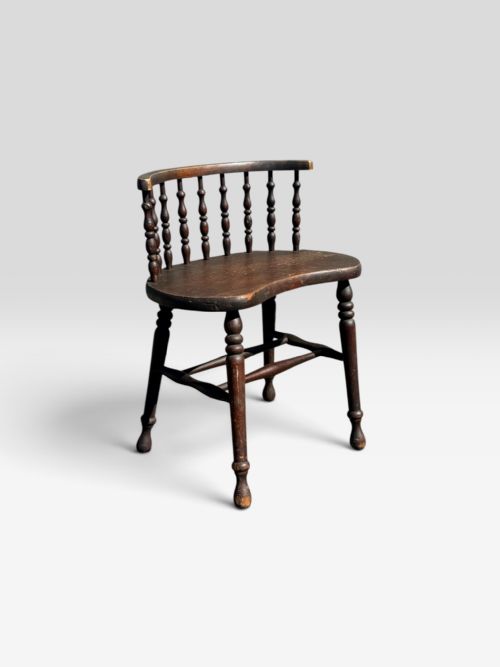
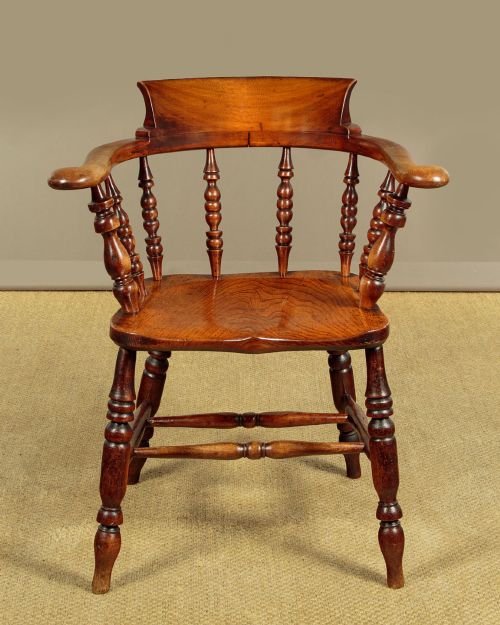
When searching for a wooden captains desk chair, buyers encounter robust seating designed for long hours at a workspace or study. These pieces typically take the form of heavy armchairs, Windsor styles, or smoker's bows intended for office and library settings.
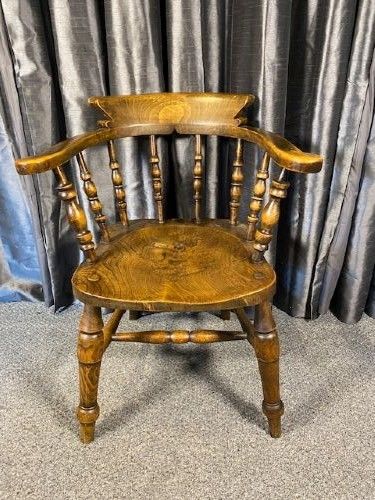
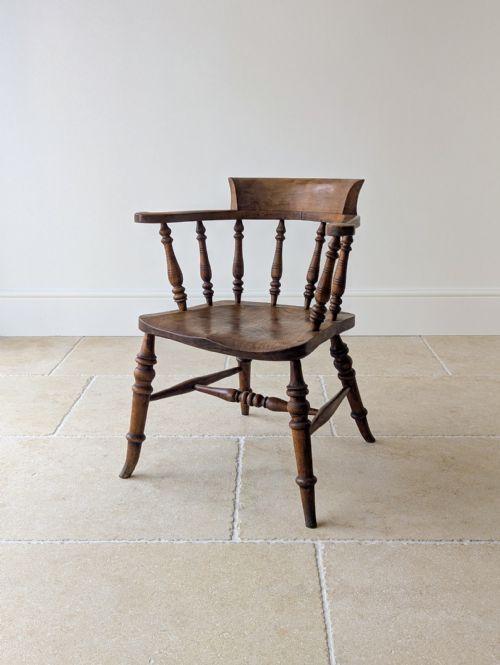
The most common versions met on this page date from the Victorian and Edwardian periods, constructed in regional English workshops. They balance domestic comfort with functional utility, often featuring low backs and continuous curved armrails.
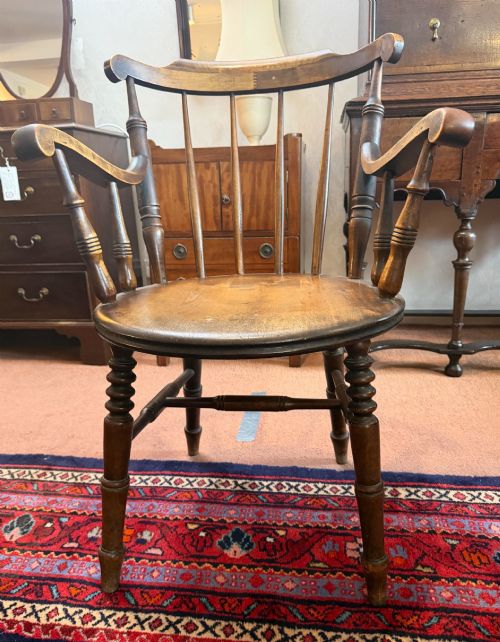
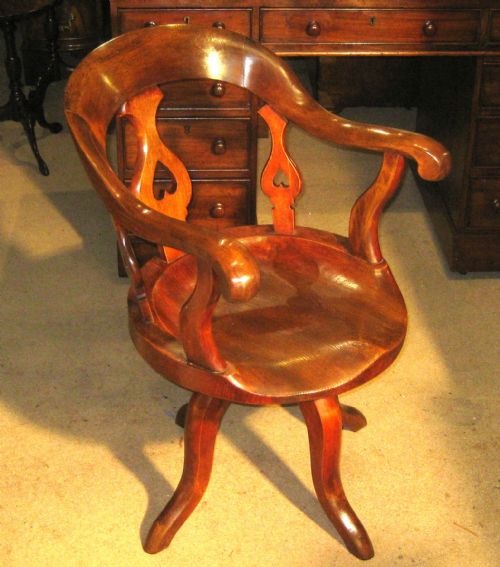
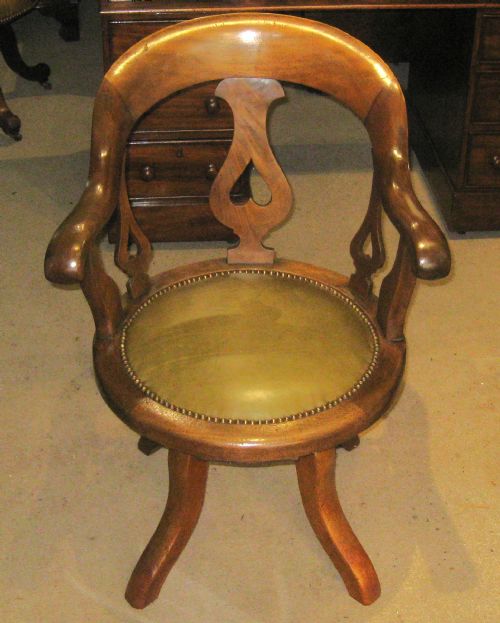
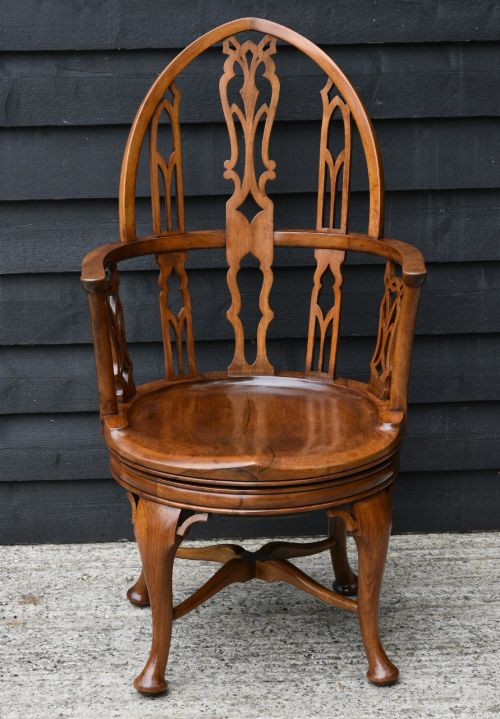
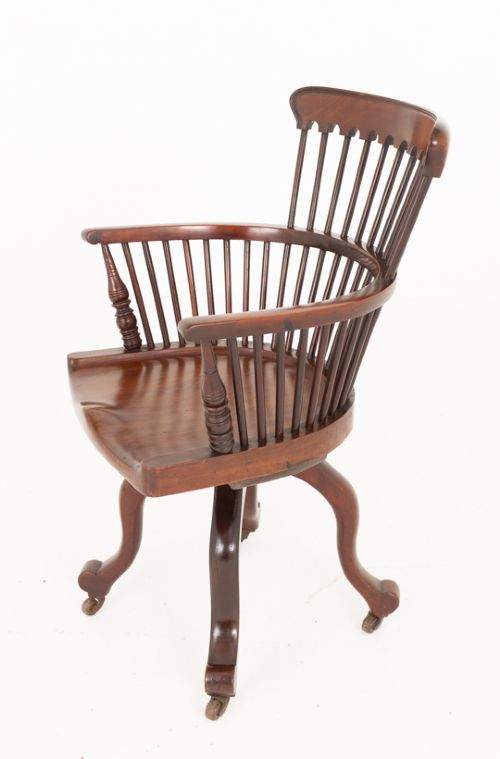
Makers drew on established vernacular designs, producing solid timber seating that adapted well to professional desks. Examples range from simple farmhouse iterations to sophisticated revolving office models fitted with swivel mechanisms.
Materials and construction
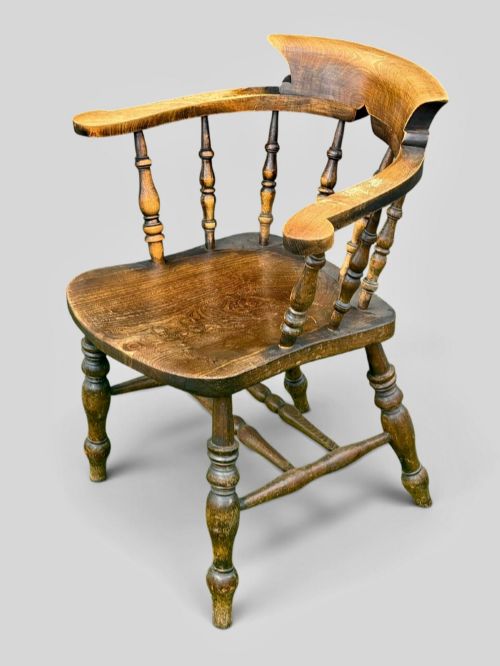
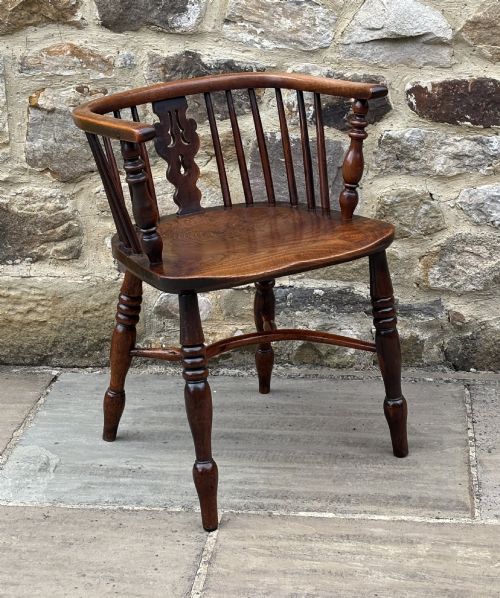
Construction relies heavily on native hardwoods such as elm, ash, beech, and oak, often paired for different structural demands. Seats were frequently carved from a single thick slab of solid elm to provide ergonomic contouring.
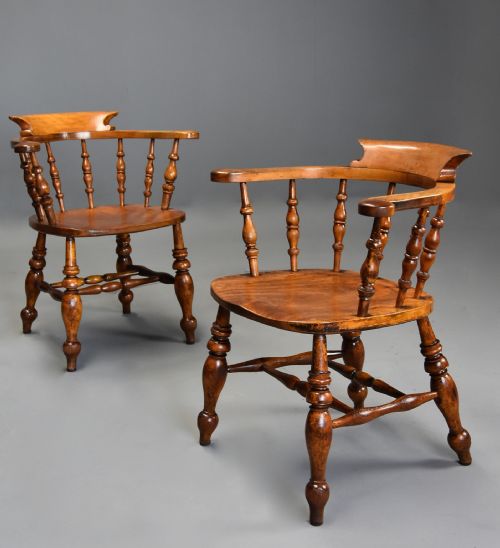
Makers utilised traditional joinery, including wedged tenons and steam-bent wooden components for the continuous armbows and spindle backs. Swivel iterations incorporated cast iron and brass revolving mechanisms to allow movement at the desk.
Several chairs double as smoke room companions, thoughtfully curved so a gentleman could lean back and ponder his pipe in peace.
Judging quality and character
Quality rests in the selection of timbers and the depth of the natural patina built up through decades of daily use. Heavy grain figuring in the elm seats and the crispness of the turned spindle work distinguish finer workshop output.
Structural integrity depends on the original tightness of the joints and the preservation of the carved seat saddle without excessive timber shrinkage or historic repairs.
The Wooden Captains Desk Chair Glossary
- Smoker's bow
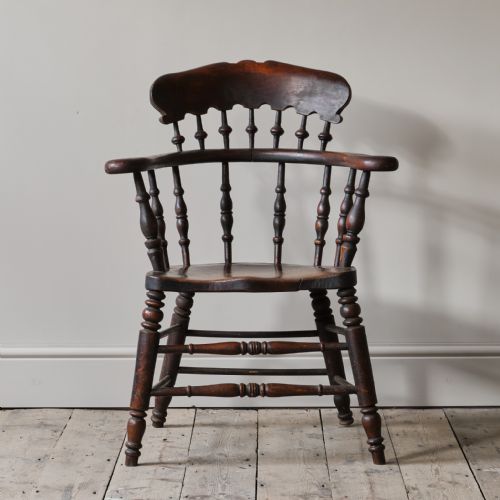
- A low-backed Windsor armchair featuring a continuous rounded backrest supported by turned spindles. This form serves as the direct precursor to many nineteenth-century desk chairs.
- Carver chair
- A traditional term for an armchair, often used in vernacular dining and desk sets to match simpler side chairs. They provide wider elbow room for seated tasks.
- Windsor chair
- A chair built with a solid wooden seat into which the legs and back spindles are separately bored and wedged. Regional variations include spindle backs and comb backs.
- Bentwood
- Wood that has been rendered pliable via steam and then pressed into curved shapes. This technique created the flowing frames seen on later Victorian and Edwardian office seating.
- Aesthetic Movement
- A late nineteenth-century design style emphasising visual and material qualities over heavy historic ornamentation. Walnut swivelling chairs from this period often display clean, considered lines.
Wooden Captains Desk Chair: Frequently Asked Questions
What is a captains desk chair?
A captains desk chair is a sturdy wooden armchair designed for office or study use, featuring a curved armrest bow.
They derive from traditional Windsor and smoker's bow forms, offering a comfortable seat for writing and administrative work.
How do I identify a Victorian captains chair?
Victorian examples typically date from the nineteenth century and utilise native timbers like elm, ash, and mahogany.
They often exhibit turned spindles, saddle seats, and occasionally revolving mechanical bases suited for office desks.
Were these chairs used at desks?
Many nineteenth-century and Edwardian wooden armchairs served practical roles in offices, studies, and ships.
Over time, their sturdy frames and ergonomic low backs made them natural partners for heavy writing desks.
What woods were used?
Makers relied heavily on domestic hardwoods, frequently pairing elm seats with ash or beech spindles.
More formal or later examples incorporate mahogany, walnut, and oak to match contemporary library and office interiors.