


Antique Office Desk Chair
An antique office desk chair brings heavy Victorian timber, Edwardian swivel mechanics and Georgian proportions to a modern workspace.
Antique Office Desk Chair
An antique office desk chair encompasses sturdy nineteenth-century captain's chairs, swivel armchairs and library seats designed for working at a ledger or writing table. These seating forms span the Georgian, Victorian and Edwardian periods, offering robust utility built for long hours at a desk.
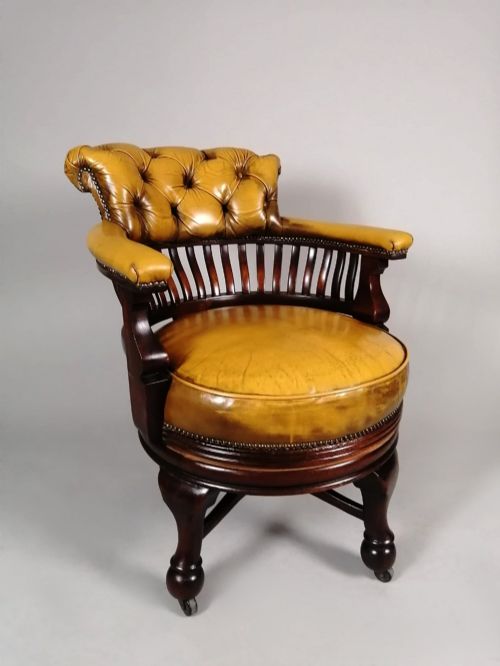
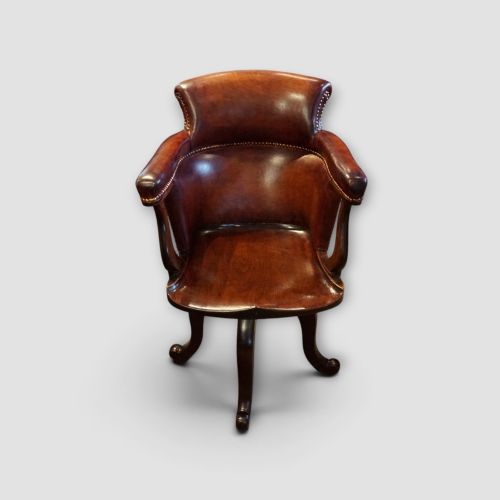
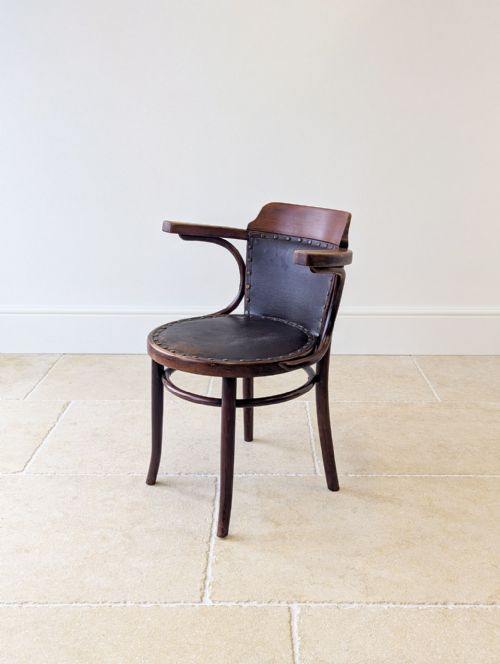
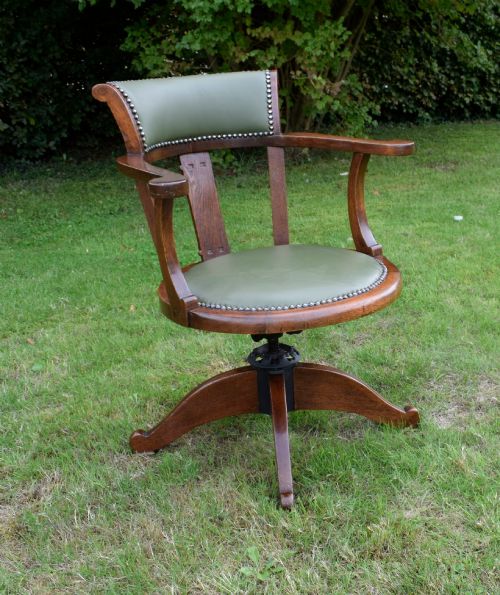
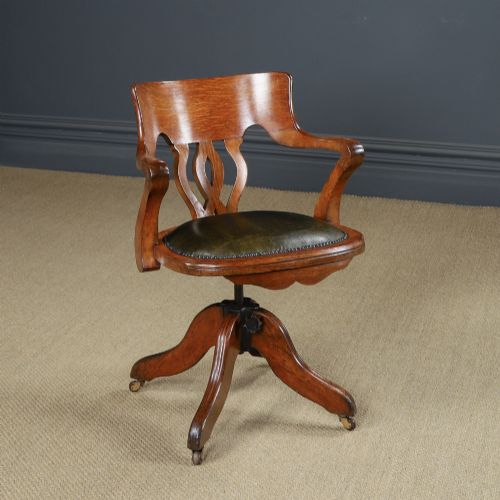
The most common version met on this page is the Victorian or Edwardian revolving armchair featuring a mahogany, oak or beech frame with a green leather pad. Turn-of-the-century models frequently incorporate iron swivel mechanisms and bentwood elements alongside traditional timber turning.
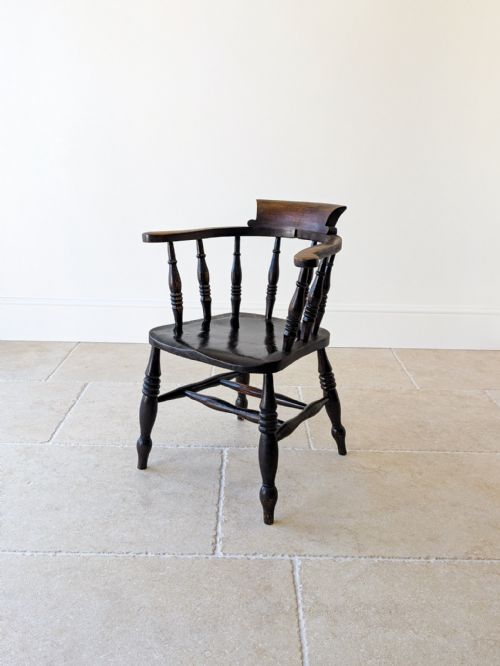
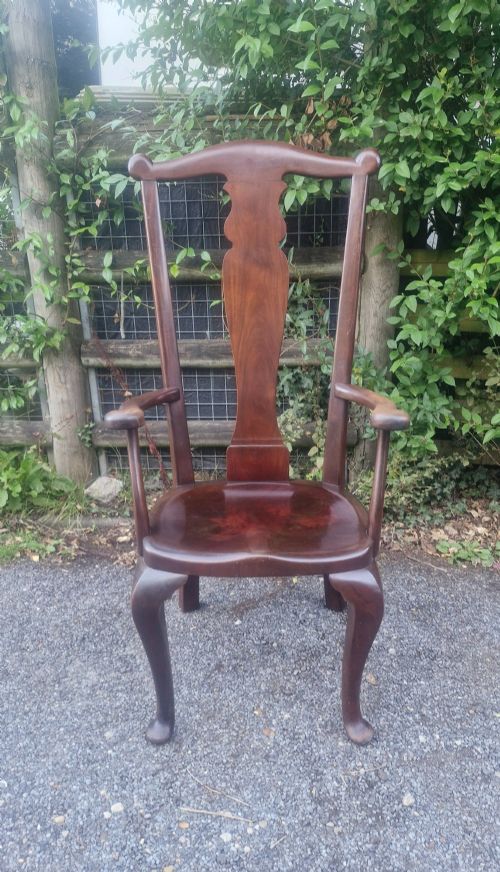
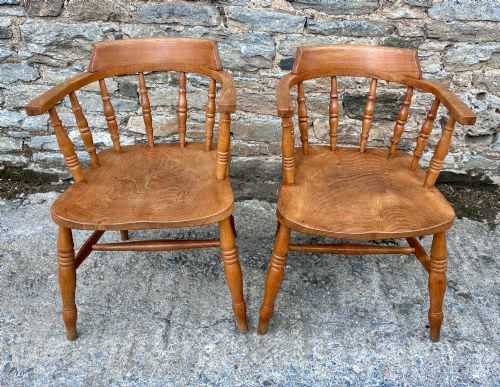
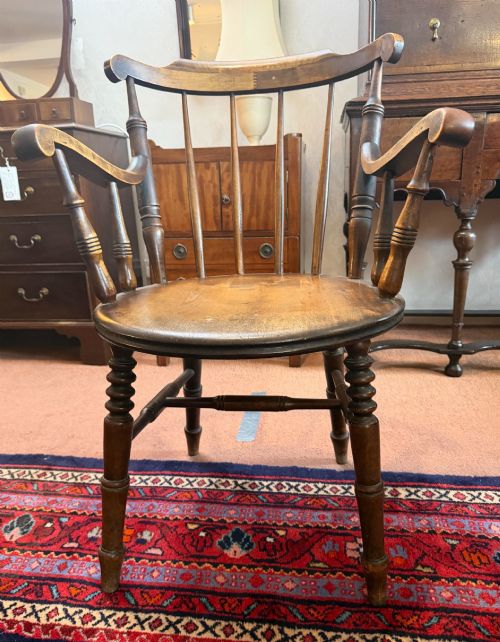
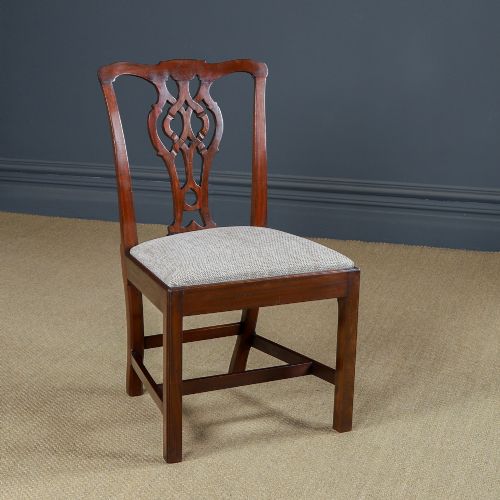
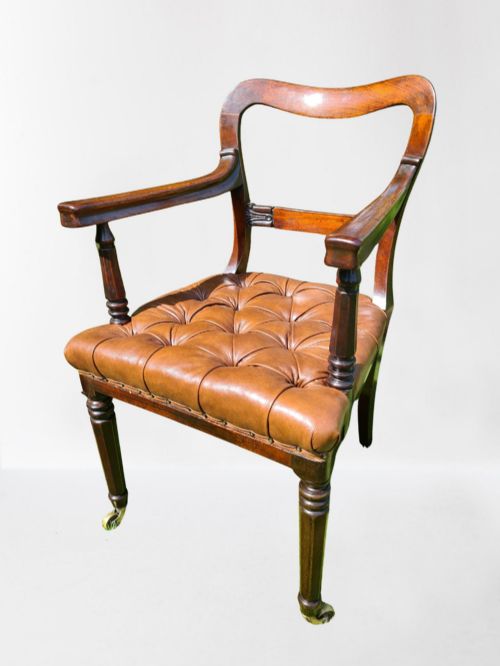
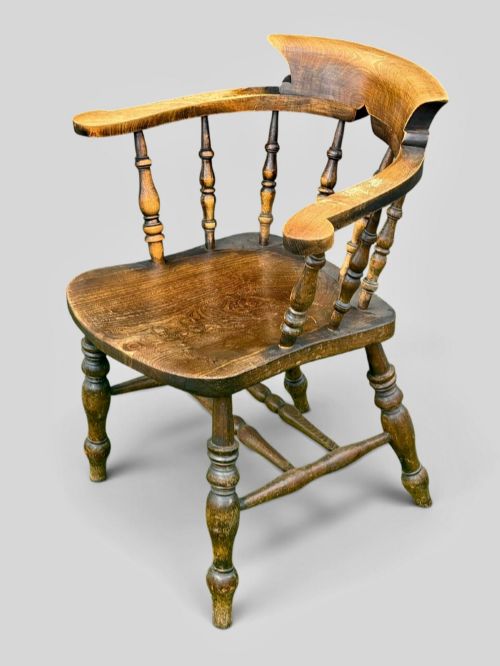
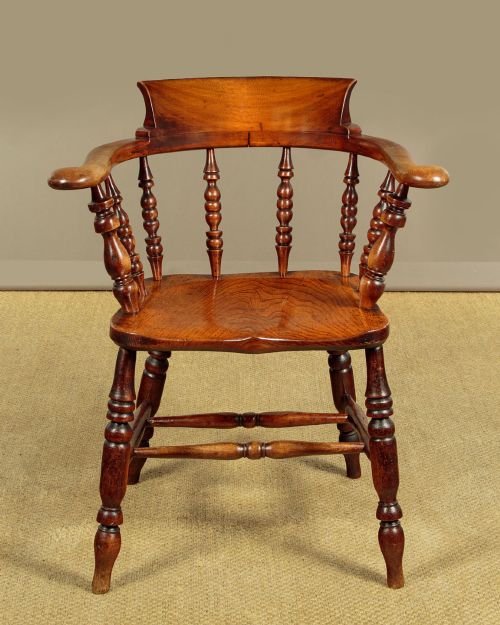
Beyond standard swivel chairs, the selection includes stationary library armchairs, elm smoker's bows and Chippendale style carvers adapted for office use. Each piece reflects the workplace demands of its era, balancing solid construction with supportive horseshoe backs and elbow rests.
Materials and construction methods
Makers built these frames using dense hardwoods like mahogany, oak, walnut, beech, elm and ash, selected for their structural resilience. Joinery relied on mortise and tenon joints, steam bending for curved rails, and solid turned spindles that could withstand constant movement and weight.
Upholstery typically employed durable leather inserts in green or crimson, secured with brass tacks around the seat perimeter. Swivel models utilised cast iron or brass mechanical spindles beneath the seat base to allow smooth rotation and height adjustment.
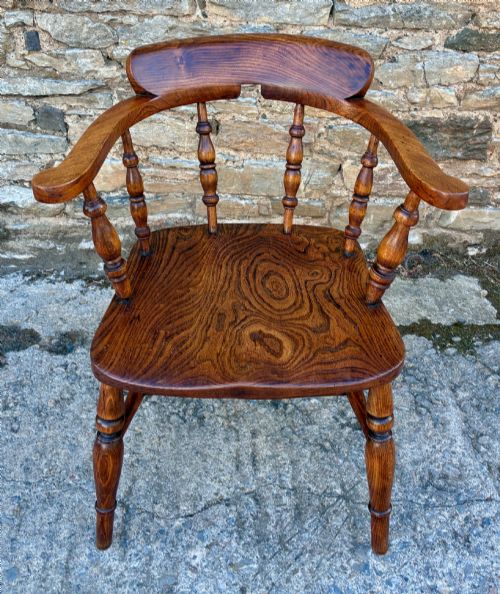
Several captain's chairs retain deep adze marks where nineteenth-century chair makers carved the elm seats by hand to fit sitting clerks.
Distinguishing quality across the range
Quality reveals itself in the weight of the timber, the depth of hand-carved details on the crest rail, and the complexity of the revolving mechanism. Superior examples feature figured mahogany or golden oak with integrated spindles and original cast-iron swivel actions that operate without wobble.
Construction integrity separates workshop pieces from utilitarian factory output, evident in pegged joints, thick saddle seats carved from single elm planks, and well-preserved leather tooling. Lower tiers often show simpler turned components and replaced hardware rather than period original fittings.
Mercier Freres·Bell Barn Furniture
The Antique Office Desk Chair Glossary
- Captain's chair
- A low-backed wooden armchair featuring a rounded spindle rail supported by vase-shaped turnings above a solid saddle seat. These seats originated in boardrooms and ships before entering domestic studies.
- Smoker's bow
- A sturdy low-backed Windsor-style armchair with a continuous bentwood rail and thick arm supports. They share ancestry with captain's chairs but usually lack the revolving swivel base.
- Revolving mechanism
- The iron or brass spindle assembly concealed beneath the seat that permits three-hundred-and-sixty-degree rotation. Edwardian models frequently paired this action with height-adjusting screws.
- Chippendale style
- A Georgian aesthetic characterised by interlaced pierced splats, carved cabriole legs and ball-and-claw feet. Desk chairs in this style adapt dining carver proportions for writing duties.
- Saddle seat
- A solid timber seat base scooped and carved into a concave contour to fit the human form. Elm and ash examples show deep adze marks from the maker's shaping.
Antique Office Desk Chair: Frequently Asked Questions
Can I use an antique office desk chair daily?
These hardwood chairs were engineered for continuous daily work in nineteenth-century offices and studies. Their solid timber frames and mechanical joints endure modern use remarkably well.
Buyers should verify that the swivel action and leg joints remain secure before placing the chair into daily service. Regular wax maintenance keeps the timber nourished under regular friction.
How do I distinguish Victorian from Edwardian models?
Victorian office seating tends to feature dark solid mahogany or walnut with deep hand-carved crest rails and heavy proportions. Leather upholstery on these pieces is frequently secured with individual brass tacks.
Edwardian examples often showcase golden oak or bentwood construction alongside lighter frames. The introduction of spring-loaded swivel mechanisms and standardised office production also defines the later period.
Are swivel desk chairs entirely original?
Many surviving swivel chairs retain their original cast-iron or brass spindles and four-legged iron spider bases. However, continuous workplace rotation meant components like washers and screws occasionally required workshop replacement.
Checking the patination across the metal and wood surfaces helps determine whether the base mechanism has remained with the seat since manufacture.
How do I care for the leather seat pad?
Period leather inserts benefit from gentle cleaning with a damp cloth followed by a neutral leather preservative wax. Avoid modern chemical solvents that strip the historical dye and dry out the hide.
Keeping the chair away from direct heat sources prevents the original leather from cracking over time.