


Wood Entryway Table
A wood entryway table establishes the character of a hall immediately, bringing practical surface space and period craftsmanship into the threshold.
Wood Entryway Table
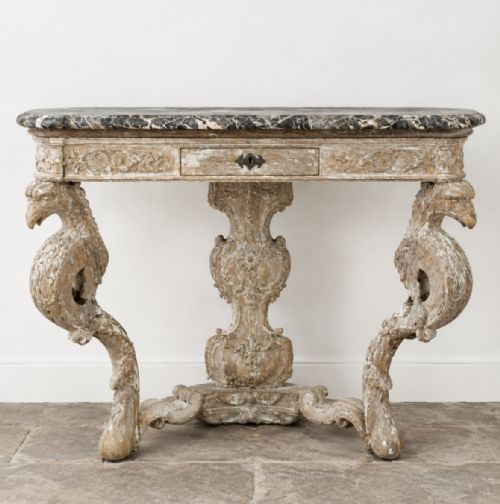
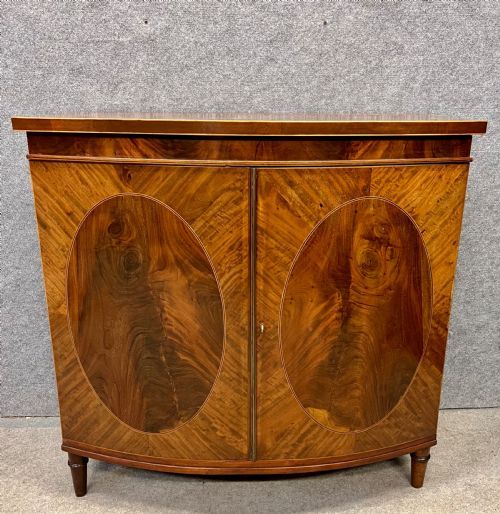
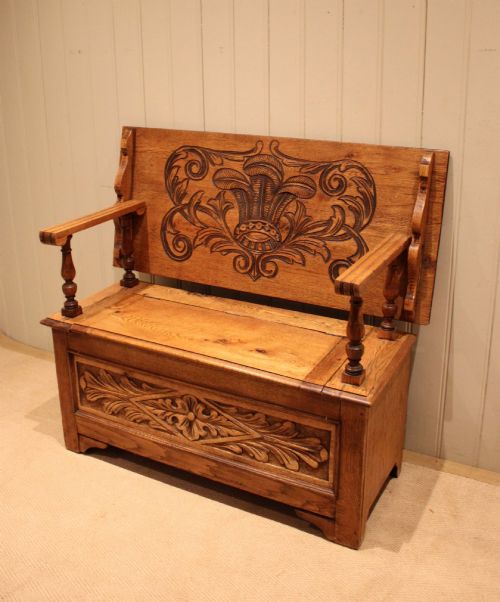
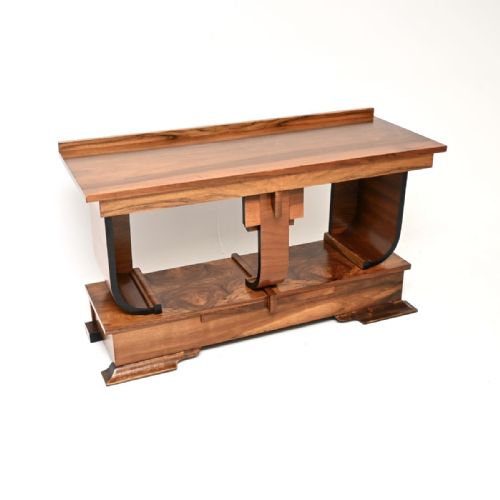
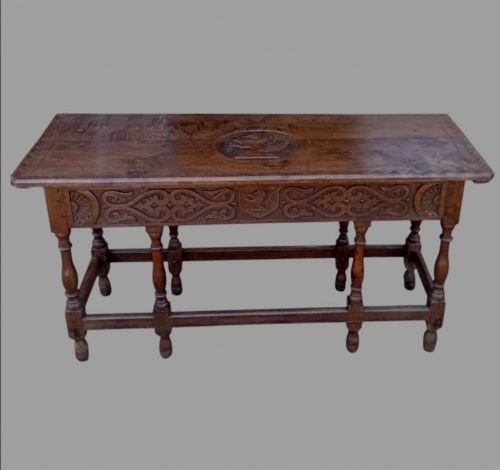
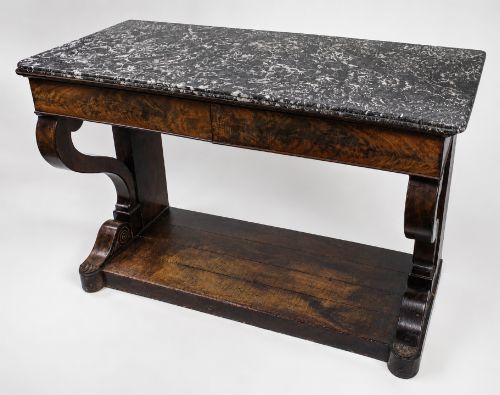
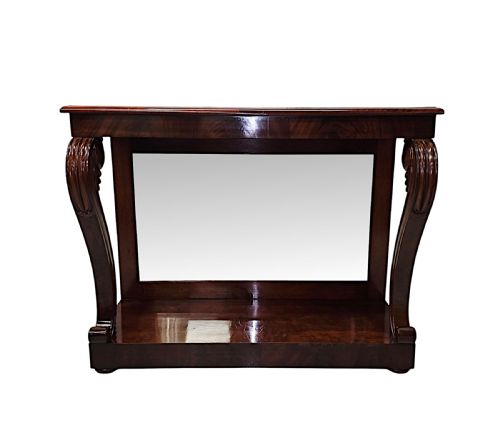
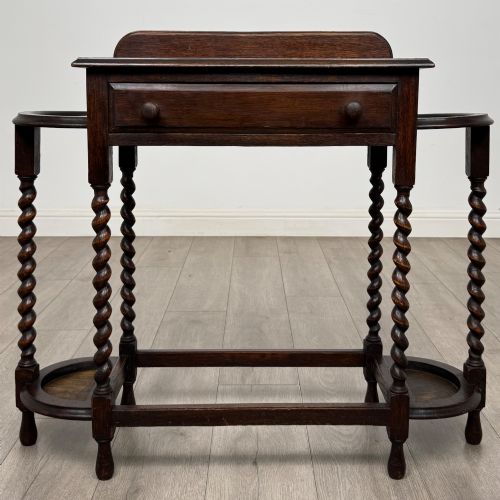
A wood entryway table encompasses console tables, hall tables, cabinets, and benches designed to fit narrow spaces near the front door. Buyers encounter pieces ranging from simple oak examples to elaborate console tables with marble tops.
The selection spans numerous periods, including 18th century, Regency, Victorian, and Edwardian eras. Mahogany and oak dominate the forms, frequently accompanied by walnut, rosewood, and painted finishes.
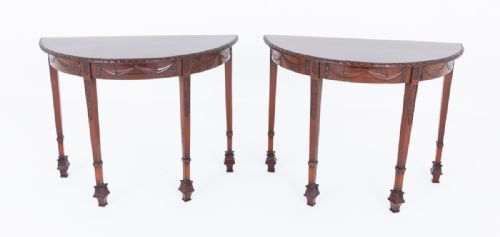
Origin points vary widely across English, French, Italian, and Chinese workshops. Pieces take shapes such as demi-lune, D-shaped, serpentine, and rectangular profiles.
Materials and construction methods
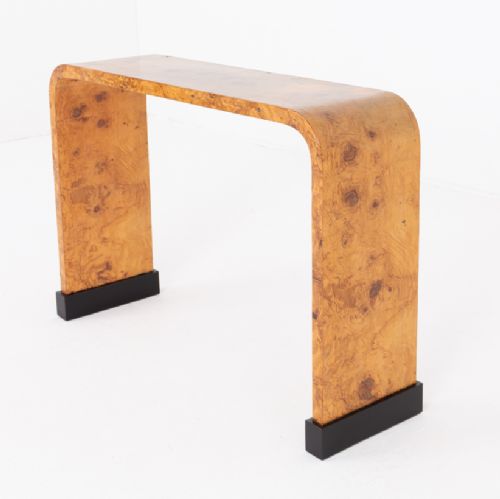
Cabinetmakers utilised solid timbers and veneers like mahogany, oak, walnut, and burr birch, often mounting them on carved or parcel-gilt frames. Heavy stone elements such as marble or fossil marble tops appear frequently on continental console tables.
Surface ornamentation relies on hand carving, boxwood inlay, and painted decoration. Giltwood frames employ traditional gilding techniques over carved wood substrates.
Lion's paw supports stand ready to hold up grand Italian console tables.
Distinctions in construction and design
Superior examples demonstrate crispness in hand-carved details and precise joinery that maintains structural integrity over centuries. The choice of timber grain, particularly in figured walnut or mahogany, elevates the visual depth of the piece.
Integration of secondary materials dictates overall execution, where fitted marble slabs and fire-gilt mounts align seamlessly with the wooden structure beneath.
Gillingtons of Dublin
The Wood Entryway Table Glossary
- Console table
- A table designed to stand against a wall, traditionally supported by brackets or console legs rather than four standard posts. These tables form a primary category for hallway placement.
- Demi-lune
- A half-moon shape characteristic of tables built to sit flush against a wall in tight spaces. This profile appears frequently in satinwood and mahogany pieces.
- Serpentine
- An undulating front edge that curves outward in the centre and inward at the sides, or vice versa. This contour adds considerable visual movement to Victorian and French tables.
- Parcel gilt
- Portions of a wooden or painted surface highlighted with gold leaf. It draws the eye to specific carved motifs.
- Altar table
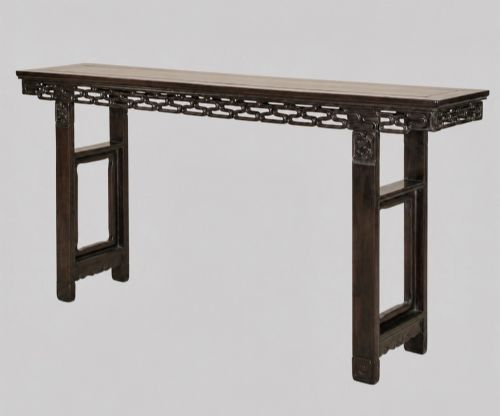
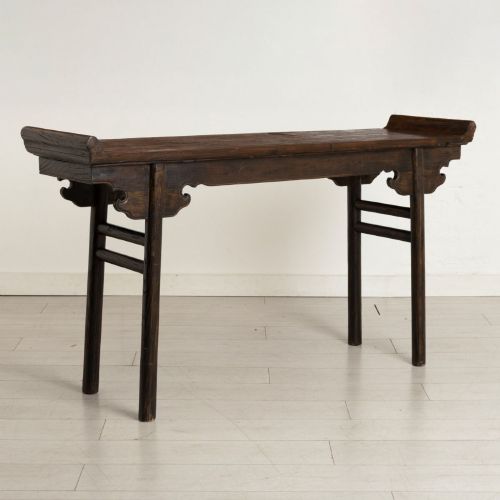
- A traditional Chinese form adapted for domestic use as a narrow side or hall table. These feature clean structural lines in hardwood.
Wood Entryway Table: Frequently Asked Questions
Where should a wood entryway table go?
These tables belong in hallways, corridors, and entrance foyers where narrow depths allow passage while providing a surface for daily items.
Matching the scale of the table to the proportions of the hallway ensures the entryway remains functional and visually balanced.
How do I identify a Victorian hall table?
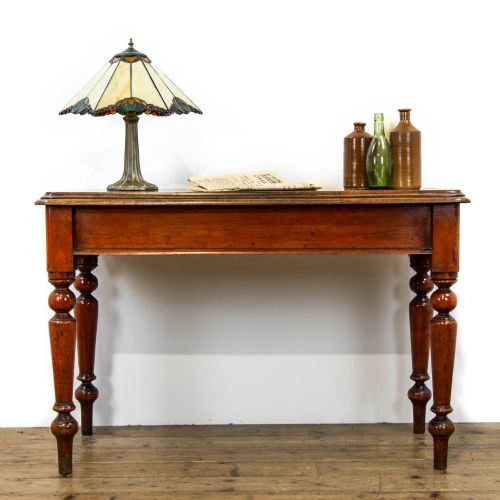
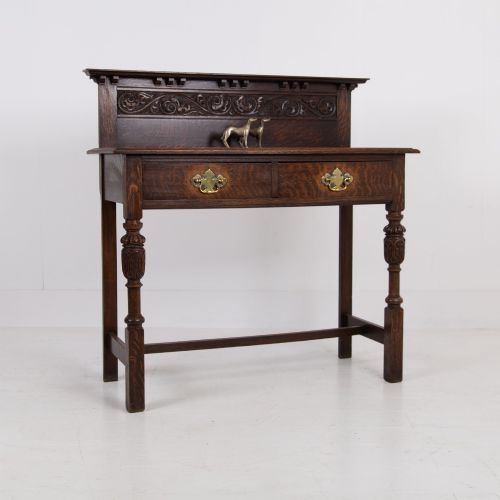
Victorian examples frequently utilise solid mahogany or oak with robust turnings and deep mouldings. They often incorporate drawers or lower shelves for practical storage.
Stylistic cues draw heavily on earlier Georgian or Jacobean revivals, executed with the heavier proportions typical of the nineteenth century.
What is the difference between a console and a hall table?
Console tables traditionally required wall attachment or specific console brackets for support, while standard hall tables stood independently on four legs. Over time, these definitions overlap considerably in modern descriptions.
Both serve the identical domestic purpose of furnishing an entrance space.
Can I use a marble top table in an entryway?
Marble topped tables provide a highly durable, cool surface that resists moisture and heavy use. French and Italian examples frequently utilise this combination for practical elegance.
Care involves regular wiping and avoiding acidic spills that might etch the stone surface.