



Curved Wall Table
These curved wall table pieces are console tables shaped to fit tight against a room, built to hold ornaments and lamps in hallways and drawing rooms.

Curved Wall Table
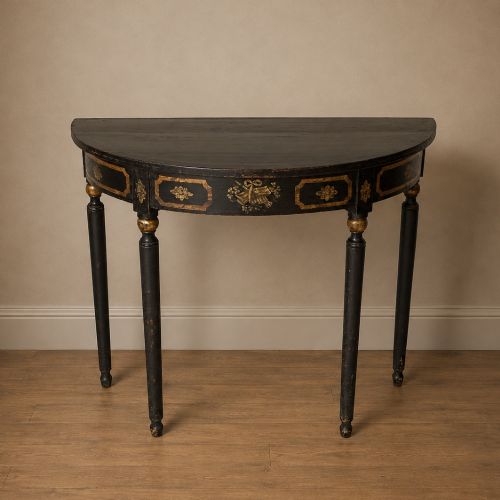
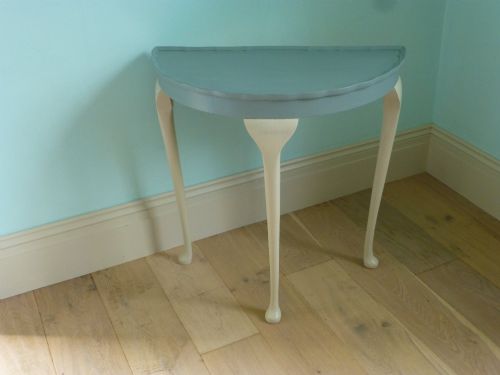
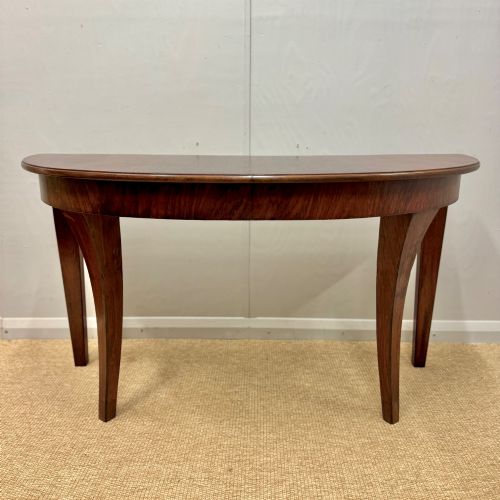
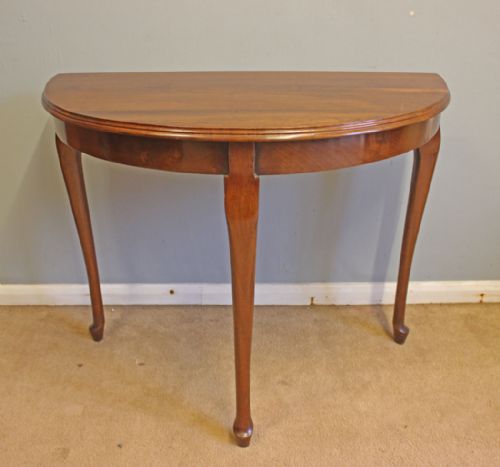
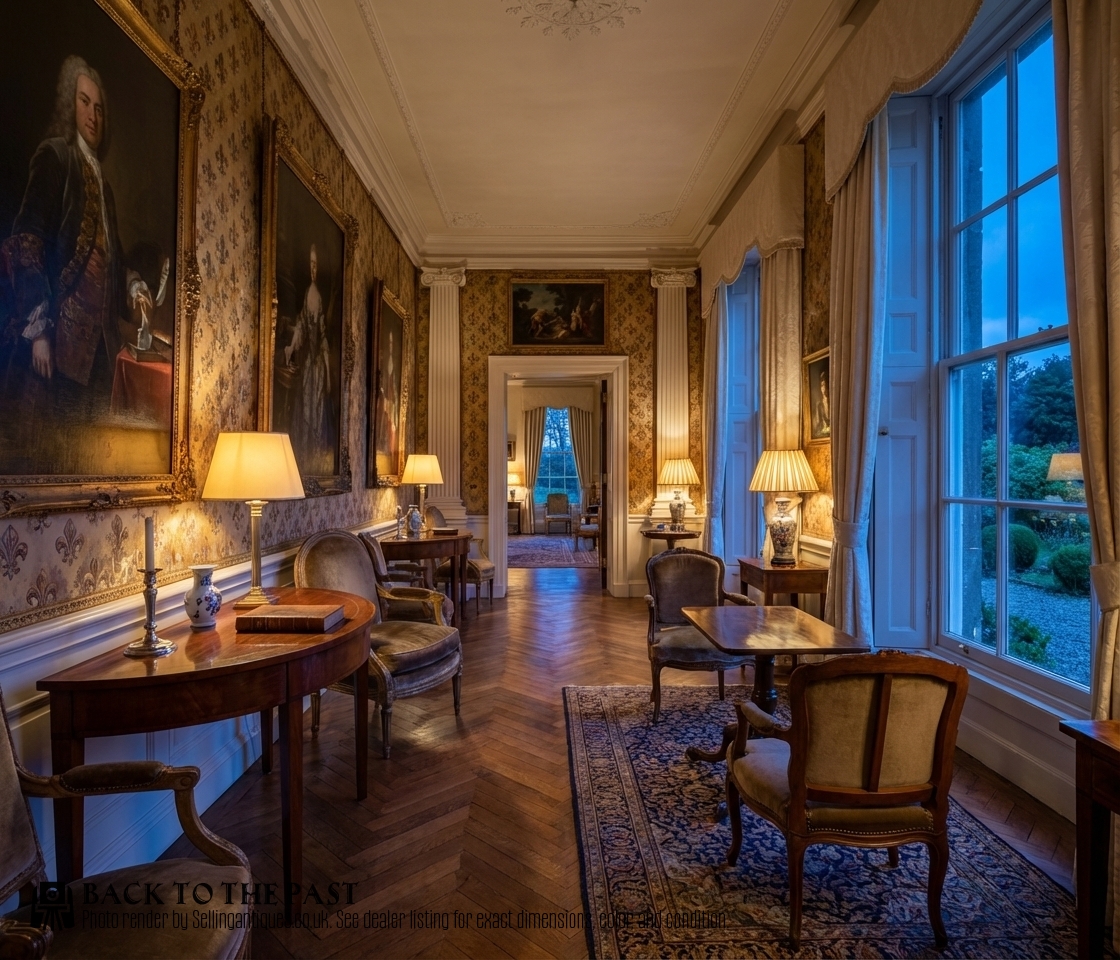
A curved wall table is designed to sit flat against a vertical surface while showing a rounded or serpentine front. The listings here comprise console tables and side tables shaped in demi-lune, serpentine, and concave forms.
Makers shaped these pieces from timber to follow neoclassical or revival outlines, creating architectural furniture for period interiors. Walnut, mahogany, satinwood, and painted wood dominate the selection.
Originating across multiple centuries, these tables span Georgian and Regency designs through to early twentieth-century interpretations. The most common versions encountered here date from the nineteenth and early twentieth centuries.
Materials and construction methods
Cabinetmakers constructed these tables using solid timbers and decorative veneers such as walnut, burr walnut, mahogany, and satinwood. Tops often feature figured grain patterns selected to display the natural beauty of the wood.
Surface decoration includes black paint, parcel gilt, and hand-painted details applied over timber carcasses. Selected pieces incorporate heavy marble slabs inset into the wooden framework for durability and display.
Some tablescurve inward instead of out, just to keep hallways interesting.
Assessing the grade of a curved wall table
Quality rests in the precision of the curved joinery and the selection of timber veneers. Superior examples display balanced grain orientation across the semi-circular tops and clean execution on carved or turned supports.
The sophistication of the surface finish separates standard items from finer work. Hand-applied gilding, refined paintwork, and original marble tops elevate the visual weight of the piece.
Maple and Co
The Curved Wall Table Glossary
- Demi-lune
- Half-moon shape. This semi-circular profile allows the table to stand flat against a wall while projecting outward into the room.
- Serpentine
- A line that curves outward in the centre and inward at the sides. It creates a flowing, undulating front edge on the table top.
- Console table
- A table supported by wall brackets or console legs. These pieces are intended to stand against a wall rather than free in the room.
- Parcel gilt
- Partially gilded. This technique applies thin gold leaf to specific carved details or mouldings to contrast with painted or dark wood surfaces.
Curved Wall Table: Frequently Asked Questions
Where should a curved wall table go?
These tables suit narrow hallways, entrance passages, and reception rooms where floor space is limited. Their flat back allows them to anchor securely against a wall.
They provide a practical surface for lamps, mirrors, and decorative objects without blocking movement through the room.
How do I spot a Georgian period table?
Georgian pieces typically exhibit restrained classical proportions and timber construction such as mahogany or satinwood. Look for understated carving and traditional joinery methods appropriate to the eighteenth century.
Compare the leg structure and edge moulding against documented examples from the same decade to verify the period.
What is a demi-lune shape?
Demi-lune translates as half-moon, describing a flat straight edge that places flush against the wall and a curved front. This geometry maximises usable top space while minimising the furniture footprint.
It is the most frequent profile found among antique console tables designed for domestic interiors.
Can these tables hold heavy items?
Console tables rely on their wall proximity and leg construction for stability. Pieces featuring heavy marble tops provide a solid weight for display.
Verify the sturdiness of the legs and the wall fixing method before placing substantial decorative objects on the surface.