


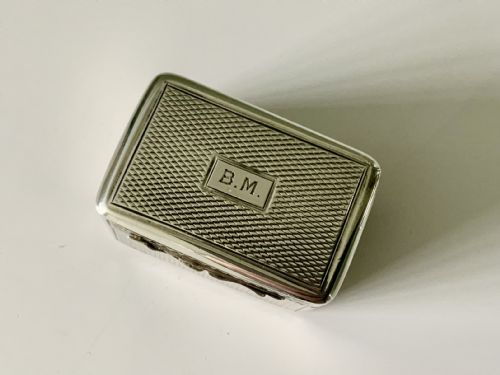

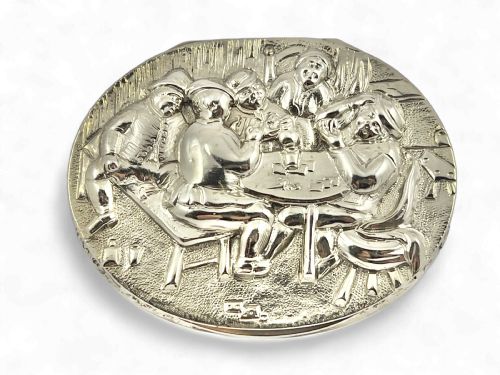


William IV Silver Box
A william iv silver box is a pocket or table receptacle for snuff, nuts or trinkets, prized for its dense chased decoration and solid weight.
William IV silver box forms
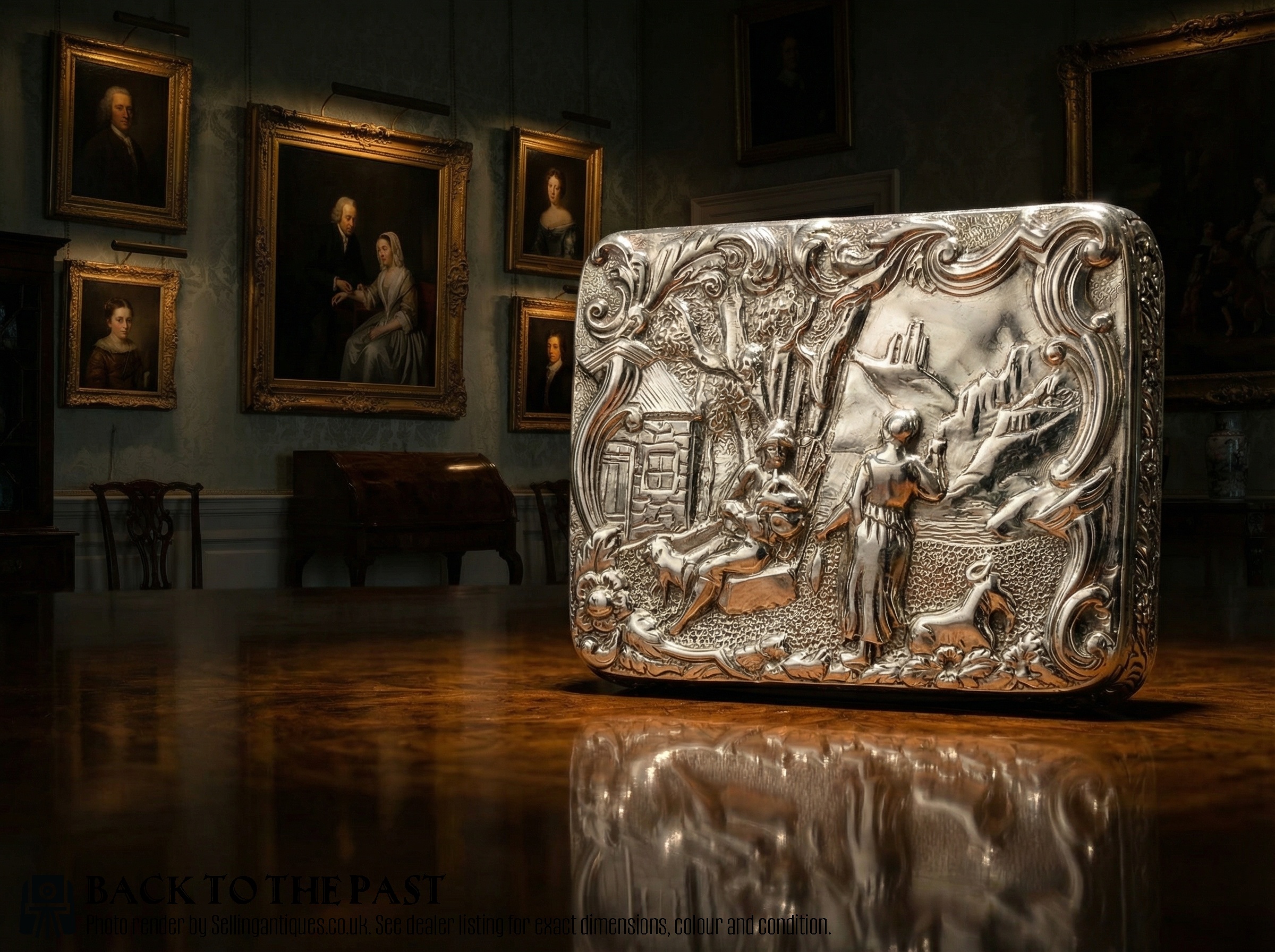
A william iv silver box encompasses pocket and table receptacles designed primarily for snuff, alongside specialised items such as nutmeg graters and ring boxes. The evidence shows these pieces span the Regency, Georgian and nineteenth-century periods, capturing a distinct era of British metalwork.
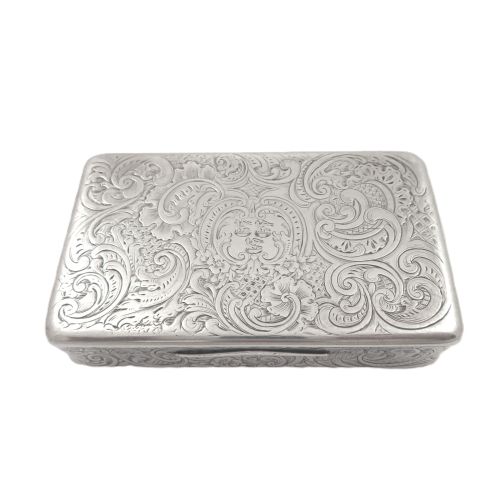
Snuff boxes dominate the selection, appearing in various forms including rectangular pocket versions, heavy table pieces, and specific designs like castle tops and book styles. These containers reflect the social habits of the period, executed in solid sterling silver or silver gilt.
Regional variations appear across the records, with makers working in Birmingham, London, Edinburgh and Scotland. Collectors encounter both plain polished surfaces and elaborately chased borders or thistle engravings.
Materials and construction
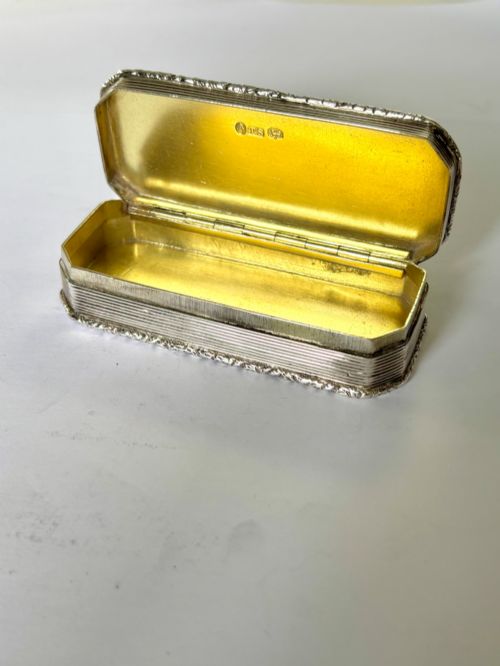
These items are constructed from sterling silver, occasionally finished with silver gilt interiors or highlights. Certain examples incorporate natural stones such as agate cabochons into the lid.
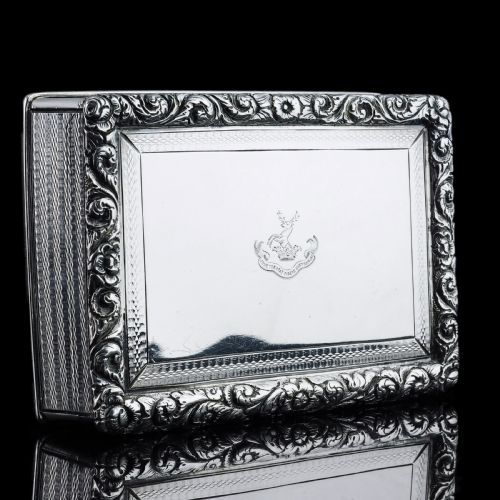
Makers utilised techniques including floral chasing, engine-turning, and high-relief casting for architectural castle tops. Hinges and bezels were closely fitted to ensure secure closures for dry goods.
Retail Price Guide 2026
Typical UK retail prices for william iv silver box, calculated from the Sellingantiques database of over a million retail prices indexed since 2003. This retail price guide relies exclusively on Sellingantiques data; no external sources or auction records are used, so the figures do not describe the wider market.
Recorded pieces span the Regency, Georgian, and 19th Century periods, utilising sterling silver and silver gilt with occasional agate stones.
Quality variations in silver boxes
The distinction between standard items and superior pieces rests on the depth and crispness of the chased ornament. Finer examples feature intricate architectural scenes or complex floral borders that remain sharp under magnification.
Weight and structural substance also set examples apart, with heavier table snuff boxes offering a more substantial feel in the hand. The integration of specialty materials like inset agate cabochons elevates a piece above standard plain silver designs.
Thomas Shaw·Joseph Willmore·John Caw·Edward Smith·Nathaniel Mills·Taylor And Perry·Edward Edwards·William Comyns
The William IV Silver Box Glossary
- Silver gilt
- Sterling silver that has been coated with a thin layer of gold, commonly applied to the interior of snuff boxes to prevent corrosion from tobacco.
- Castle top
- A specialised box lid featuring a high-relief architectural engraving of a historic building or Scottish seat such as Abbotsford House.
- Agate cabochon
- A polished, convex-cut semi-precious stone set flush into the lid of a container as an ornamental focal point.
- Nutmeg grater
- A small cylindrical or box-shaped culinary implement designed to grate whole spices at the dining table, executed in silver during this era.
- Chasing
- A metalworking technique where designs are hammered into the front surface of the silver from the exterior to push the metal inward and create relief.
Frequently Asked Questions
How were these silver boxes used?
These containers served primarily to hold dry snuff for personal consumption during social gatherings. Pocket versions accompanied gentlemen in waistcoats, while larger table boxes sat permanently in reception rooms.
Other variations housed nutmeg for grating into beverages, or stored rings and small trinkets. Their robust construction allowed them to withstand daily handling and transport.
Are all these boxes made of solid silver?
The recorded pieces consist of sterling silver or silver gilt, which is solid silver with a gold wash applied to the interior. This prevented the acidic nature of tobacco from tarnishing the metal surface.
Some examples also incorporate natural stones like agate set into the lid. Hallmarks stamped on the pieces confirm their metal standard and place of origin.
How do I identify the maker?
Makers marked their work with registered punch stamps showing their initials or full names alongside assay office symbols and date letters. These hallmarks provide definitive proof of the silversmith and the year of production.
Prominent silversmiths working in Birmingham and London stamped these marks on the inner rims or bases. Reference guides assist in matching these stamps to recorded workshops.