





White Tin Glaze Dishes
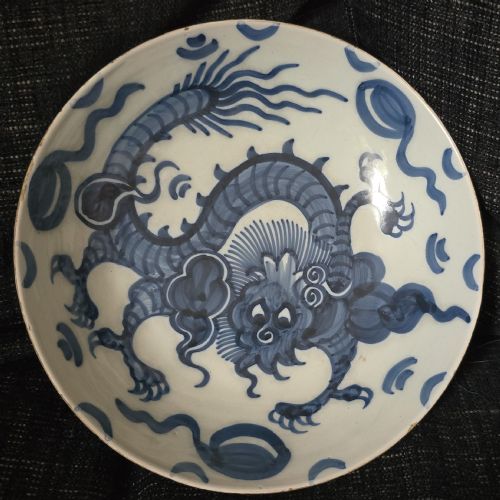
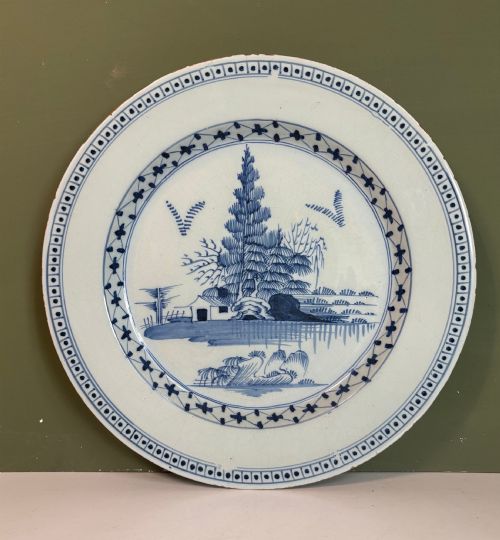
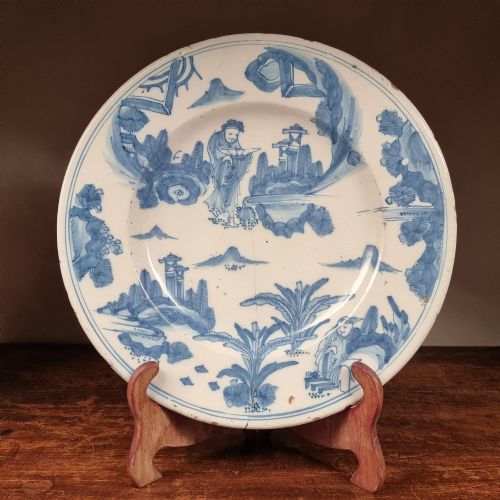
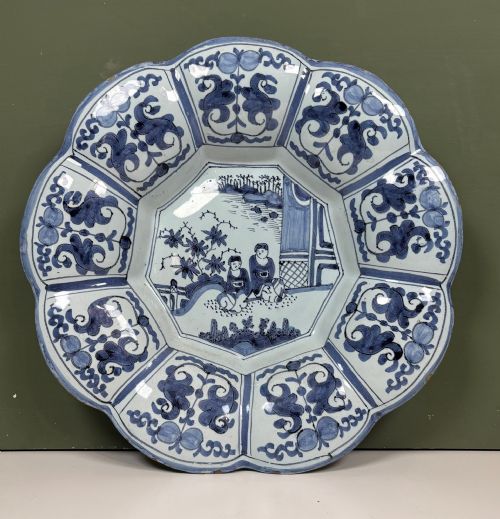
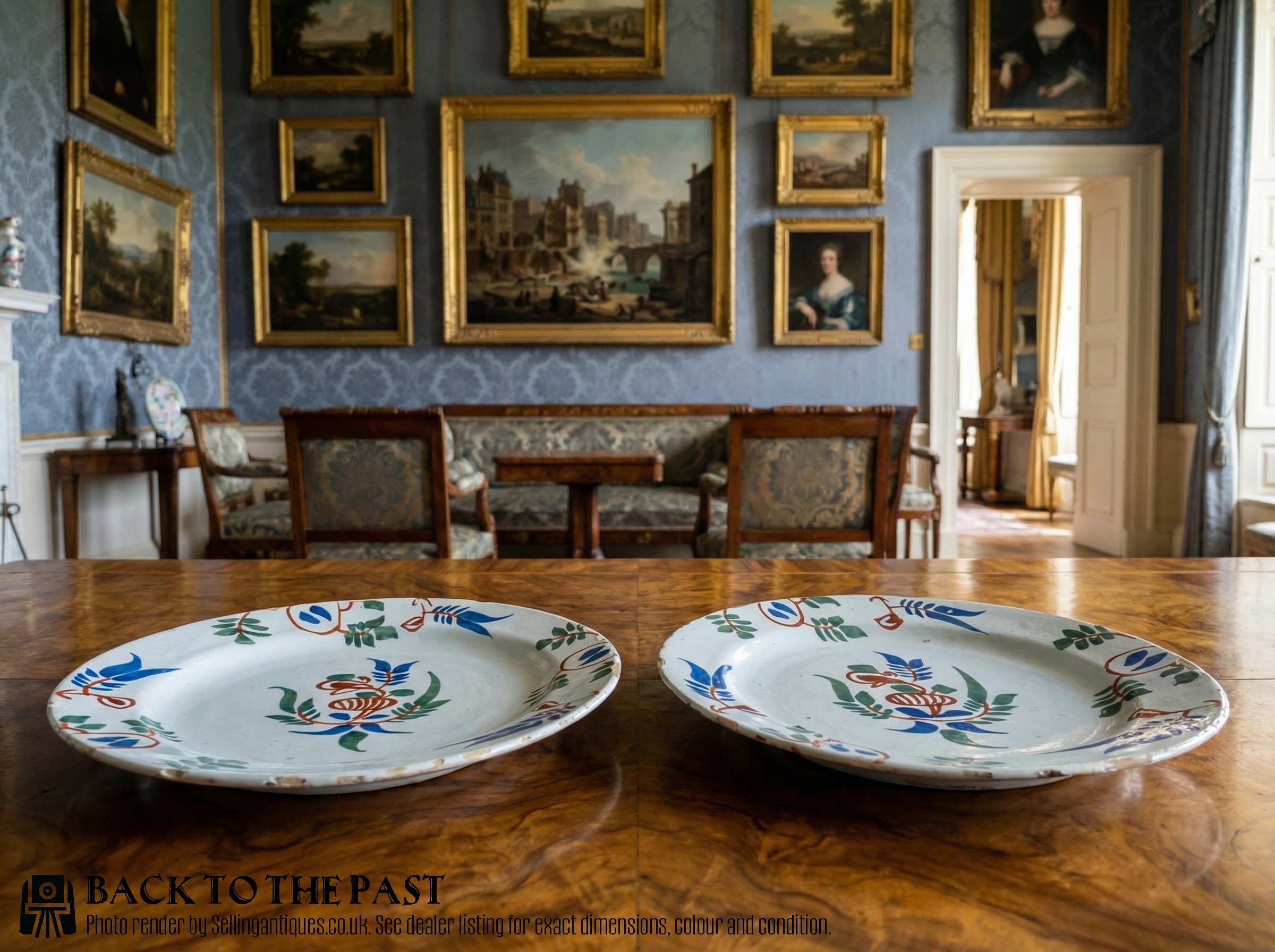
White tin glaze dishes are historic earthenware plates and bowls finished with a distinctive opaque white surface, prized for their hand-painted blue, manganese, and polychrome designs.
White Tin Glaze Dishes
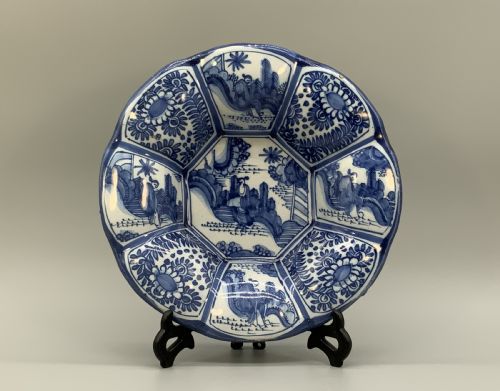
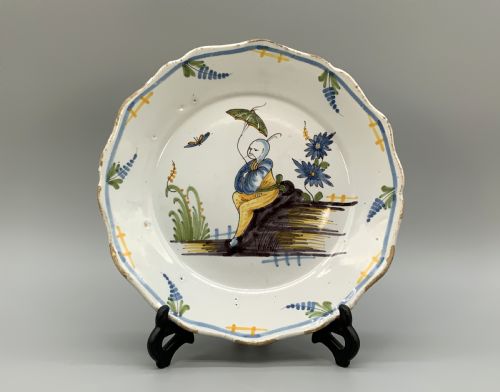
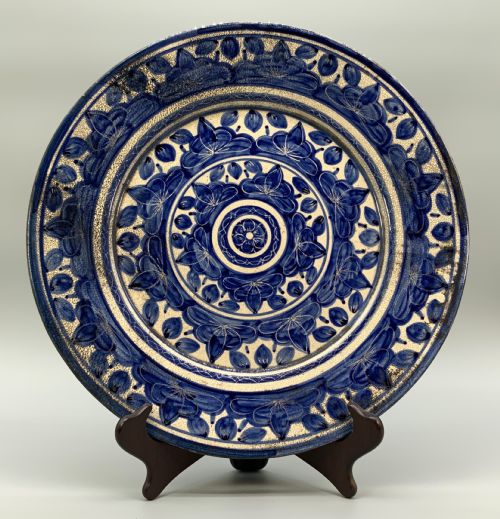
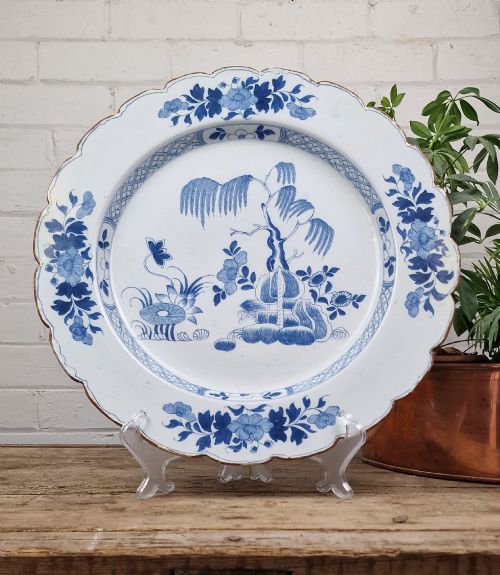
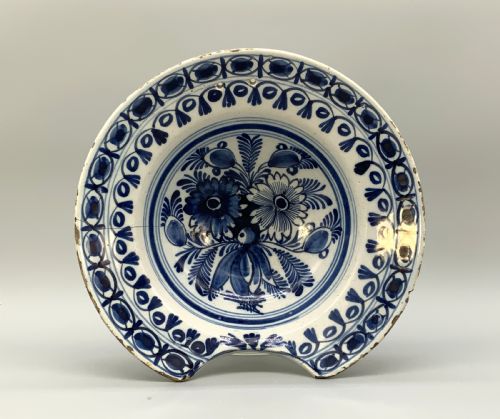
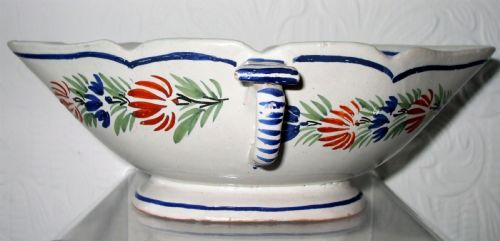
White tin glaze dishes comprise a diverse range of historic tableware and display vessels, including large chargers, shallow bowls, plates, barber's bowls, salt cellars, and sauceboats. Most examples found here originate from the seventeenth and eighteenth centuries, representing major European centres of production.
Formats vary from domestic plates intended for daily dining to large decorative chargers made for display on walls or dressers. Specific historical forms like barber's bowls and sweetmeat dishes also appear among the selections.
Materials and construction
Potters formed these pieces using local earthenware clay bodies, which were shaped on a wheel or pressed into moulds to create plates, chargers, and specialised vessels like sauceboats. This earthenware base remained porous and reddish or buff in tone until coated.
The signature opaque white surface relies on a glaze containing tin oxide applied over the fired clay body. Artisans then painted cobalt pigment, manganese, and other mineral oxides directly onto this absorbent unfired glaze before a final high-temperature kiln firing.
White Tin Glaze Dishes Retail Price Guide 2026
Typical asking prices for white tin glaze dishes among the pieces listed under this phrase on Sellingantiques today, from the lower quarter to the upper quarter. They describe what is for sale here now, not the wider market.
Materials recorded across the inventory include tin-glazed earthenware, cobalt pigment, and ceramic bodies.
Assessing quality
Quality rests primarily upon the skill and confidence of the brushwork applied to the tin glaze surface. Fluid, expressive painting in cobalt or polychrome pigments elevates a piece above stiff or formulaic decoration.
The stability and brilliance of the tin-glazed surface itself distinguish finer examples, alongside the crispness of the underlying earthenware moulding. Well-potted items with minimal kiln distortion and even glaze coverage represent the better end of production.
Quimper French Faience·Desvres French Faience·Gien faience pottery·Dorotheenthal Germany
The White Tin Glaze Dishes Glossary
- Tin Glaze
- A ceramic glaze made opaque by the addition of tin oxide, providing a white background for painted decoration. This technique forms the defining surface of delftware and faience.
- Charger
- A large decorative plate intended for display on a wall or sideboard rather than for service at the table. These substantial vessels often display the most ambitious painted scenes.
- Chinoiserie
- European artistic styles reflecting Chinese motifs and landscapes, frequently adapted by tin-glazed earthenware painters. These designs appear widely on seventeenth and eighteenth-century plates.
- Polychrome
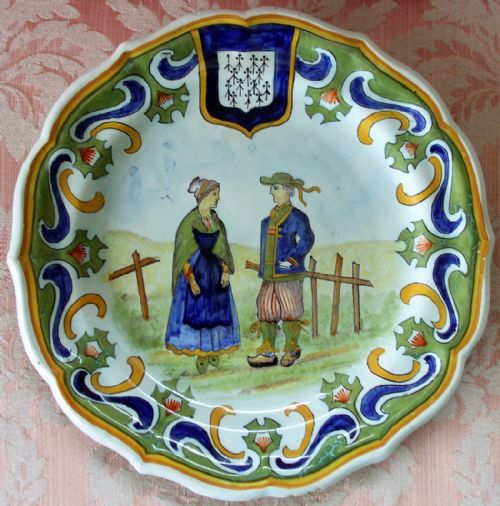
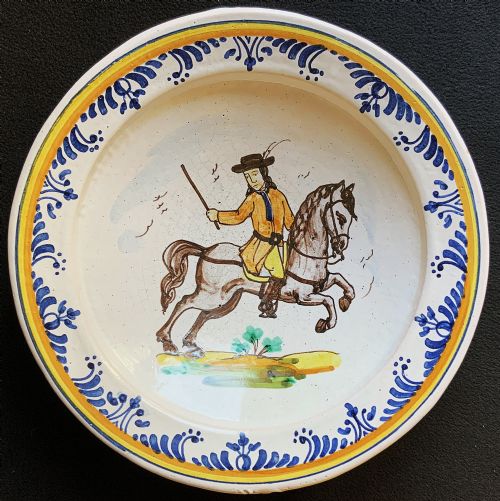
- Decoration employing multiple colours rather than a single pigment like cobalt blue. On these earthenwares, polychrome palettes typically incorporate yellow, green, and manganese.
- Faience
- The continental European term for tin-glazed earthenware, encompassing French, Spanish, and other regional traditions. It mirrors the English term delftware in construction and appearance.
White Tin Glaze Dishes: Frequently Asked Questions
What is white tin glaze pottery?
White tin glaze pottery refers to earthenware coated in a white glaze made opaque with tin oxide, serving as a canvas for painted pigments.
Potters across Europe utilised this technique from the seventeenth century onward to imitate prized Chinese porcelain.
How were these dishes used historically?
While some plates served food at elite tables, larger chargers were strictly ornamental items displayed on sideboards and walls.
Specialist vessels such as barber's bowls and sauceboats fulfilled specific domestic and grooming functions within the household.
How do I care for antique earthenware?
Keep these historic ceramic pieces away from direct sunlight and dramatic fluctuations in temperature or humidity.
Wash them by hand using mild soap when necessary, avoiding dishwashers and abrasive scrubbing materials entirely.
How do I distinguish English and Dutch delftware?
English and Dutch pieces share similar tin-glaze and cobalt painting techniques developed during the seventeenth and eighteenth centuries.
Distinctions often rely on subtle differences in clay bodies, glaze tones, and regional decorative motifs recorded in the specific item origins.