
White Porcelain Cup
When you search for a white porcelain cup, you seek a ceramic vessel shaped by centuries of tea and coffee drinking.
White Porcelain Cup
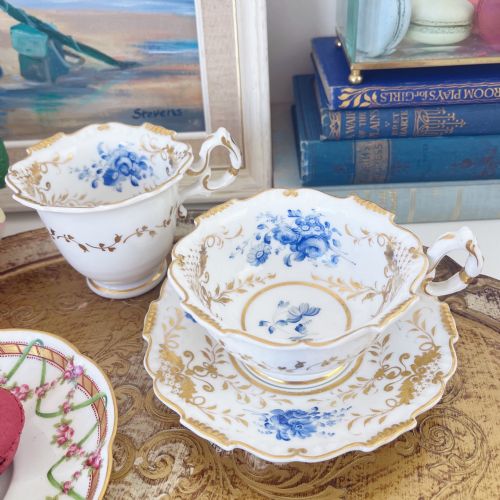
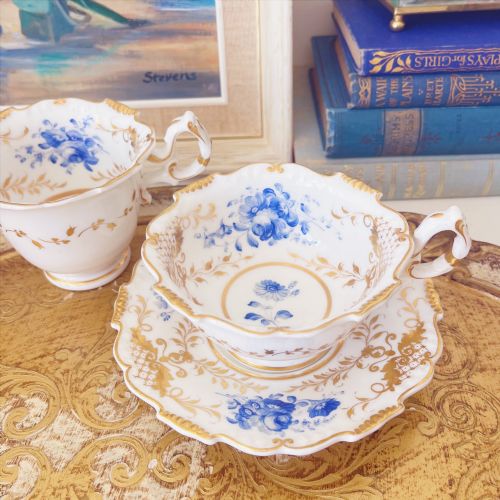
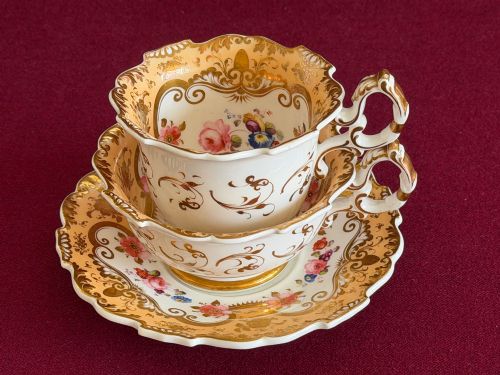
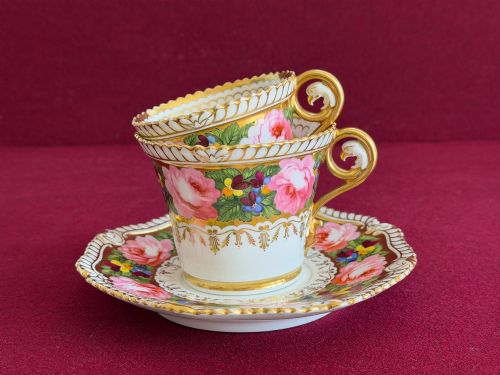
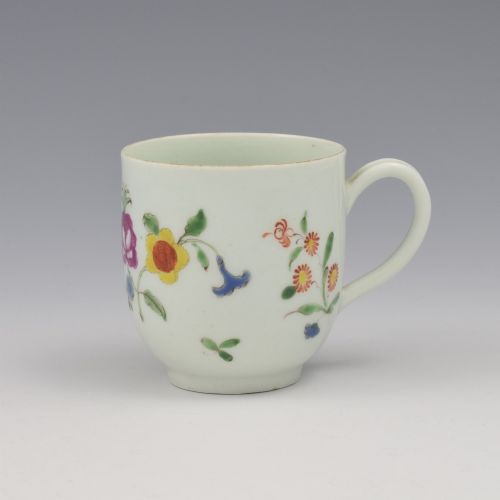
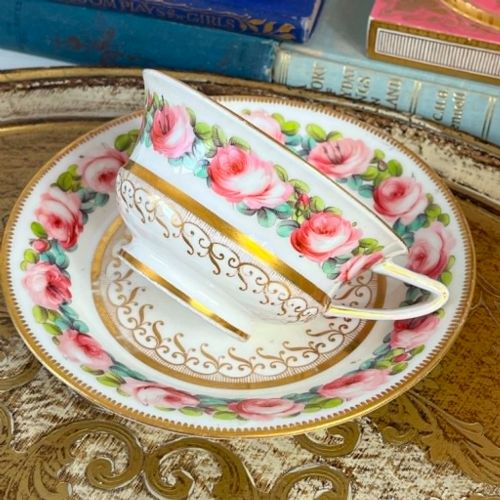
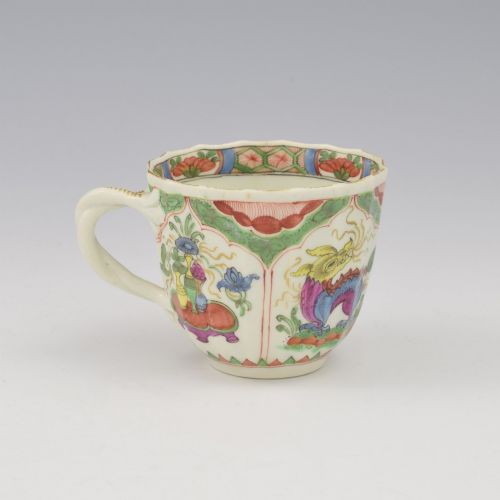
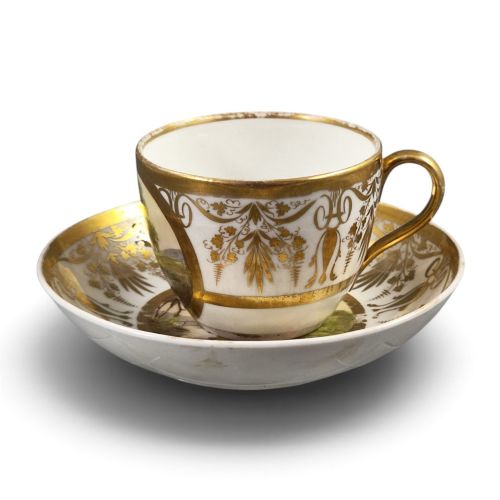
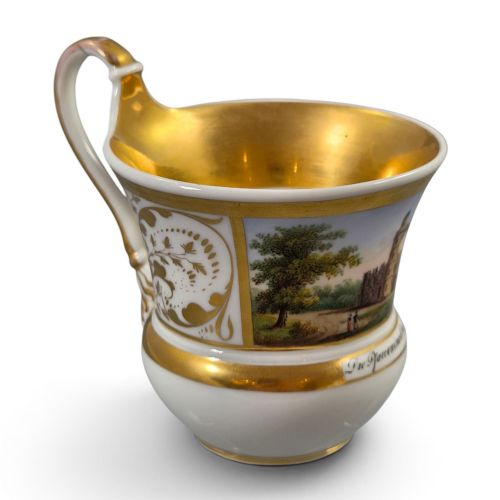
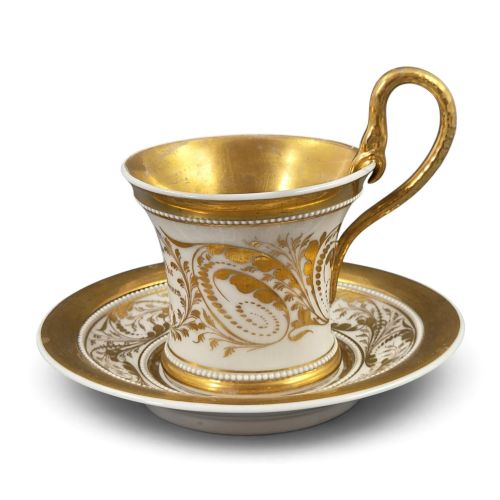
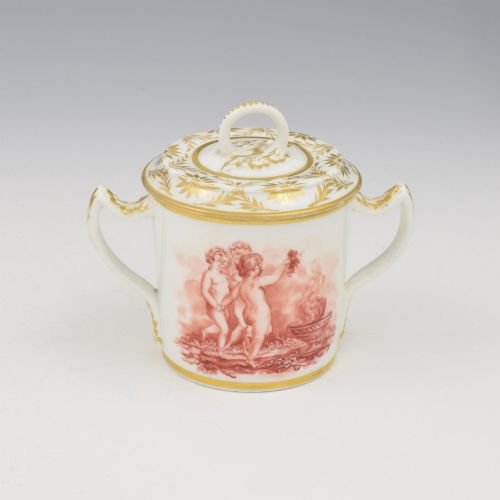
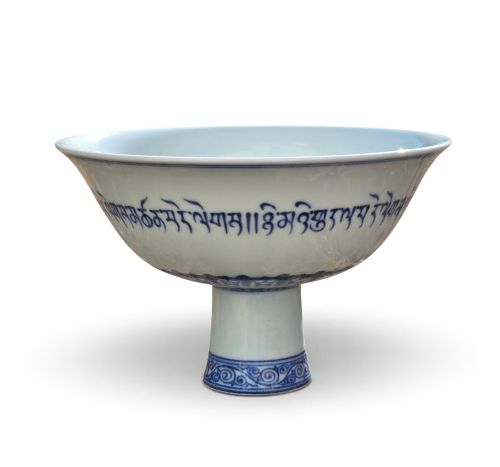
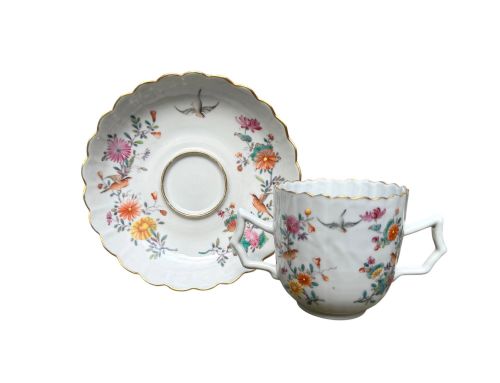
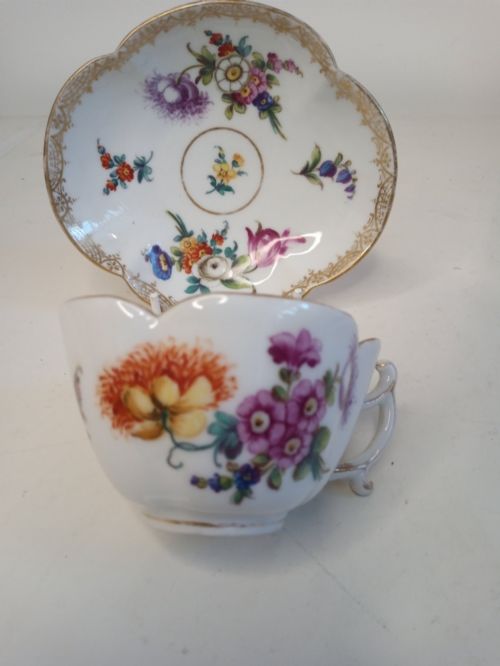
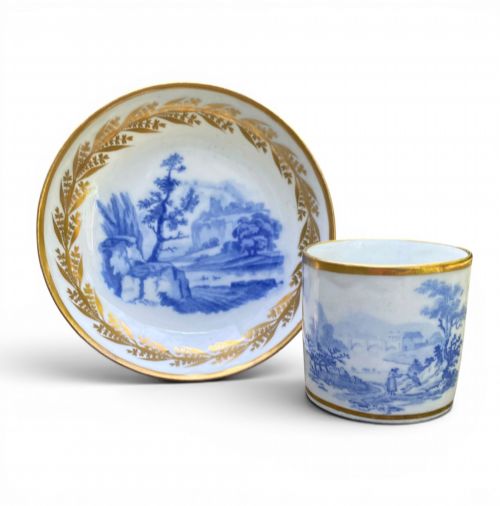
A white porcelain cup sits at the heart of historic tea and coffee service, taking forms from simple tea bowls to handled cabinet cups, coffee cans, and chocolate cups with covers. These pieces emerge in soft-paste and hard-paste porcelain, often paired with matching saucers or stands, spanning the eighteenth and nineteenth centuries.
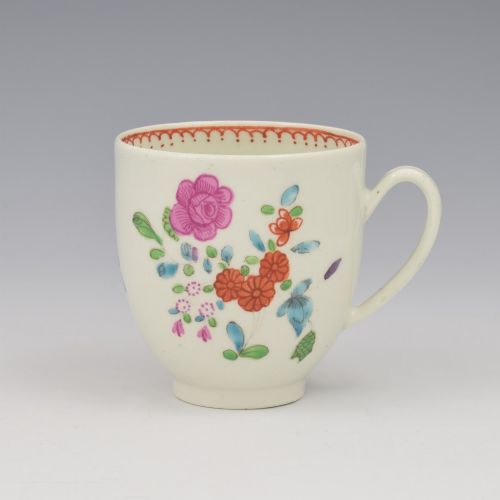
The version most likely to meet you on this page is an eighteenth-century English or continental piece, or a Regency and nineteenth-century English porcelain trio, decorated with handpainted landscapes, floral motifs, or chinoiserie figures.
Originating across English potteries like Worcester, Derby, and New Hall, alongside continental factories such as KPM Berlin, Meissen, and Sèvres, these cups reflect the shifting domestic rituals of Georgian and Victorian dining tables.
How they were made
Potters shaped these vessels using hard-paste or soft-paste porcelain, firing the ceramic body before applying enamels and underglaze blue pigments by hand.
Gilding and gold leaf highlights were meticulously painted onto handles, rims, and borders, then fixed with a secondary firing to secure the metallic finish.
Listings feature porcelain from the 18th century, 19th century, Georgian, Regency, and Victorian periods, utilising gold leaf, enamel, and gilding.
What varies in quality
The distinction at the top of the range lies in the precision of the handpainted detail, where miniature landscapes, botanical studies, and figurative scenes demonstrate exceptional brushwork by named factories or skilled ceramic artists.
The refinement of the porcelain body itself, from translucent hard-paste to finely potted soft-paste paste, dictates the delicacy of the handle, the crispness of the moulded fluting, and the integrity of the glaze.
H & R Daniel·Chamberlain Worcester·Richard Chaffers·KPM Berlin·Bloor Derby·Minton·Duesbury & Kean·Flight Barr & Barr·Meissen
The White Porcelain Cup Glossary
- Soft-paste porcelain
- An artificial ceramic compound fired at lower temperatures than hard-paste, common in eighteenth-century English factories. It produces a warm, creamy body that interacts richly with enamel colours.
- Hard-paste porcelain
- A true porcelain made from kaolin and petuntse, fired at high temperatures to create a durable, vitreous body. Continental houses like Meissen and KPM Berlin utilised this material.
- Coffee can
- A straight-sided cylindrical cup designed specifically for drinking coffee in the eighteenth and nineteenth centuries. They rarely feature handles and often accompany matching saucers.
- Tea bowl
- A handleless small vessel used for drinking tea before the widespread adoption of handled teacups. They derive their form from Chinese prototypes.
- Trembleuse cup
- A specialised vessel featuring a raised well in the centre of the saucer to hold the cup securely in place. They were used by nobility to prevent spills during delicate social occasions.
White Porcelain Cup: Frequently Asked Questions
How do I date a porcelain cup?
Dating relies on identifying the paste body, factory marks, stylistic traits, and the palette of the handpainted decoration. Eighteenth-century pieces often show different glazing characteristics compared to nineteenth-century productions.
Comparing the handle shape, form, and pattern number against documented factory archives helps narrow the decade of manufacture.
Can I use these cups for daily tea?
Historic porcelain requires careful handling and hand washing to preserve fragile enamels, handpainted details, and delicate gilding. Modern dishwashers and microwaves will damage the historic glaze and gold leaf.
Most collectors prefer to display or occasionally use these pieces for special occasions rather than everyday routines.
What is the difference between a tea bowl and a teacup?
Tea bowls are completely handleless and follow traditional Chinese porcelain forms imported during the eighteenth century. Teacups incorporate applied handles, reflecting the evolution of European dining habits.
Both forms served the same beverage but required different grips from the drinker.
Why do some cups have saucers and others stands?
Standard saucers collected stray drops and held biscuits, while specialised stands or covers were designed for specific forms like chocolate cups or delicate cabinet pieces. French and English factories adapted these accessories to suit contemporary fashion.
Matching cups with their original saucers or stands significantly enhances their historical context.