
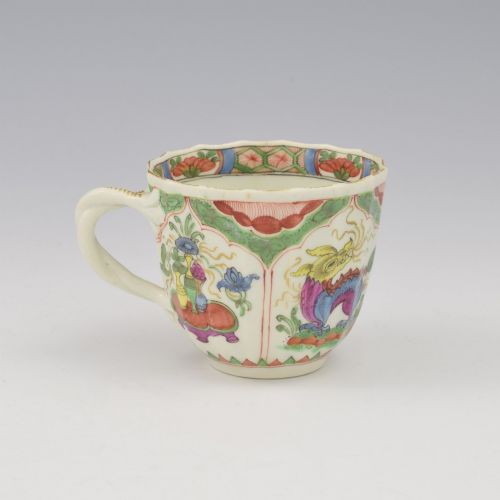
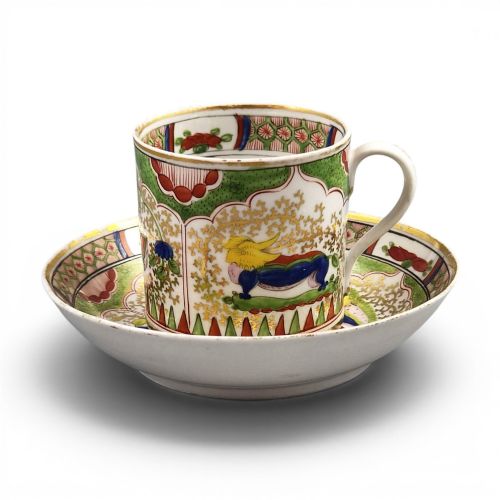


Dragon in Compartments
Dragon in compartments pieces are highly decorative ceramic items featuring distinct painted panels, offering a striking display of traditional design.
Dragon in Compartments
Dragon in compartments items primarily comprise English porcelain tableware and decorative objects produced by Worcester factories, including pieces from the Dr Wall period, Flight Barr & Barr, and Chamberlain Worcester. The selection encompasses decorative plates, tea ware, coffee cups and saucers, inkwells, bowls, and cabinet plates.
Collectors frequently encounter examples spanning the eighteenth century, the Regency period, and the wider nineteenth century. These items showcase distinctive Chinoiserie and Georgian aesthetic influences applied across various utilitarian and display vessel forms.
What varies in quality
Quality differences stem from the precision of the enamel painting within the compartmentalised sections and the crispness of the gilt work. Earlier eighteenth-century pieces often display fine fluting and meticulous brushwork.
The prominence of the manufacturing factory, such as Flight Barr & Barr or Chamberlain Worcester, influences the standing of individual items. Preservation of the original gilding and the clarity of the dragon motifs further determine the distinction between average and exceptional specimens.
Dragon in Compartments Retail Price Guide 2026
Typical asking prices for dragon in compartments among the pieces listed under this phrase on Sellingantiques today, from the lower quarter to the upper quarter. They describe what is for sale here now, not the wider market.
Dr Wall·Barr Flight and Barr·Flight Barr and Barr·Chamberlain Worcester
The Dragon in Compartments Glossary
- Dr Wall
- The period of Worcester porcelain production initiated by Dr John Wall from 1751 onwards. This era is celebrated for delicate soft-paste bodies and fine early porcelain formulations.
- Soft-paste porcelain
- A ceramic material composed of clay and glass frit fired at lower temperatures than hard-paste porcelain. It produces a warm translucent body characteristic of early English factories.
- Gilding
- The application of gold leaf or gold paint to ceramic surfaces for decoration. On these pieces, it highlights borders and compartmental structures.
- Chinoiserie
- European artistic style reflecting Chinese motifs and decorative themes. The dragon in compartments pattern draws directly from this aesthetic tradition.
- Sucrier
- A small covered sugar bowl used in tea service sets. These vessels match the tea bowls and coffee cups in contemporary porcelain settings.
Dragon in Compartments: Frequently Asked Questions
What is a dragon in compartments pattern?
The dragon in compartments pattern is a distinctive decorative ceramic design featuring stylized dragons separated into geometric painted panels or sections.
This aesthetic draws heavily on Chinoiserie influences popular in English porcelain production during the eighteenth and nineteenth centuries.
Which factories made these pieces?
These items were principally produced by Worcester porcelain manufacturers, including the early Dr Wall works and subsequent iterations like Flight Barr & Barr and Chamberlain Worcester.
Each factory applied its own distinctive paste formulations and painting standards while utilising the signature compartmentalized motif.
How do I distinguish eighteenth-century pieces?
Eighteenth-century examples often feature soft-paste porcelain bodies with distinct fluting on tea bowls, coffee cups, and plates. They typically originate from the Dr Wall period and display characteristic early enamel palettes.
Later nineteenth-century pieces from firms like Chamberlain Worcester or Flight Barr & Barr generally exhibit different paste compositions and baseline factory marks.