


Antique Worcester Teacup
An antique worcester teacup brings Eighteenth and Nineteenth Century ceramic artistry directly to your table, prized for delicate hand-painted motifs and fine porcelain bodies.
Antique Worcester Teacup
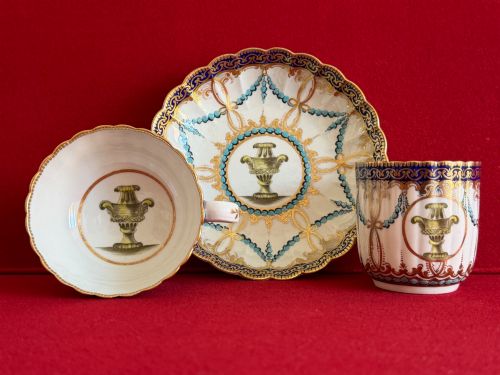
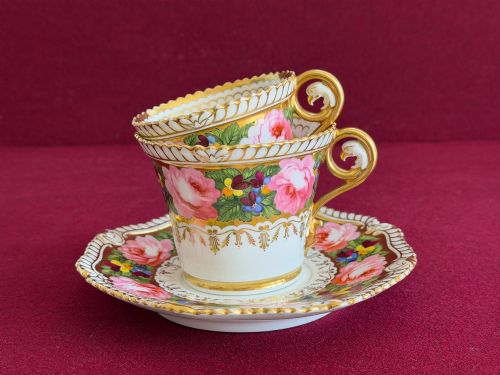
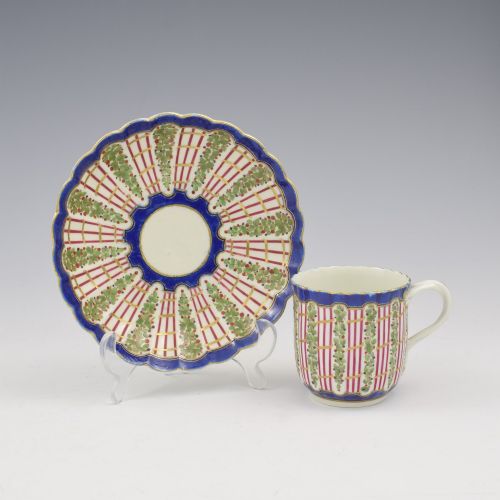
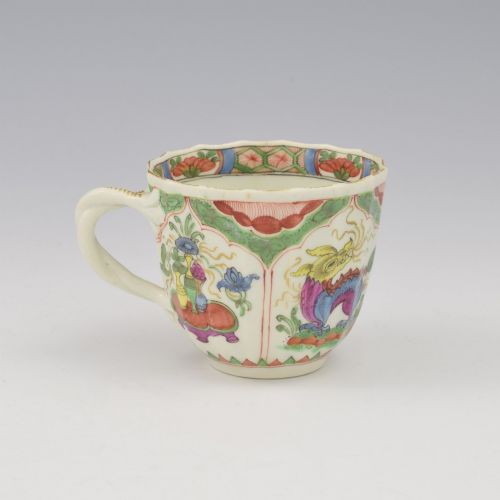
An antique worcester teacup represents fine English ceramic production spanning from the Eighteenth Century through the Georgian and Regency eras into the Victorian period and the early twentieth century. When exploring this selection, buyers encounter various forms including tea bowls, coffee cups, trios, and matched saucers alongside complete tea services.
The pieces on this page originate predominantly from the Eighteenth Century, particularly the First Period associated with Dr Wall, as well as subsequent eras under factory proprietors such as Flight, Barr and Barr, Chamberlain, and Royal Worcester. Early examples frequently take the form of handleless tea bowls paired with matching saucers, reflecting period tea-drinking customs.
Production styles range from Rococo and Chinoiserie patterns to Georgian Neoclassical designs, English Naturalist motifs, and later Victorian or Edwardian floral decoration. Buyers find both cabinet display items and functional pieces that demonstrate the evolving aesthetic of English porcelain manufacture.
What varies in quality
Quality in an antique worcester teacup rests on the precision of the hand-painting, the crispness of moulded fluting, and the sophistication of the enamel palette. Pieces decorated by named artists or distinguished factories command greater interest due to superior artistic execution.
The condition of the gilding and the preservation of delicate enamel colours dictate the visual impact of the piece. Fine potting with minimal distortion from the kiln firing process distinguishes masterwork productions from standard wares.
Listings feature porcelain, soft-paste porcelain, enamel, gold leaf, and gilding across Eighteenth, Georgian, and Regency periods.
Chamberlain Worcester·Flight Barr And Barr·Royal Worcester
The Antique Worcester Teacup Glossary
- Soft-Paste Porcelain
- An early artificial porcelain composition fired at lower temperatures than hard paste, known for its warm texture and creamy glaze. It absorbs light differently than true porcelain.
- Tea Bowl
- A handleless drinking vessel used in early tea services before handled cups became standard during the Georgian era. They require careful holding when filled with hot liquid.
- Guilloche
- A decorative pattern consisting of intertwined or overlapping curved bands, often rendered in vibrant enamel colours on borders. It adds geometric precision to floral designs.
- Trio
- A matched set comprising a teacup, a coffee cup, and a saucers, popular during the Regency period for serving different hot beverages. They provide a unified display on the tea table.
- Armorial
- A ceramic decorated with a family crest or coat of arms, commissioned by landed gentry. These bespoke pieces reflect specific historical patronage.
Antique Worcester Teacup: Frequently Asked Questions
How do I date an antique worcester teacup?
Dating relies on factory marks, paste composition, and stylistic cues such as fluting or hand-painted motifs recorded across different production periods.
First Period pieces from the Eighteenth Century differ significantly in body and mark from Nineteenth Century Regency wares produced by Flight, Barr and Barr or Chamberlain.
Were tea bowls used differently from teacups?
Early tea bowls lacked handles and were held in both hands to sip tea during the Eighteenth Century. Handled teacups and coffee cups emerged as dining habits evolved in the Georgian era.
Both forms functioned as part of formal tea services displayed on tables or stored in cabinets.
What is a porcelain trio?
A trio consists of a teacup, a saucer, and a matching coffee cup produced as a unified set during the Regency period. They accommodated changing preferences for hot beverages within a single matched service.
Collectors prize complete trios for their decorative harmony on the tea table.