




White Marble Urns
White marble urns bring classical proportion and cool mineral weight to a room, ranging from grand Italian souvenirs to French mantel garnitures.
White Marble Urns
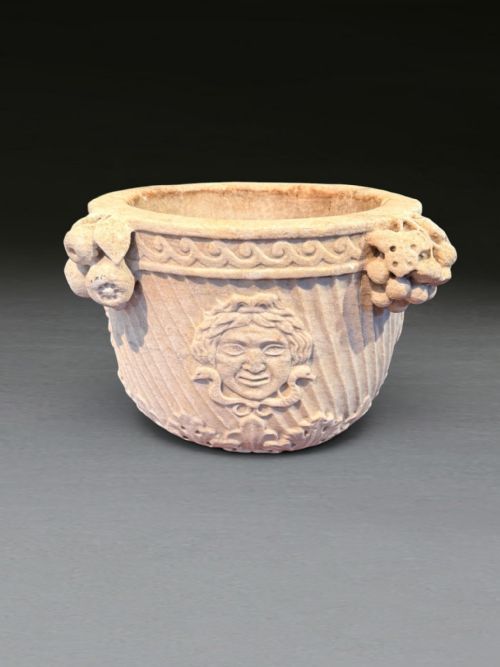
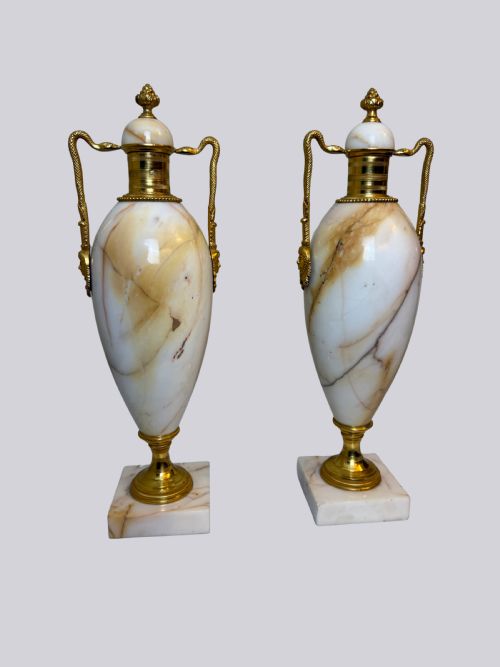
White marble urns encompass decorative vessels, table lamps, clock garnitures and cassolettes drawn from centuries of classical revival. When you search for white marble urns, you encounter everything from sixteenth-century Italian labrums and nineteenth-century Grand Tour souvenirs to French Louis XVI style ormolu-mounted pieces.
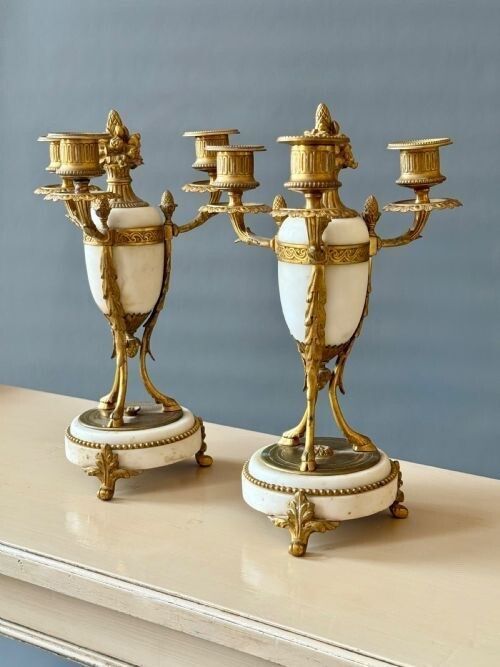
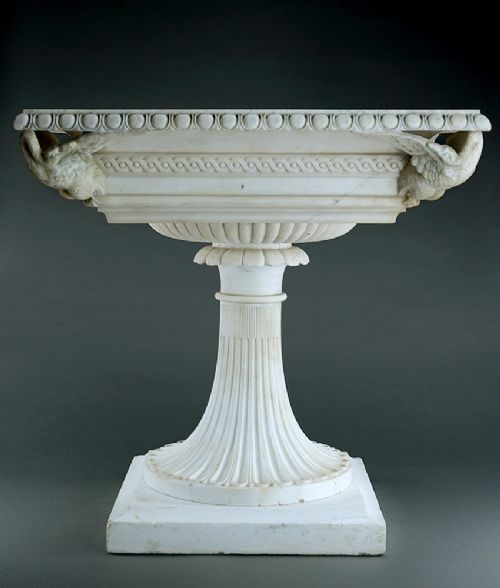
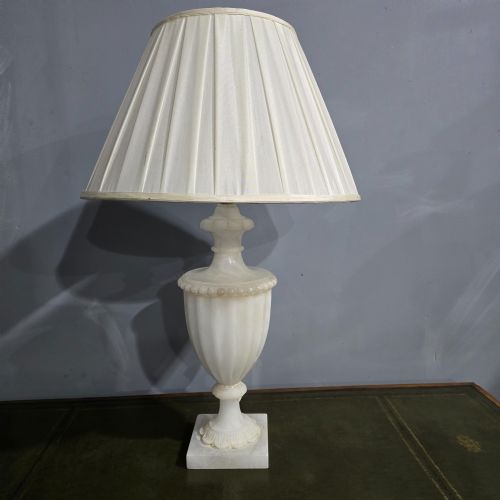
The objects take many forms, including towering tazzas, lidded cassolettes and mounted vessels fitted for electricity as table lamps. Italian workshops and French makers dominate the selection, utilising the stone for both monumental architectural pieces and refined interior decoration.
How they were made
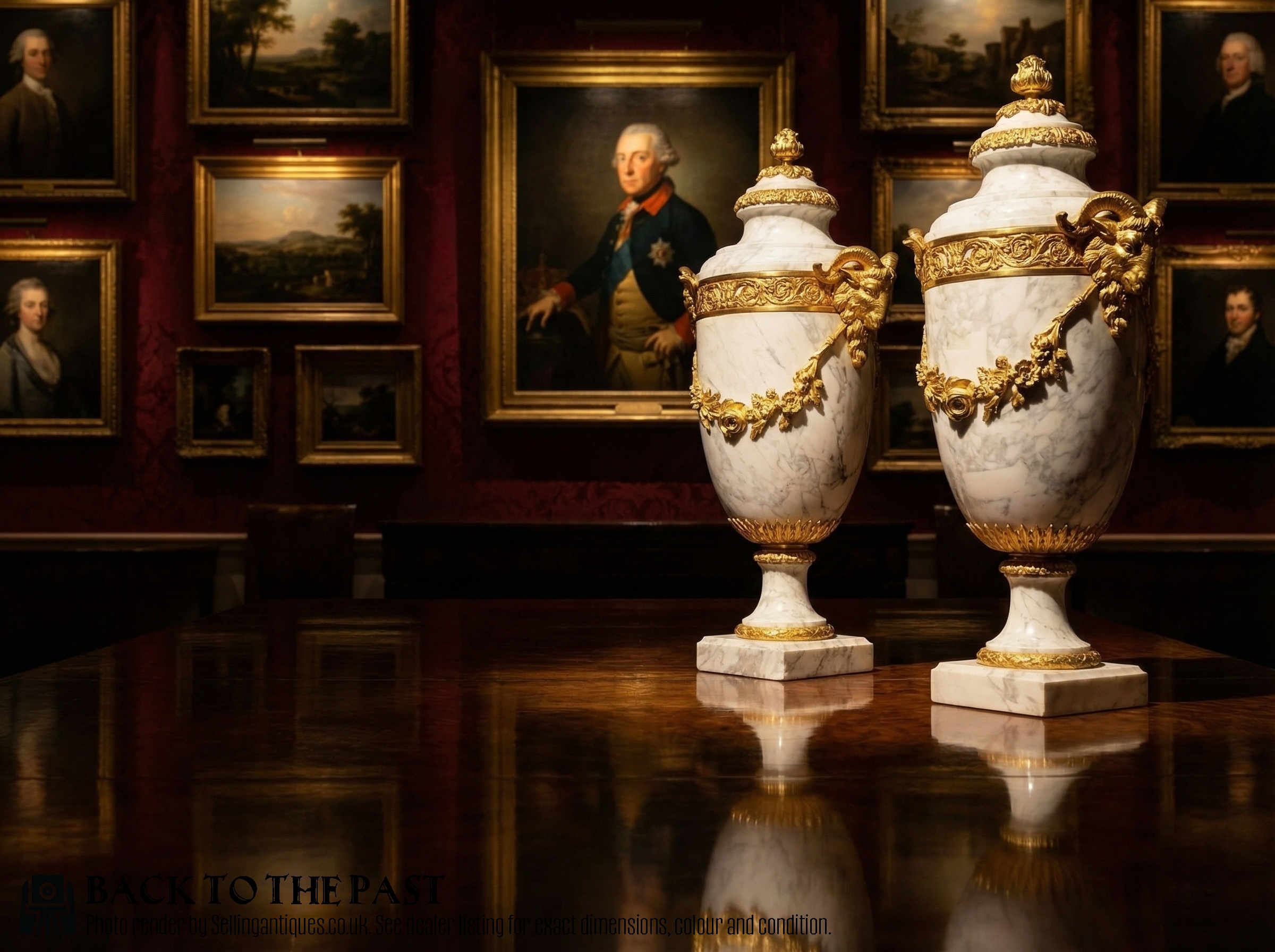
Carved white marble and alabaster form the primary bodies of these pieces, often shaped on a lathe or hand-carved with classical motifs. Workshops paired the pale stone with gilt bronze, ormolu, and brass mounts, securing cast metal handles, collars, and paw feet around the stone containers.
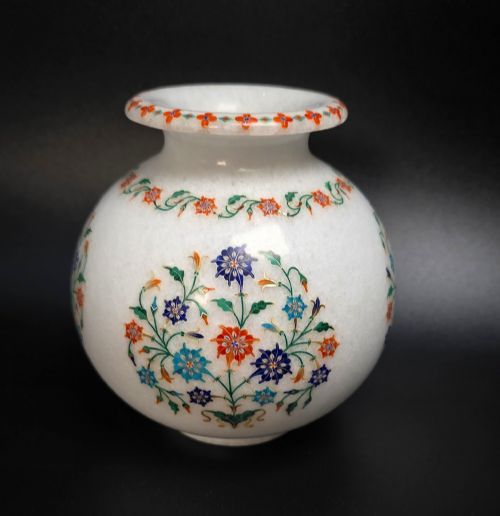
Some examples incorporate pietra dura inlay or variegated stone effects, whilst French mantel clocks and candelabra integrate enamel dials and detailed cast bronze elements directly into the marble architecture.
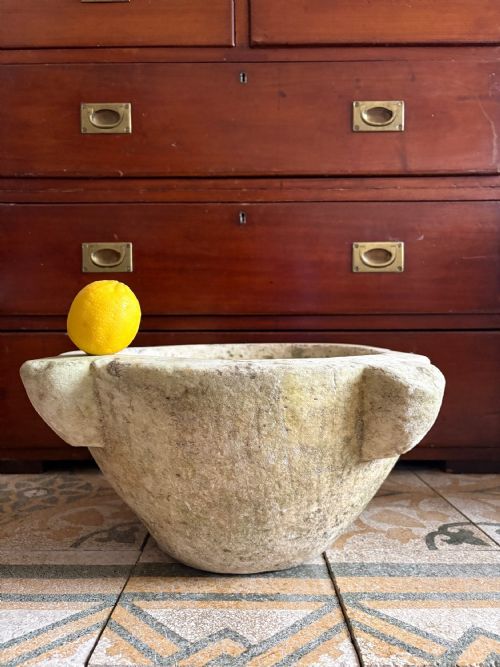
Object forms range from practical mortars and table lamps to decorative candelabra, tazzas, and monumental garden or interior urns.
What varies in quality
Quality rests in the crispness of the marble carving and the weight of the cast bronze mounts. Finer pieces show deep, deliberate hand-carving on classical details and heavy, fire-gilded ormolu rather than lighter brass plating.
The grade of the stone itself dictates the character, from uniform white statuary marble to richly figured alabaster and onyx. Superior examples demonstrate harmonious proportions between the stone vessel and its metal garniture.
Boschetti·Louis Goret·Sacre·James Ritchie and Son
The White Marble Urns Glossary
- Cassolette
- A reversible decorative vessel that functions as an urn or, when turned, a candleholder. These pieces often feature pierced metal lids and ormolu mounts.
- Ormolu
- Gilded bronze applied as decorative mounts, handles, and feet on marble bodies. The technique involves applying a gold amalgam to bronze.
- Tazza
- A shallow bowl or vase raised on a high foot and pedestal. Italian workshops frequently produced these in marble and alabaster during the nineteenth century.
- Garniture
- A set of matching decorative objects, typically a central clock flanked by two urns or candelabra. They were designed to sit symmetrically on a mantelpiece.
- Grand Tour
- A cultural journey undertaken by European elites who collected antiquities and souvenirs such as carved alabaster vases and miniature marble architectural models.
White Marble Urns: Frequently Asked Questions
What are white marble urns?
White marble urns are decorative vessels, lamps, and clock components carved from stone and frequently mounted with gilt bronze. They draw heavily on classical Greek and Roman forms.
These pieces range from antique Italian Renaissance items to nineteenth-century French revival objects designed for formal interiors.
How were they used?
Historically, urns served as ornamental focal points on mantelpieces, sideboards, and architectural pedestals. Many were later converted into table lamps during the twentieth century.
Clock garnitures combined a central timepiece with matching urns to create a balanced decorative display for formal reception rooms.
How do I style them?
Place a pair of urns on a sideboard or mantelpiece to anchor a room with classical symmetry. Their neutral white stone complements both traditional period settings and modern minimalist spaces.
Lamps converted from these urns provide sculptural lighting that works well on large side tables or desks.
How do I tell periods apart?
Nineteenth-century pieces often reflect Louis XVI Revival styles with precise ormolu mounts and cast bronze details. Earlier examples from the eighteenth century or earlier show hand-carved tool marks and simpler, heavier proportions.
Twentieth-century conversions and lamps frequently incorporate twentieth-century electrical fittings alongside older stone bodies.