



Carved Alabaster Urns
Carved alabaster urns are solid stone vessels shaped after classical antiquities, bringing a weighty neoclassical presence and a soft translucent glow to a room.
Carved Alabaster Urns
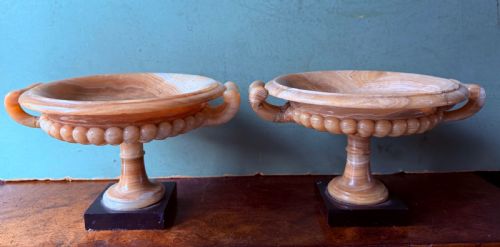
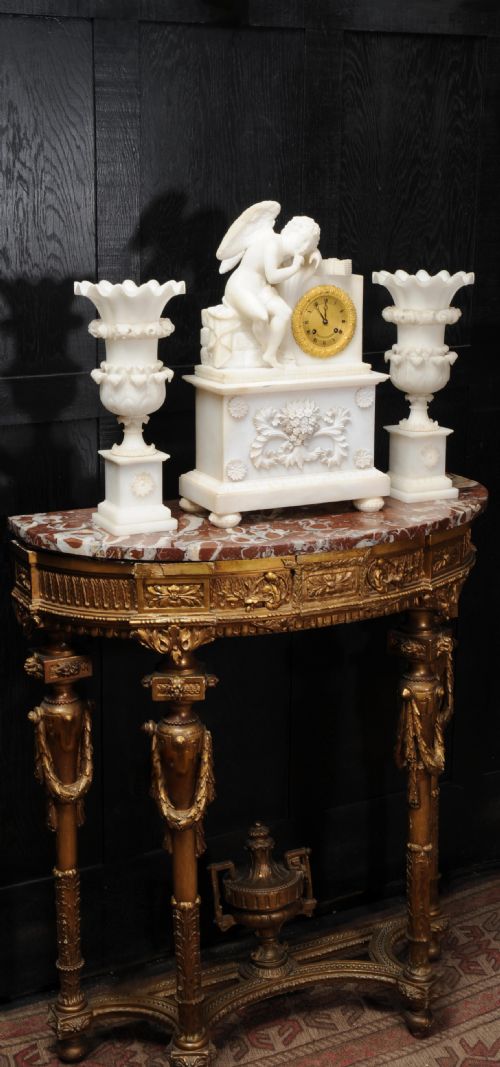
When you search for carved alabaster urns, you encounter decorative vessels, souvenir tazze, and occasional lamp bases shaped in classical revival styles. These objects draw directly upon ancient forms collected during the nineteenth century Grand Tour.
The pieces on this page span from the mid-nineteenth century through the art deco period of the 1930s. You will find items originating from Italian workshops alongside French and continental pieces, often taking the form of campana urns or classical vases.
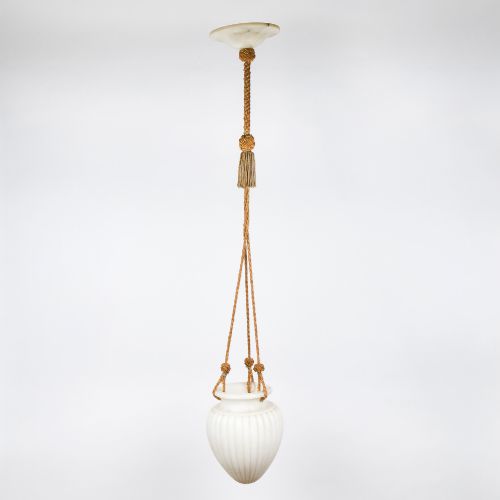
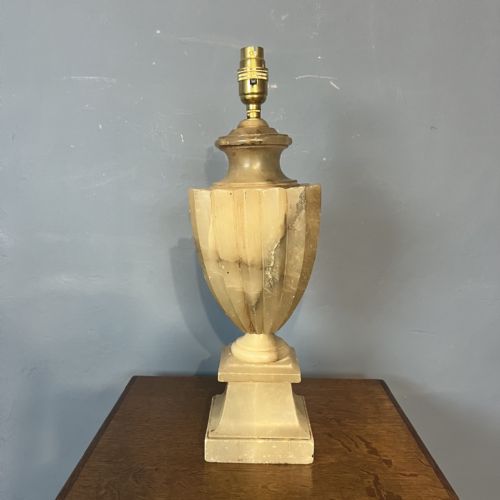
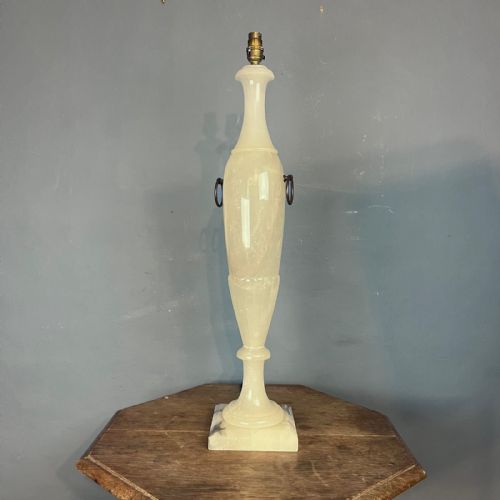
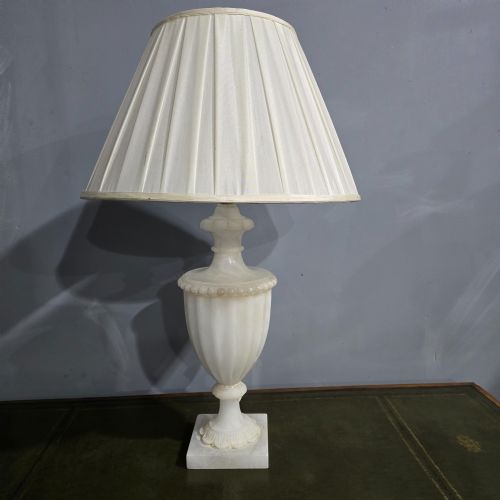
Many examples are adapted as lighting, pairing white or figured alabaster bodies with brass, gilt metal, or marble block bases. Purely decorative bowls and figural groups also appear under this heading alongside standard urn configurations.
How they were made
Carved alabaster urns rely on the soft nature of gypsum stone, which allows artisans to turn and carve intricate profiles on a lathe or by hand. Highly-figured varieties show natural veining that makers highlighted through careful positioning of the vessel.
Makers integrated supporting elements of brass, gilt metal, and black marble to mount the stone components securely. Wired conversions and hanging lights incorporate fabric cord and glass elements alongside the primary alabaster structure.
Materials appearing across these entries include white alabaster, black marble, gilt metal, brass, and fabric cords.
What varies in quality
The degree of figuration in the stone and the crispness of the classical carving dictate the visual impact of carved alabaster urns. Finer pieces display smooth, uniform translucency and finely proportioned handles or rims modelled after antiquity.
The quality of the secondary materials, such as heavy marble block bases or chased gilt metal mounts, separates standard souvenirs from more ambitious cabinet pieces and lighting conversions.
The Carved Alabaster Urns Glossary
- Alabaster
- A fine-grained, soft stone often prized for its milky translucency and ability to be carved into thin-walled vessels.
- Grand Tour
- A cultural journey undertaken by nineteenth-century Europeans who collected souvenir artefacts like carved alabaster urns and classical vases.
- Tazza
- A shallow cup or vase on a pedestal foot, frequently produced in alabaster as a souvenir after the antique.
- Campana Urn
- A bell-shaped vessel with an everted rim and foot, commonly seen in classical architecture and replicated in stone lamps.
- Neoclassical
- A stylistic movement drawing inspiration from the art and culture of classical antiquity, prevalent in the nineteenth-century pieces found here.
Carved Alabaster Urns: Frequently Asked Questions
Are carved alabaster urns fragile?
Alabaster is a relatively soft and porous stone that scratches easily and is sensitive to moisture. Care must be taken to keep them away from damp environments and abrasive cleaners.
Dusting with a dry, soft cloth is sufficient for routine maintenance. Avoid using water or liquid polishes which can stain the porous surface.
How do I identify a Grand Tour piece?
Nineteenth-century Grand Tour items often replicate famous classical antiquities seen by travellers in Italy. They frequently feature highly-figured stone and are mounted on black marble block bases.
These souvenir pieces emphasise classical design, ranging from small tazze to urns and architectural models. The patination and historical mounting materials help indicate their age.
Can alabaster urns be used as lamps?
Several pieces are adapted or originally constructed as table lamps or hanging lights. The natural translucency of the stone allows light to diffuse softly through the body.
When fitted with electrical components, the urn acts as a shade or column. Care should be taken with vintage wiring to ensure safety during daily use.
What is alabastro egiziano?
Alabastro egiziano refers to a specific heavily-figured variety of stone used by Italian artisans for Grand Tour souvenirs. It exhibits distinct patterning and colour variation across the carved surface.
This material was chosen for its decorative qualities in items modelled after ancient artefacts. It gives the carved vessels a rich, textured appearance.