





Pair Decorative Cassolettes
These pair decorative cassolettes bring classical French and Italian presence to a room, turning practical stone and metal into ornamental focal points.
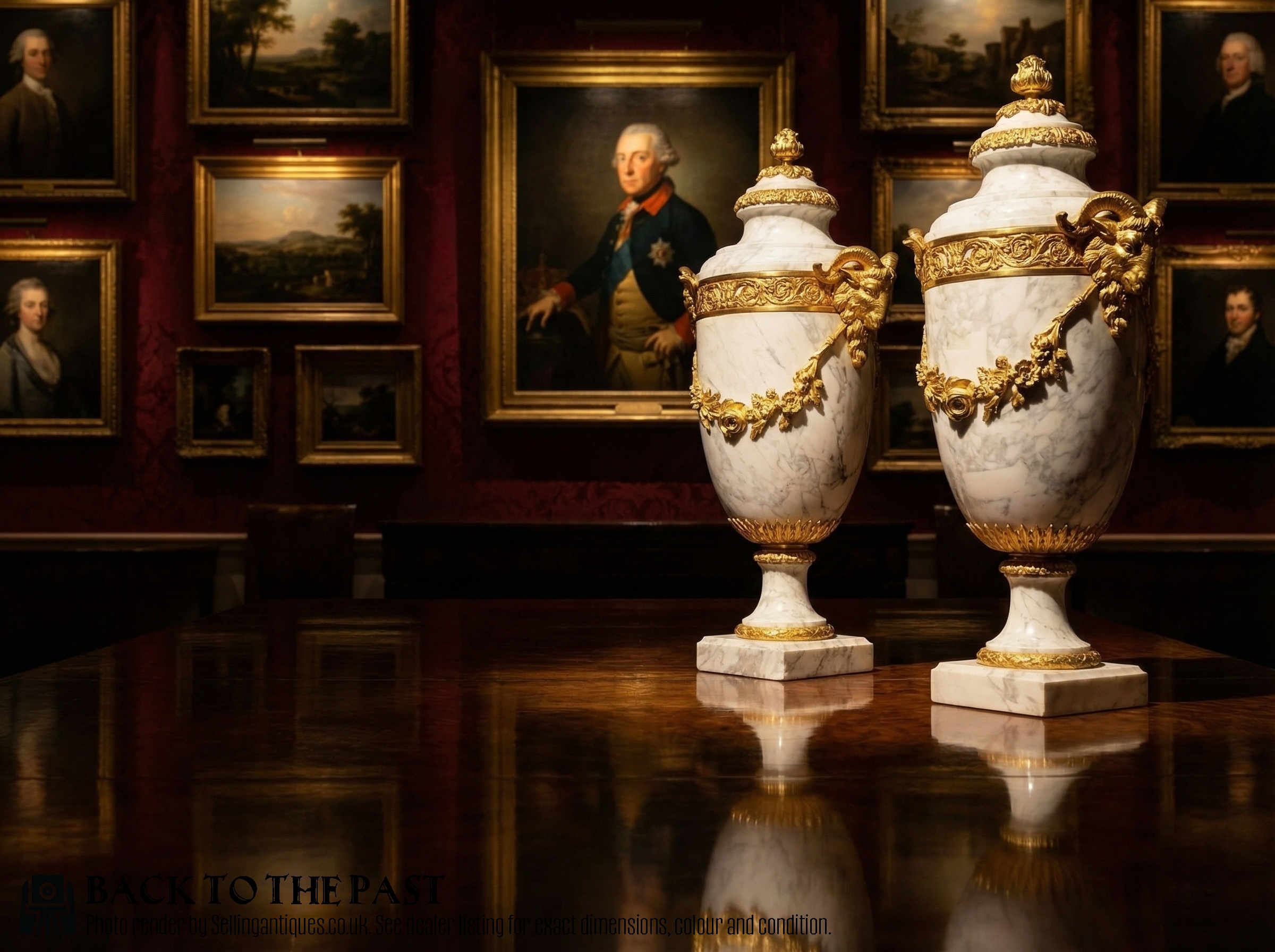
Pair Decorative Cassolettes
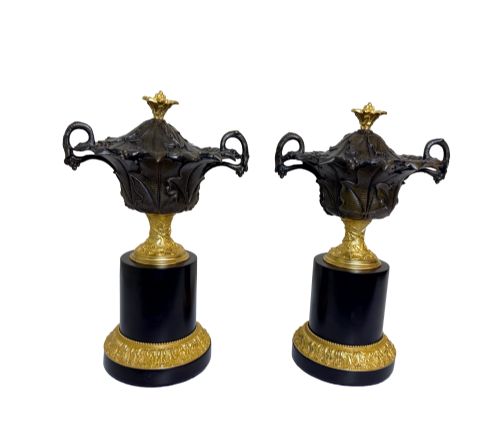
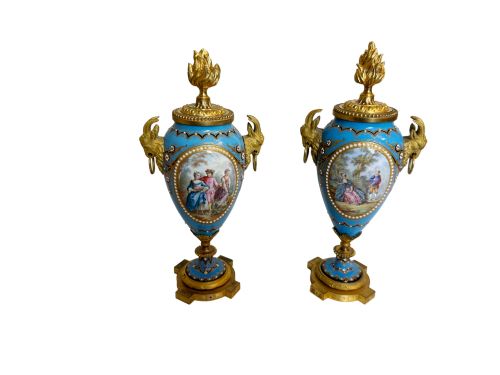
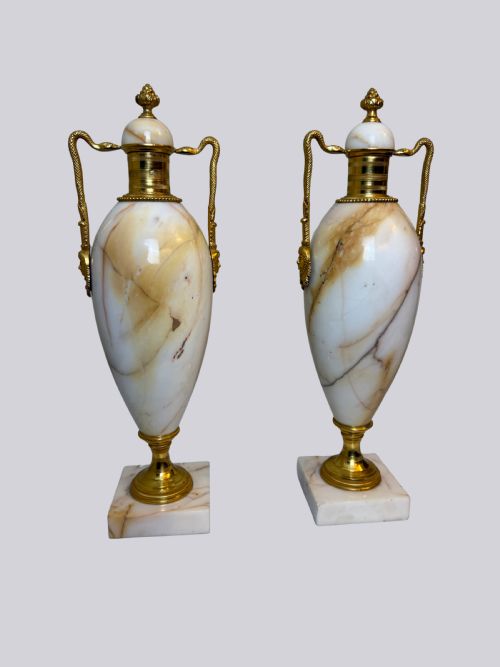
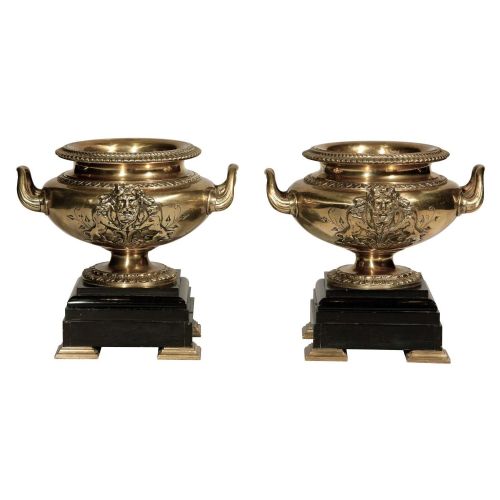
A search for pair decorative cassolettes uncovers dual display vessels originating largely from the nineteenth century, including Victorian examples and items in the Grand Tour manner. These decorative objects take the form of urns, vases, amphorae, and tazzas designed to sit symmetrically on mantelpieces or console tables.
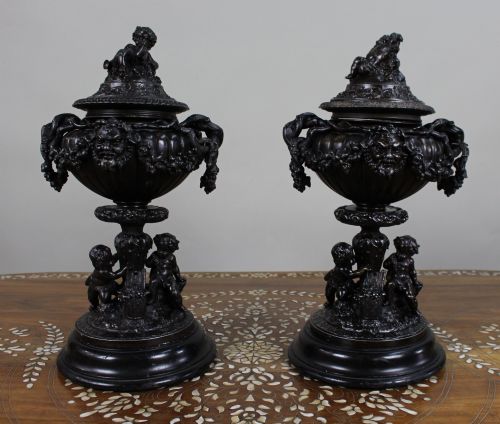
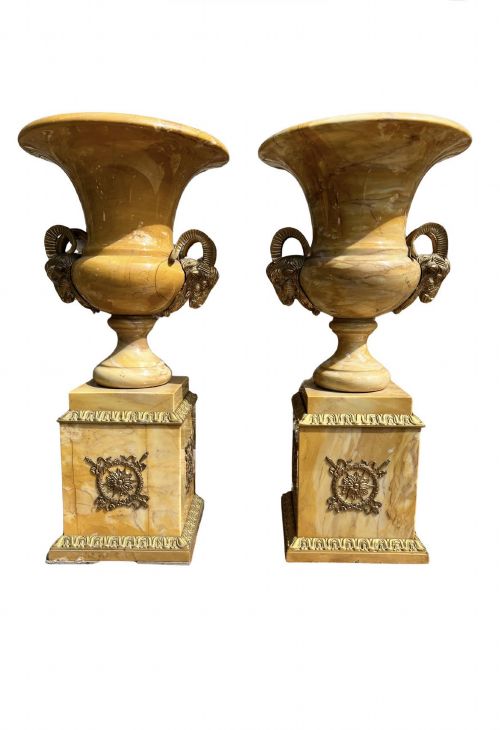
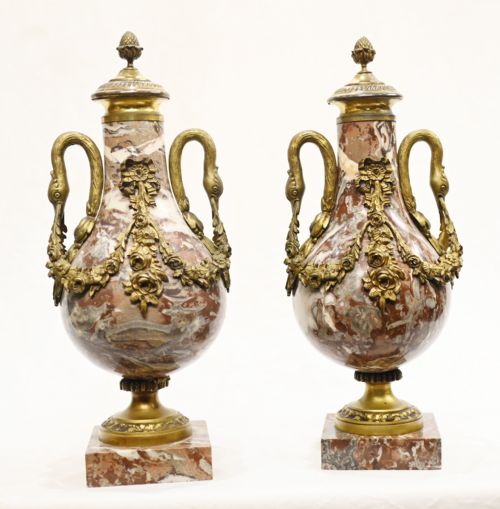
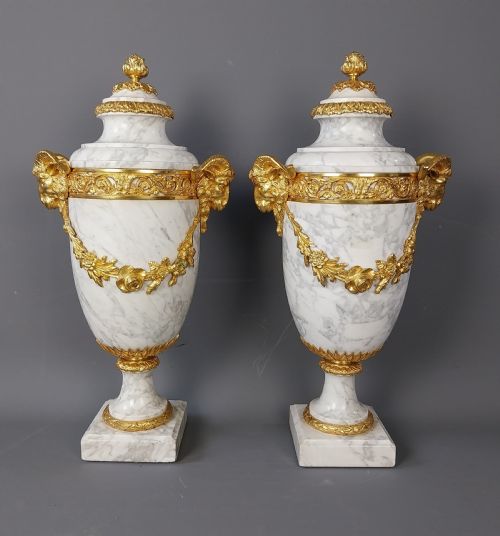
The versions met most often on this page combine turned marble bodies with gilt bronze, ormolu, or patinated bronze mounts. Many items incorporate reversible lids or insert sections that shift the silhouette from a solid urn to an open vase.
Stylistic influences span French Empire, Louis XVI, and Neoclassical Revival designs, showing classical motifs such as Bacchic masks and putti. Makers and artisans utilised white, green, black, Sienna, and quartz marbles alongside cast metals to achieve formal symmetry.
What varies in quality
The precision of the metal casting and the crispness of chased details, such as facial expressions on masks or foliate scrolls, separate ordinary production from finer examples. Sharp relief work and well-defined tooling demonstrate higher workshop standards.
The selection and turning of the stone body also mark differences in grade, with uniform veining, polished finishes, and tight fitting between metal collars and marble sections indicating superior construction.
Several pairs hide dual functions beneath their lids, ready to transform from solid urns into open vases at a gentle turn.
The Pair Decorative Cassolettes Glossary
- Cassolette
- A decorative vessel featuring a reversible or dual-purpose lid that allows the piece to function as either a closed urn or an open vase.
- Ormolu
- Gilt bronze created by applying a mercury and gold amalgam to cast bronze, giving a rich metallic lustre.
- Grand Tour
- A nineteenth-century tradition of travel through France and Italy that inspired domestic replicas of classical antiquities.
- Tazza
- A shallow saucer-like ornamental cup or vase elevated on a stem and foot.
- Spelter
- A zinc-based alloy utilised as a substitute for bronze in casting decorative figures and mounts.
Pair Decorative Cassolettes: Frequently Asked Questions
What is a cassolette?
A cassolette is a decorative urn or vase designed with a removable or reversible lid. This mechanism permits the vessel to change its appearance between a solid form and an open receptacle.
Historically, such vessels were sometimes adapted to hold aromatics or perfumes, though surviving antique examples serve primarily decorative functions in interior display.
How do I style them at home?
These pairs work best when placed symmetrically on a mantelpiece, sideboard, or flanking a large mirror. Their mixed stone and metal surfaces catch natural light effectively.
Keep surrounding objects minimal to let the classical silhouettes and contrasting textures of marble and bronze command attention.
Are these French or Italian?
The listings show influences from both nations, with French Empire and Louis XVI styles appearing alongside Italian Sienna marble and Grand Tour pieces. Many nineteenth-century workshops across Europe drew on shared classical design vocabularies.
Specific origins often declare themselves through the choice of marble types, such as Sienna or statutory white, combined with distinct mount designs.
How do I date these pieces?
Dating relies on observing material combinations, casting methods, and stylistic revivals associated with the nineteenth century. Periods range from early nineteenth-century neoclassical works to later Victorian and 1890s revival pieces.
Clues rest in the patination of the bronze, the turning style of the marble pedestals, and the presence of specific revival markers like Bacchic masks.