
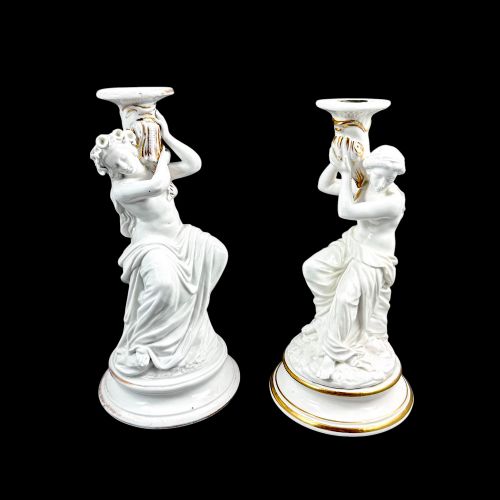


White Glaze Porcelain Figure
These white glaze porcelain figure examples capture centuries of modelled character, from Staffordshire pugs to German factory groups.
White Glaze Porcelain Figure
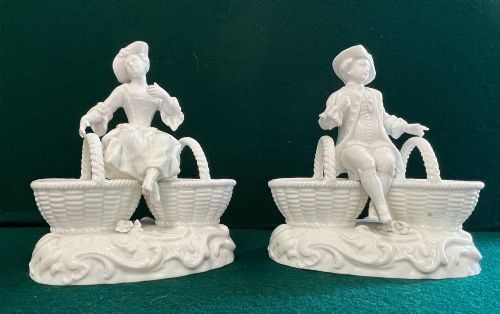
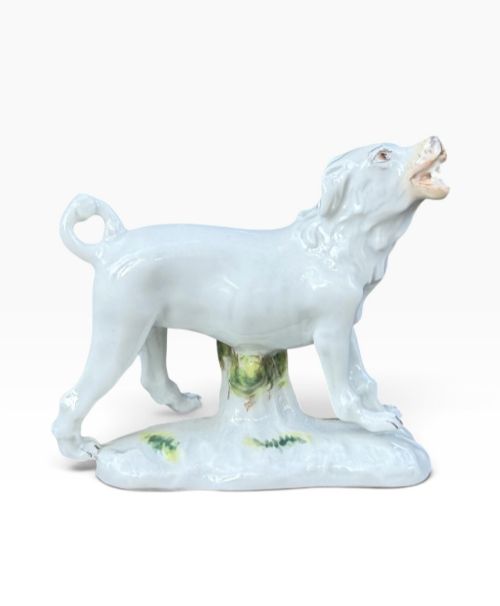
A white glaze porcelain figure search reveals modelled sculptural forms, animals, and human groups originating from eighteenth-century manufactories through to Art Deco studios. Buyers encounter pieces spanning Derby, Meissen, and Staffordshire traditions, often finished in plain white or blanc de chine surfaces.
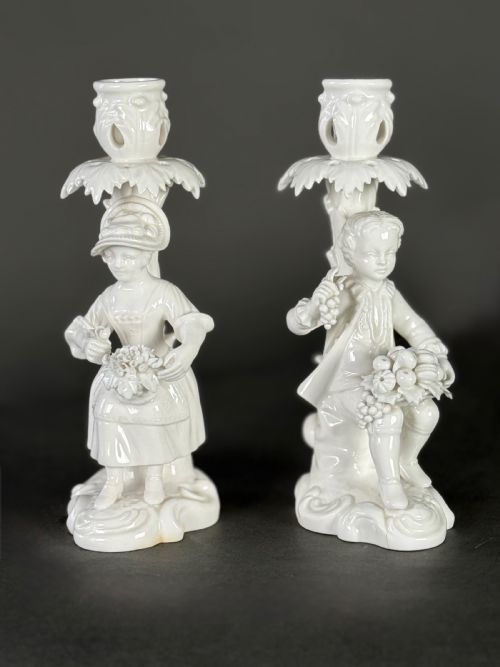
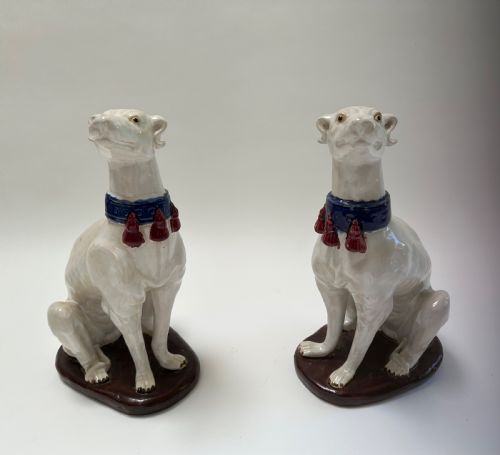
The objects take the form of standing figurines, portrait groups, candlesticks, and domestic animals such as dogs and sheep. Many follow Rococo Revival curves or classical motifs, rendered in hard-paste or soft-paste ceramic bodies.
Originating across England, continental Europe, and East Asia, these sculptural works frequently represent mythological figures, theatrical characters, or pastoral subjects. The selection includes both monumental sculptural groups and smaller cabinet ornaments.
Materials and production methods
Makers shaped these objects using refined clay mixtures of porcelain or earthenware, often applying a translucent white glaze before high-temperature firing. Selected pieces incorporate added enamel details, gold leaf highlights, or gilt accents over the primary glazed surface.
Production techniques involved press-moulding or slip-casting liquid clay in multi-part plaster moulds, followed by meticulous hand-modelling of fine details like hair, textiles, and facial expressions. European factories utilised both hard-paste compositions fired at extreme heat and softer argillaceous pastes requiring lower kiln temperatures.
Current listings feature porcelain, earthenware, and glazed ceramic bodies decorated with enamel, gilt, and gold leaf.
Factors determining quality
The prestige of the producing kiln and the skill of the individual modeller dictate the artistic merit of the piece. Master modellers achieved naturalistic anatomical proportions and lively stances, whereas lesser workshops produced stiff, repetitive castings.
Meissen·Derby·Royal Worcester·Staffordshire·Minton·Royal Dux·Beswick
The White Glaze Porcelain Figure Glossary
- Blanc de chine
- A French term translating to white from China, used to describe Chinese porcelain from Dehua featuring a glossy colourless glaze. European factories later adopted the phrase for their own unpainted white wares.
- Hard-paste
- A true porcelain composed of kaolin and petuntse fired at very high temperatures to produce a dense, vitrified body. It resists scratching by steel and transmits light through thin sections.
- Soft-paste
- An artificial porcelain compound invented in Europe as an imitation of Asian wares, combining white clay with ground glass and various fluxes. It fires at lower temperatures and possesses a warmer, softer texture.
- Flatback
- A style of Staffordshire ceramic figure moulded with a finished front and a flat, unglazed or minimally decorated reverse side. These pieces were designed to stand directly against a wall on a mantelpiece.
- Bisque
- Unglazed porcelain fired once to create a matte, porous surface resembling smooth marble. It allows sculptural detail to remain entirely crisp without the softening effect of a glassy coating.
White Glaze Porcelain Figure: Frequently Asked Questions
What periods do these figures come from?
The available selection spans from the eighteenth century through the Victorian era and into the Art Deco period of the twentieth century. Earlier examples often originate from European royal manufactories.
Later pieces reflect Victorian domestic taste and twentieth-century modernist design movements. Each era employed distinct modelling styles and paste compositions.
How were these figures displayed originally?
Many items served as decorative ornaments on mantelpieces, dining tables, or enclosed display cabinets. Flatback Staffordshire types sat securely against drawing room walls.
Other functional forms like candlesticks and chambersticks combined sculptural display with domestic utility. Miniature animal groups adorned desktop collections and side tables.
How do I care for antique porcelain?
Dust these glazed surfaces gently with a soft, dry brush to prevent the accumulation of dirt in recessed crevices. Avoid harsh chemical cleaners or abrasive scrubbing pads.
Keep pieces away from direct sunlight and areas prone to sudden temperature shifts to protect the ceramic body and glaze. Lift heavier sculptural groups from the base rather than delicate extremities.