
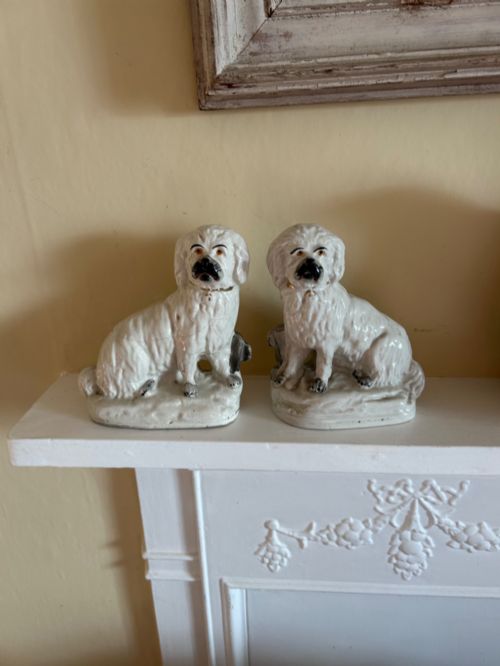
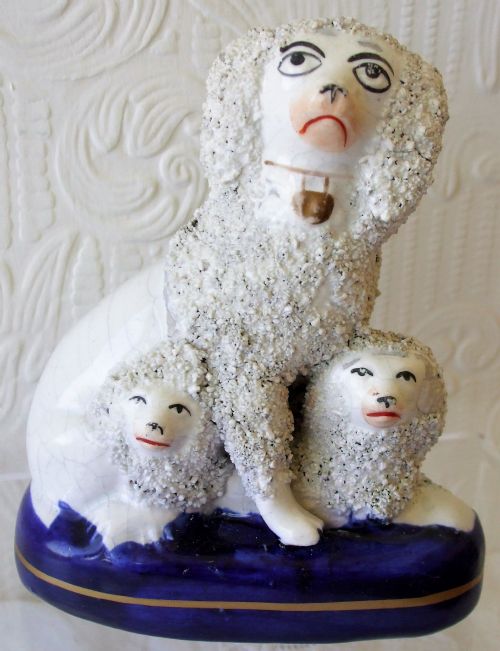


White Ceramic Dog Figures
White ceramic dog figures bring character and history to a room, ranging from Staffordshire spaniels to Meissen porcelain hounds.
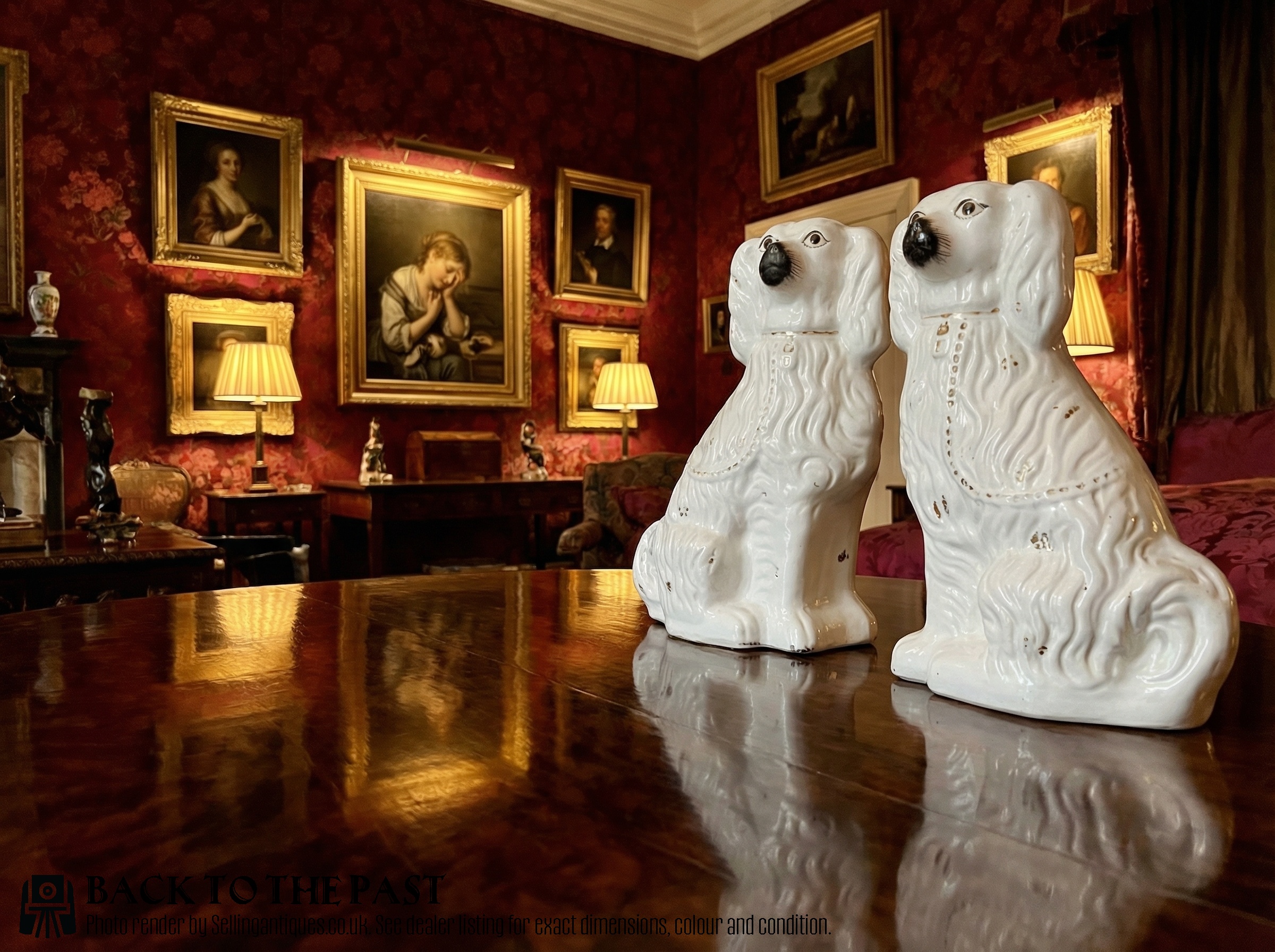
White Ceramic Dog Figures
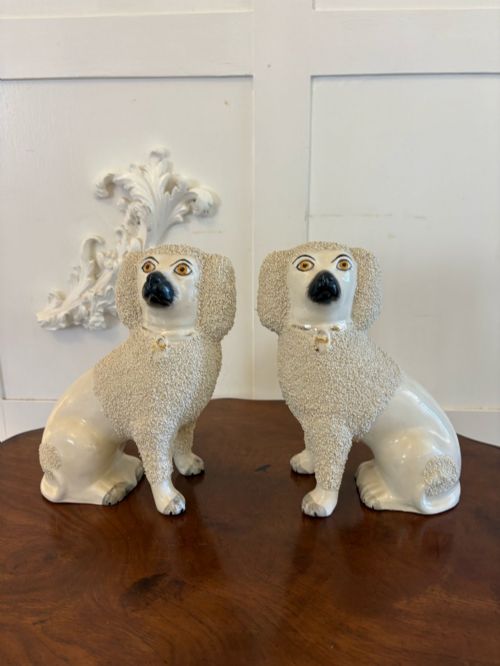
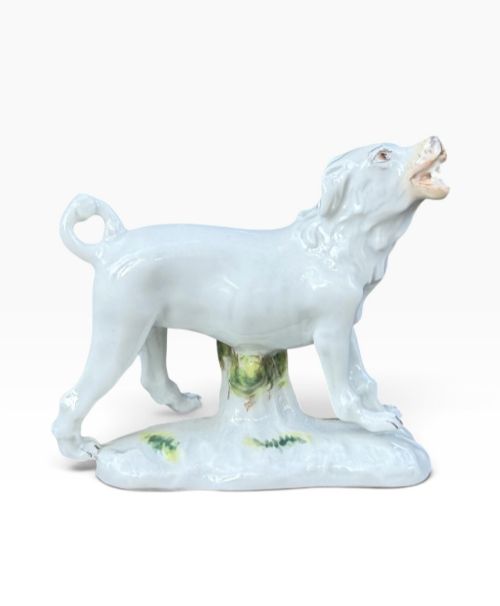
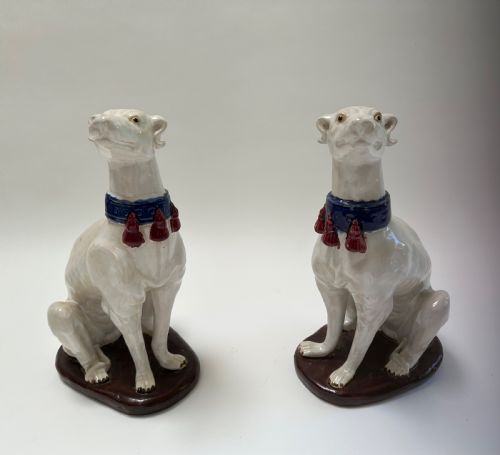
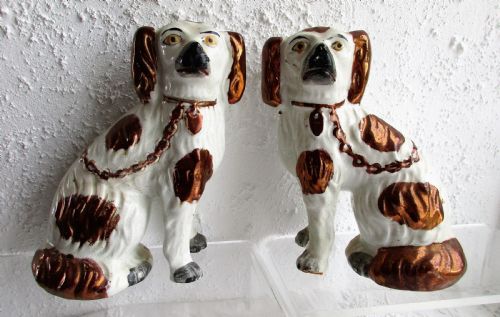
White ceramic dog figures encompass various breeds and ceramic bodies, with Staffordshire earthenware examples appearing most frequently on this page. These pieces date across the nineteenth century and include spaniels, poodles, greyhounds, and pugs.
The selection extends beyond simple mantel ornaments to functional objects such as inkwells, money boxes, quill holders, and lamp bases. Formats range from single seated dogs to symmetrical pairs and elaborate figure groups involving multiple puppies.
Origin points span English potteries, German porcelain works, and Japanese kilns, showing how different ceramic traditions interpreted domestic and sporting dogs over several centuries.
How they were made
Moulding techniques allowed workshops to produce hollow Staffordshire figures and detailed porcelain groups consistently. Firing temperatures determined the hardness of the ceramic and the depth of the glaze.
White Ceramic Dog Figures Retail Price Guide 2026
Typical asking prices for white ceramic dog figures among the pieces listed under this phrase on Sellingantiques today, from the lower quarter to the upper quarter. They describe what is for sale here now, not the wider market.
Listings feature earthenware, porcelain, and parian ware across Victorian and earlier periods.
What varies in quality
The refinement of the modelling separates finer figures from standard production pieces, particularly in the rendering of facial expressions and fur texture. Crispness in the moulding and careful application of enamel or gilt indicate higher workshop standards.
Completeness within pairs and functional elements like inkwells or clock surrounds also influence the standing of a piece. Early examples from established makers show greater artistic ambition than later decorative iterations.
Thomas Parr·Minton·John Durham·Enoch Wood factory
The White Ceramic Dog Figures Glossary
- Staffordshire pottery
- Earthenware ceramics produced in the Staffordshire region of England. This pottery group includes the familiar mantel spaniels and poodles found in many Victorian homes.
- Blanc de chine
- A French term for white porcelain originating from China, later adopted by European potteries. It denotes a milky white glaze over a fine ceramic body.
- Parian ware
- A type of biscuit porcelain resembling white marble, developed in the nineteenth century. Sculptures and figures utilise this material for its smooth, unglazed finish.
- Quill holder
- A desk accessory featuring a modelled figure with built-in channels or receptacles for writing feathers. These combine domestic animal subjects with practical nineteenth-century desk furniture.
- Majolica
- Low-fired earthenware covered with an opaque tin glaze and painted with coloured enamels. Italian versions display rich tones and sculptural depth.
White Ceramic Dog Figures: Frequently Asked Questions
What are Staffordshire comforter spaniels?
Staffordshire comforter spaniels are ceramic dog figures traditionally placed on mantelpieces in pairs facing inwards. Potters modelled them on King Charles spaniels, which served as popular lapdogs during the Victorian era.
Collectors often find them finished in white with gold gilt lockets or black patches. They symbolised domestic loyalty and hearthside comfort in nineteenth-century British homes.
How were ceramic dog figures used?
Many dog figures served purely as decorative mantel ornaments or shelf displays. Others incorporated practical functions into the ceramic design, such as inkwells, money boxes, and quill holders.
Some porcelain pieces formed parts of larger table centerpieces, clock groups, or candlestick bases. Lamp bases also emerged as electrification spread in the late nineteenth century.
How do I date antique white dogs?
Dating relies on examining the ceramic body, glaze characteristics, and potting style. Earlier nineteenth-century earthenware typically feels heavier and shows craquelure in the glaze.
Victorian pieces often feature characteristic copper lustre highlights or moulded feather texturing. Marked porcelain items provide more precise attribution through factory culls and registration diamonds.
How should I display them?
Pair figures look most natural arranged symmetrically on mantelpieces, sideboards, or console tables. Their white surfaces stand out effectively against dark wood furniture or painted walls.
Functional items like inkwells and quill holders suit study desks and library shelving. Proper placement protects delicate earthenware ears and glazed extremities from accidental knocks.