
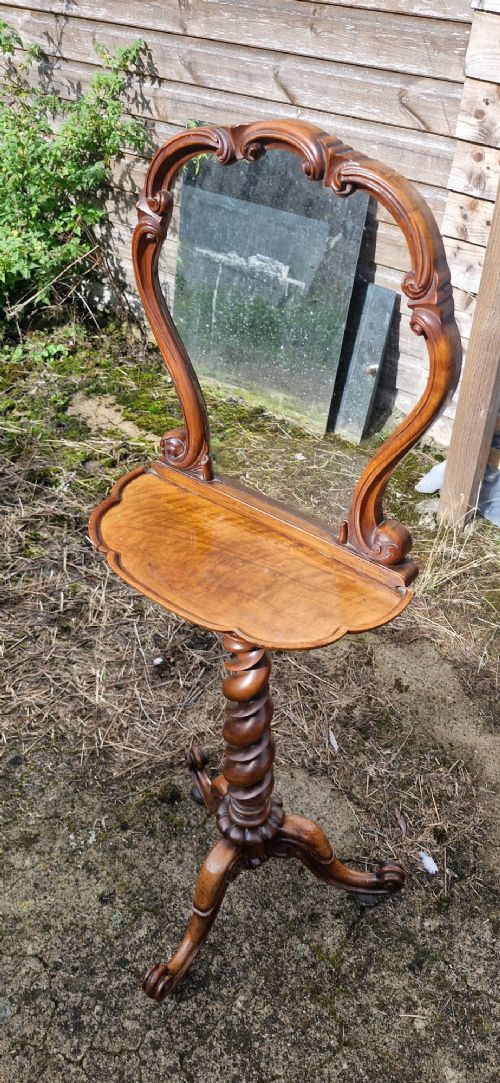
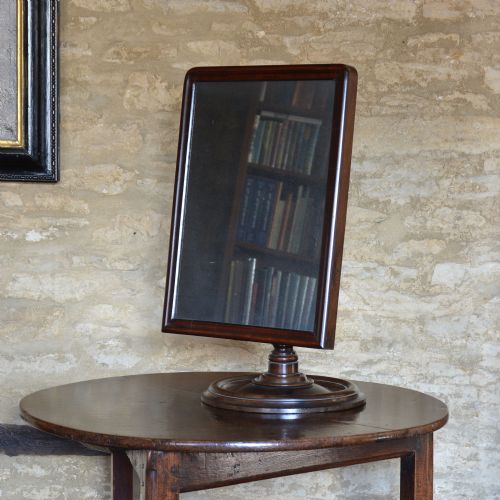
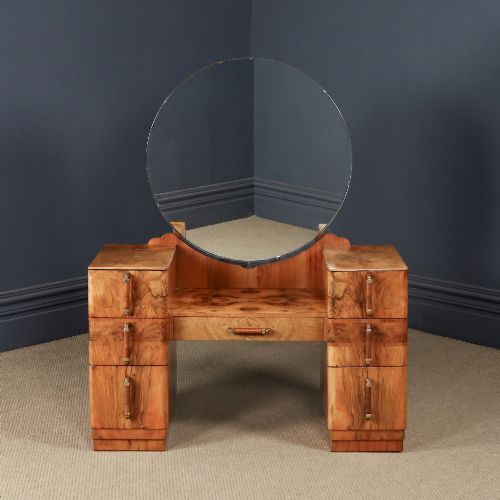
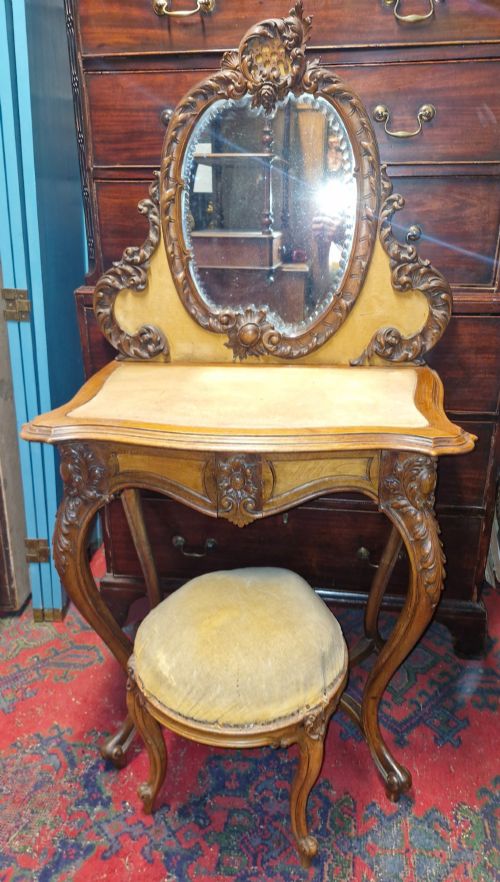
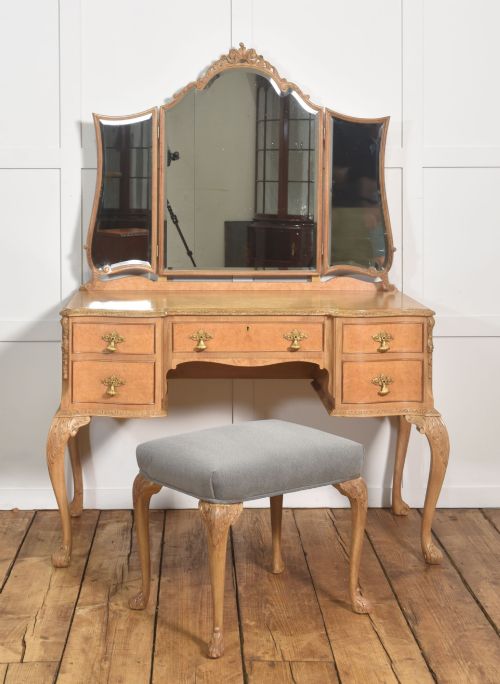
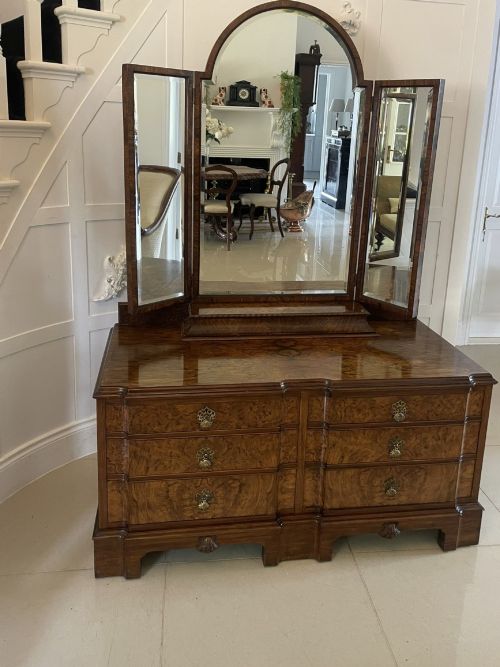
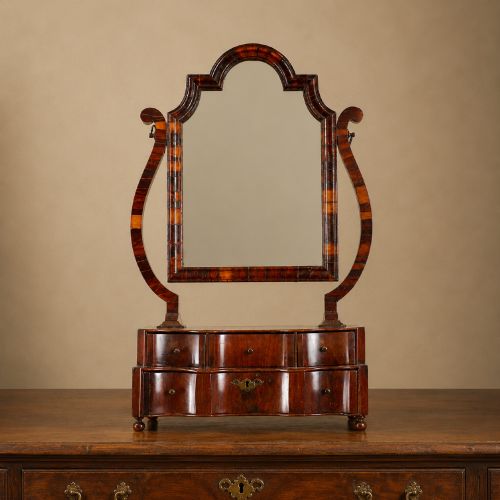
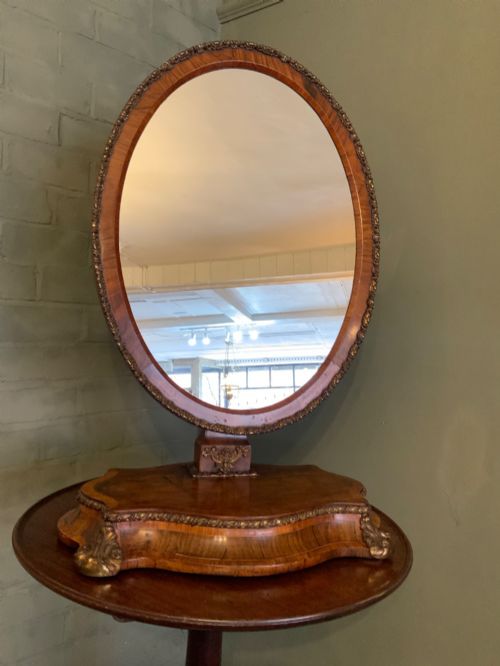


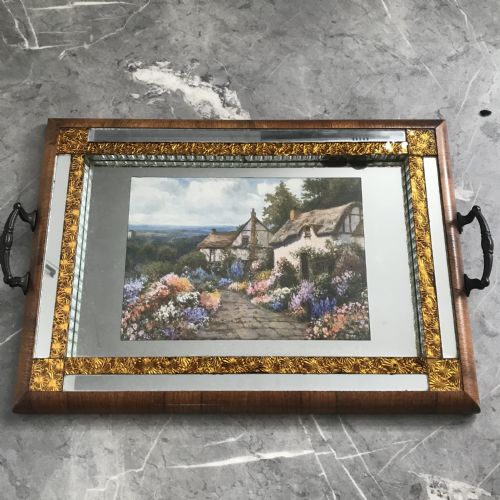

Walnut Table Mirror
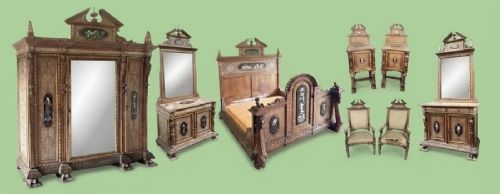
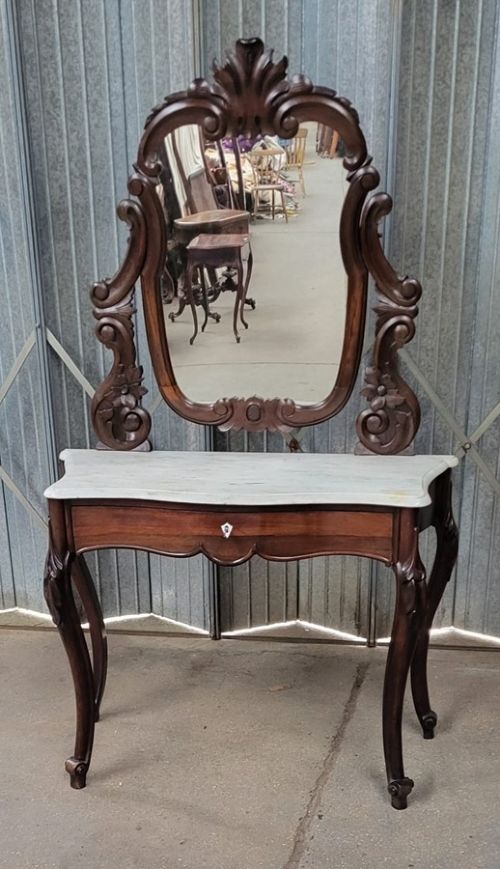
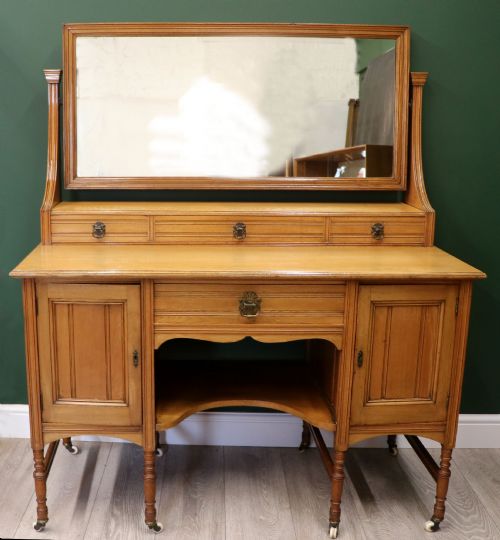
When you search for walnut table mirror, you open a field of dressing glass and toilet plates framed in rich timber from the eighteenth century to the art deco era.
Walnut Table Mirror
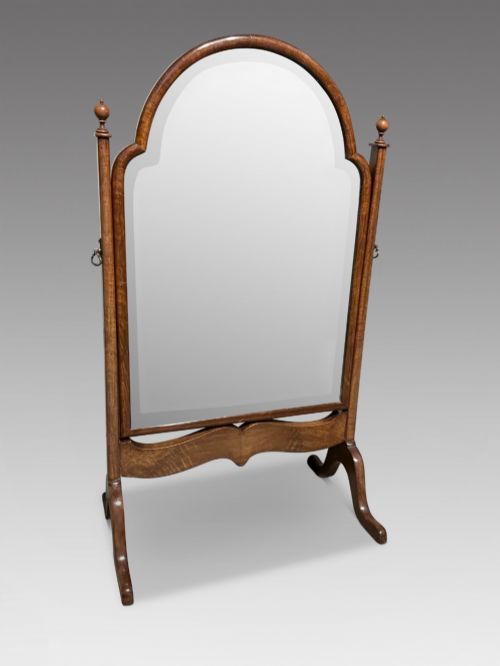
A walnut table mirror typically sits upon a chest, bureau or dedicated dressing stand, designed to provide an adjustable reflection for grooming and personal care.
The versions most common on this page range from early Georgian bureau mirrors with small drawer fitments in the base to Victorian burr walnut swivel glasses and later art deco designs.
Makers produced these pieces across several distinct periods, including Queen Anne, Georgian, Victorian and Edwardian reigns, alongside Dutch marquetry examples and twentieth-century interpretations.
Materials and Construction
Cabinet makers utilised solid walnut and figured veneers such as burr walnut, laid over secondary timbers to create rich, patterned surfaces on the frames and drawer fronts.
Plates of mirror glass were set within pivoting side arms held by brass pins or screw knobs, allowing the user to tilt the angle of reflection.
Drawer boxes within the base utilised traditional dovetail joints, sometimes incorporating boxwood stringing, marquetry details or small compartment interiors for trinkets and shaving gear.
Walnut Table Mirror Retail Price Guide 2026
Typical asking prices for walnut table mirror among the pieces listed under this phrase on Sellingantiques today, from the lower quarter to the upper quarter. They describe what is for sale here now, not the wider market.
Listings feature walnut table mirrors spanning from the seventeenth century through Georgian and Victorian periods to Art Deco designs.
Evaluating Quality and Proportion
The distinction between standard utility items and the finest examples rests on the selection of the timber veneers and the crispness of the carving or inlay.
Proportion plays a central role, as superior pieces maintain a balanced relationship between the size of the swing frame and the supporting base or drawers.
Originality of the mirror plate, backboards and brass hardware elevates an example, while later replacements alter the character and historical integrity of the piece.
Waring & Gillows·Lamb of Manchester·Maurice Adams·Harry and Lou Epstein·Gillows
The Walnut Table Mirror Glossary
- Burr walnut
- A figured wood grain obtained from the excrescences or burls of walnut trees, prized for its swirling patterns and rich texture.
- Toilet mirror
- A smaller mirror designed to sit on a table, chest or dressing stand, popular from the late seventeenth century onwards.
- Swivel glass
- A mirror plate mounted on pivots between upright arms, allowing it to tilt back and forth.
- Dovetail
- A joint formed by interlocking wedge-shaped fingers, used to construct sturdy drawer boxes in period furniture.
- Stringing
- Thin inlay lines of a contrasting wood, such as boxwood, used to outline panels and drawer fronts.
Walnut Table Mirror: Frequently Asked Questions
How do I date a walnut table mirror?
Dating relies on examining the construction methods of the base, the profile of the mirror frame mouldings, and the type of wood used for the secondary framing.
Early eighteenth-century examples often feature candle slides and walnut veneer over pine, while Victorian pieces typically show heavier proportions and burr veneers.
Are the mirror plates usually original?
Many older pieces have replacement mirror plates because silvering degrades over centuries of exposure to light and moisture.
Original glass often exhibits slight distortion, small foxing spots, or thin bevels consistent with period manufacturing techniques.
What is a bureau mirror?
A bureau mirror is a table glass where the supporting base incorporates a small writing slope or a tier of small drawers for papers and valuables.
These compact items combined grooming functions with small-scale correspondence storage in bedrooms or boudoirs.
How do I care for antique walnut?
Walnut benefits from being kept away from direct sunlight and sudden temperature changes, which can dry out the timber and crack the veneers.
Applying a traditional beeswax polish helps nourish the grain and maintain a natural sheen without building up heavy synthetic layers.