


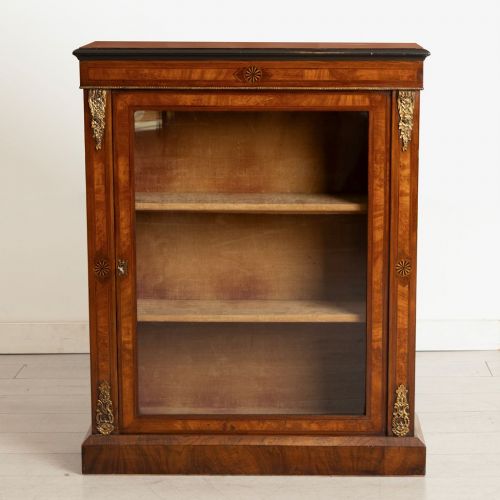
Walnut Glazed Credenza
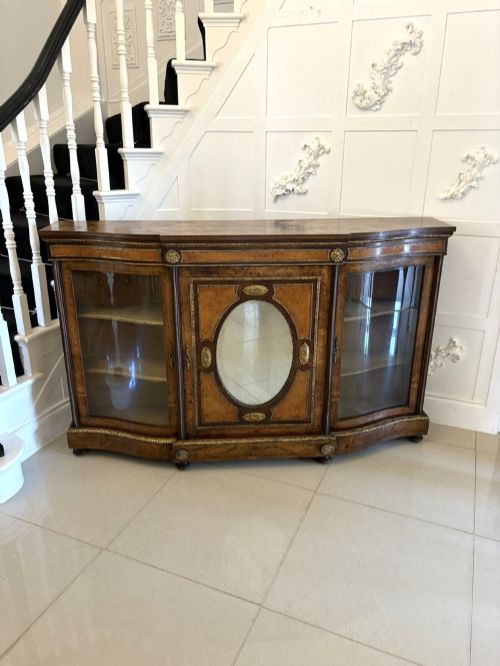
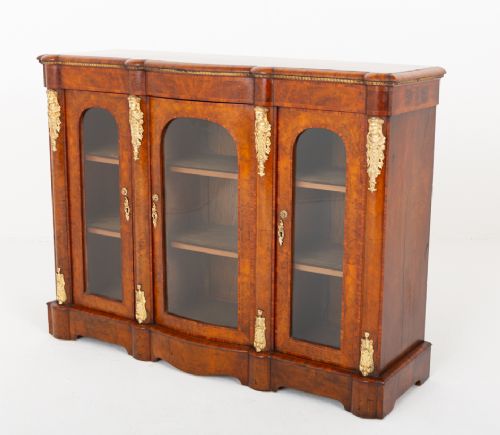
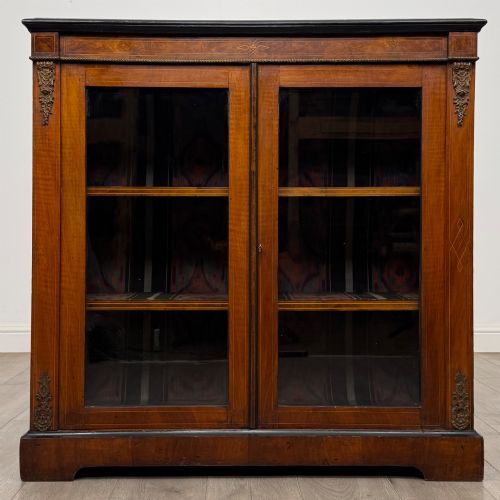
A walnut glazed credenza brings Victorian craftsmanship and warm burr veneers into a room, offering display space behind glass doors.

Walnut Glazed Credenza
A walnut glazed credenza combines the low, sprawling format of a Victorian side cabinet with glazed doors designed for the display of ceramics and books. Pieces carrying this description span the nineteenth century, with strong representation from the eighteen-sixties and eighteen-eighties alongside occasional Regency and early twentieth-century examples.
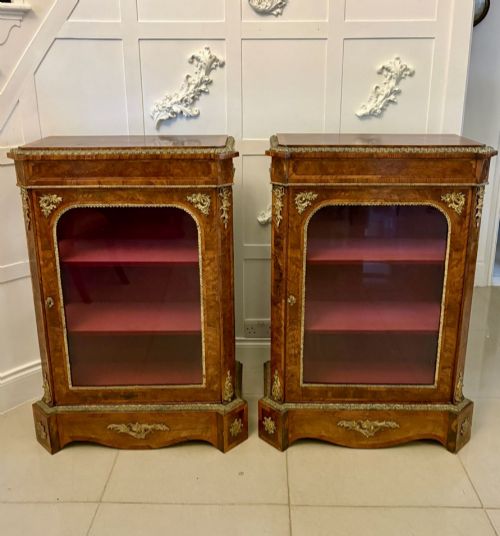
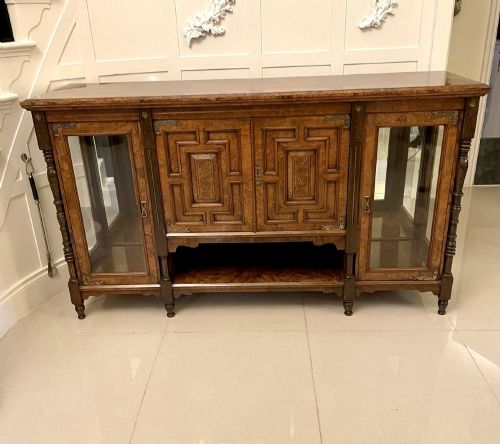
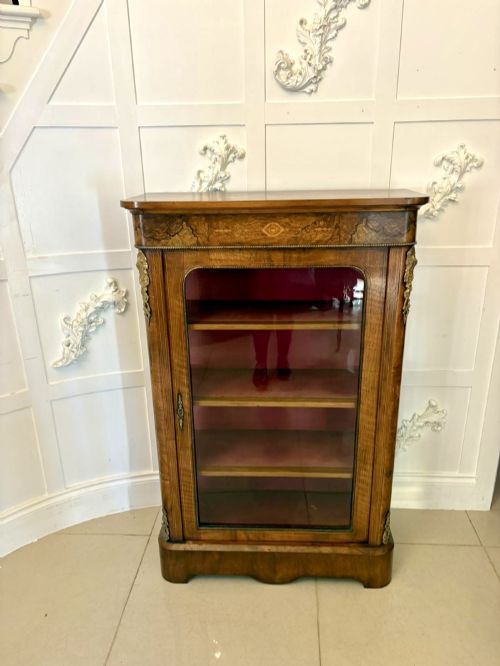
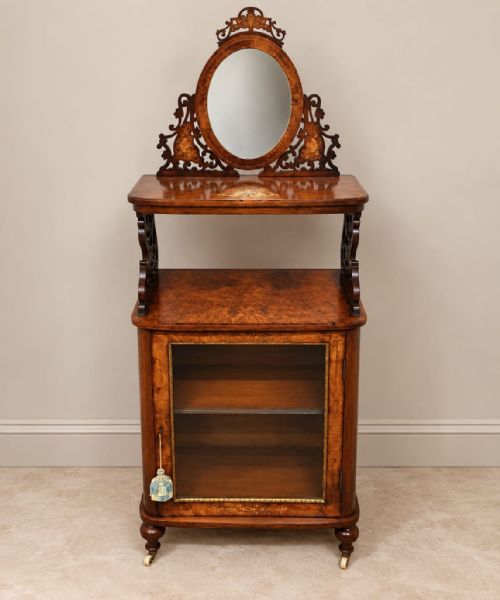
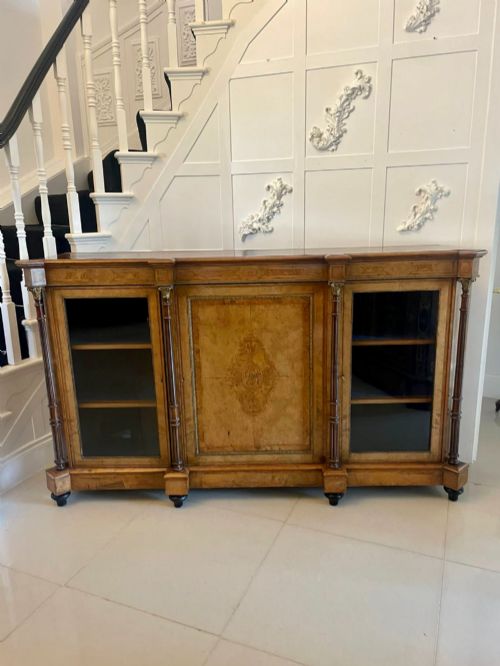
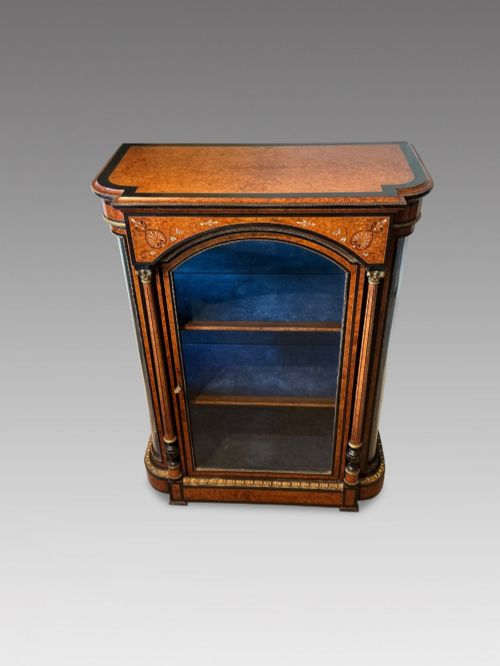
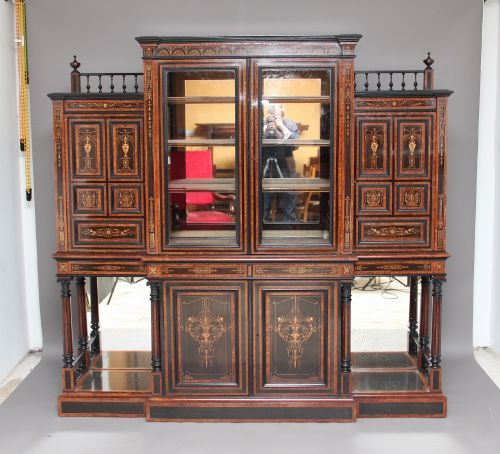
The primary forms appearing here include multi-door credenzas, breakfront bookcases, and compact pier cabinets designed to fit narrow wall spaces between windows. These items originate predominantly within Victorian cabinet-making traditions, incorporating styles ranging from Queen Anne Revival to French Revival and Aesthetic Movement.
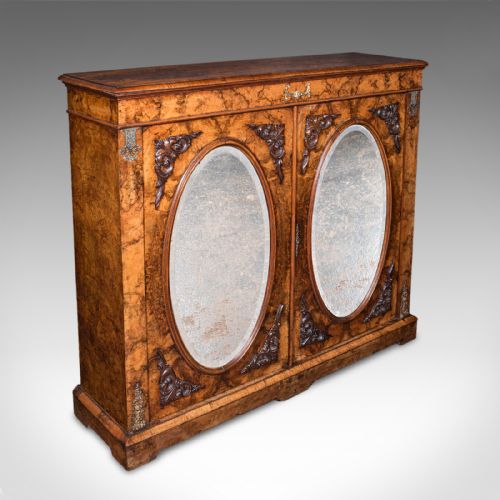
Makers and workshops of the period utilised rich timber reserves to build low display furniture that anchored formal rooms. Buyers exploring this category encounter sideboards, mirror-back credenzas, and glazed display cabinets sharing a common vocabulary of timber and glass.
Materials and Construction
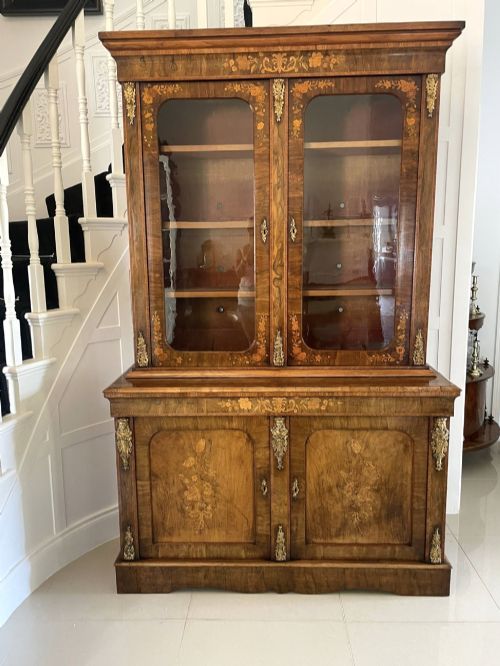
Makers constructed these cabinets using solid carcases faced with burr walnut veneers selected for their swirling grain patterns. Workshops applied contrasting boxwood and exotic wood inlays to create geometric bands and floral marquetry panels across the doors and friezes.
Ormolu mounts cast in bronze and gilt provide decorative highlights around panels and pilasters, while ebonised wood details offer sharp visual contrast against the warm brown timber. Glass panels fitted into the doors protect the interior shelves while revealing the contents.
Walnut Glazed Credenza Retail Price Guide 2026
Typical asking prices for walnut glazed credenza among the pieces listed under this phrase on Sellingantiques today, from the lower quarter to the upper quarter. They describe what is for sale here now, not the wider market.
Some nineteenth-century cabinet makers hid secret drawers inside credenzas for storing family silver and letters.
Evaluating Execution
Distinctions in quality arise from the selection of the burr walnut veneer and the precision of the marquetry and stringing inlay. Cabinets displaying balanced grain matching across multiple doors and complex cast ormolu mounts sit at the higher end of production.
Lamb of Manchester
The Walnut Glazed Credenza Glossary
- Credenza
- A low cabinet or sideboard used for storage and display, often featuring central glazed doors flanked by curved side compartments. The form evolved significantly during the Victorian period.
- Burr Walnut
- Timber taken from the warted growths of walnut trees, yielding highly figured grain patterns with intricate swirls and eyes. Cabinet-makers sliced this wood into thin veneers for decorative surfaces.
- Ormolu
- Gilded bronze mounts applied to furniture for decorative effect during the nineteenth century. These metal enrichments accent corners, friezes, and panel borders.
- Marquetry
- Decorative patterns formed by fitting together contrasting pieces of veneer onto a structural carcase. Makers used this technique to create floral and geometric designs.
- Pier Cabinet
- A narrow display cabinet built to stand against the wall space between windows. These compact Victorian pieces frequently feature glass doors and velvet-lined interiors.
Walnut Glazed Credenza: Frequently Asked Questions
What is a walnut glazed credenza?
A walnut glazed credenza is a nineteenth-century low cabinet featuring wooden framing, burr walnut veneers, and glass doors for display.
These pieces served as ornamental storage units in Victorian drawing rooms and dining rooms.
How were these cabinets used?
Original owners used them to display porcelain, silver, and decorative books behind protective glass panels.
The top surface provided additional space for ornaments and lamps during evening gatherings.
How do I date a walnut cabinet?
Dating relies on stylistic markers such as ormolu mounts, ebonised details, and inlay techniques associated with specific decades.
Victorian pieces frequently display distinct revival styles like Queen Anne or French Revival motifs.
Where should I place a credenza?
These cabinets suit dining rooms, living rooms, or wide hallways where low furniture complements surrounding seating.
The glass fronts allow for illuminated display while keeping dust away from delicate items.