


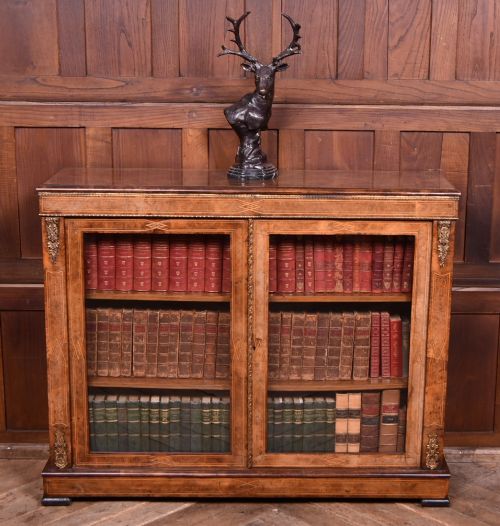
19th Century Walnut Credenza
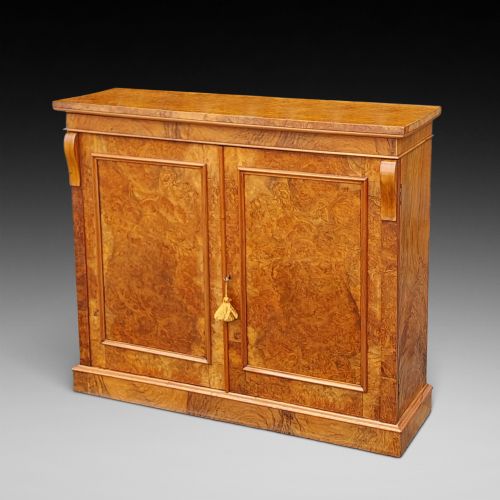
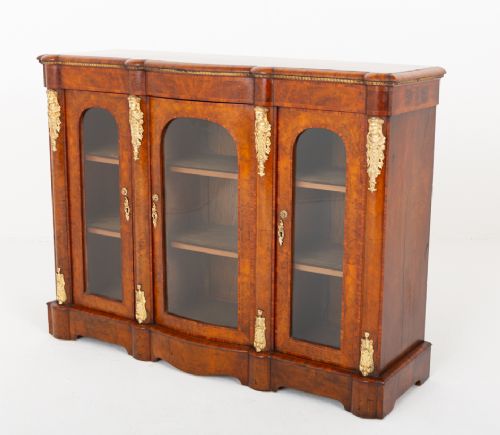
A 19th century walnut credenza brings stately presence to a room, offering rich burr grain and fitted display space for a collection.
The Form and Character of the 19th Century Walnut Credenza
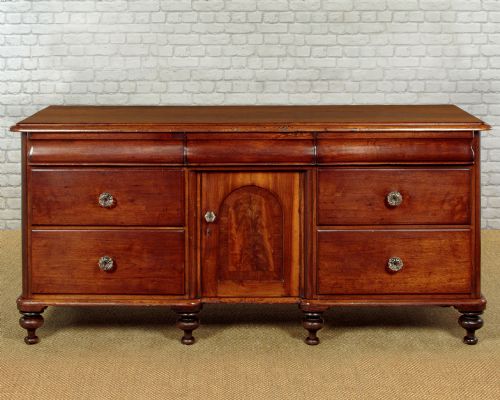
When searching for a 19th century walnut credenza, a buyer is looking at a low-profile cabinet designed for domestic display and storage in Victorian drawing rooms. These pieces frequently double as sideboards or side cabinets, serving both functional and decorative roles within a formal interior.
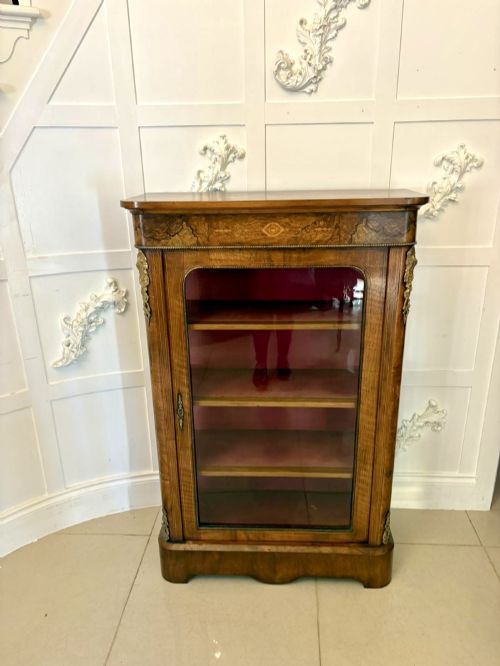
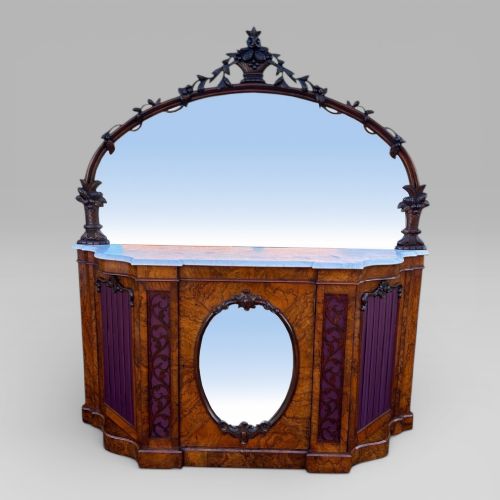
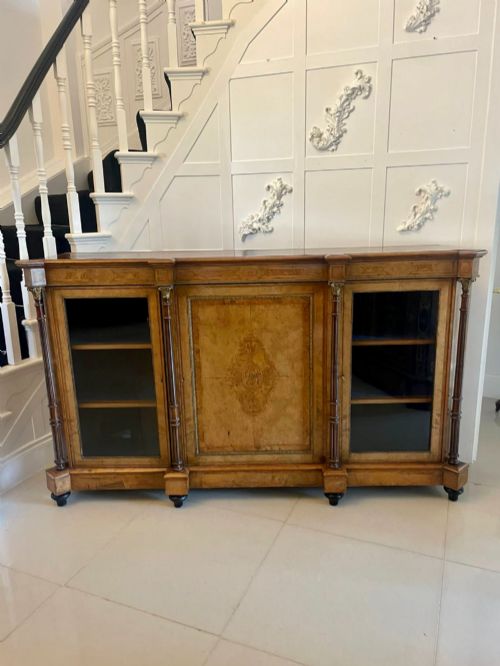
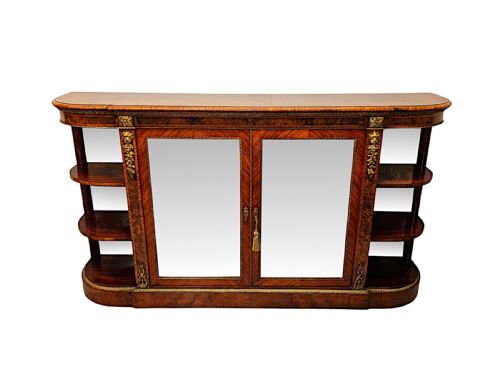
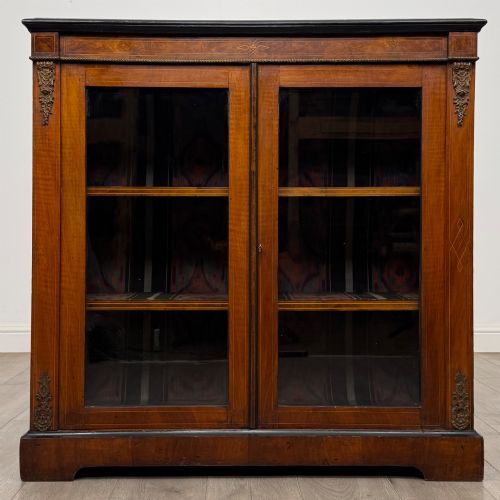
The version most commonly met on this page is the Victorian credenza, often fashioned with curved serpentine fronts, bow ends, or breakfront configurations. They typically incorporate mirrored backs and glass-fronted side cupboards to display porcelain and small objects.
Origins cluster around the mid to late Victorian period, specifically around the decades of 1860 and 1870. The form relies on horizontal emphasis, standing low to the ground with enclosed central shelving flanked by glazed side compartments.

Materials and Construction Methods
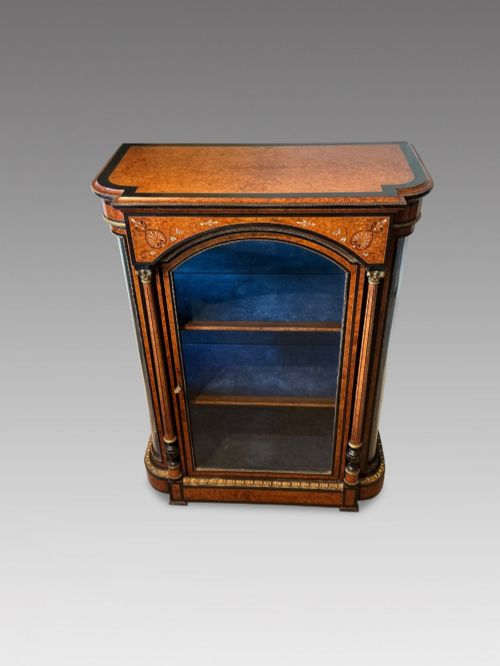
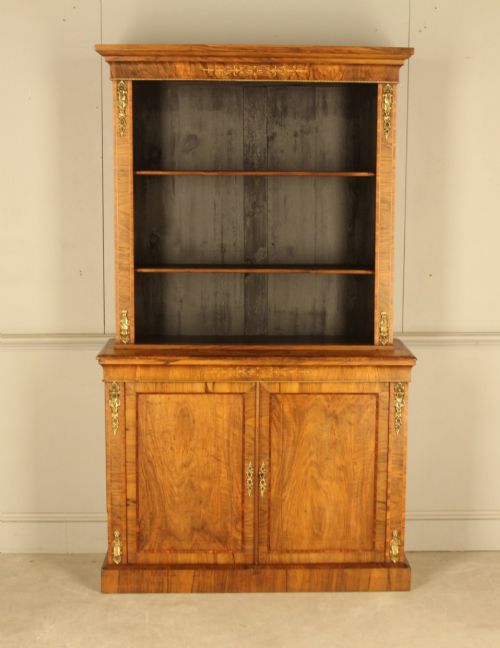
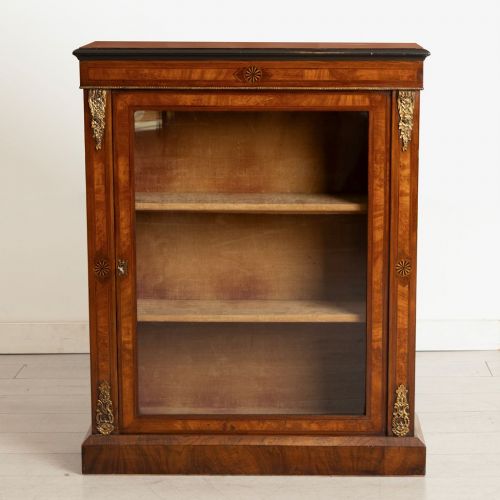
Cabinetmakers utilised solid and veneered walnut, frequently selecting highly figured burr walnut for its complex, swirling grain patterns. Secondary timbers and decorative accents included boxwood and ebonised wood to provide sharp linear contrast against the warm brown tones of the primary veneer.
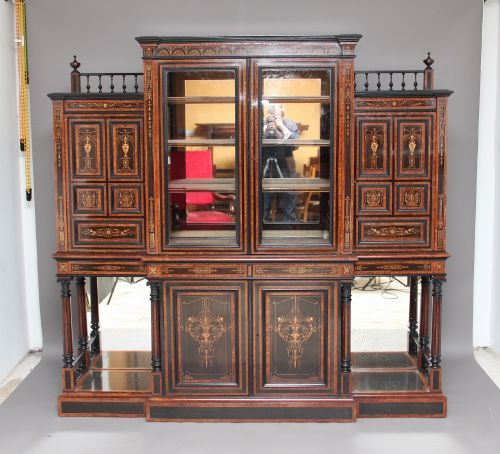
Surface decoration often involved intricate marquetry inlay executed in various lighter woods and satinwood. Metalwork played a structural and decorative role, with cast ormolu mounts, gilt bronze mounts, and brass detailing framing the doors and corners.
Glass was utilised extensively for mirrored backs and cabinet doors, sometimes paired with marble tops on serpentine forms. Interior shelving provided display space, while secure brass locks protected the contents of the side cabinets.
Retail Price Guide 2026
Typical UK retail prices for 19th century walnut credenza, calculated from the Sellingantiques database of over a million retail prices indexed since 2003. This retail price guide relies exclusively on Sellingantiques data; no external sources or auction records are used, so the figures do not describe the wider market.
Materials recorded across the archive include burr walnut, ormolu, porcelain, boxwood, and mirror glass.
Differentiating Quality Across the Range
The upper tier of these cabinets is distinguished by the selection of the timber veneer, particularly the density and symmetry of the burr walnut figure across the central panels. Finer examples display meticulous marquetry where the inlaid motifs remain crisp and tightly fitted into the surrounding wood.
Mounts and hardware create a clear division between standard production and superior craftsmanship. Heavy, finely chased ormolu or gilt bronze mounts integrated smoothly into the overall design indicate a higher tier of manufacture than simpler brass fittings.
Cabinet geometry and structural ambition also separate the grades. Serpentine fronts, breakfront layouts, and bow ends require advanced carpentry to maintain stability, whereas flat-fronted versions represent a simpler construction standard.
H. Ogden Manchester
The 19th Century Walnut Credenza Glossary
- Burr Walnut
- A timber derived from the abnormal growths on walnut trees, yielding complex, swirling grain patterns highly prized for veneer work. Cabinetmakers sliced this wood thinly to cover prominent exterior surfaces.
- Ormolu
- A gilded bronze technique utilising finely ground gold-mercury amalgam applied to a brass or bronze base. It provides decorative mounts and framing elements on nineteenth-century furniture.
- Marquetry
- The art of applying decorative pieces of veneer to a structural structure to form pictorial or geometric patterns. Makers used contrasting woods like boxwood and satinwood to achieve distinct tonal separation.
- Serpentine
- A furniture front characterised by a wavy outline featuring a convex centre flanked by concave curves. This shape requires skilled woodworking to ensure the doors and framework align properly.
Frequently Asked Questions
Where were these cabinets placed in Victorian homes?
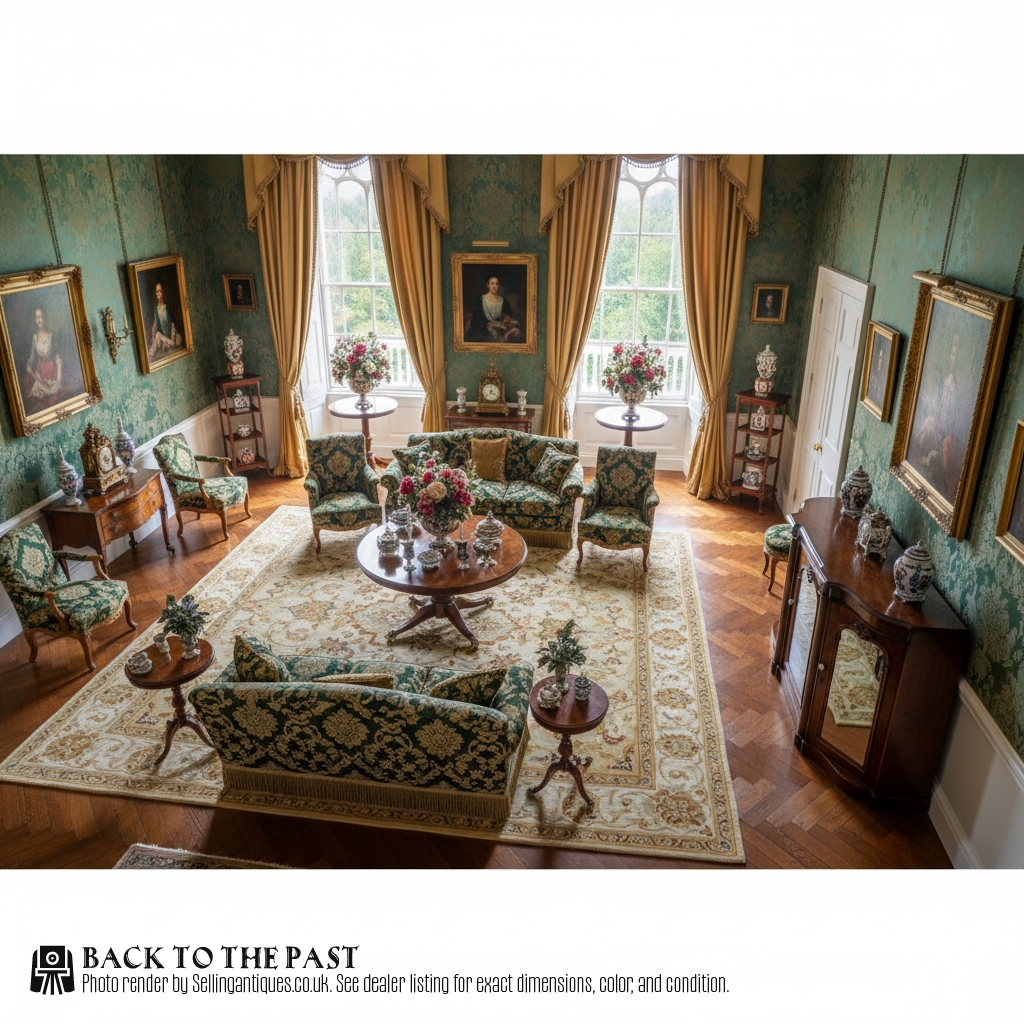
These cabinets were primarily positioned against the main walls of formal drawing rooms and reception spaces. Their low profile allowed them to sit beneath large wall mirrors without obstructing sightlines.
They served as focal points for displaying prized ceramics, glassware, and small ornaments. The mirrored backs helped to reflect light and brighten the interior spaces of the room.
How do I care for burr walnut veneer?
Burr walnut requires stable indoor humidity and protection from direct sunlight to prevent the thin veneer from lifting or fading. Regular dusting with a soft, dry cloth maintains the polished surface without introducing moisture.
Avoid placing these cabinets near direct heat sources such as radiators or fireplaces. Applying appropriate furniture wax occasionally helps nourish the historic timber finish.
How can I tell a mid-Victorian piece from a later one?
Mid-Victorian pieces from around 1860 tend to feature crisper marquetry work and heavier ormolu mounts influenced by earlier French designs. The integration of ebonised wood accents became particularly prominent during this decade.
Later nineteenth-century examples occasionally show broader interpretations of these styles with simpler internal joinery. Examining the secondary timbers and backboards helps confirm the period of construction.