
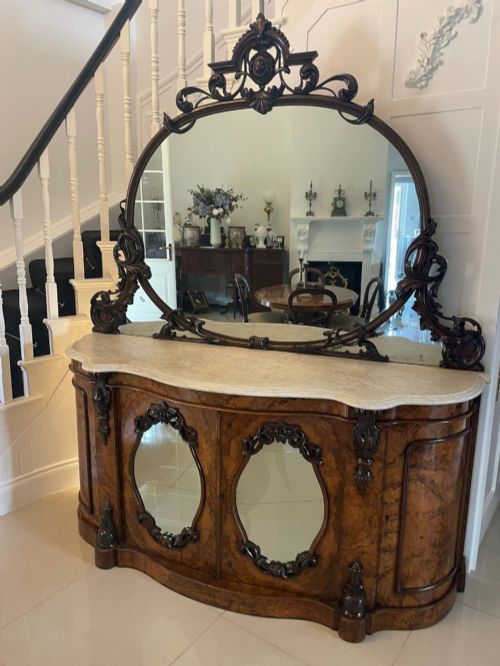
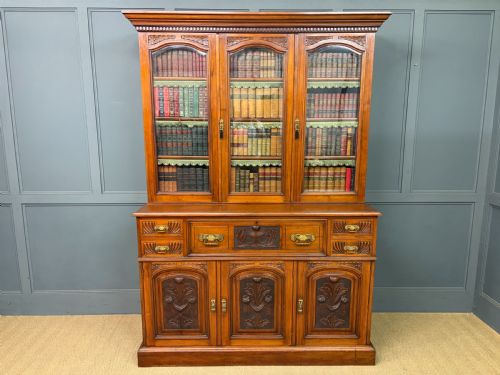


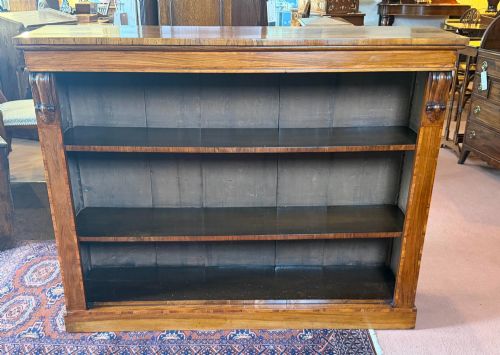
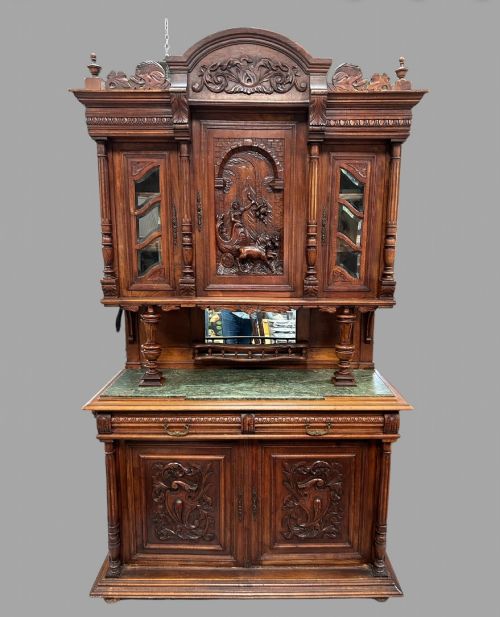
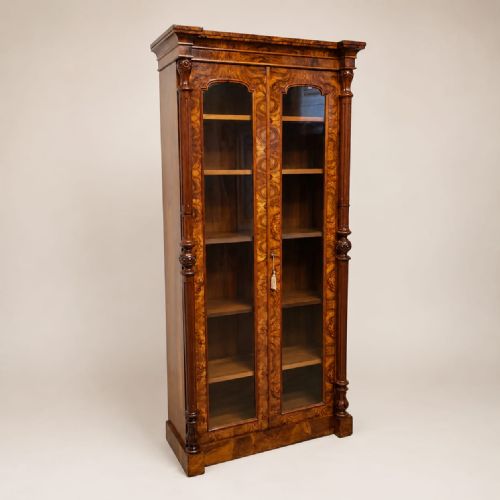
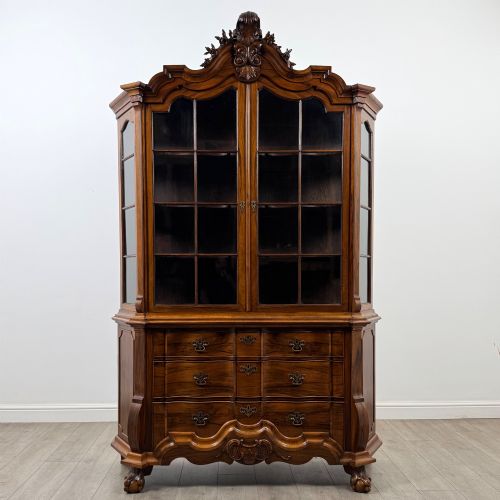
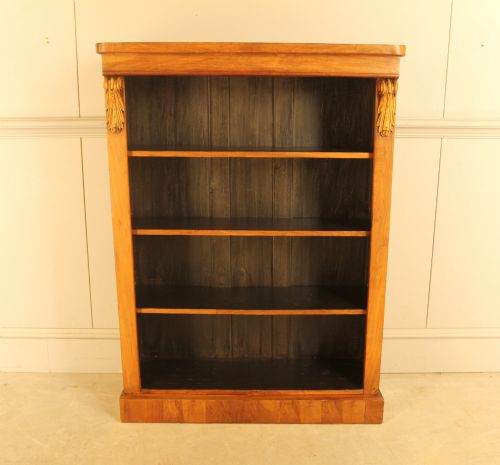
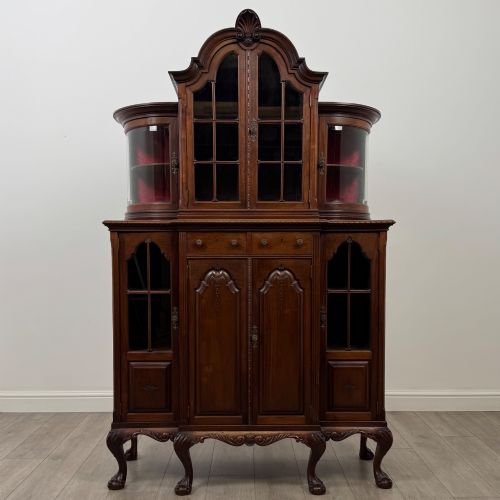
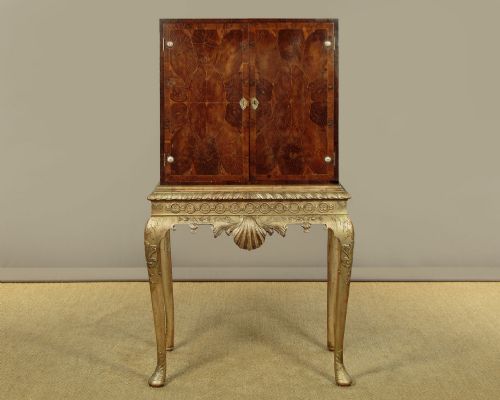
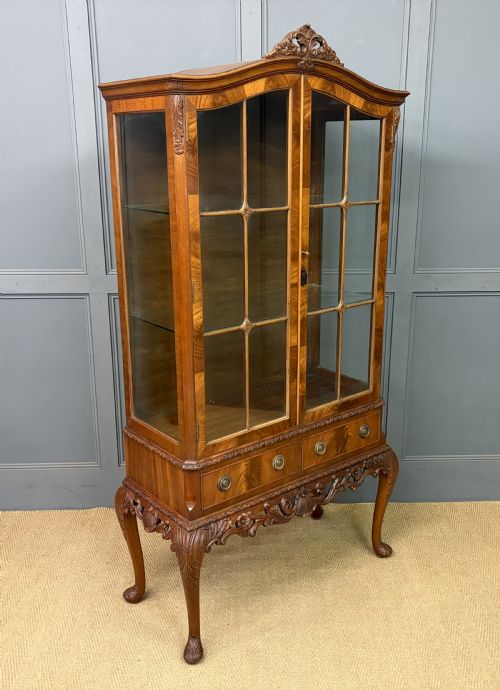
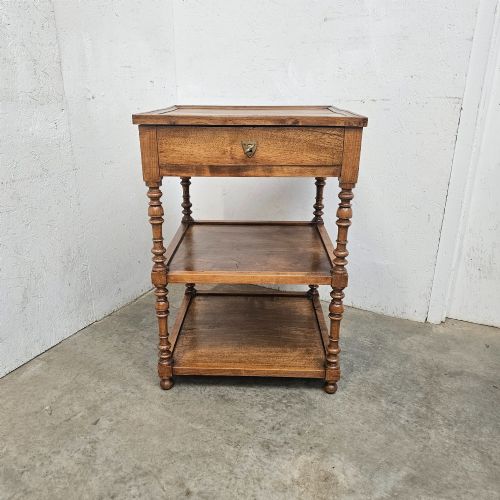
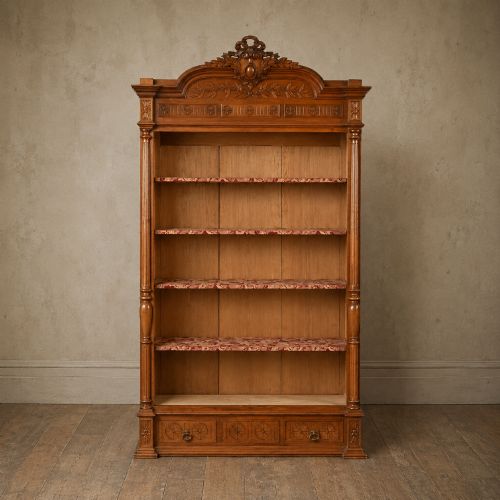
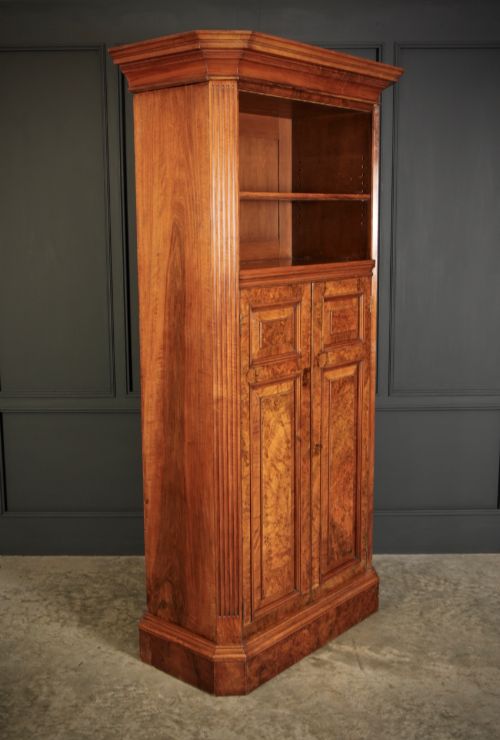
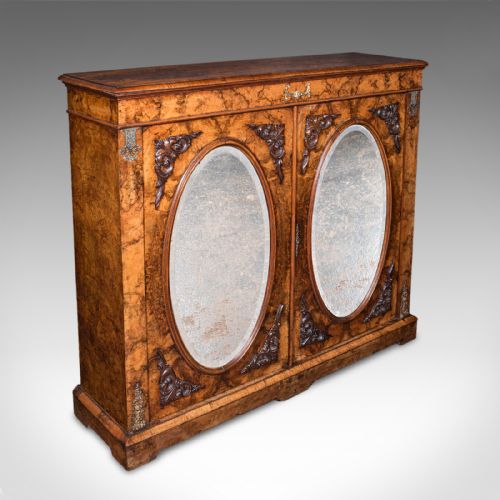
Carved Walnut Display Cabinet
A carved walnut display cabinet brings warmth and figured grain to any room, housing your treasured objects behind clear glass.
Understanding a carved walnut display cabinet
A carved walnut display cabinet is a refined piece of furniture designed to exhibit ceramics, books, or curiosities while protecting them from dust. When you search for this phrase, you encounter forms ranging from compact hanging wall cupboards to substantial floor-standing bookcases and credenzas.
The pieces listed on this page span the nineteenth century up through the nineteen-thirties, taking in Victorian, Aesthetic Movement, French Provincial, and Continental Classical Revival styles. You are most likely to meet Victorian burr walnut examples or corner cabinets featuring glazed doors and brass hardware.
Makers such as Arthur Reynolds of Ludlow and Liberty & Co. illustrate the varied workshops producing these items across Britain and Europe. Whether you select a two-door bookcase or a French kitchen dresser style, each object showcases the dark, rich tones characteristic of walnut timber.
Judging the quality of walnut cabinets
Quality rests primarily on the selection and matching of the walnut timber, particularly where burr veneers show intricate, swirling grain patterns across the doors. Finer examples display crisp, hand-carved detailing rather than repetitive machine mouldings.
The structural integrity of the glazed doors and the weight of the brass fittings also distinguish superior pieces from simpler utilitarian storage. Workshop attribution to known makers further elevates the standing of a cabinet within the market.
Retail Price Guide 2026
Typical UK retail prices for carved walnut display cabinet, calculated from the Sellingantiques database of over a million retail prices indexed since 2003. This retail price guide relies exclusively on Sellingantiques data; no external sources or auction records are used, so the figures do not describe the wider market.
Arthur Reynolds Of Ludlow·Liberty & Co.
The Carved Walnut Display Cabinet Glossary
- Burr walnut
- A veneer sliced from the knotty growth of a walnut tree, prized for its swirling, highly decorative grain patterns. This material appears frequently on high-end Victorian furniture.
- Credenza
- A low cabinet, often featuring glazed or panelled doors, used historically for storing and displaying dining silver or porcelain. On this page, they share space with tall bookcases and corner cabinets.
- Aesthetic Movement
- A late nineteenth-century design style that emphasised visual beauty and craftsmanship over heavy historicism. Pieces in this style often integrate Anglo-Japanese or Moorish decorative elements.
- Escutcheon
- A protective plate surrounding a keyhole, usually fashioned from brass. It serves both a functional purpose and a decorative role on cabinet doors.
- Glazing bars
- The narrow wooden strips that hold individual panes of glass within a cabinet door. Their arrangement defines the window pattern of the display section.
Frequently Asked Questions
What is a carved walnut display cabinet?
It is a wooden storage piece featuring glass doors or open shelving designed to showcase decorative objects. The use of walnut provides a dark, rich aesthetic.
These cabinets serve practical storage needs while acting as focal points in a dining room or drawing room.
How do I date a walnut cabinet?
Dating relies on observing stylistic markers such as Victorian proportions, Aesthetic Movement asymmetry, or Edwardian Arts and Crafts simplicity. Construction methods and hardware types also offer clues.
Comparing the piece against documented examples from makers helps narrow down the decade of manufacture.
Where should I place a corner cabinet?
A corner cabinet fits neatly into empty room junctions, utilising dead space for storage and display. They work particularly well in dining rooms for china.
Ensure the wall angles match the cabinet construction before placement to guarantee a flush fit.
How do I care for walnut furniture?
Maintain walnut by keeping it away from direct sunlight and heat sources that can dry out the timber and veneer. Regular dusting with a soft cloth preserves the finish.
Applying appropriate wax occasionally helps nourish the wood without building up heavy residue.