

Walnut Desk Side Drawers
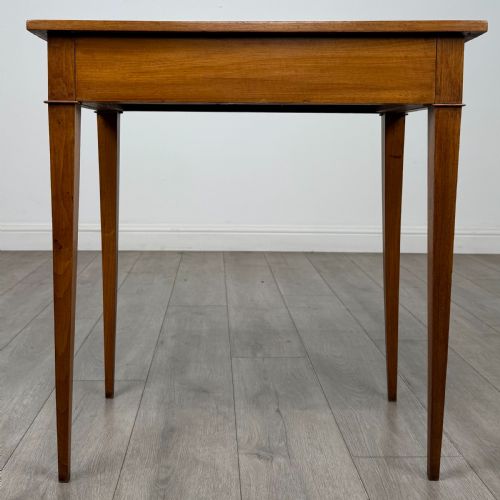
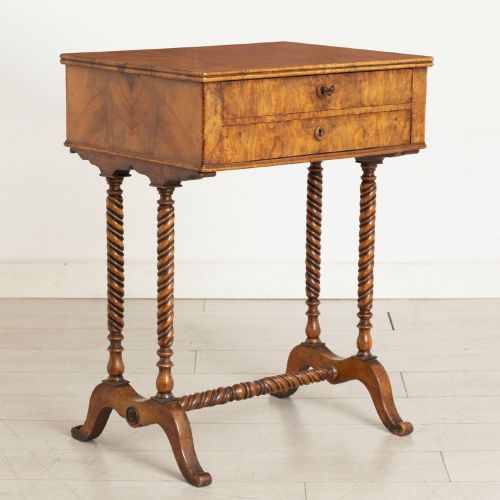
These walnut desk side drawers and related tables combine figured timber with practical compartments, offering surface workspace and tidy storage.
Walnut Desk Side Drawers
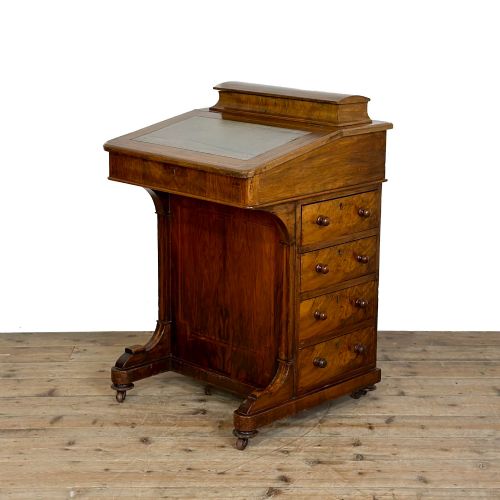
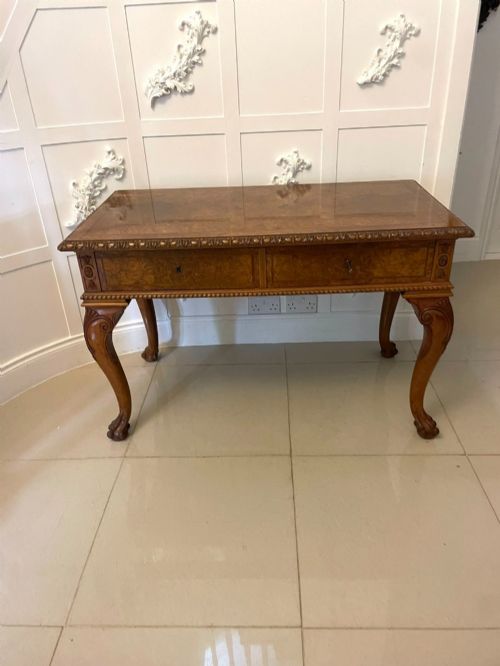
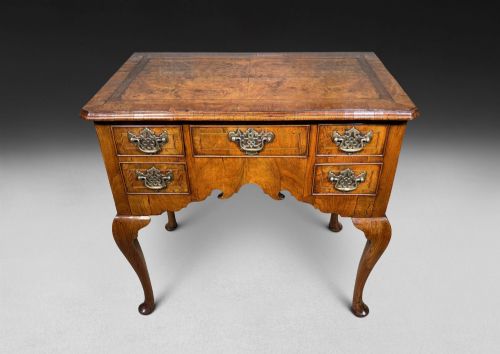
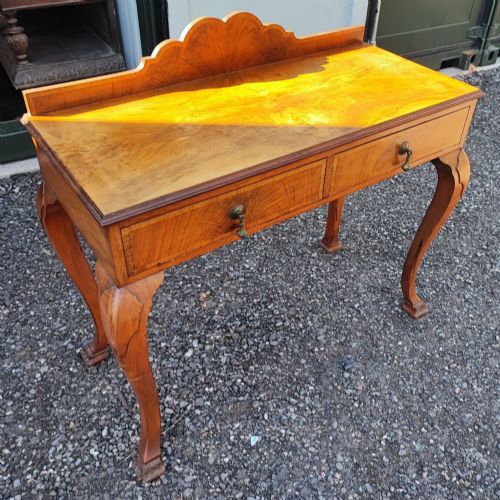
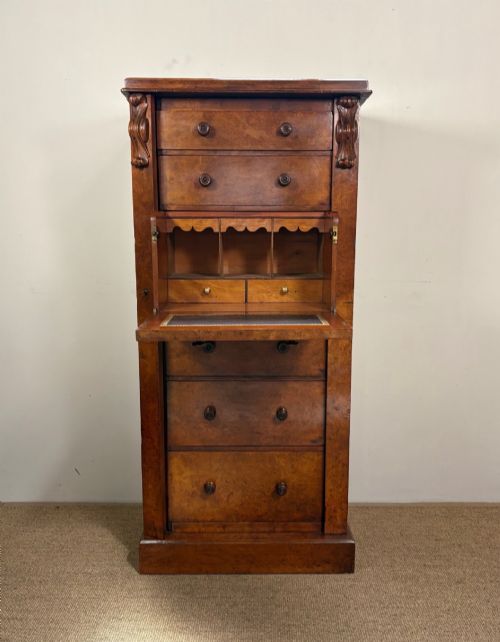
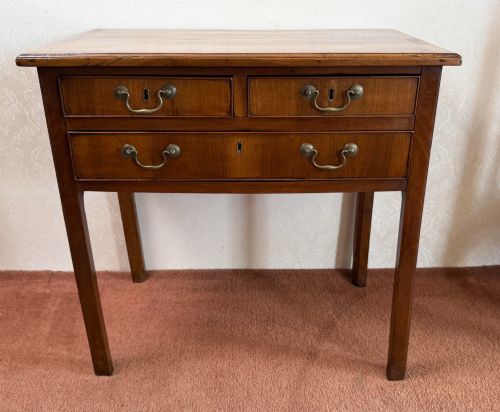
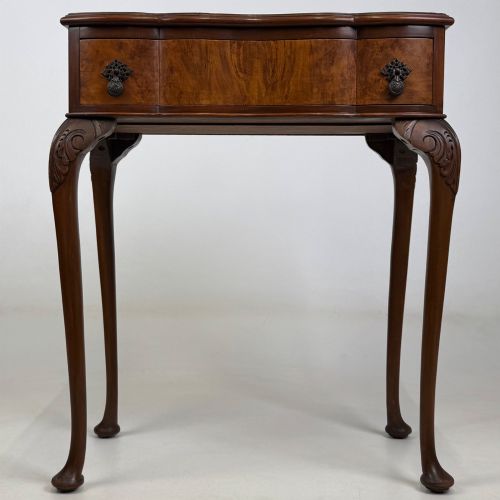
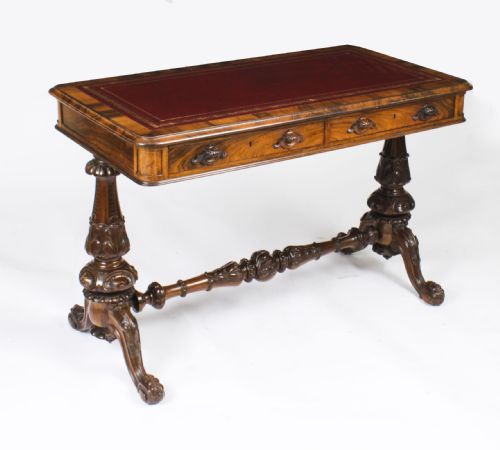
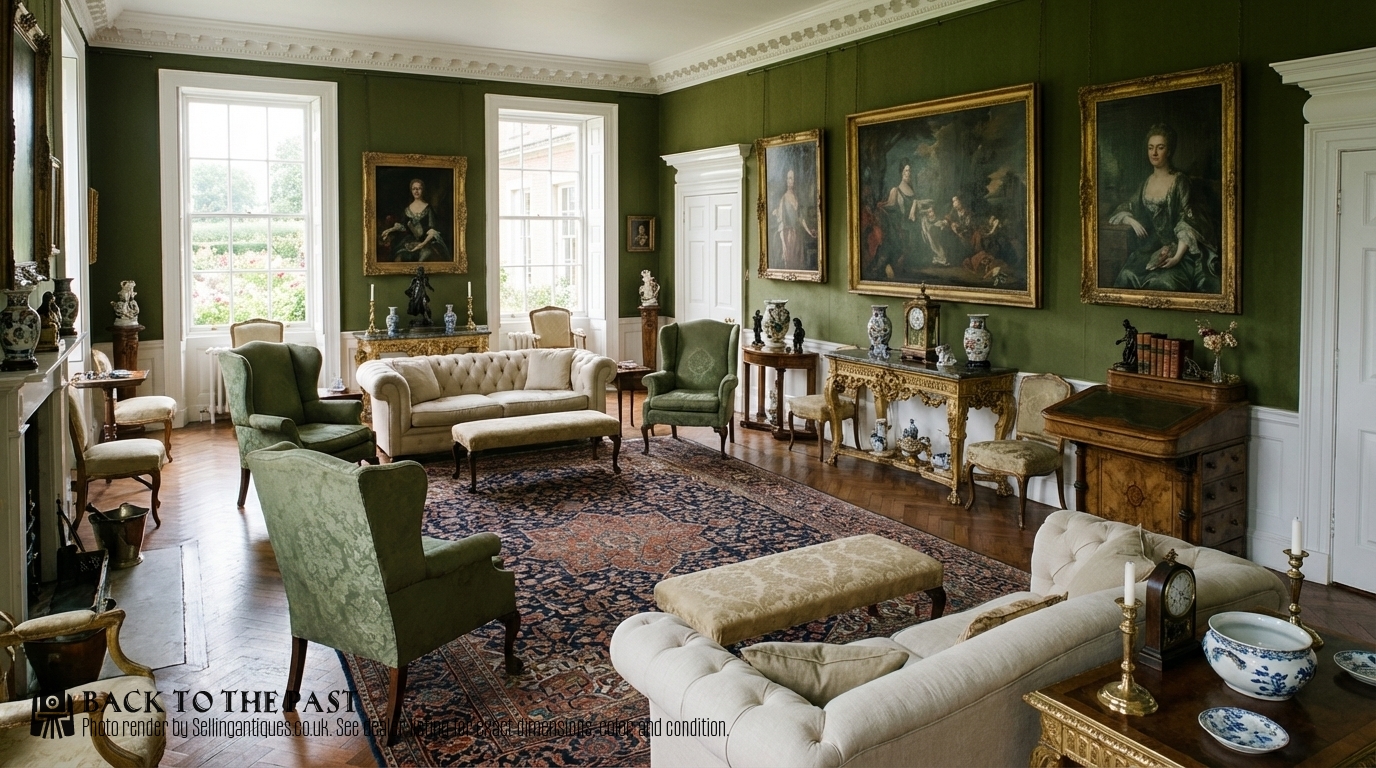
Walnut desk side drawers appear primarily across lowboys, writing tables, Davenport desks, and console tables. These pieces originate from the eighteenth century onwards, spanning Georgian, Victorian, and Edwardian periods.
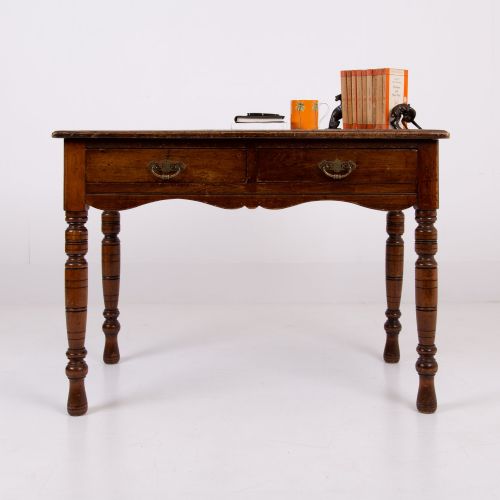
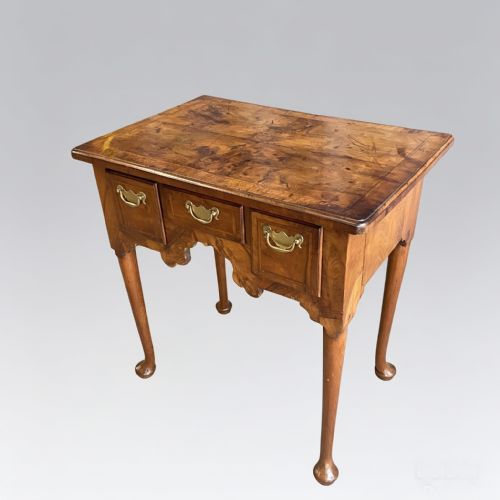
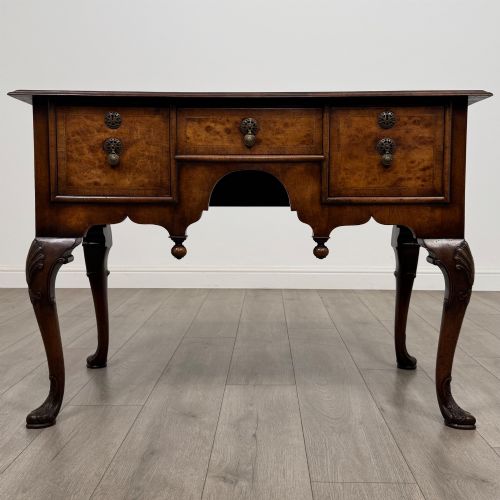
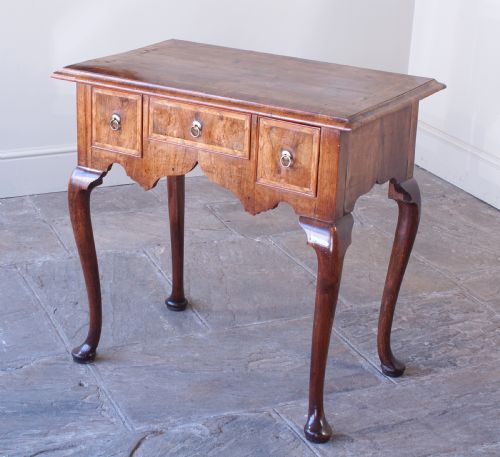
Lowboys and writing tables provide low-slung surfaces with integrated drawer compartments positioned beneath the top. The selection includes examples styled in the manner of George II alongside later Victorian and Edwardian iterations.
Makers such as Edwards & Roberts, Shoolbred and Co, and Maple and Co produced refined versions utilising figured timber. Buyers encounter both compact freestanding tables and fitted desks designed for domestic writing and storage.
Materials and Construction
Cabinet makers utilised solid walnut, burr walnut, and satin walnut, frequently highlighting decorative grain patterns across table tops and drawer fronts. Secondary timbers such as fruitwood support the internal structure of the drawers.
Metalwork details incorporate brass handles, escutcheons, and hinges. Leather inserts appear on writing surfaces, whilst specialist techniques like feather banding decorate the perimeters of eighteenth-century drawer faces.
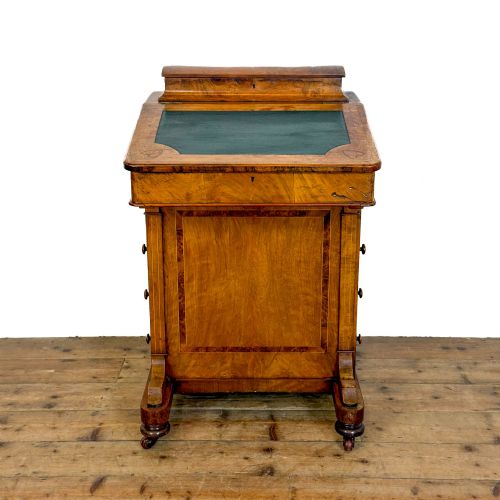
Secret drawers tucked within Davenport desks reward curious owners with hidden compartments for private correspondence.
Grading Quality
The choice of veneer defines visual hierarchy, with heavily figured burr walnut commanding greater aesthetic presence than plain timber boards. Crispness in carved cabriole legs and fine dovetail joints in the drawer construction indicate superior workshop standards.
Makers' stamps add provenance, distinguishing standard regional items from labelled pieces by notable firms like Edwards & Roberts or Maple and Co. Integrity of the secondary woods and retention of original brass hardware elevate individual pieces.
Edwards and Roberts·Shoolbred and Co·Maple and Co·W J Mansell
The Walnut Desk Side Drawers Glossary
- Lowboy
- A small table with one or more drawers, originating in the early eighteenth century as a dressing table or side table. These pieces typically feature four slender legs, sometimes terminating in pad feet.
- Davenport desk
- A compact nineteenth-century writing desk featuring a sloping, leather-lined top above a pedestal of side drawers. The side drawers often lock when the desktop slides forward.
- Burr walnut
- Timber taken from a walnut tree growth where the grain has swirled into intricate knot formations. This material provides highly decorative surfaces for table tops and drawer fronts.
- Feather banding
- An inlay technique using thin strips of veneer arranged in a herringbone pattern around the edges of drawer fronts. This detail characterises finer pieces from the eighteenth century.
- Satin walnut
- A timber derived from the American sweetgum tree, possessing a lustrous grain utilised in various nineteenth and early twentieth-century tables.
Walnut Desk Side Drawers: Frequently Asked Questions
What is a lowboy used for?
A lowboy functions as a compact side table or serving surface equipped with practical drawers. Historically, these pieces served multiple domestic roles including dressing tables and writing surfaces.
In modern interiors, they fit easily into hallways or reception rooms where surface space and subtle storage are required.
What is the difference between burr walnut and plain walnut?
Burr walnut comes from a tree excrescence that produces complex, swirling grain patterns full of tiny knot clusters. Plain walnut displays a more uniform, straight or wavy grain structure.
Cabinet makers reserved burr veneer for the most prominent display surfaces of high-status furniture.
How do I care for antique walnut furniture?
Keep walnut furniture away from direct sunlight and strong heat sources to prevent the timber and veneer from drying out. Regular dusting with a soft, dry cloth maintains the polished finish.
Applying occasional wax feeds the wood and preserves the lustre of the antique grain.