






Captain Desk Drawers
Captain desk drawers take the form of compact writing cabinets, offering fitted storage and a sloped writing surface that suit compact studies.
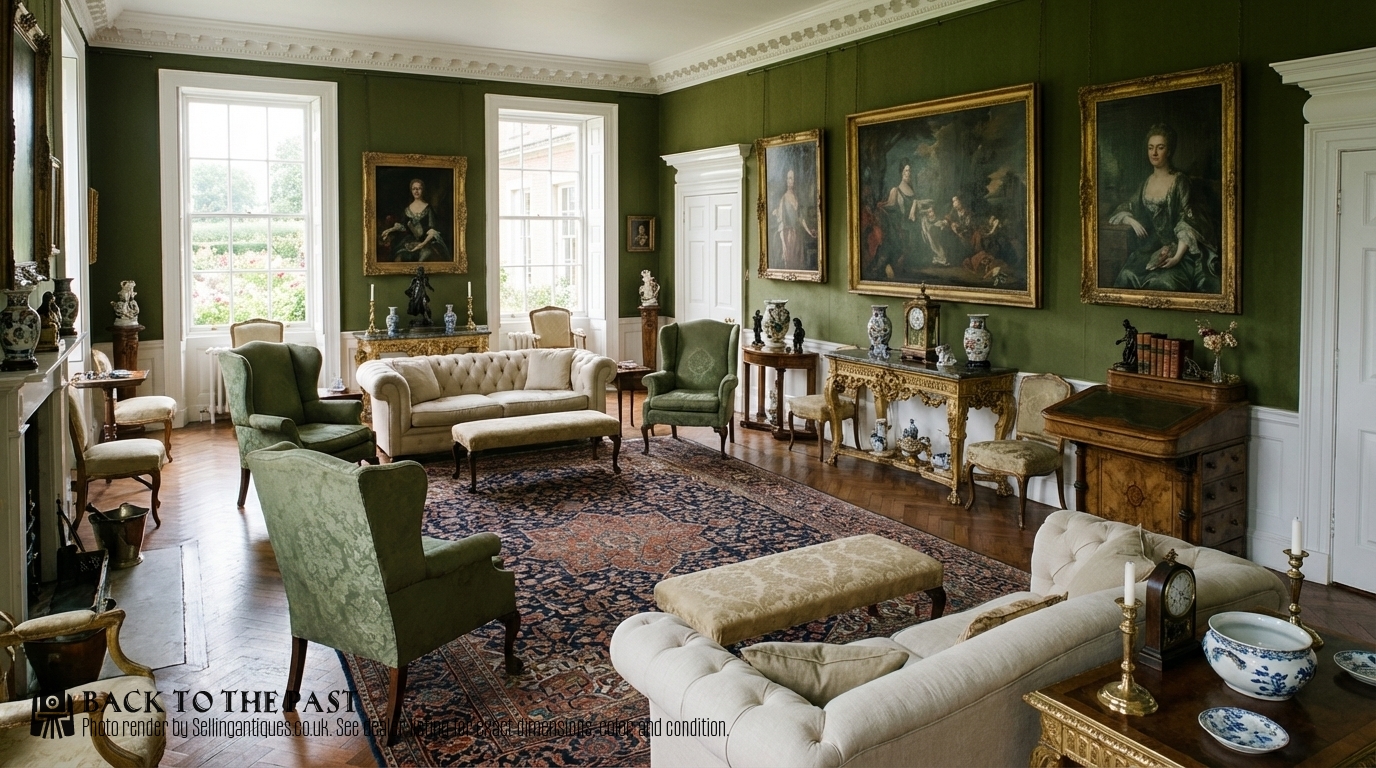
Captain Desk Drawers
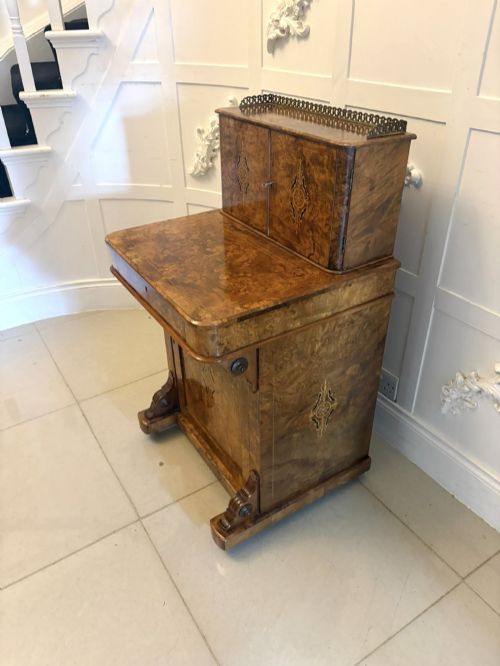
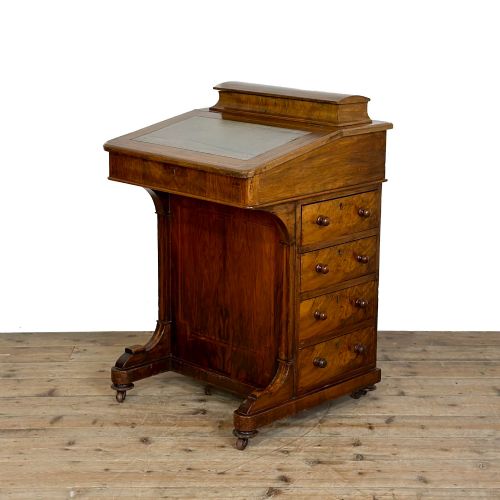
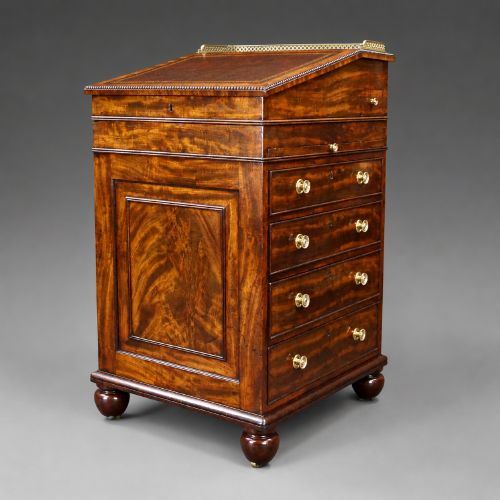
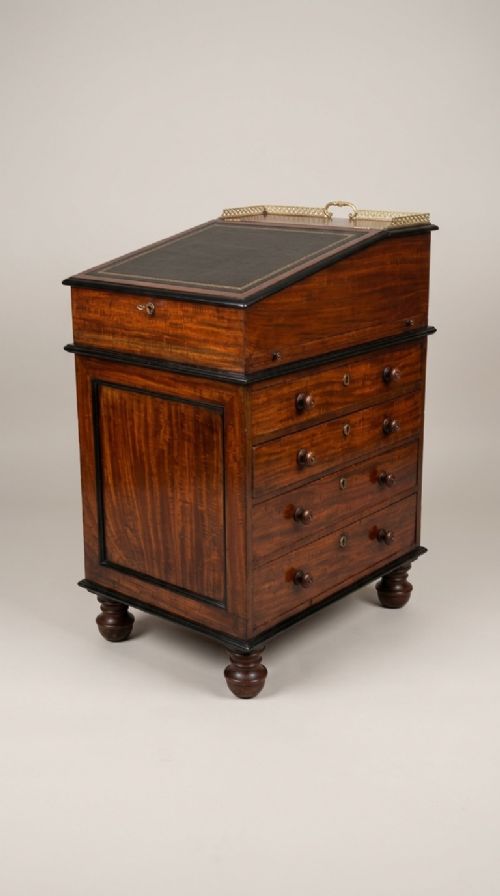
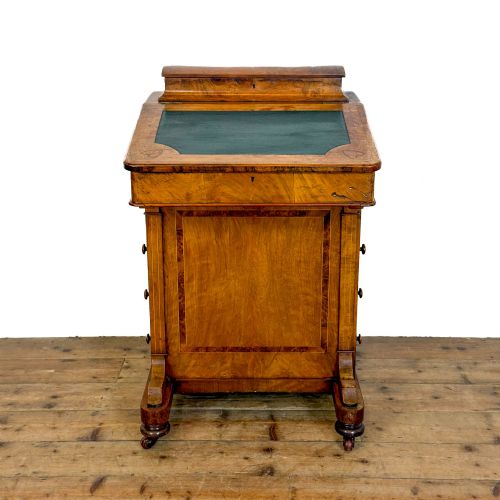
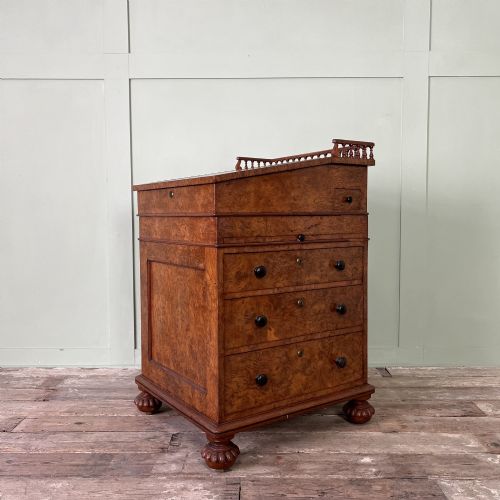
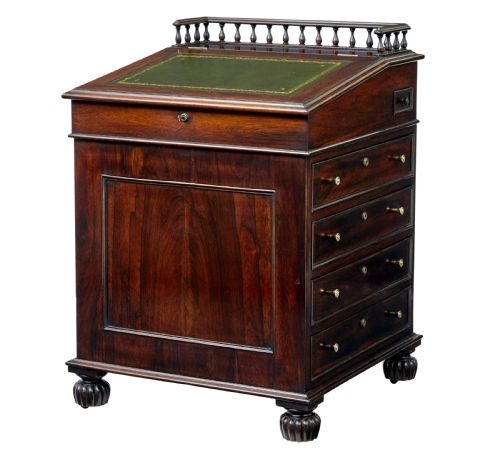
When buyers search for captain desk drawers, they encounter compact writing desks known primarily as Davenports, which combine a writing slope with a pedestal of drawers. These pieces date across the Georgian, Regency, William IV, Victorian, and Edwardian periods.
The most common examples on this page are Victorian and nineteenth-century pieces finished in burr walnut or mahogany. Makers and workshops constructed these desks to provide a functional workstation with drawers set into the side.
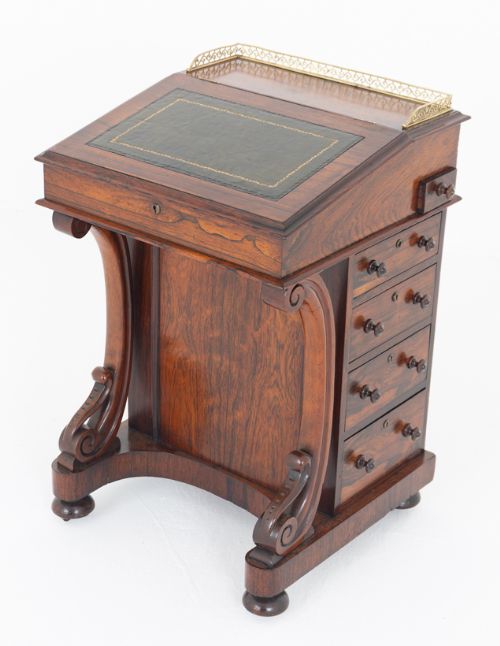
Forms range from simple mahogany writing desks to elaborately inlaid walnut and rosewood variants featuring keys and sliding tops. They appear as freestanding items designed for domestic writing and correspondence.
How they were made
Cabinet makers utilised dense hardwoods such as mahogany, rosewood, walnut, and burr walnut for the primary structure. Decorative veneers like flame mahogany, pollard oak, and amboyna provided rich surface grain patterns.
Inlays of satinwood and marquetry decorated the exteriors, while leather panels formed the writing surfaces of the slopes. Brass fittings, including locks and keys, secured the drawers and interior compartments.
Some nineteenth-century writing desks include secret compartments designed to keep private correspondence entirely hidden from visiting guests.
What varies in quality
The selection of timber grain defines the visual merit of each piece, ranging from plain mahogany to highly figured burr walnut and amboyna veneers. Superior execution appears in the precision of satinwood inlay and marquetry detail.
Gillows·Gillow and Co
The Captain Desk Drawers Glossary
- Davenport
- A compact writing desk featuring a sloped top above a pedestal of drawers. This form became popular during the nineteenth century.
- Burr walnut
- A wood harvested from the warted growths on walnut trees, yielding complex swirling grain patterns. Cabinet makers prized it for decorative veneer.
- Marquetry
- The art of applying pieces of veneer to a structure to form decorative patterns and pictures. It often incorporates various exotic timbers.
- Satinwood
- A pale, durable hardwood used for contrasting inlay and stringing on dark furniture surfaces. It produces a luminous quality when polished.
- Flame mahogany
- A distinct timber figure resembling flickering flames, cut from the branch junctions of mahogany trees. Regency and Victorian makers utilised it on prominent surfaces.
Captain Desk Drawers: Frequently Asked Questions
What is a Davenport desk?
A Davenport desk is a compact writing cabinet with a slanted top and drawers opening to the side.
These pieces combine a writing surface and storage within a single footprint.
How do I date a Victorian desk?
Victorian desks span the nineteenth century, showing shifts from heavy mahogany to burr walnut and marquetry.
Specific construction methods and secondary woods help confirm the decade of manufacture.
Where were these desks used?
These desks served for private correspondence and household administration in sitting rooms and studies.
Their compact size allowed them to occupy smaller spaces than a full partner's desk.
What woods appear most often?
Mahogany and walnut form the primary structure of most examples on this page.
More decorative versions utilise rosewood, burr elm, pollard oak, and amboyna.