


Marquetry Writing Davenport
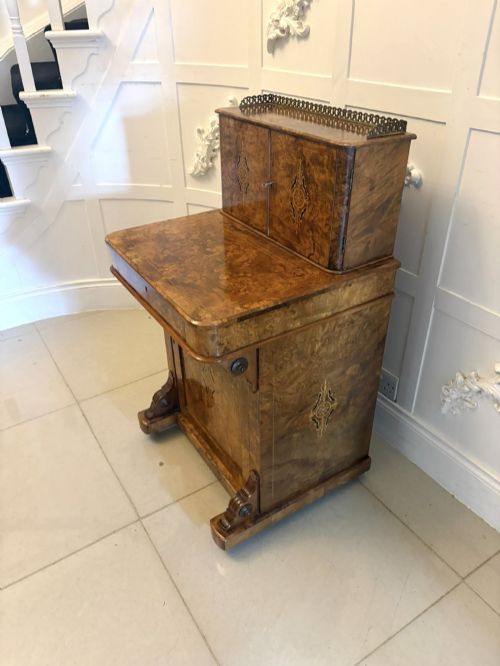
These marquetry writing davenport desks combine a compact writing slope with intricate floral or geometric wood patterns, offering a practical workspace wrapped in Victorian craftsmanship.
Marquetry Writing Davenport
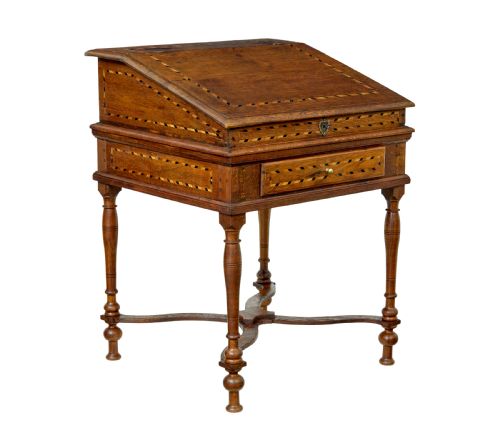
A marquetry writing davenport is a small, sloping desk designed for correspondence, frequently encountered from the Victorian period with dates spanning the nineteenth century. These pieces usually feature a sloped writing surface above a set of drawers, often accompanied by stationary compartments or pop-up mechanisms.
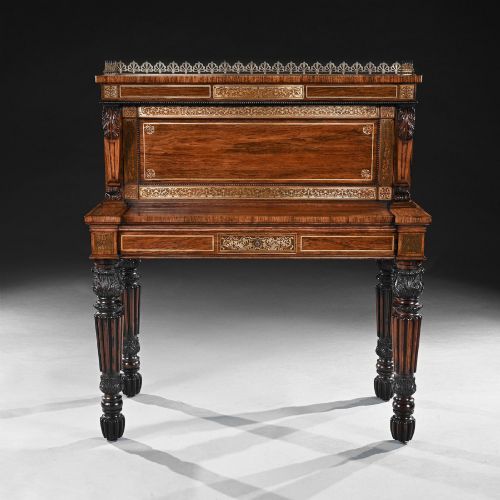
The versions most likely to meet you on this page are constructed from burr walnut or rosewood, ornamented with detailed boxwood, satinwood, or marquetry inlay. Many examples adopt traditional forms with side drawers, while others incorporate piano tops or freestanding layouts intended to sit centrally in a room.
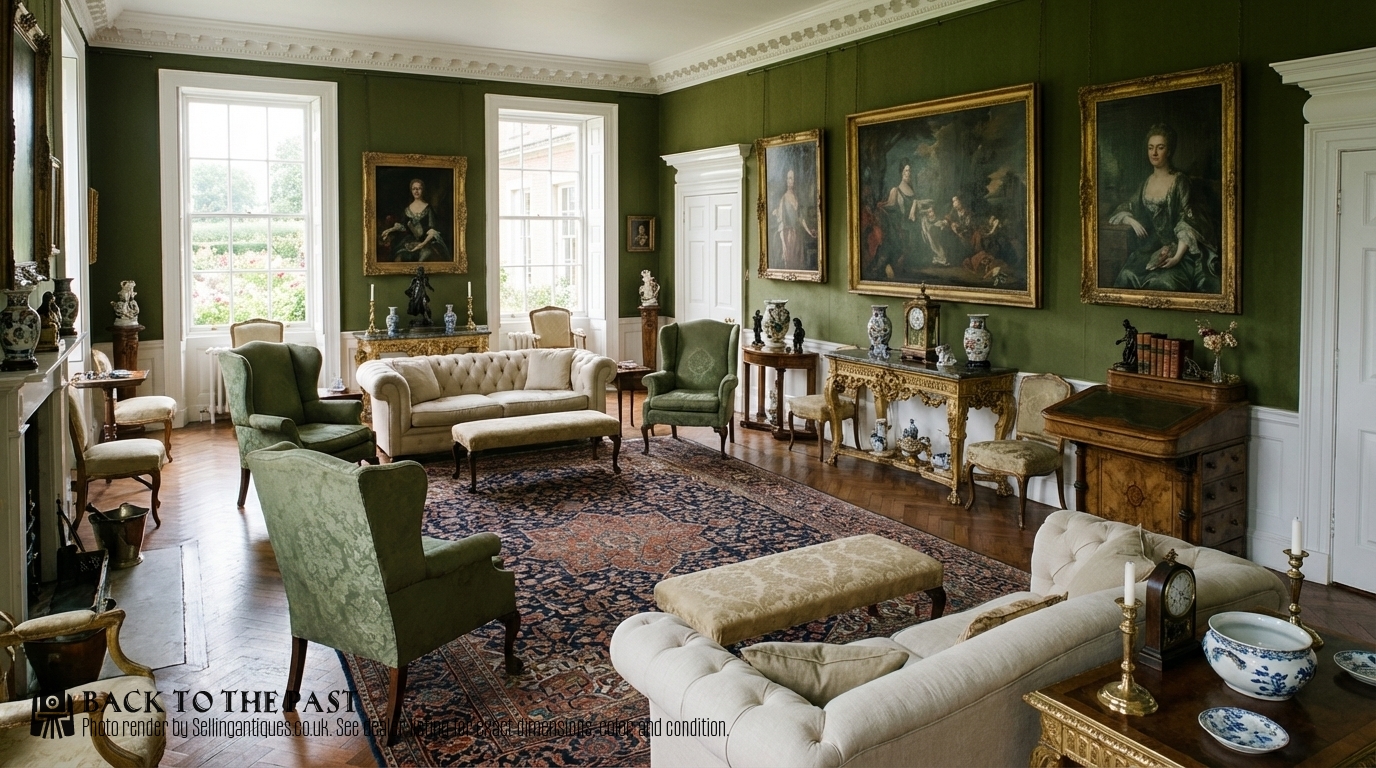
Originating as compact desks for domestic use, they combine storage with a manageable footprint. The survival of these pieces demonstrates the enduring appeal of nineteenth-century craftsmanship, where utility met decorative ambition in a single piece of furniture.
How they were made
Cabinet makers utilised dense timber foundations like walnut, burr walnut, rosewood, and oak, applying fine veneers to achieve rich grain patterns across the sloping lid and body. These structural woods provided the stability needed for everyday writing desks and bureau cabinets.
Decoration relied heavily on contrasting timbers such as boxwood and satinwood, cut carefully into floral or geometric marquetry patterns and set flush into the primary surface. Brass hardware and leather writing inserts completed the construction, balancing ornamental inlay with functional utility.
Some nineteenth-century examples hide stationery compartments that spring upward like tiny wooden jack-in-the-boxes at the touch of a secret button.
What varies in quality
The distinction between standard examples and the finest pieces lies in the complexity and precision of the marquetry inlay and the choice of primary timber. Burr walnut and figured rosewood with intricate boxwood and satinwood details represent a higher tier of nineteenth-century cabinet work.
Construction methods also separate the ranges, particularly in the execution of mechanical elements like pop-up stationery boxes, cylinder mechanisms, and well-fitted drawers. Superior examples display seamless integration of these moving parts alongside balanced proportions.
Gillows Oxford Street Workshop
The Marquetry Writing Davenport Glossary
- Marquetry inlay
- Decorative patterns formed by fitting small pieces of contrasting veneer into a prepared wooden surface. This technique allows for elaborate floral and geometric designs across the writing slope.
- Burr walnut
- Timber taken from the gnarled growth of a walnut tree, prized for its swirling and highly figured grain patterns. It forms the primary surface for many nineteenth-century examples.
- Writing slope
- The angled upper surface of the desk designed to support paper while writing. It often lifts to reveal a compartment for storage.
- Piano top davenport
- A specialised form featuring a roll-top or cylinder enclosure reminiscent of a keyboard lid. This mechanism conceals the interior fittings when not in use.
- Stationery cabinet
- An upright compartment mounted on top of the desk body to hold letters and writing supplies. It frequently includes pigeonholes and small drawers.
Marquetry Writing Davenport: Frequently Asked Questions
What is a davenport desk used for?
These desks were originally designed for correspondence and keeping personal records in private rooms or drawing rooms. The sloped top provided a comfortable writing angle while the built-in drawers stored stationery and letters.
Today, they serve well as compact writing stations in modern homes where floor space is limited. Their enclosed compartments help keep paperwork tidy and out of sight.
Are davenports comfortable for writing?
The sloping lid provides a traditional angle for handwriting, though the fixed height of nineteenth-century desks can feel different from modern office furniture. They were built for short letters and household accounts rather than extended computer work.
Pairing the desk with a suitably sized chair helps achieve a comfortable seating position. The upper writing surface is best utilised for notebook entries and correspondence.
What is a pop-up davenport?
A pop-up davenport incorporates a spring-loaded or mechanical compartment that rises from the back of the desk when released. This hidden section typically houses stationery dividers and small drawers.
This clever mechanism demonstrates nineteenth-century ingenuity in maximising storage within a compact footprint. It adds an interactive element to the piece beyond standard drawers.