

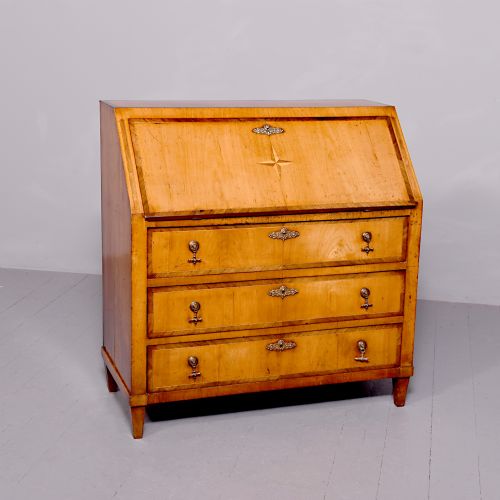

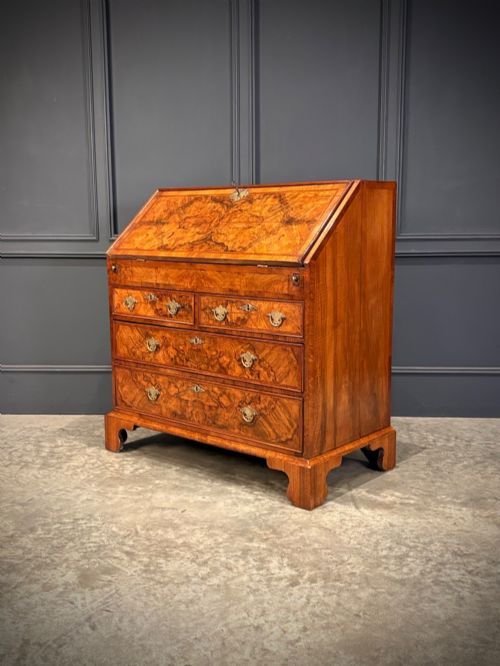
Walnut Chest Bureau Desk
A walnut chest bureau desk combines secure drawer storage with a fitted writing surface, bringing centuries of fine cabinet-making into a room.
Walnut Chest Bureau Desk
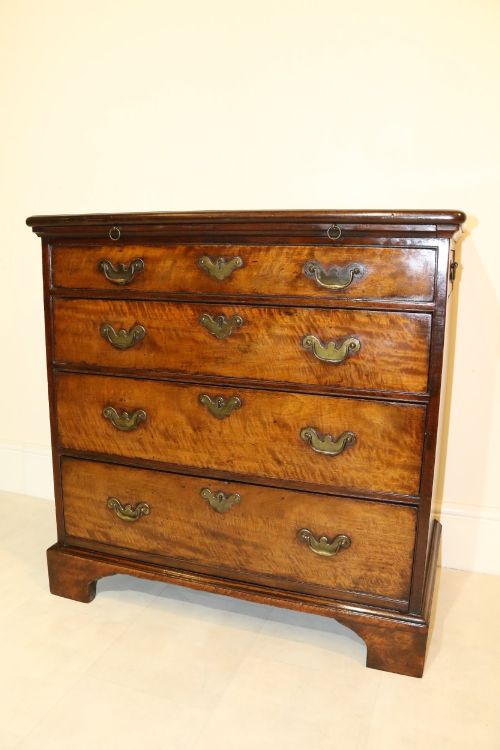
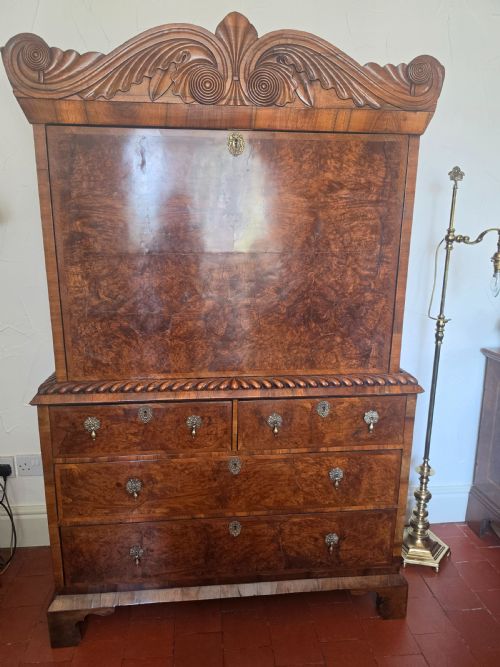
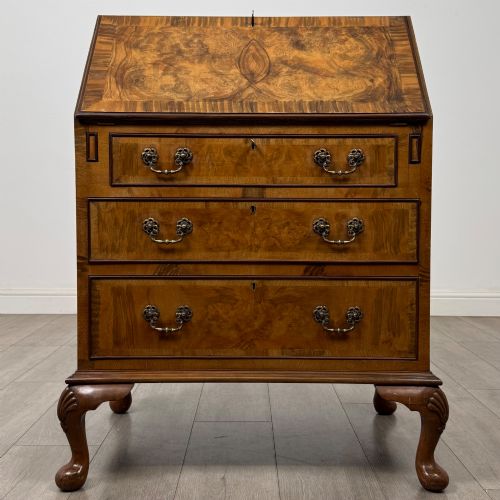
A walnut chest bureau desk is a dual-purpose domestic piece designed for storage and correspondence, uniting a set of drawers with a writing cabinet. Buyers searching for a walnut chest bureau desk encounter forms ranging from compact fall-front cabinets to tall escritoires and elaborate bureau bookcases. The selection relies heavily on pieces originating from the 17th century, Georgian period, and 18th century, alongside later 19th-century interpretations and 20th-century reproductions.
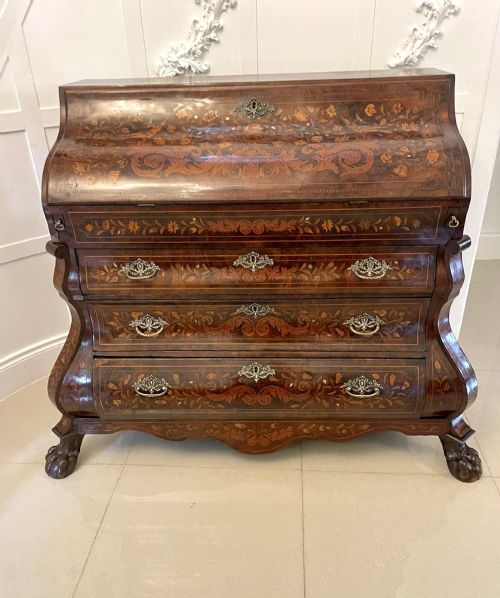
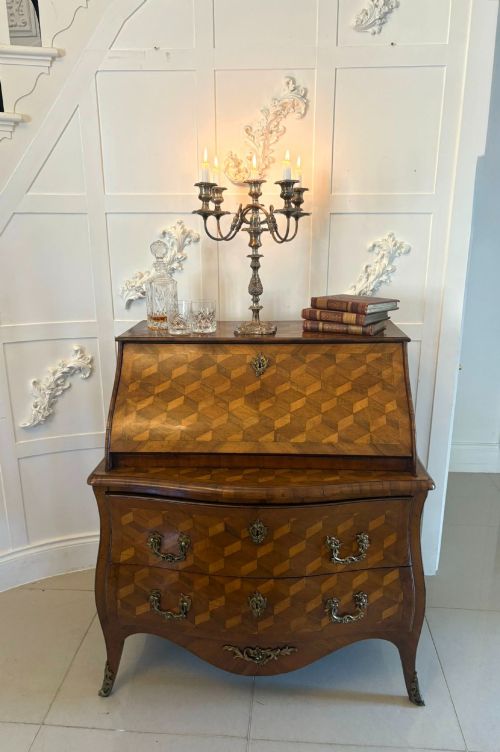
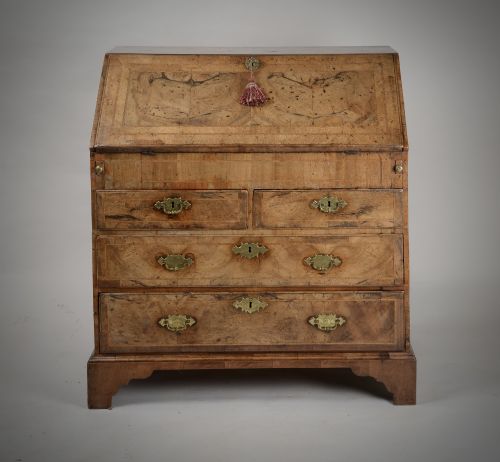
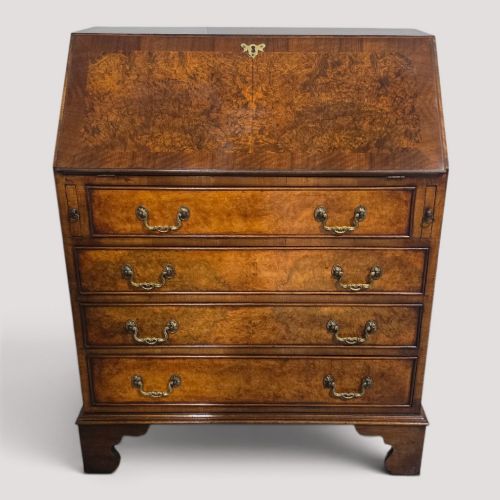
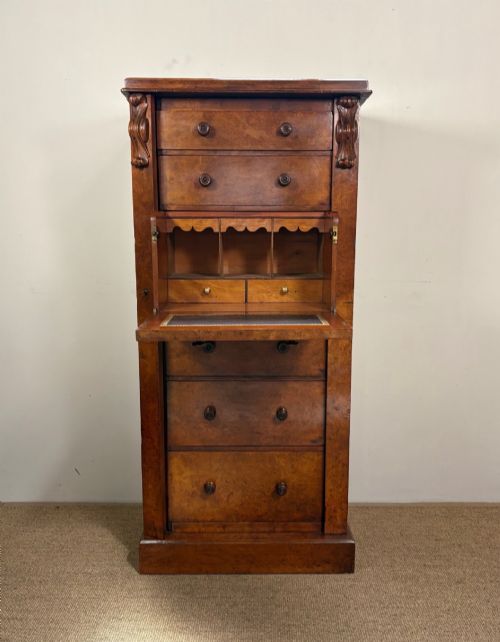
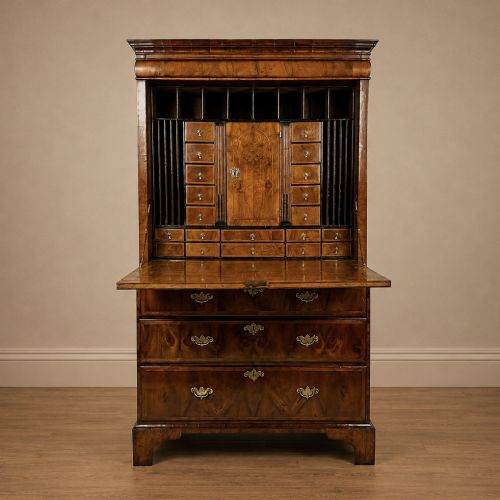
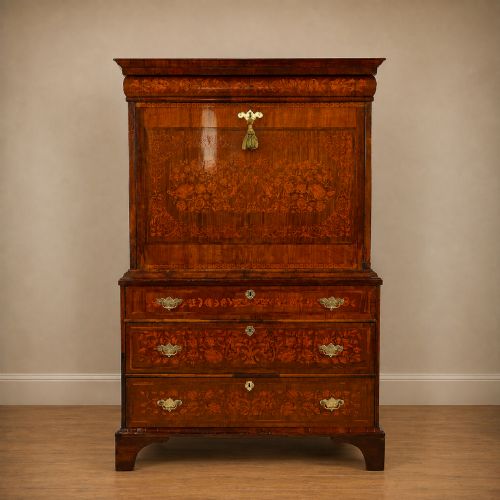
The most frequent examples on this page include fall-front bureaux, bureau bookcases, and secretaire chests with fitted pigeonholes and secret compartments. Stylistic influences span William and Mary, Queen Anne, George I, George II, and Dutch Baroque designs, with many pieces displaying distinctive fall fronts that conceal the writing interior. Continental variations often exhibit bombe shaping and floral marquetry, whilst English examples tend toward rectilinear proportions and figured veneers.
How they were made
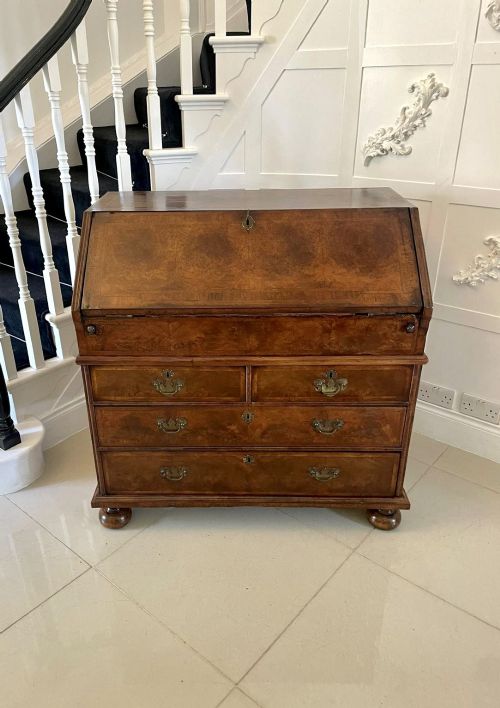
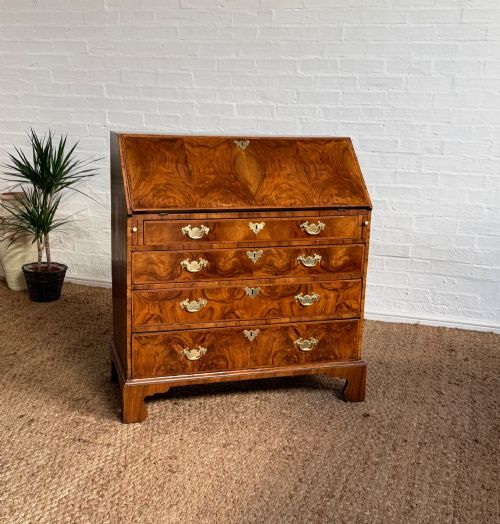
Cabinet-makers constructed these items using solid timbers and decorative veneers applied to secondary woods such as oak or pine. Walnut, burr walnut, and fruitwood provided the primary visual surfaces, often accented with herringbone or feather banding to outline the drawer fronts and writing flaps.
Makers integrated brass drop handles, escutcheons, and ironwork to secure the drawers and fall fronts. Interiors frequently incorporated leather or baize writing surfaces, alongside pigeonholes, small drawers, and compartments accessed through sliding panels.
Many early writing desks include secret sliding panels designed to keep love letters and household ledgers safe from prying eyes.
What varies in quality
Quality rests upon the selection and matching of the veneer grain, particularly where burr walnut or complex parquetry and floral marquetry are employed. Pieces displaying continuous grain patterns across drawer fronts and harmonious book-matching demonstrate superior craftsmanship.
The integrity of the original hardware, interior fittings, and structural joinery dictates the standing of an individual piece. Stronger examples retain their original ironwork or brasses, undisturbed secondary woods, and well-executed internal compartmentation without modern replacements.
The Walnut Chest Bureau Desk Glossary
- Bureau
- A writing cabinet featuring an angled or fall-front flap that opens to reveal a fitted interior of small drawers and pigeonholes. It typically sits atop a chest of drawers.
- Escritoire
- A tall writing cabinet or desk, often synonymous with a secretaire, featuring a drop-down writing surface enclosed by a large fall front or doors. These pieces date predominantly from the late 17th and early 18th centuries.
- Marquetry
- A decorative technique of inlaying pieces of wood veneer, and occasionally other materials like ivory or metal, into a background veneer to form pictorial or floral patterns. It is frequently seen on Dutch and Continental furniture.
- Herringbone
- A distinctive zigzag banding inlay used to border drawer fronts and writing surfaces. This detail employs small strips of veneer cut at angles to create a continuous V-shape pattern.
- Bombe
- A swelling, convex curved contour found on the front and sides of furniture bases, particularly associated with Dutch and Continental pieces. This form requires advanced shaping of the timber and veneer.
Walnut Chest Bureau Desk: Frequently Asked Questions
What is a walnut chest bureau desk?
A walnut chest bureau desk is a combination of a set of drawers and an enclosed writing compartment. It provides practical storage below a sloping or drop-down writing flap.
Inside the flap, these pieces generally house small drawers, pigeonholes, and concealed compartments for letters and writing materials.
How do I use a bureau desk today?
A bureau desk functions well as a compact workspace in a living room, bedroom, or hallway. The drop-down flap provides a dedicated writing surface that can be closed to hide paperwork when not in use.
The drawers below offer everyday storage for household items, linens, or stationery while maintaining a tidy interior appearance.
How do I tell George I from George II pieces?
George I furniture, produced in the early 18th century, often showcases figured walnut veneers, herringbone banding, and clean architectural lines. Proportions tend to be neat and restrained.
George II pieces, dating from roughly 1727 onward, frequently incorporate richer carved details, heavier proportions, and occasionally early rococo influences as styles shifted.
Are Dutch bureau desks different from English ones?
Dutch bureau desks frequently feature elaborate floral marquetry inlay and pronounced bombe curved fronts. They tend to showcase decorative display sections or bookcase tops.
English bureau desks generally rely on figured walnut veneers, feather banding, and more rectilinear, architectural profiles without the sweeping curves seen on Continental examples.